


Ask ten swimmers how they care for their wetsuit and most will say the same thing: rinse it, hang it up, done. That advice isn't wrong. It's just incomplete. Neoprene actually breaks down in three separate ways, and each one has a different cause, a different warning sign, and a different fix.
Here's a question worth sitting with: why does one training partner's wetsuit stay supple after three full seasons while another's goes stiff and cracked after one? Swim frequency isn't usually the deciding factor. What's in the water matters more. So does what happens in the thirty minutes after getting out of it.
Neoprene Is Foam, Not Fabric
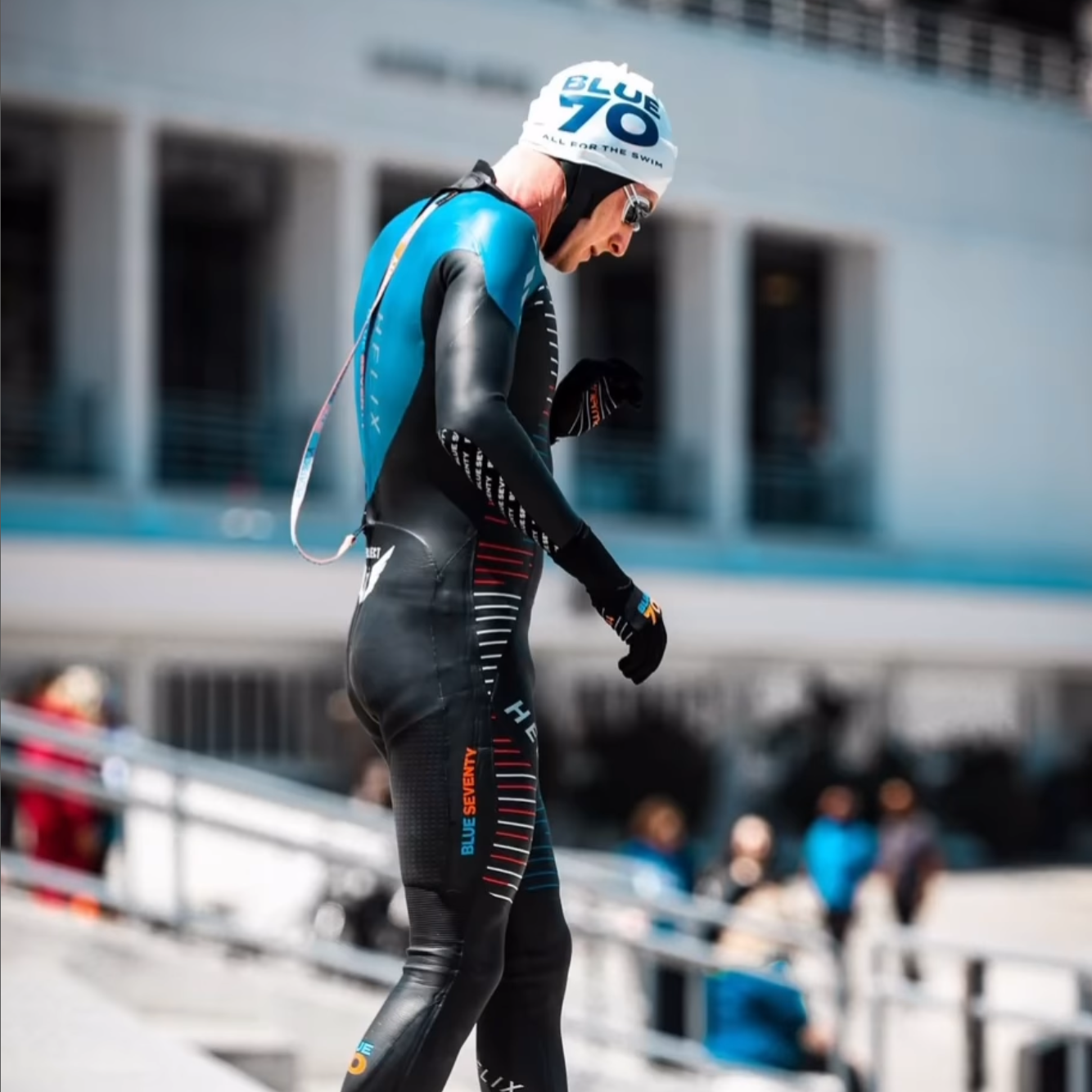
Before getting into cleaning steps, it helps to understand what you're actually cleaning. Blue70 wetsuits are built from Yamamoto neoprene, rated in cell grades of 38, 39, and 40. Higher cell counts mean a finer, more flexible cell structure.
That structure changes everything about how you care for the suit. A woven fabric sheds water and dries from the outside in. Foam neoprene works the opposite way: it holds water and whatever's dissolved in it inside a lattice of closed gas cells, and it dries, and degrades, from the inside out.
That single detail explains why three separate threats to your wetsuit move on three separate timelines.
Chlorine Oxidation
Pool chlorine breaks down the polymer chains inside neoprene, but slowly, over many exposures rather than all at once. A suit rinsed soon after a chlorinated swim can go years without stiffening. A suit left damp in a swim bag after masters practice stiffens much faster, because chlorine keeps reacting with the neoprene while the suit sits there.
Salt Crystallization
Ocean swims work differently. Dissolved salt gets trapped inside the foam's cell structure, and as the suit dries, that salt crystallizes. Picture sharp little crystals sitting inside a flexible foam matrix, grinding against it every time you bend an elbow or reach for the catch. That's exactly why unrinsed saltwater suits tend to feel granular and less supple at the shoulders and elbows first. Those are the highest-flex zones in any freestyle stroke.
UV and Ozone Exposure
The third threat gets ignored most often. Neoprene oxidizes faster under direct sunlight, the same way most rubber compounds do. A suit dried in full sun degrades at the surface faster than one dried in shade, even if both suits were rinsed identically beforehand.
Three mechanisms. Three fixes. "Rinse and hang" isn't the wrong idea. It's just missing the details that actually protect a suit.
The Rinse: What You're Really Removing
Rinse in fresh, cool water, inside and out, as soon as you reasonably can. Warm water shows up in a lot of care advice, but neoprene's foam cells can compress slightly under heat, and bonded seams can soften with repeated warm rinsing. Cool to lukewarm water is the safer choice, especially for a suit built with thin, flexible panels like a race-day model.
The rinse isn't about appearance. You're flushing whatever's currently sitting inside the cell structure before it crystallizes or keeps reacting with the neoprene. Timing beats intensity here. A quick rinse within an hour of getting out of the water does more good than a hard scrub two days later, once everything has already dried in place.
For open-water swimmers, that means rinsing before the drive home, not after. A gallon jug of fresh water in your trunk does more for your wetsuit's lifespan than any bottle of cleaner on a shelf.
Soap: Use It Sparingly, and Never the Kind From Your Shower
A mild, pH-neutral cleanser, used occasionally rather than after every single swim, helps clear body oils, sunscreen residue, and the organic film that both pool and open-water swimming leave behind. Standard detergents and bar soap strip oils aggressively. That's the last thing you want against a neoprene-rubber bond. Used often enough, they dry out and weaken seam glue over time.
Sunscreen deserves a specific mention. Oil-based formulas are a common, underrated cause of neckline and shoulder wear in open-water swimmers, and that's precisely where application tends to be heaviest and rinsing tends to be least thorough.
Drying: The Step Most Swimmers Skip
Turn the suit inside out first. Wash the interior, then dry it inside out before flipping it right-side-out to finish. Since neoprene dries from the inside out, drying it right-side-out first traps moisture against the interior lining longer, giving chlorine and organic residue more time to keep working on the material.
Hang the suit over something wide and rounded. A proper wetsuit hanger works. So does a thick pool noodle threaded through the torso. A standard wire hanger does not. It concentrates the suit's weight on the shoulder seams and can leave a permanent crease or, worse, a stress point at a seam over time.
Dry it out of direct sunlight. A shaded, ventilated space, a garage with the door cracked open, works better than a sunny balcony rail, even though the balcony dries the suit faster. Speed isn't the goal here. Evenness is.
Storing a Wetsuit Between Seasons
Fold lines set more easily into foam that's been compressed for months than into foam stored under light tension for a few days. Hang the suit for long-term storage whenever you have the space for it. If folding is unavoidable, avoid folding at the same crease every time, and keep the suit somewhere temperature-stable rather than a hot garage or car trunk. Repeated heat cycling accelerates the same oxidation that sunlight causes.
The Damage That Has Nothing to Do With Cleaning
Two of the most common causes of wetsuit damage happen before cleaning ever enters the picture: fingernail punctures during donning and heel tears during removal. Both are mechanical, not chemical. No cleaning routine prevents either one. Only technique does.
- Roll the suit on instead of yanking it into place
- Use flat hands rather than fingertips whenever possible
- Pull on fabric panels, not directly on neoprene
This distinction matters for more than your maintenance routine. Swimmers sometimes blame "the neoprene wearing out" for damage that actually came from a rushed transition and a fingernail catch. Blue70's one-year materials warranty covers manufacturing defects. It does not cover fingernail punctures, heel tears, or damage from forceful zipper use.
A Practical Routine, By Swim Type
After a pool swim: rinse in fresh water within the hour if you can, apply a mild cleanser to the interior lining occasionally, then dry inside out and away from direct sun.
After an open-water or ocean swim: rinse thoroughly, inside and out, prioritizing full saturation over speed. Salt left to crystallize is the bigger long-term threat, more so than the swim itself. Follow the same drying steps.
After a race with heavy sunscreen use: pay extra attention to the neckline and shoulders, and repeat the rinse if the first pass doesn't fully clear the film.
At the end of the season: do a full clean and a full dry, and budget more time than you think you'll need since inside-out drying takes longer than it looks. Store the suit hung, in a stable location, out of the sun.
Why Ten Minutes Matters
A well-cared-for wetsuit keeps its flexibility exactly where it matters most: the shoulders and arms, where restriction translates directly into fatigue over a long open-water leg. Whether you're training weekly in a Reaction or racing in a Fusion, neoprene stiffened by chlorine buildup or salt crystallization doesn't just look worn. It changes how the suit performs, adding drag exactly where you need freedom of movement.
Ten minutes of rinsing and hanging a suit properly after every swim keeps that buoyancy and flexibility working the way the suit was built to. Treat it as part of your cooldown, not an afterthought.
Not sure your current suit still fits the way it should after a season of wear and tear? Check our fitting guide or reach out to our team with questions before your next race.