


Race week turns triathletes into amateur meteorologists. You refresh water temperature trackers, reread the athlete guide, and ask one question: will the swim be wetsuit-legal? The cutoff varies by governing body, race distance, athlete category, and how the water gets measured. Treat it as a decision process, not a fixed number on a thermometer.
The Rulebook Is a Moving Target
USAT, Ironman, World Triathlon, and local race directors each publish current rules. Some make wetsuits mandatory below a cold-water threshold. Others set a warm-water ceiling above which wetsuits are off the table. Between those points sits a legal but optional window. The exact numbers change season to season. The current rulebook for your event is the only source to trust on legality. That detail is easy to overlook, and it causes most race-week confusion.
Your Body Does Not Read the Thermometer
A wetsuit lets in a thin layer of water, and your body warms that layer. In cold water, the layer adds thermal protection. In warm water, the same mechanism can trap heat your body wants to shed. A race can be wetsuit-legal near 70 to 72°F and still feel heavy by the halfway point of a long swim. The rulebook tells you what is legal. Your shoulders tell you what is right.
Longer swims generate more sustained heat. A sprint may allow a full suit comfortably. The same water temperature at 70.3 or Ironman distance can turn a legal suit into a sauna. Body size, pace, and cold-water acclimatization shift that experience. Wind and sun on race morning shift it too.
Match the Suit to Your Training Week, Not Just Race Day
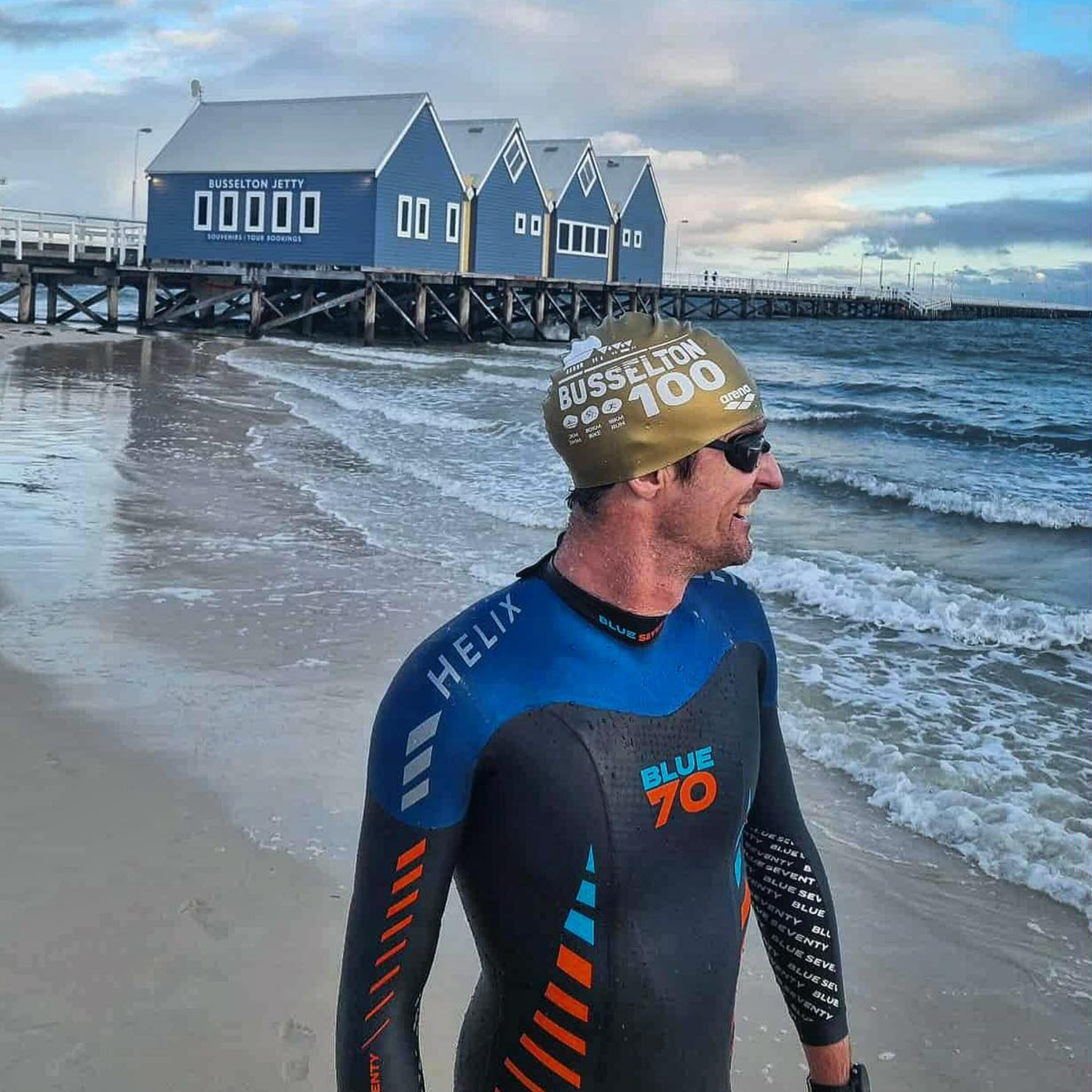
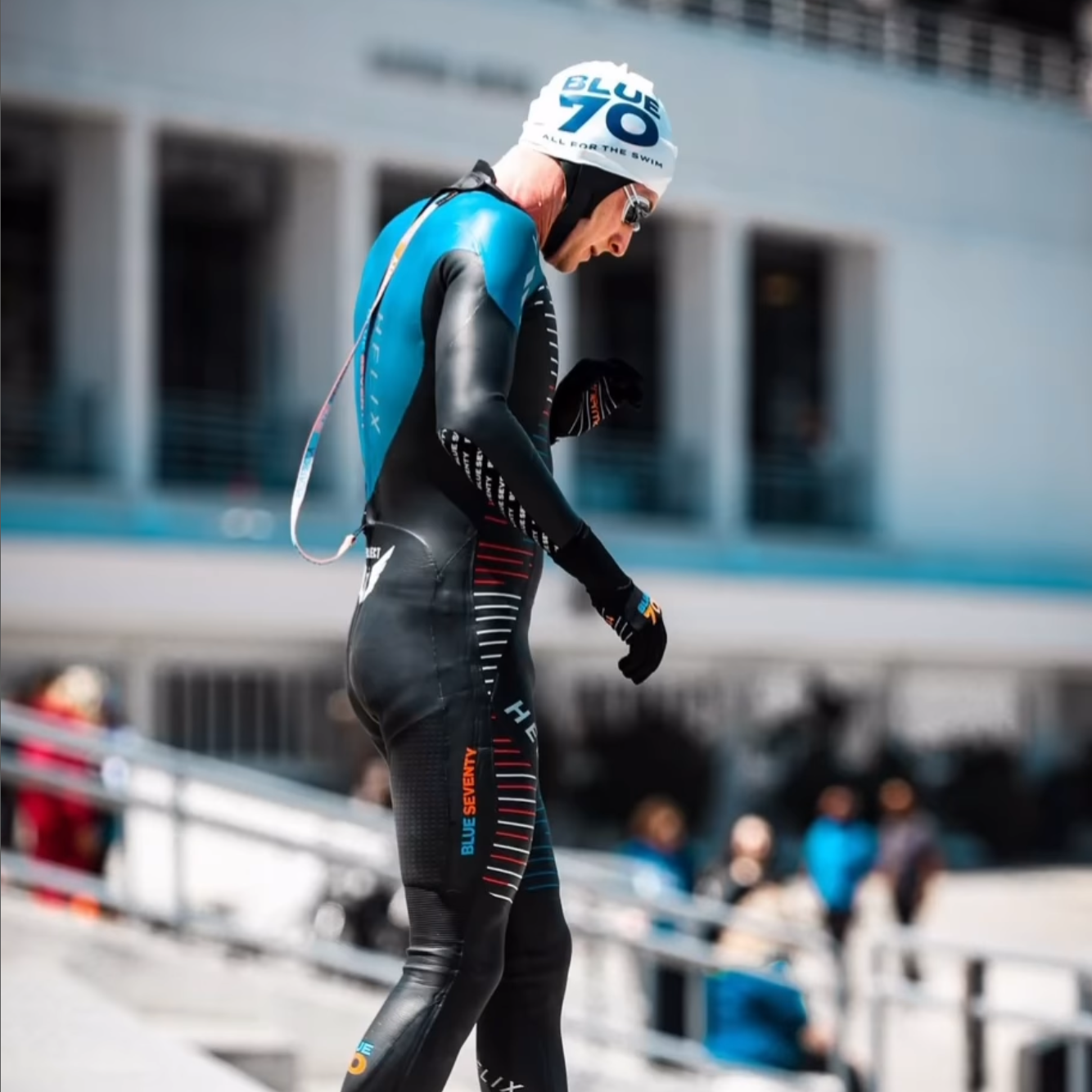
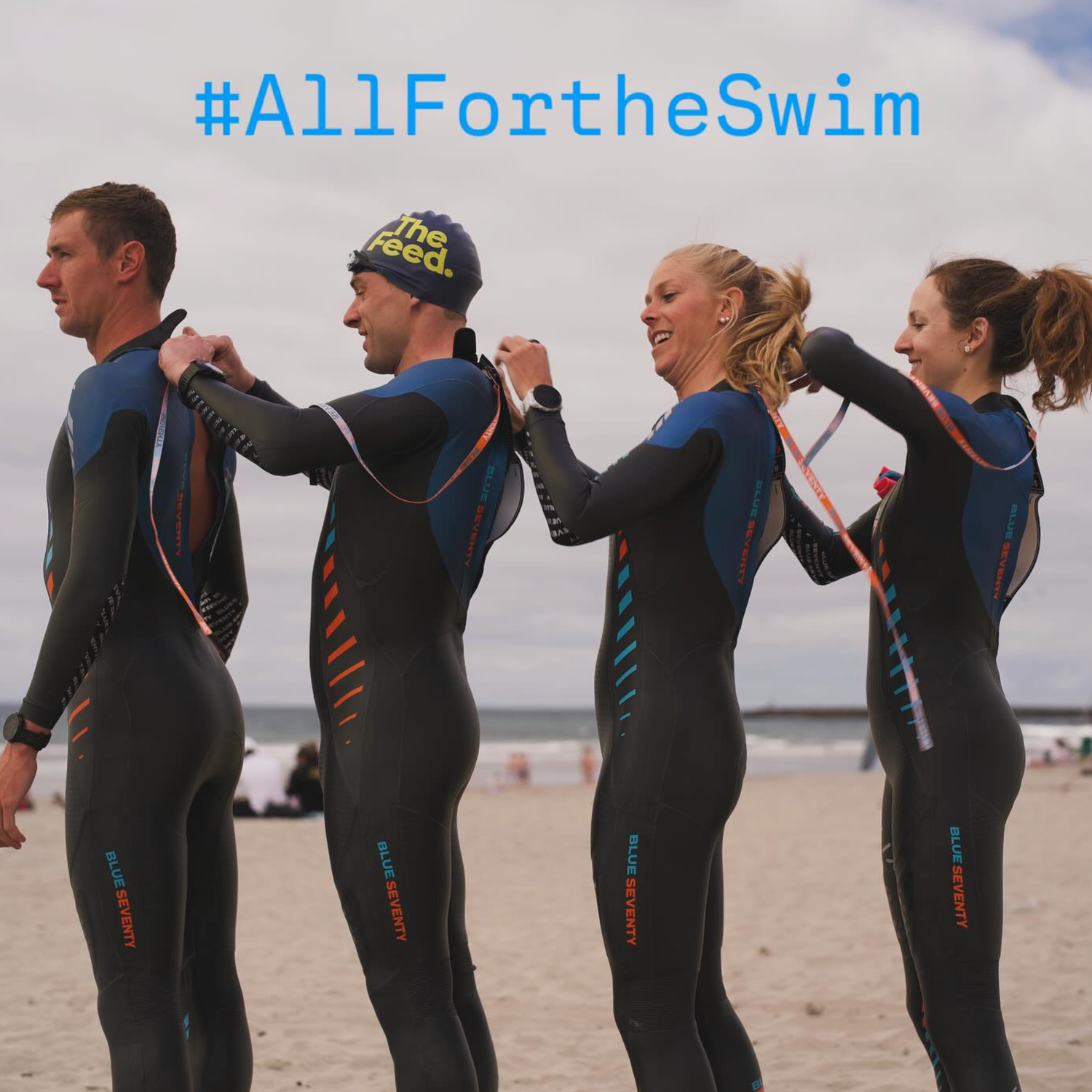
Start with how often you swim open water. The Helix is the flagship race suit. It uses thin, flexible neoprene in the arms and shoulders to preserve freedom from restriction, plus a permeable catch panel that has been in the design since 2010 to keep feel for the water. That flexibility comes with a trade-off. blueseventy notes the Helix will break down more quickly with frequent training use. If you swim open water once a week or more, the Reaction and Fusion are better daily choices.
The Reaction uses higher-grade neoprene and suits longer swims. The Fusion is the best-selling mid-range suit for shorter frequent sessions. Its 2021 redesign added a lower-sitting neckline for comfort without losing the watertight seal. The Sprint is the entry point. At the cold end, the Thermal Reaction brings full Zirconium jersey lining for added thermal protection below about 56 to 58°F. At the warm end, the Reaction Sleeveless or Glide Short John remove arm and shoulder insulation while keeping core coverage. If your race is wetsuit-prohibited, the suit stays in transition and a blueseventy swimskin becomes the race option.
blueseventy's Femme Fit adjusts bust, torso, wrist, and ankle patterns for women's specific fit. For every athlete, the goal is snug on land and comfortable in the water. All blueseventy wetsuits use Yamamoto neoprene in 38, 39, and 40 cell. Higher cell count means more flexibility, and that matters at 1,500 meters when your stroke wants to shorten.
Race Week Checklist
Use this order when the water temperature drops or climbs:
- Find the official water temperature. Race directors measure at set depths and times. Your watch reading from the shoreline is not the official number.
- Know your race's categories. Mandatory, legal, optional, and prohibited each trigger a different packing list.
- Test your suit in realistic water before race week. blueseventy's Test Swim option lets you swim in a wetsuit and still return or exchange it if it is clean, dry, and unmodified.
- Travel with two options when you can: a full suit and a sleeveless suit or swimskin. The water temperature measured at 6 a.m. may feel different at the second turn buoy after twenty minutes of hard swimming.
The Athlete Culture Split
Elite racing has made the cutoff part of the story. In 2012, blueseventy athletes Alistair Brownlee and Leanda Cave won major titles in Helix wetsuits. Brownlee took Olympic gold. Cave won both the 70.3 and Ironman World Championships. That season showed what a race-tuned suit could do when shoulder mobility and buoyancy came together. It also kept the cutoff conversation front and center.
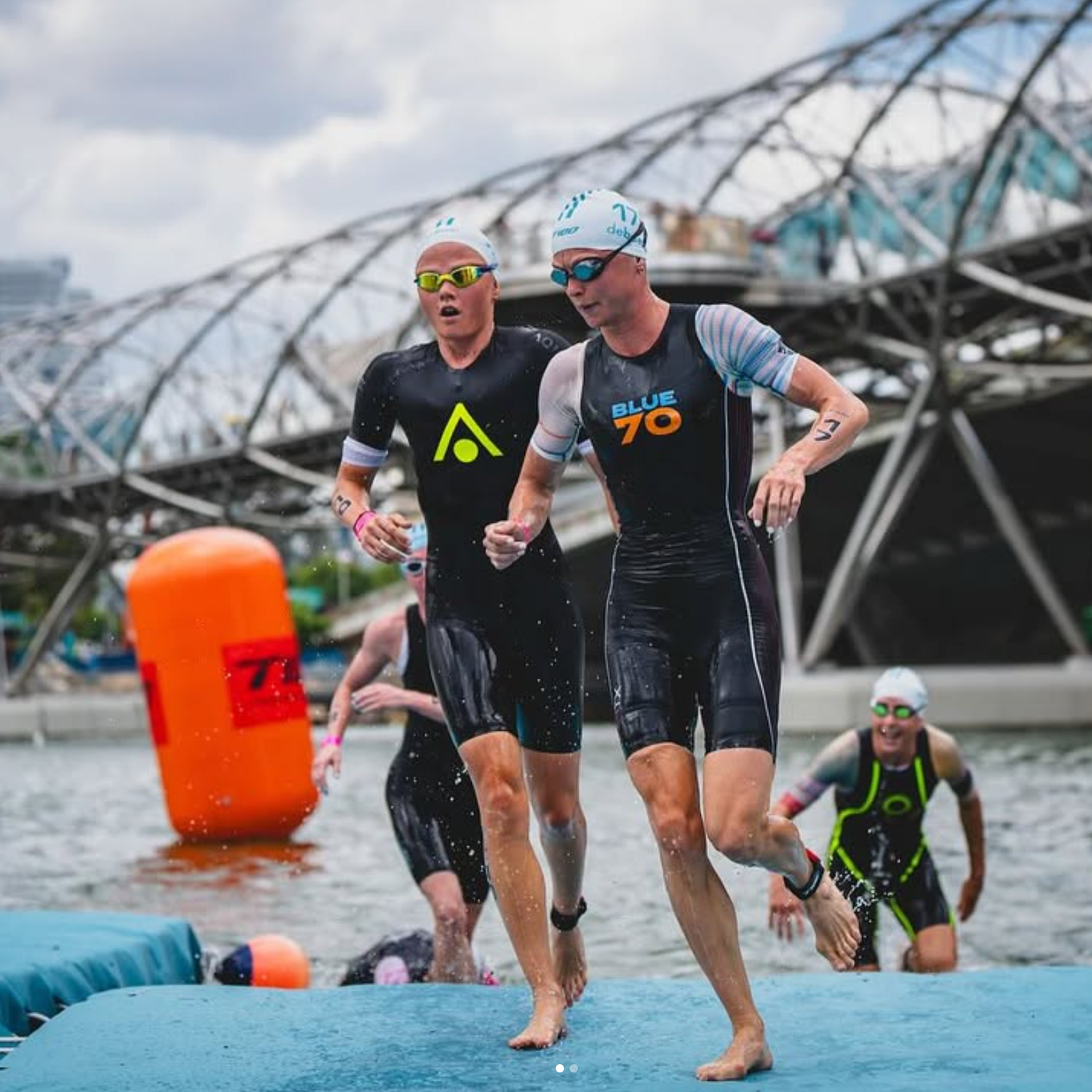
Some professionals choose to race without a wetsuit near the legal edge to save transition time and avoid overheating. Age groupers often choose the suit for the buoyancy benefit. Those choices reflect different risk calculations, not different levels of toughness. Expect more precise measurement and more category splits. Race organizers are moving toward deeper, repeated readings. Wetsuit design is shifting too. blueseventy's LIFT panels, added to the Helix in 2018, provide targeted buoyancy. The catch panel preserves feel for the water. Materials that separate insulation from buoyancy may make the cutoff less binary in the future.
The Decision You Own
The wetsuit cutoff is a governance line. It tells you what is allowed. It does not tell you what is smart for your body and distance. Read the current rulebook, test your suit in realistic water, and pack for your own thermal profile. A suit that moves with your shoulders will matter more than any last-minute cutoff anxiety. All for the swim.