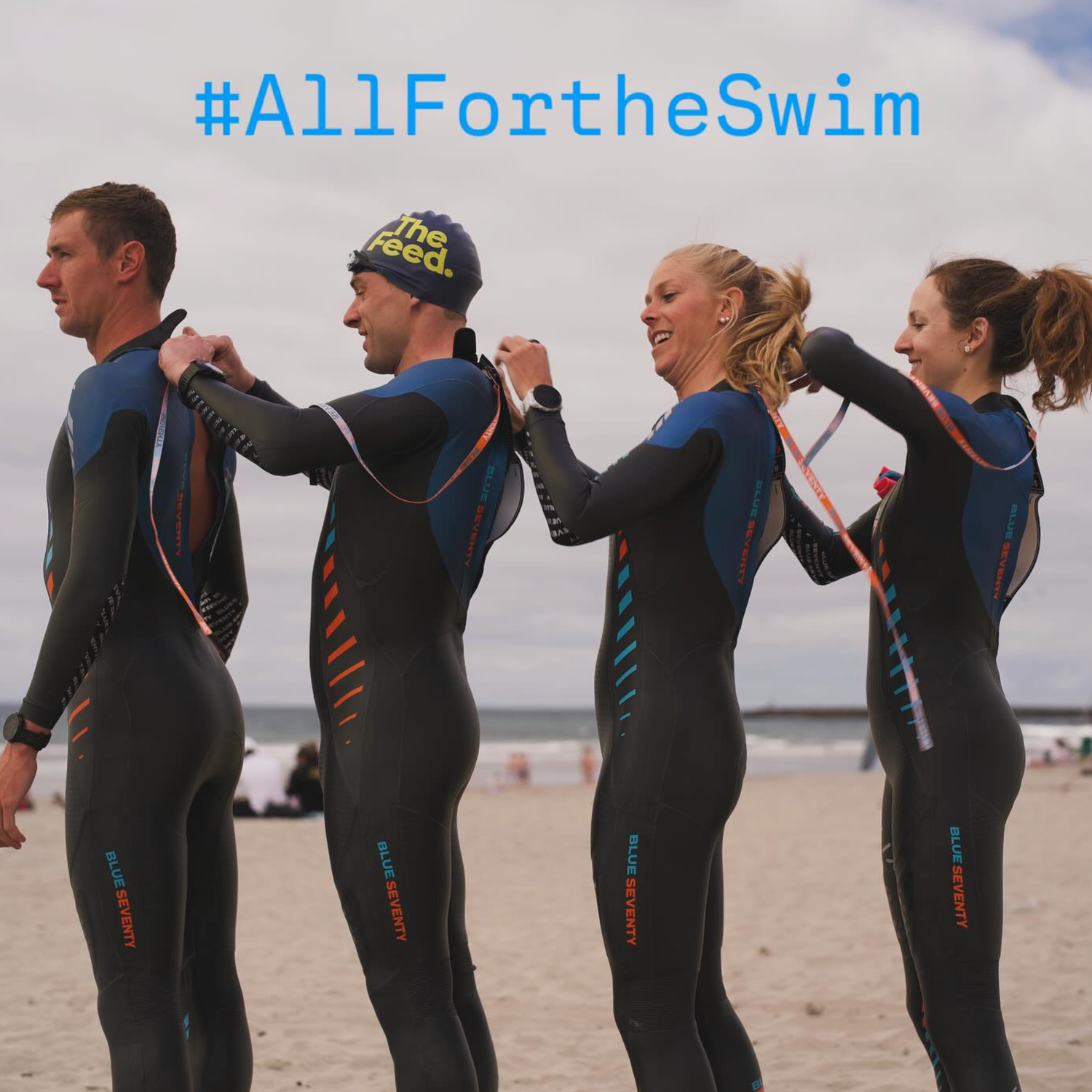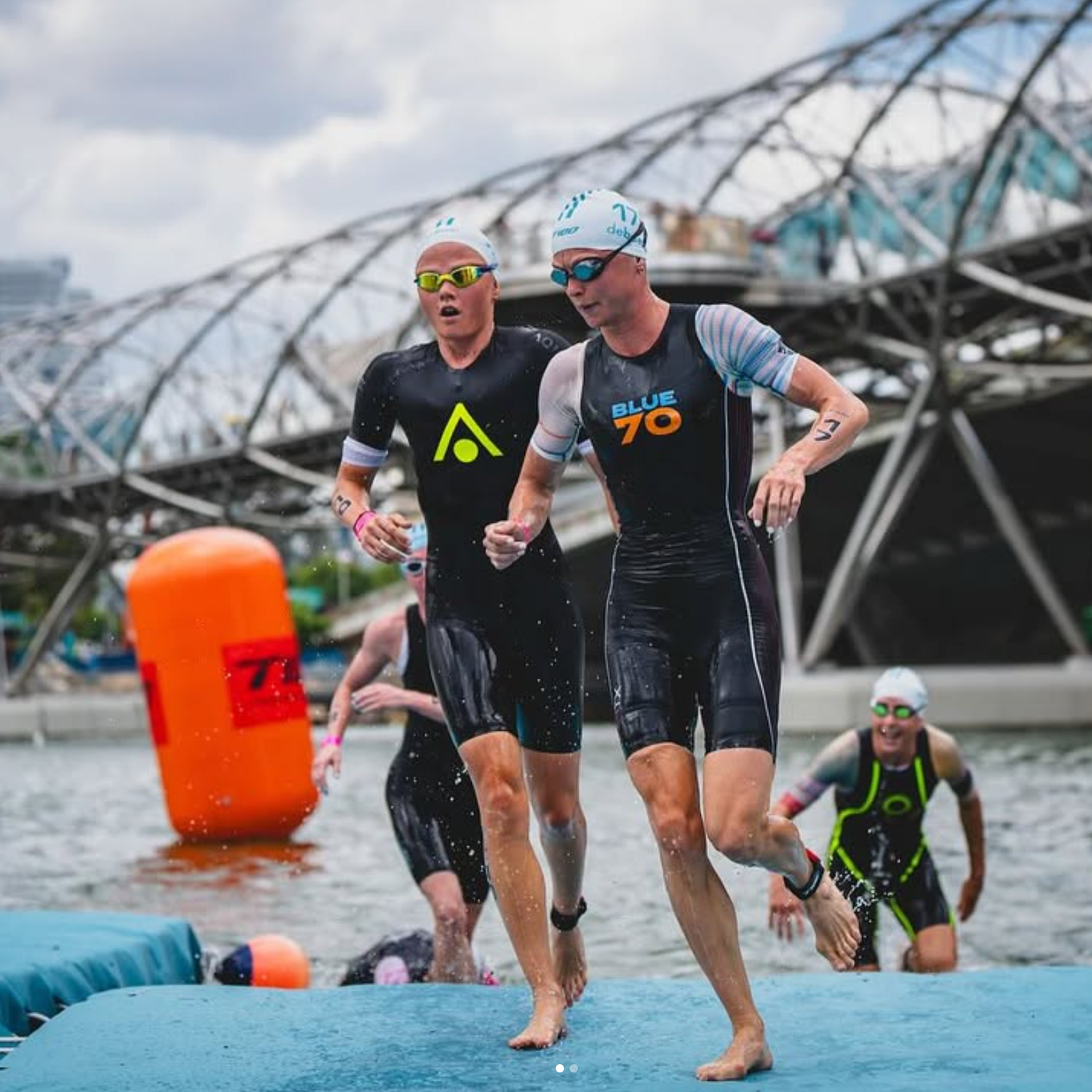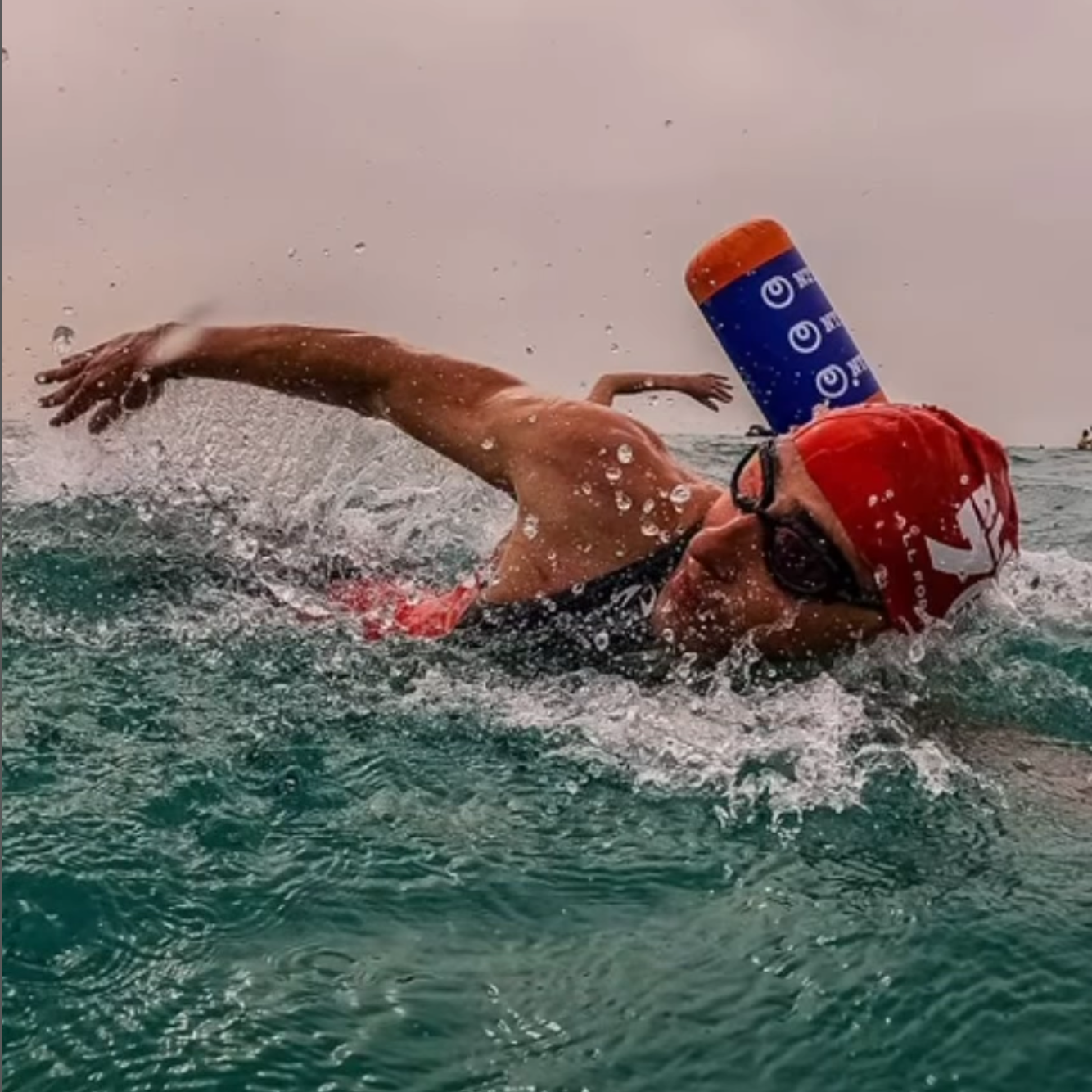



A rolled cuff, a slow unroll, and dry skin will get you into a Blue70 wetsuit without plastic bags. Plastic bags add a slick film, but rolling the neoprene up your leg does the same job without torn plastic to manage in transition. Blue70 suits use Yamamoto neoprene, which is flexible enough to slide when you work it correctly.
Start dry and protect the neoprene
Remove rings, watches, and bracelets before you open the suit. Check your fingernails for rough edges. Your fingernails cause most avoidable wetsuit punctures, and that damage is not covered by the warranty. Moisture makes bare skin tacky against neoprene, so dry your feet and lower legs. Sit down on a chair, tailgate, or towel if you can. This keeps the suit off abrasive ground and makes leg entry easier.
Use the rolled-cuff method on each leg
Work one leg at a time and let the neoprene unroll over your skin instead of pulling it upward by the waistband.
- Fold the bottom 6 to 8 inches of one leg inside out to create a cuff.
- Slide your foot through the opening and point your toes.
- Keep your thumbs inside the folded edge and unroll the cuff toward your knee.
- When the suit feels tight at the calf, stop and push the rolled edge higher.
- Let the neoprene release over the widest part of the muscle before you continue.
- Repeat on the other leg.
A thin sock over the foot helps the ankle pass through the narrow opening. Remove the sock once the lower leg is covered.
Settle the hips before the zip
Once both legs are unrolled to the upper thighs, stand and lift the torso with flat hands. Use small lifts instead of one hard pull. A slight squat gives you slack around the hips. On women's Blue70 suits with Femme Fit, the extended back zipper makes settling the hips easier, but the hips still need to be seated before you zip.
Position the arms next
Roll each sleeve into a donut shape, slide your hand through, and unroll the sleeve to your shoulder. If you wear a sleeveless suit, skip this step. After both arms are in, reach overhead and circle your arms slowly. That movement settles the suit into the shoulder pocket and frees the stretch panels for a full swim stroke.
Zip last and check the fit
Leave the zipper open until the suit feels even across your chest and shoulders. On a back-zip suit, pull the long cord straight up rather than out to the side. If the zipper resists, lower your chin and let a helper guide the two sides together. Do not force the zip.
The suit should feel snug on dry land but still allow a full breath. It will feel less restrictive in the water because the suit lets in a thin layer of water, which your body warms. A properly seated suit does not sag at the crotch or bunch behind the knees. If it does, work the excess material upward from your calves and thighs before you zip again.
Practice before race day
Run through this sequence once or twice at home. After swimming, rinse the suit in fresh water and dry it away from direct heat. If you are unsure about the fit, the Blue70 Test Swim policy lets you swim in the suit and still return or exchange it if it comes back clean, dry, unmodified, and with tags or accessories.
Happy swimming.