


The short answer: there is no single calendar date when a wetsuit expires. A suit that gets raced twice a summer and rinsed religiously can last five seasons or more. The same model worn three mornings a week without a post-swim rinse can feel dead in two years. The right question is not “how often,” but “what am I asking the suit to do, and what is it telling me in return?”
The two things that dictate lifespan are how you use the suit and which suit you bought.
Usage: Frequency, Distance, and Care
Every pull across the water, every wrestle during a transition, every hour sitting damp in a trunk introduces tiny stresses in the neoprene. A wetsuit used once a week for a 1,500-meter lake swim ages differently from one used four times a week for 4,000-meter sessions.
Care swings the timeline more than anything else. Three habits stretch a suit’s useful life:
- Rinse it in fresh water after every swim, inside and out. Salt and chlorine eat at the neoprene and glue seams over time.
- Dry it inside out first, then right side out, away from direct sun and heat.
- Hang it folded at the waist on a wide hanger or lay it flat. Wire hangers and sharp edges create creases that become tears.
Suits that live in a hot car or a sun-baked transition area will lose flexibility faster, no matter the model.
Model Choice: Durability Versus All‑Out Speed
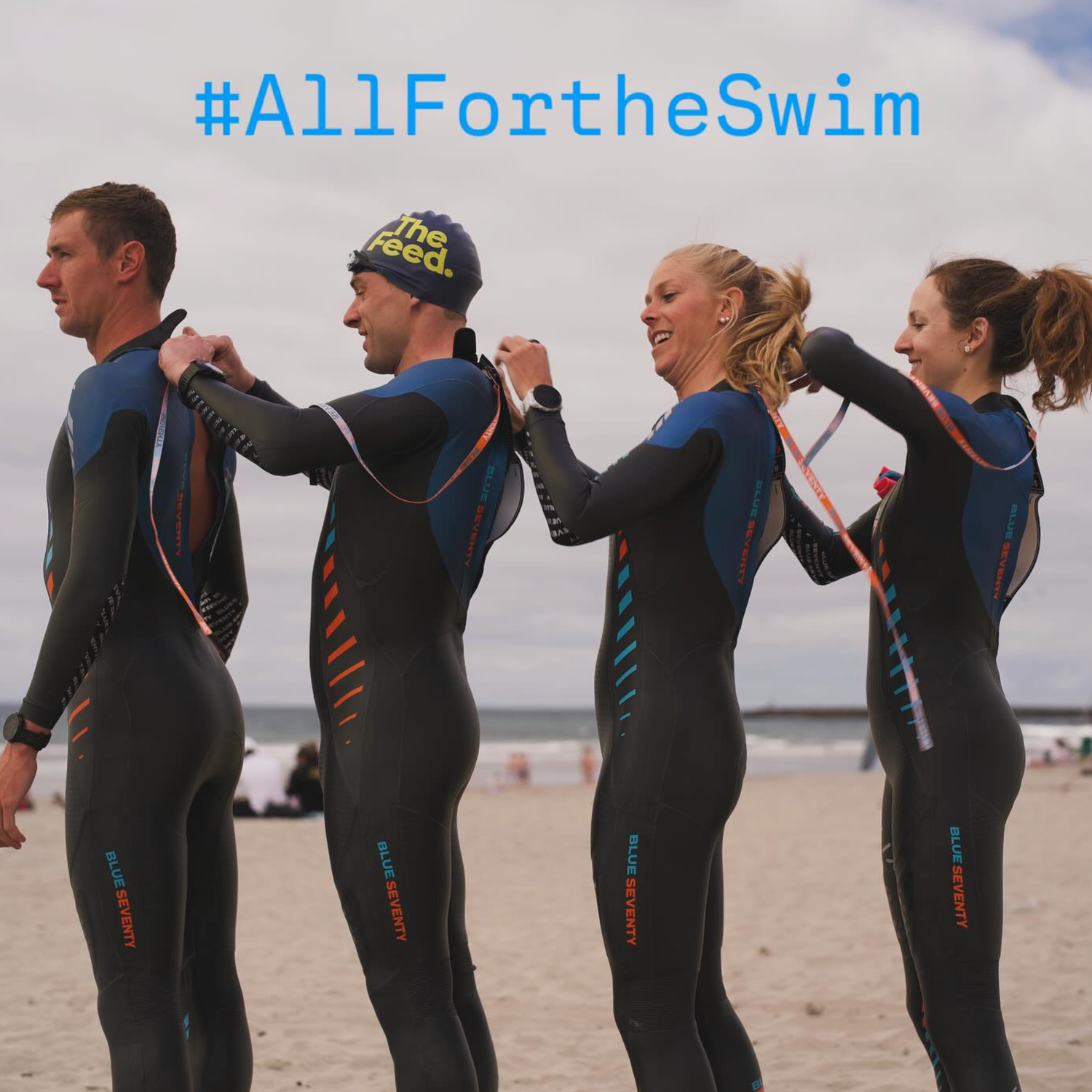
Blue70 wetsuits are built from Yamamoto neoprene, graded by cell structure: 38, 39, and 40 cell. Higher cell numbers mean more flexibility and a lighter suit, but also thinner, more delicate material.
The Helix ($995) is the extreme end of that trade‑off. Its arm and shoulder neoprene is exceptionally thin, giving you maximum freedom of movement and a catch panel so permeable you can feel the water. The brand is direct about what that means: the Helix is a race‑day suit. If you swim in it five days a week for training, the neoprene will break down more quickly than a suit built for frequent use.
For swimmers training at least once a week, the Reaction ($680) and Fusion ($420) are more durable choices. The Reaction uses a higher‑grade neoprene that holds its buoyancy and stretch over repeated long swims. The Fusion, redesigned in 2021 with a lower‑sitting neck, is a workhorse for shorter, frequent sessions. Neither will feel as naked in the water as the Helix, but both will give you a longer service life.
If you spend significant time in water below roughly 58°F, the Thermal Reaction ($785) adds a Zirconium jersey liner for warmth. Like the Reaction, it uses neoprene that can absorb regular use without degrading as quickly as superlight race neoprene.
Signs It Is Time to Retire the Suit
A wetsuit does not usually fail all at once. The signals come gradually.
- Compression loss. The suit no longer feels snug against the skin, especially across the chest, hips, or thighs. The material has lost its memory. When buoyancy panels flatten, body position in the water suffers because the lift is gone. You might notice your legs sitting lower or your hip turn feeling heavy. That is not a technique problem; it is the suit telling you the closed‑cell foam is no longer doing its job.
- Seam separation or cracking. Glued and blindstitched seams should lie flat. If you see the seams lifting, peeling, or any exposed stitch, water floods into the suit and insulation drops.
- Tears around stress points. Fingernail punctures in the chest and shoulder area, heel tears near the ankle opening, and small rips at the back of the neck are the most common. A clean cut from a fingernail is fixable with neoprene cement. But if tears appear in a half‑dozen places, the material overall is likely fatigued.
- The zipper problem. If the back zipper consistently sticks, resists closing, or won’t stay sealed at the top, and the zipper teeth are not visibly damaged, the surrounding neoprene may have stretched, putting the closure under uneven tension. That is difficult to repair permanently.
One practical test: put the suit on and get in the water. If cold water pours in where it never did before, the suit’s integrity is gone.
What the Warranty Covers (and What It Does Not)
Blue70 covers manufacturing and material defects for one year from purchase, repair only. That means a seam that fails along a glue line with no sign of mechanical damage is a warranty issue. Fingernail punctures, heel tears, zipper damage from force, and deterioration from chlorine or sun are not. The warranty also excludes any non‑swimming use-surfing, scuba, kayaking-which voids it entirely.
If you have a small tear outside warranty, Aquaseal neoprene cement is the appropriate fix. Clean the area, apply a thin coat, press the edges together, and let it cure for 24 hours. The repair will hold as long as the surrounding neoprene has life left.
A Realistic Lifespan by Swimmer Profile
With good care and the right model for the job, here is what you can expect:
Occasional racer (4-8 events per year, infrequent training). A Helix can deliver four to five seasons. The suit spends most of its life dry and protected.
Age‑grouper training once or twice a week. A Reaction or Fusion, rinsed after every swim, commonly lasts three to four years. The neoprene will gradually lose buoyancy. Many swimmers notice the drop around year three and replace the suit, not because it is torn but because the lift is gone.
High‑frequency open water swimmer (3‑plus swims per week, year‑round or extended season). Two years before noticeable compression loss is typical. Those swimmers often keep two suits in rotation, allowing each to fully dry between uses, which extends total life.
Cold‑water swimmer. A Thermal Reaction, used with proper care, can last three to four seasons. The thicker neoprene holds its structure longer than ultralight race foam, but repeated exposure to very cold water stiffens neoprene slightly over time.
None of these windows are promises. They are observations that track with how neoprene behaves when you treat it well and use it for what it was designed to do.
Extending the Life You Have
Two extras make a genuine difference. The first is using a wetsuit lube or simply soapy water during donning; it reduces the tugging that causes fingernail marks and stress at the seams. The second is paying attention to the first don of the season. A suit that felt snug in October and now slides on too easily in May is telling you the foam has given up. Replace it before race day surprises you.
And if you are uncertain whether a suit still has miles left, take it for a test swim. Blue70 allows customers to swim in a wetsuit and still return it within 30 days, clean and dry, tags attached. That policy exists precisely so you can feel how the suit performs in the water, not just on the carpet.