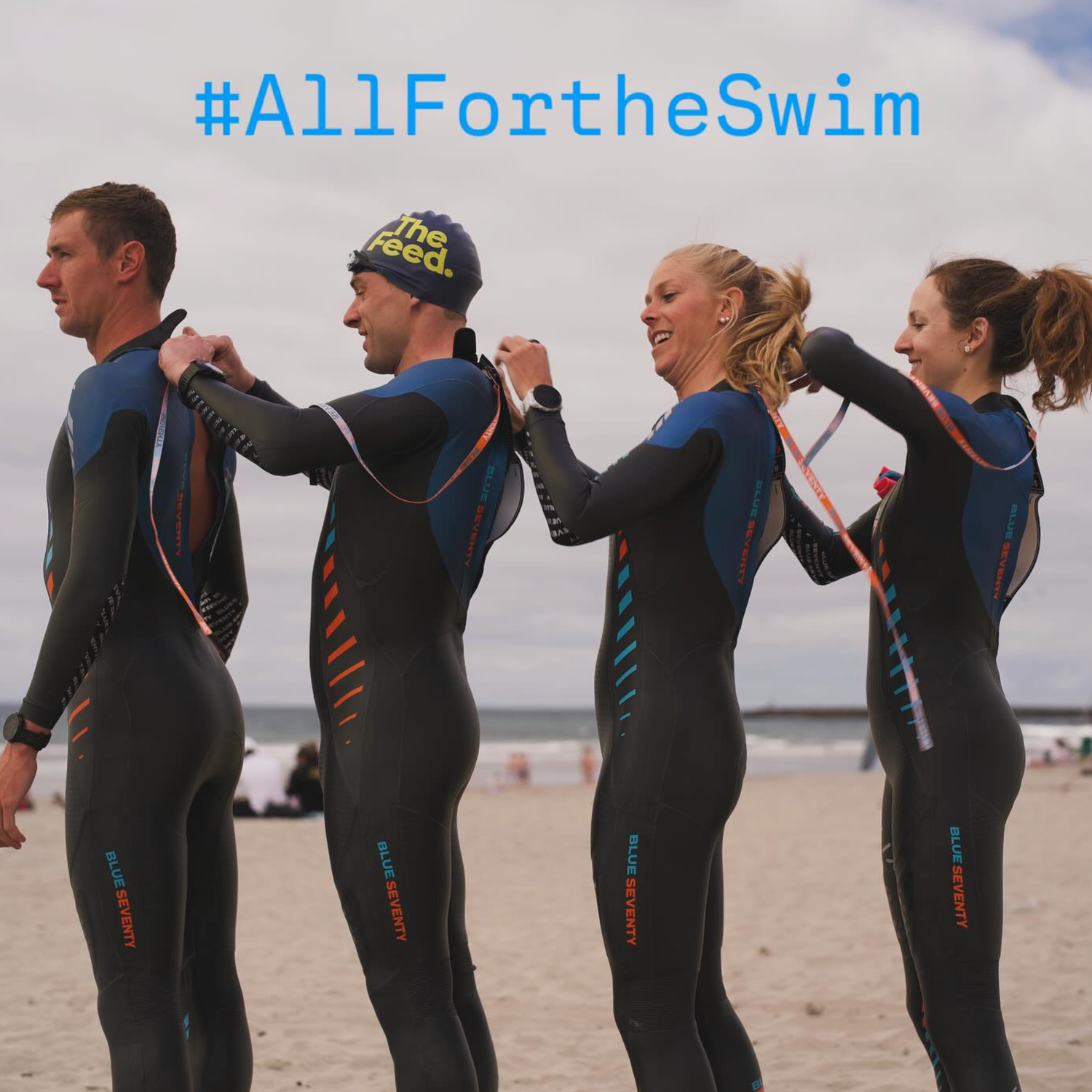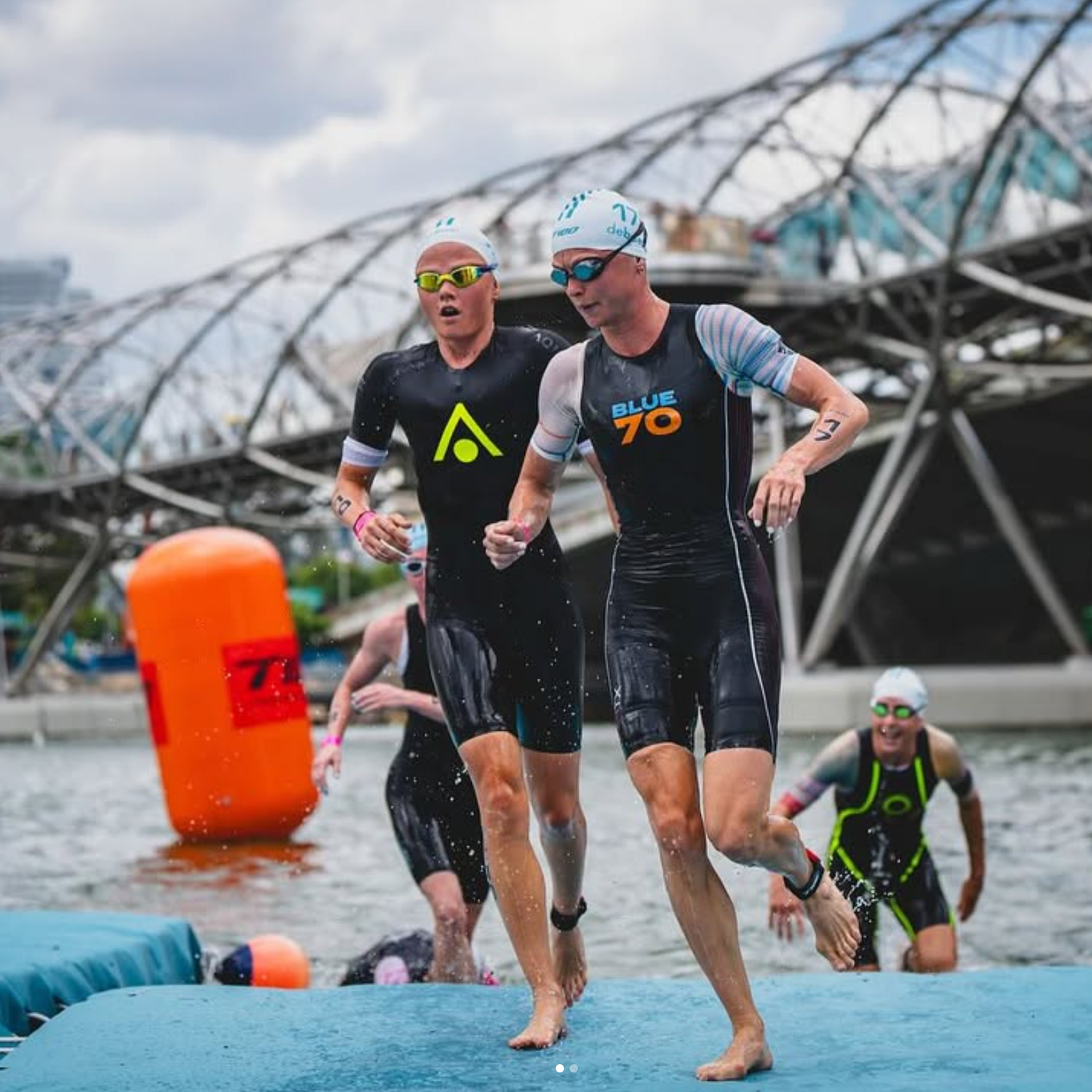



A rinsed Blue70 wetsuit will dry faster than one straight from the lake or pool, but not as fast as a swimsuit. Plan on giving it a full night indoors, and flip it once halfway through. The exact time shifts with airflow, humidity, and suit thickness.
All Blue70 wetsuits use Yamamoto neoprene in 38, 39, or 40 cell. That neoprene gives the suit its flexibility, but it also responds poorly to heat, wringing, and being left damp in a bag.
Rinse first, then let it drain
Rinsing changes the drying job. Chlorine, salt, sand, and lake water sit in the neoprene and break down seam glue over time. A cool fresh water rinse on the outside and inside clears those out. After the rinse, hold the suit over a drain tray or shower floor and let the bulk of the water run out the ankles and sleeves. Don't wring it. Wringing twists the neoprene and stresses the glued seams. A gentle press with your palms is enough.
What changes drying time
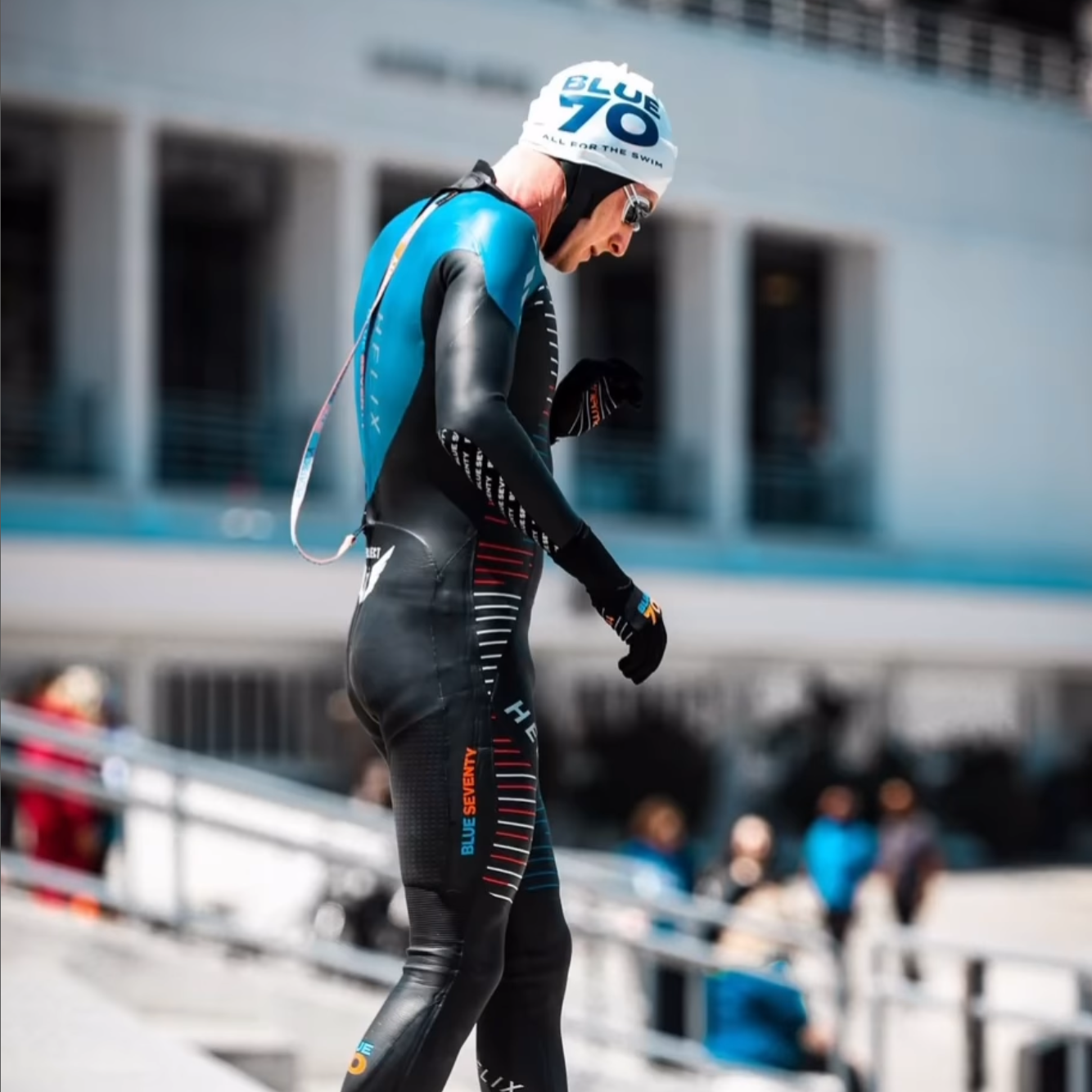
Airflow, humidity, and lining thickness control how fast your suit dries. A Blue70 suit with thin, flexible arm and shoulder panels, like a Helix or Reaction, gives up water faster than a fully lined Thermal Reaction. The Zirconium jersey lining in the Thermal Reaction holds more water by design because it is there for cold water. In any full suit, the inside holds the most water at the ankles, cuffs, and lower legs because water pools there when you hang it.
Step-by-step drying
- Rinse the suit outside and inside with cool fresh water.
- Let it drain for a few minutes.
- Hang it over a wide bar, drying rack, or padded hanger through the waist, not by the shoulders. A thin hanger creases the shoulder neoprene.
- After the outer surface stops dripping, turn the suit inside out so the side that touched your skin can dry.
- Keep it out of direct sun and away from radiators, dryers, and car dashboards. Heat damage is not covered under the Blue70 warranty.
How long should you plan on?
For most Blue70 full suits in a normal indoor room, the outside feels dry within a few hours, but the inside is not dry until the ankles and armpits have no cool dampness. Give it overnight. If you swim before work and want the suit dry by the next morning, rinse it right away, hang it over a wide bar, and point a small fan at it. In dry, moving air, a lightweight short john or sleeveless suit may be ready in four to six hours. In a humid bathroom with no fan, the same suit can still feel damp after 24 hours. Use your hand, not the clock. If the inside of the ankle or the neoprene under the armpit feels cool and clammy, it is not dry.
Avoid packing damp
A partially dry suit left in a swim bag or transition bag holds that moisture against the seams and lining. That is how mildew and that stale lake smell get into the suit. If you have to pack it before it is completely dry, lay it flat or drape it over your bag rather than stuffing it into a plastic bag or zipped pocket. When you get home, rinse it again and hang it properly. The rinse after travel is worth the extra two minutes.
All for the swim. Happy swimming.