


The short answer: they matter a lot. Wrist and ankle seals control how much water moves through the suit, and that affects warmth, drag, and how comfortable you feel after the first few hundred meters.
What wrist and ankle seals actually do
A swimming wetsuit does not keep you dry. It lets a thin layer of water in next to your skin, and your body warms that layer. The seals at the neck, wrists, and ankles reduce how often that warmed water flushes out and gets replaced by cold water from the lake, river, or ocean.
When the ankle seal gaps, water pumps up the leg as you kick. You may feel a cold rush behind the knee or along the calf. A loose wrist seal lets water run up the forearm on every pull. Over a long swim, that constant exchange makes the suit feel colder and heavier. It can also add drag because the cuff no longer lies flat and smooth against your skin.
How a good seal should feel
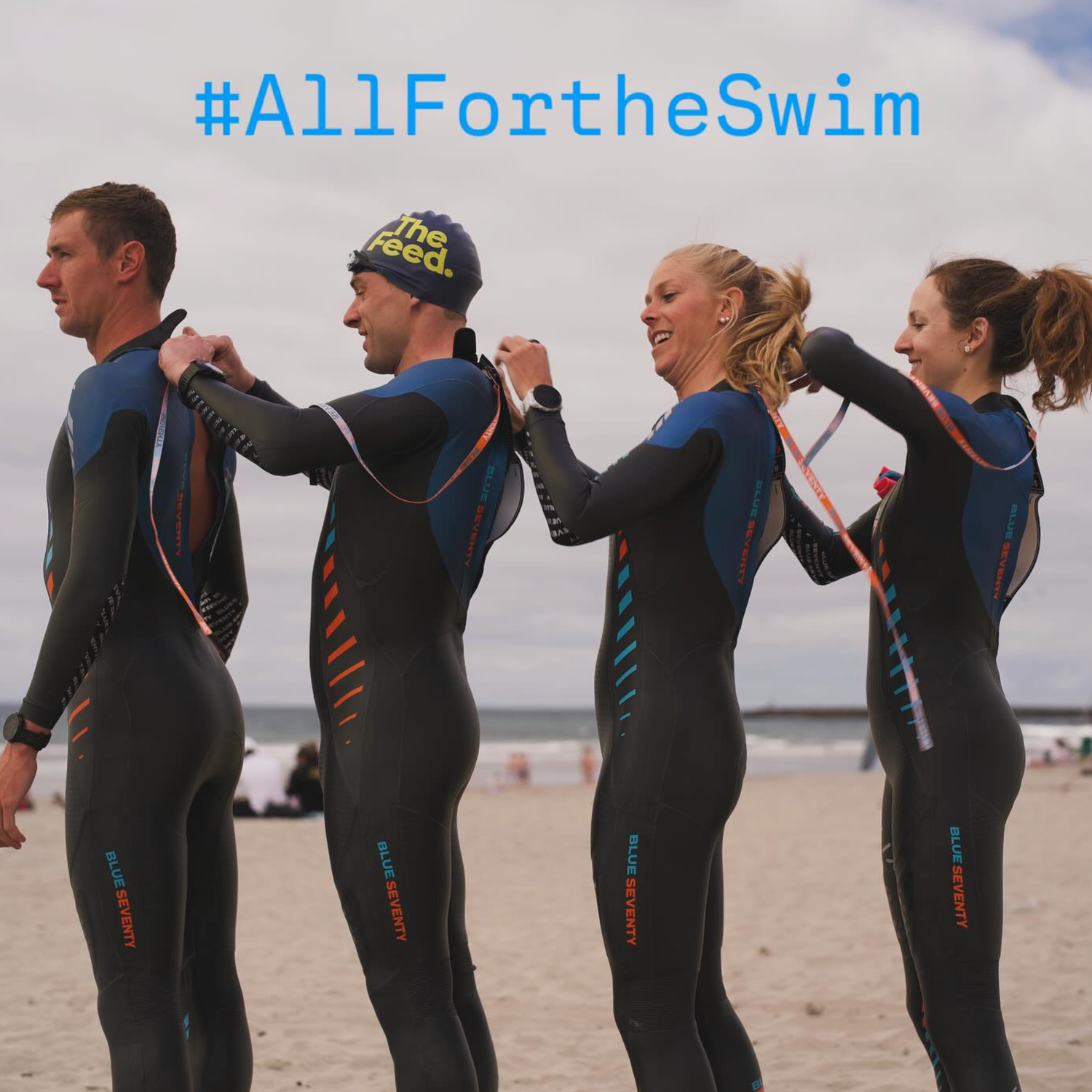
On land, a blueseventy wetsuit should feel snug. The wrists and ankles are part of that. The seals should sit flat without rolled or bunched neoprene. They should not leave deep red creases or make your hands or feet tingle. In the water, the suit relaxes a little as the neoprene and your body settle.
Try this check before you get in:
- Slide one finger under the cuff without stretching the neoprene. If it slips in easily and you can see a gap, the seal is too loose.
- Flex your wrist and ankle through a normal stroke. If the cuff opens a visible gap, the fit needs adjustment.
- If the cuff digs in and leaves a pale ring with numbness, the seal is too tight or the suit is not positioned correctly.
Why cuff fit affects speed
A gap at the wrist or ankle disturbs water flow and can create a small pocket that catches water. That pocket becomes more noticeable when you sight, push off a wall, or settle into a steady kick. A flat seal forms a cleaner junction between skin and suit, which is designed to reduce drag. The benefit is not dramatic on its own, but cuffs are one of those small fit points that add up over a race or training set.
How blueseventy approaches wrist and ankle fit
Blueseventy wetsuits are cut for swimming, not for surfing or diving. The fit is built around a streamlined body position and a full swim stroke. On women's suits, Femme Fit includes refined pattern design at the wrists and ankles, along with the bust, torso, and zipper length. The goal is a cuff that follows the shape of the wrist and ankle instead of binding through the stroke.
The neoprene also plays a role. Blueseventy wetsuits use Yamamoto neoprene in 38, 39, and 40 cell grades. Higher cell grades are more flexible, which matters at the wrist and ankle because those are small-diameter, high-movement areas. A cuff needs to move with the joint and still stay closed.
Seals are a common damage point
Many small tears near the cuffs come from fingernails during donning or removal. Use the pads of your fingers, not your nails. Work the suit up gradually and pull from the neoprene body rather than yanking the thin cuff edge. If you do get a small nick, clean the area, let it dry, and repair it with Aquaseal neoprene cement. Fingernail punctures are repairable, but they are not covered under the blueseventy warranty.
What to do if your cuffs gap or bind
Start with fit and donning before assuming the suit is wrong. A suit that is too large overall often shows it first at the wrists and ankles, because those are the narrowest points. If a cuff opens in the water, check whether the suit is bunched behind the knee or elbow. Sometimes pulling the suit up another inch changes the seal.
If the gap remains, use the blueseventy size chart and the Test Swim option. You can swim in the suit and still return or exchange it within 30 days if it is clean, dry, and unaltered. Pay attention to what the cuffs do at the start of each length. That feel in the water tells you more than any mirror check.