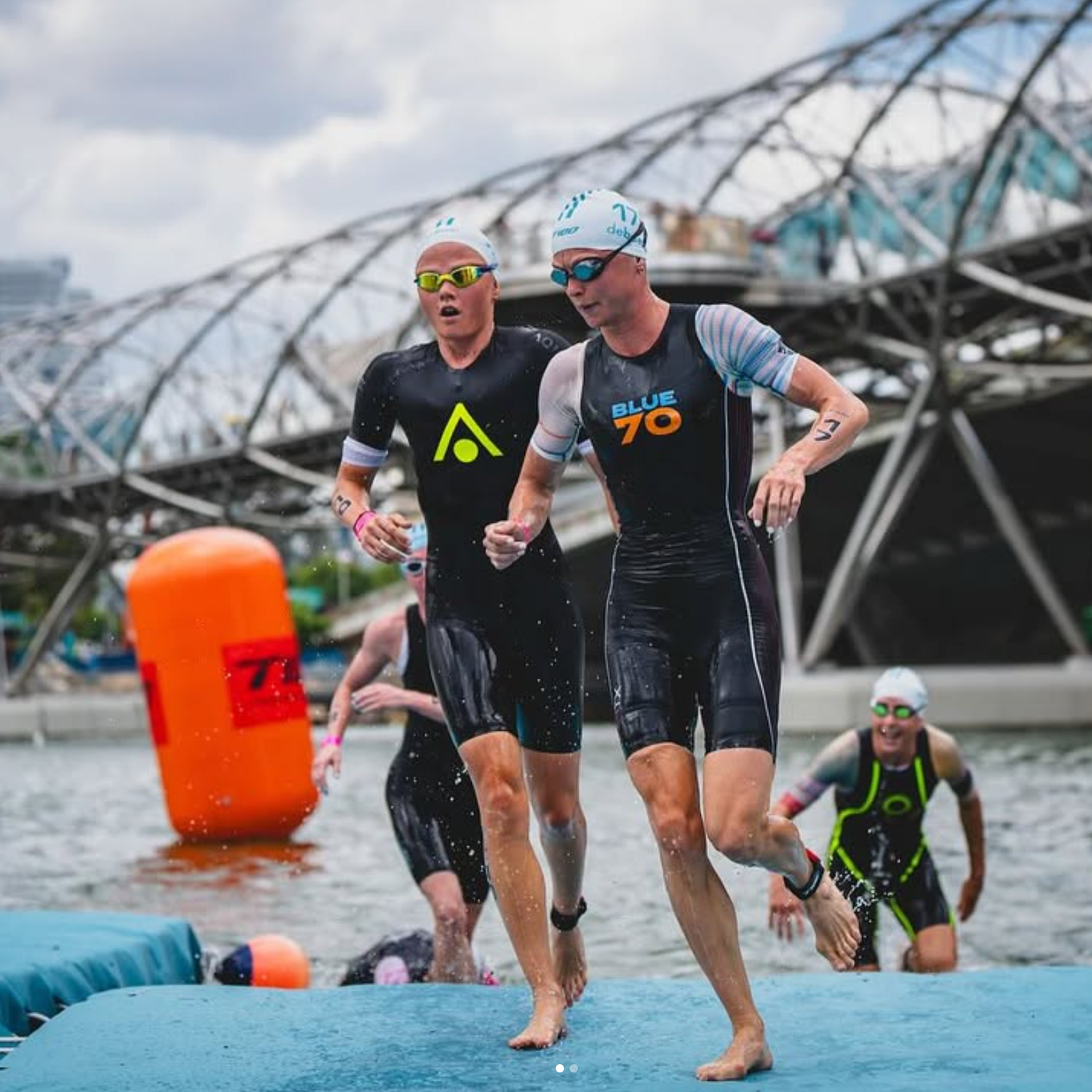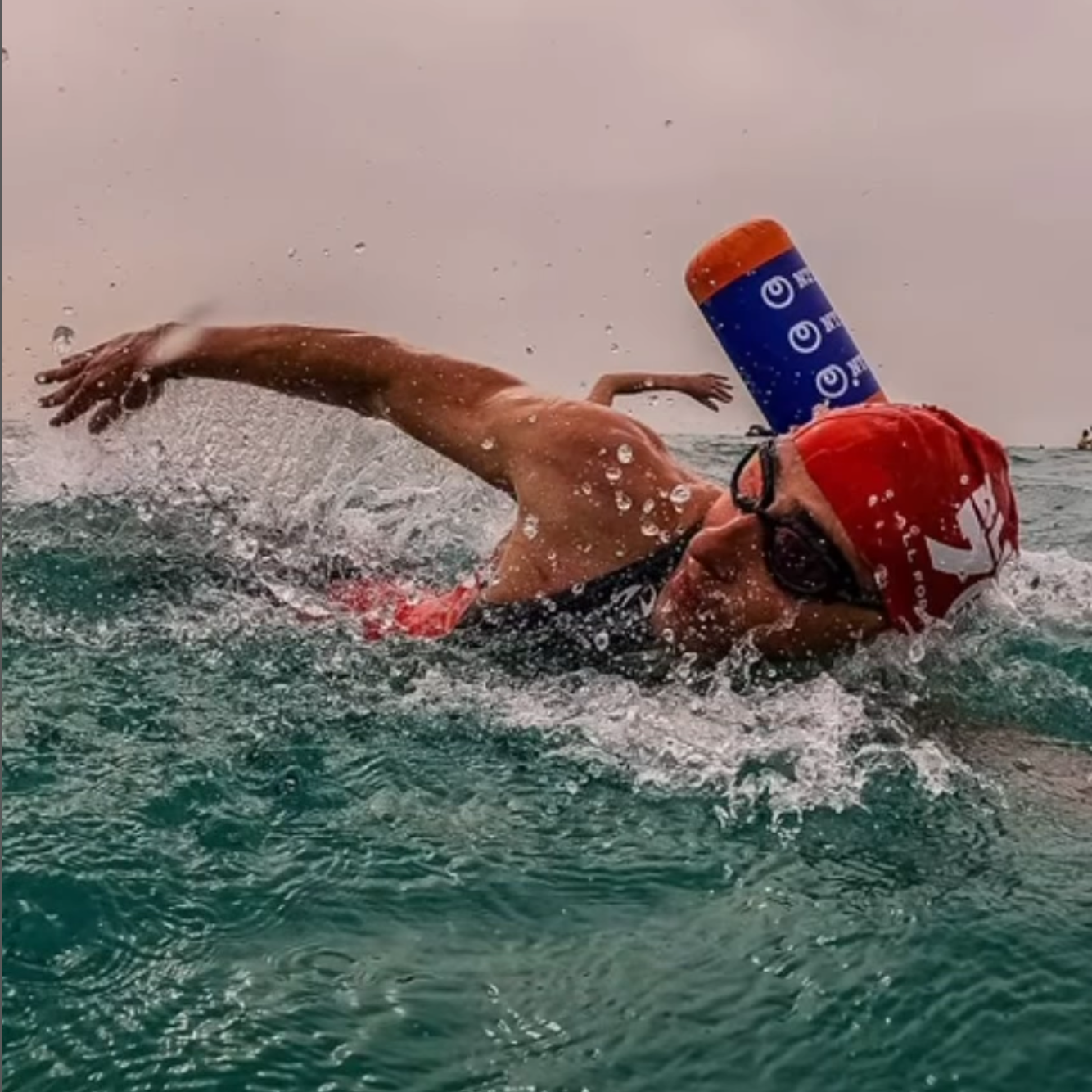



Water temperature affects wetsuit flexibility mostly through suit choice. A Blue70 full suit built for 50°F water has more material and thermal lining than a sleeveless suit built for 70°F water, so the two suits move differently around your shoulders and hips. You may notice a cold, dry suit feels stiffer before you get in. Once you enter the water and your body warms the thin layer inside the suit, the neoprene softens. The biggest difference in flexibility comes from selecting the right suit for the water temperature you actually train or race in.
Cold water changes the suit spec first
Below roughly 56 to 58°F, a purpose-built thermal suit is the right tool. The Thermal Reaction uses a full Zirconium jersey lining for added thermal protection. That lining and full coverage add material, so the suit feels less pliable than a thin race suit such as the Helix. In those temperatures, the added material is there because the priority shifts to thermal protection.
The neoprene itself is the bigger flexibility variable
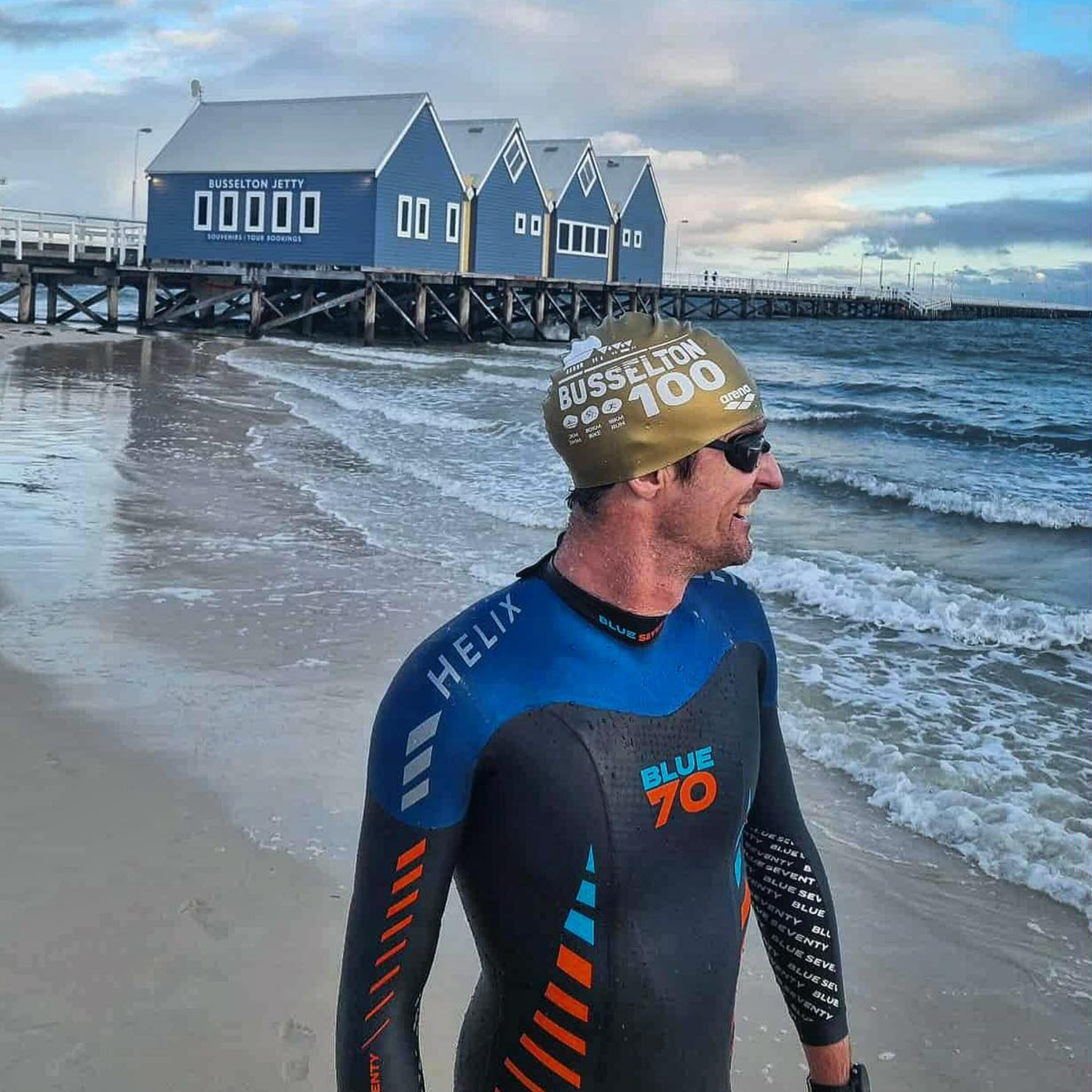
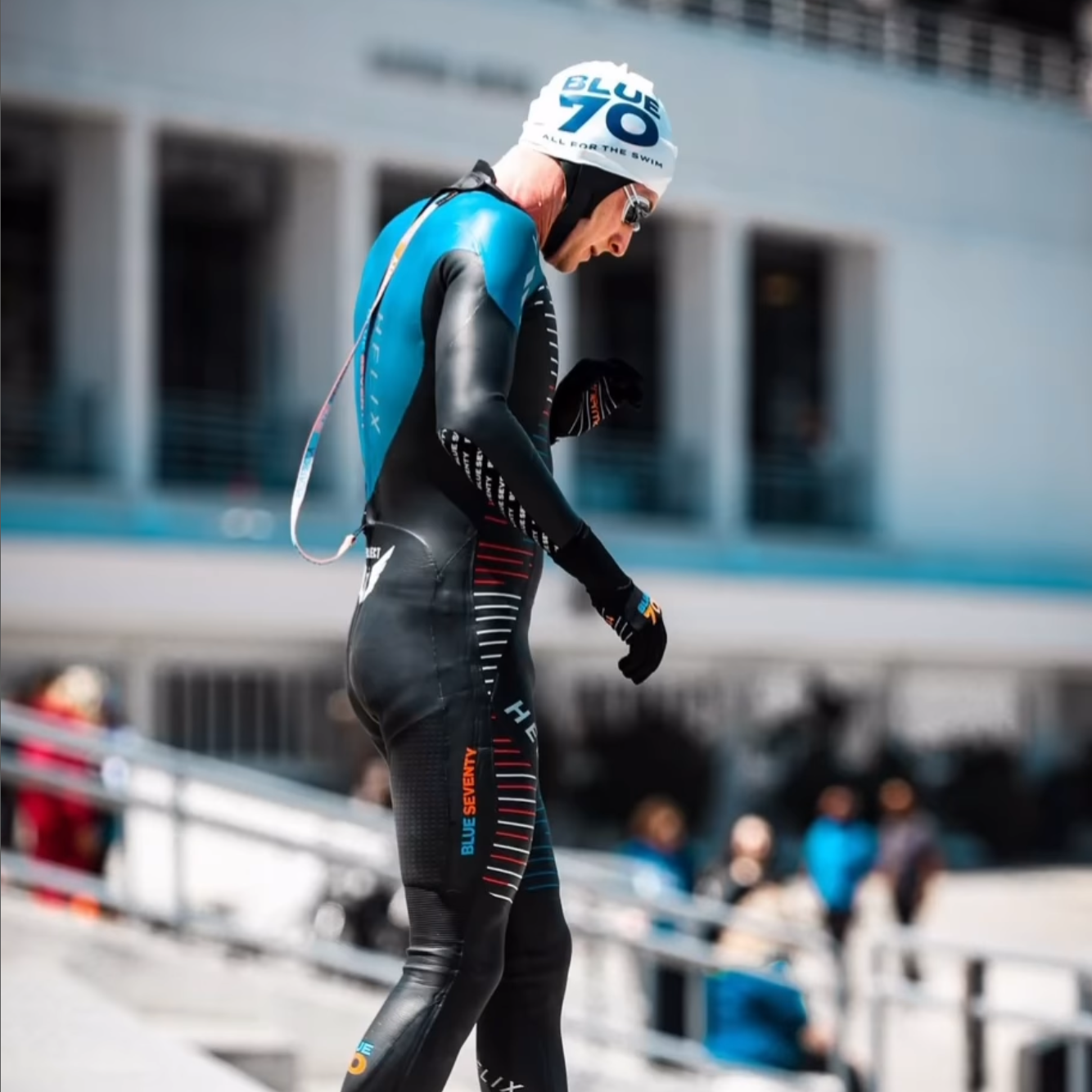
All Blue70 wetsuits use Yamamoto neoprene in 38, 39, and 40 cell. Higher cell numbers mean more flexibility. The Helix uses thin, high-stretch neoprene in the arms and shoulders, so it preserves arm freedom even in a full suit. The Reaction uses a higher-grade neoprene than the Fusion, which matters for frequent, longer swims where you still want shoulder movement on every stroke. Water temperature does not change the cell structure. Temperature changes the coverage and lining you need, and that design choice is what you feel.
Warm water changes flexibility by changing the cut
Above roughly 70 to 72°F, a full suit can be too warm over longer swims. That is when the Reaction Sleeveless or Glide Short John makes more sense. Removing arm coverage in a sleeveless suit leaves less material around the shoulders. A short john cut removes leg coverage, which changes hip freedom and reduces heat retention. In warm water, the shorter cut gives a freer feel because there is less material to move.
Fit and donning affect how the suit feels in cold water
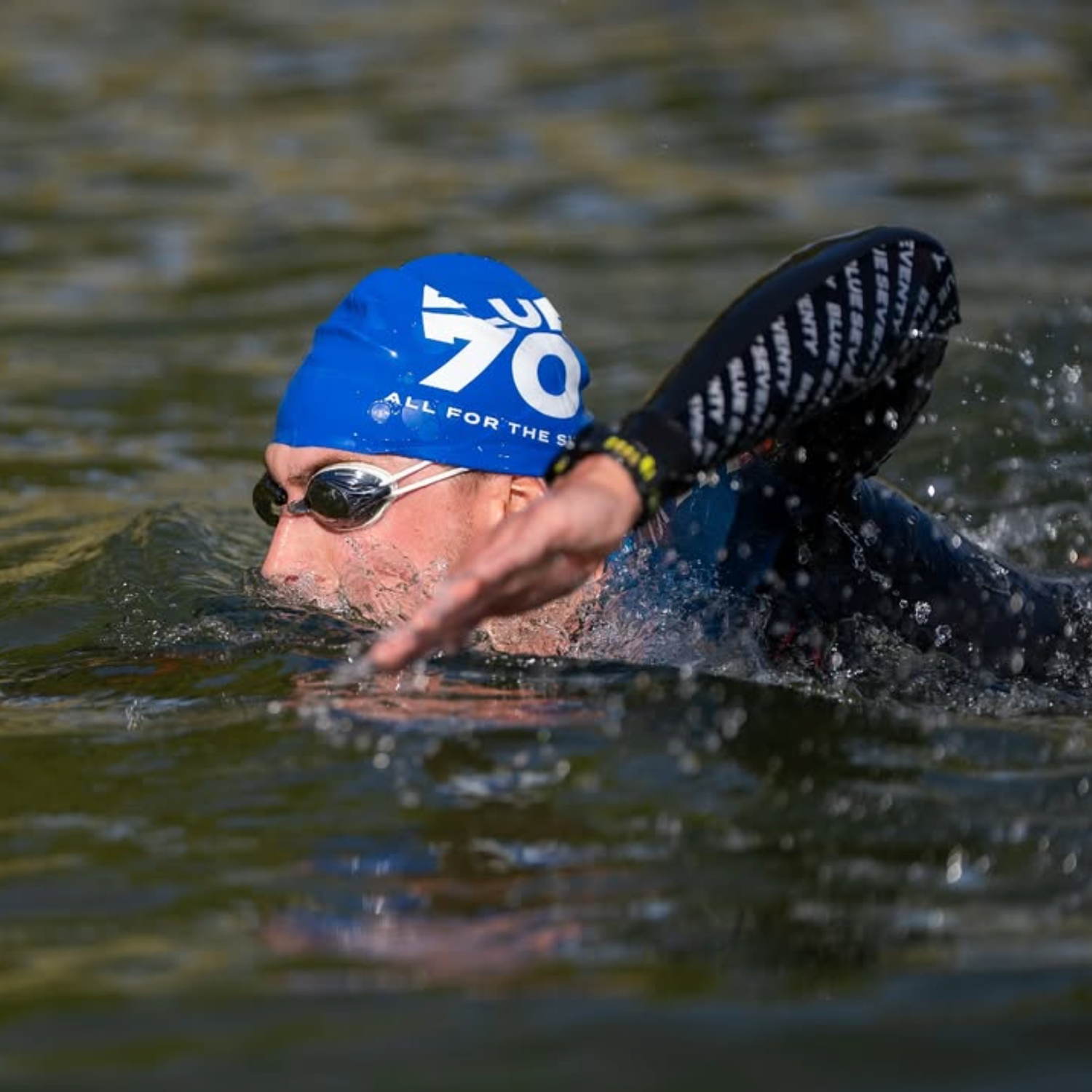
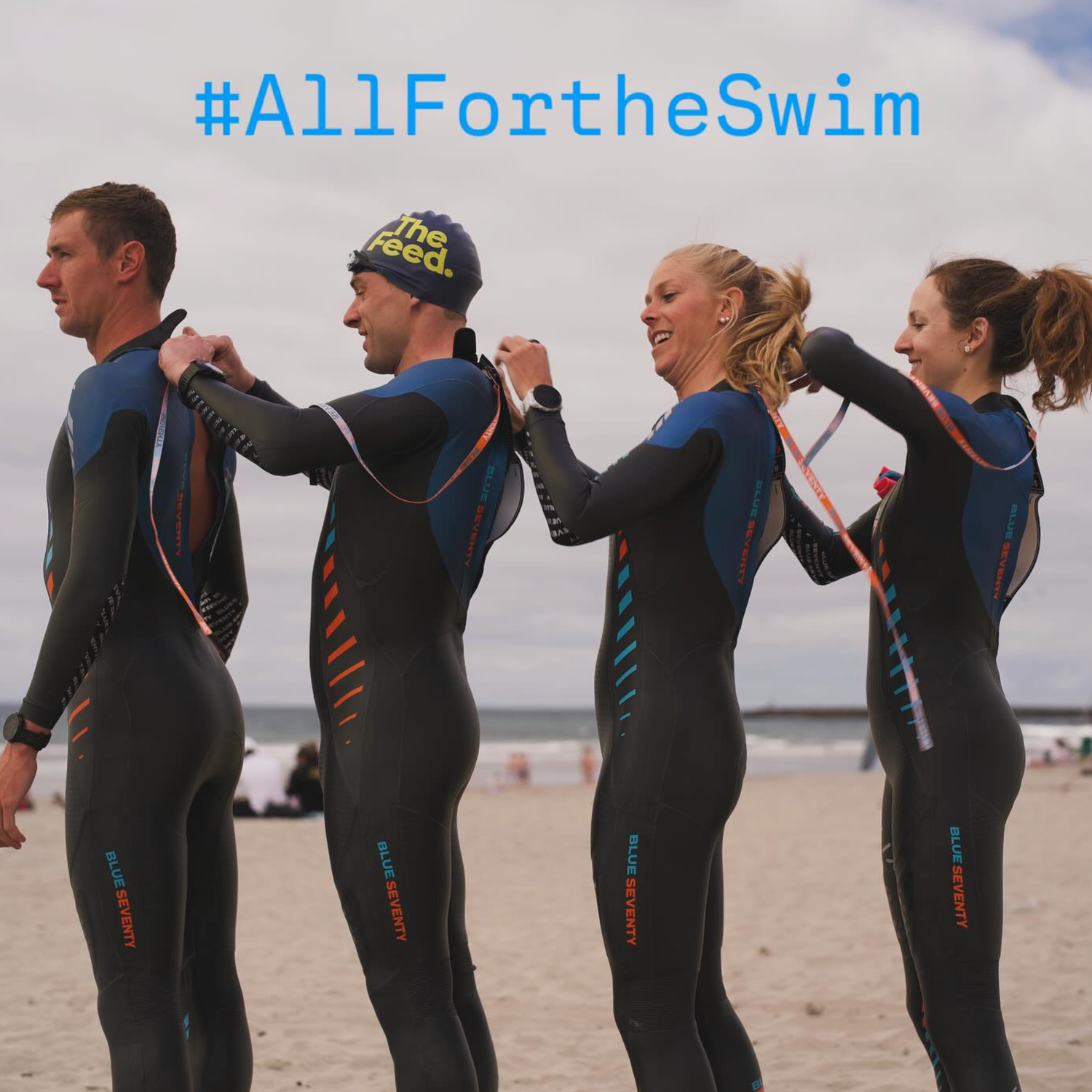
A suit that is too loose or not pulled up correctly feels restrictive before water temperature does anything. You want the suit snug on dry land, with no folds across the torso and with the shoulder panels seated flat before you get in. In cold water, a close fit lets the thin water layer warm quickly. That warming effect softens the neoprene and lets it move with your stroke. If the suit is too big, cold water flushes through and the suit can feel unstable rather than loose and free.
Care keeps flexibility consistent across seasons
Long-term neoprene flexibility depends more on care than on the water temperature on any single swim. Heat, chlorine, and salt dry neoprene and break down its cell structure. Rinse your suit in fresh water after every swim, dry it away from direct sun and heat sources, and keep it out of a hot car. If a fingernail or heel tear starts to spread, repair it with Aquaseal neoprene cement before the tear pulls the surrounding panel out of shape.
Temperature guide at a glance
- Below roughly 56 to 58°F: Thermal Reaction for full thermal lining and coverage.
- Between the cold and warm markers: Helix for race-day flexibility, Reaction for frequent longer swims, Fusion for shorter frequent swims.
- Above roughly 70 to 72°F: Reaction Sleeveless or Glide Short John when a full suit feels too warm.
If you are unsure which suit will feel right in your local water, start with the sizing tool and take a test swim before race day.