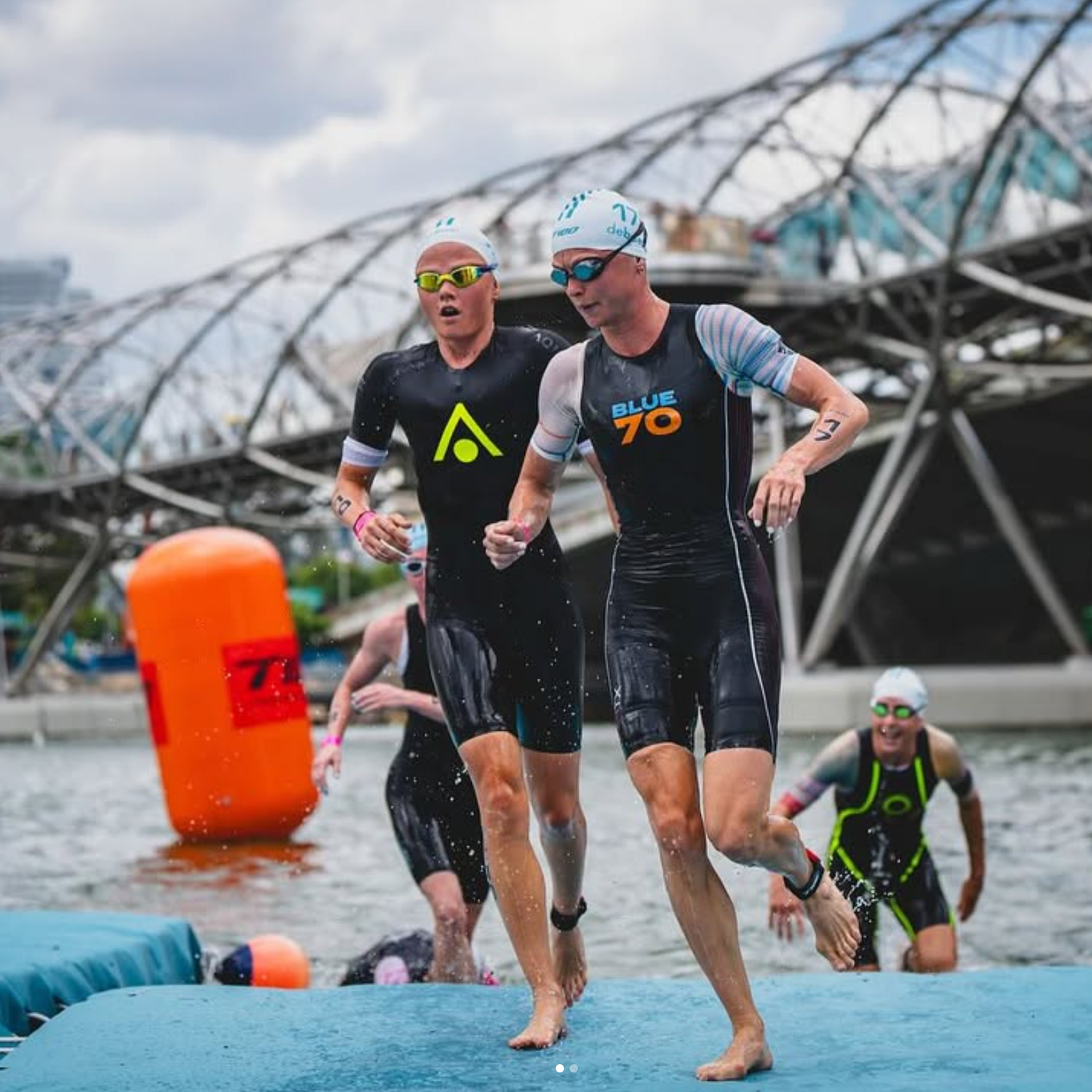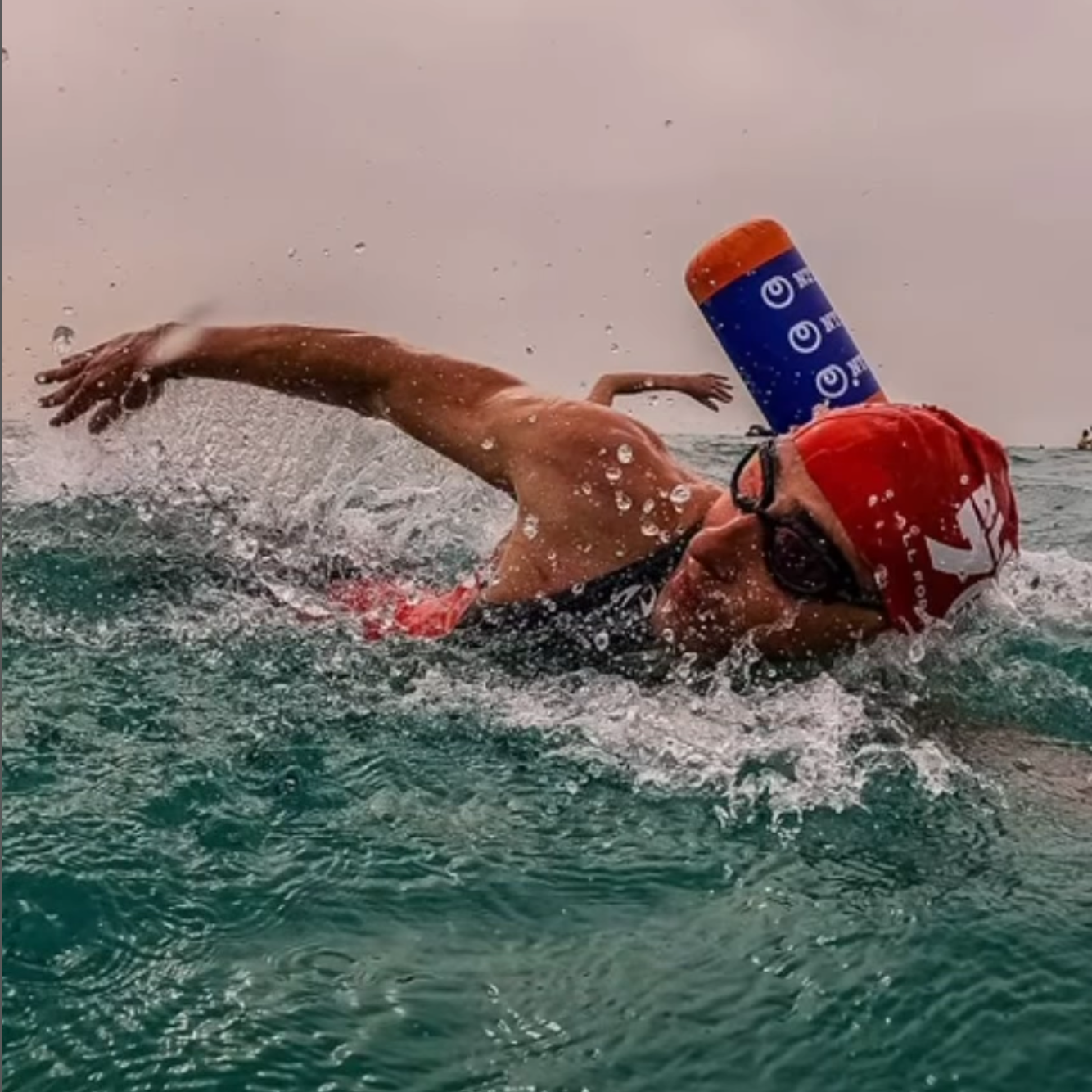



For open-water and triathlon swimming, a front zip puts the closure on your chest and allows more shoulder and neck freedom. A back zip runs up the spine and is easier for many people to get into, but it can bind across the upper back if the torso length or shoulder fit is off. Warmth and buoyancy stay the same. What changes is how the zipper behaves during a freestyle stroke.
No wetsuit is waterproof. A Blue70 swim suit is designed to let a thin layer of water in, which your body warms. The zip helps limit that flushing. The front or back placement changes how the suit closes, not whether it keeps you dry.
Where the zipper sits changes how the suit moves
With a back zip, the stiff closure runs vertically along your spine. When you extend your arm overhead, the fabric across the shoulders has to stretch around that line. If the suit is too short in the torso or too tight in the chest, the back zip becomes a restriction point. You feel it as early shoulder fatigue.
A front zip moves the closure to your chest. The panels across the upper back can stretch more evenly through the stroke. That is one reason front-zip designs are common in triathlon and open-water suits. Blue70 builds every suit with Yamamoto 38, 39, or 40 cell neoprene. Higher cell numbers mean more flexibility, but a poor back-zip fit can cancel out that material advantage.
Entry and exit: back zip is easier, front zip is faster
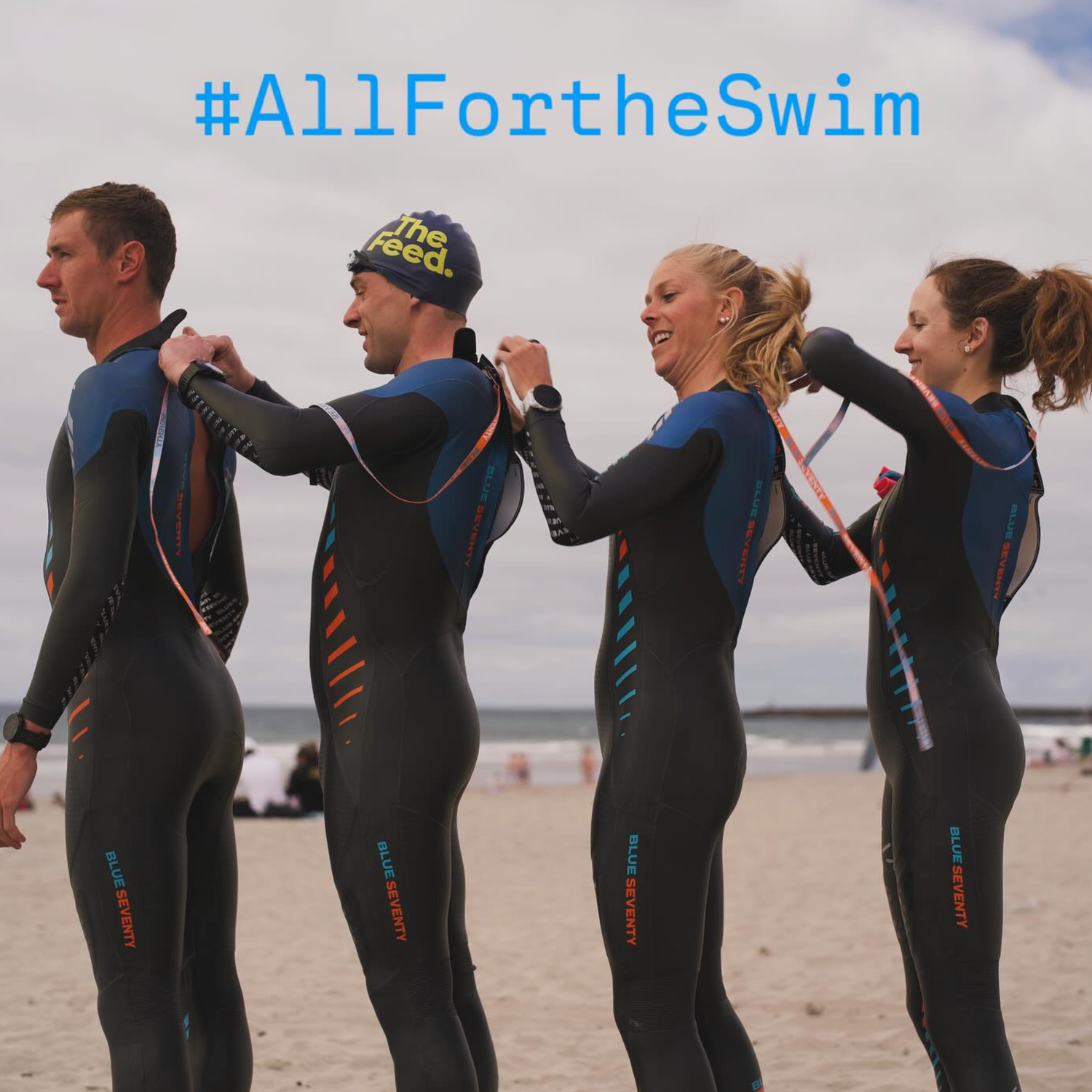
Back zips win on dry land. You step into the legs, pull the suit up, and use the long cord to close the back. A front zip requires reaching the chest closure and often a short zipper pull. For home use or first-time wetsuit wear, a back zip is more forgiving.
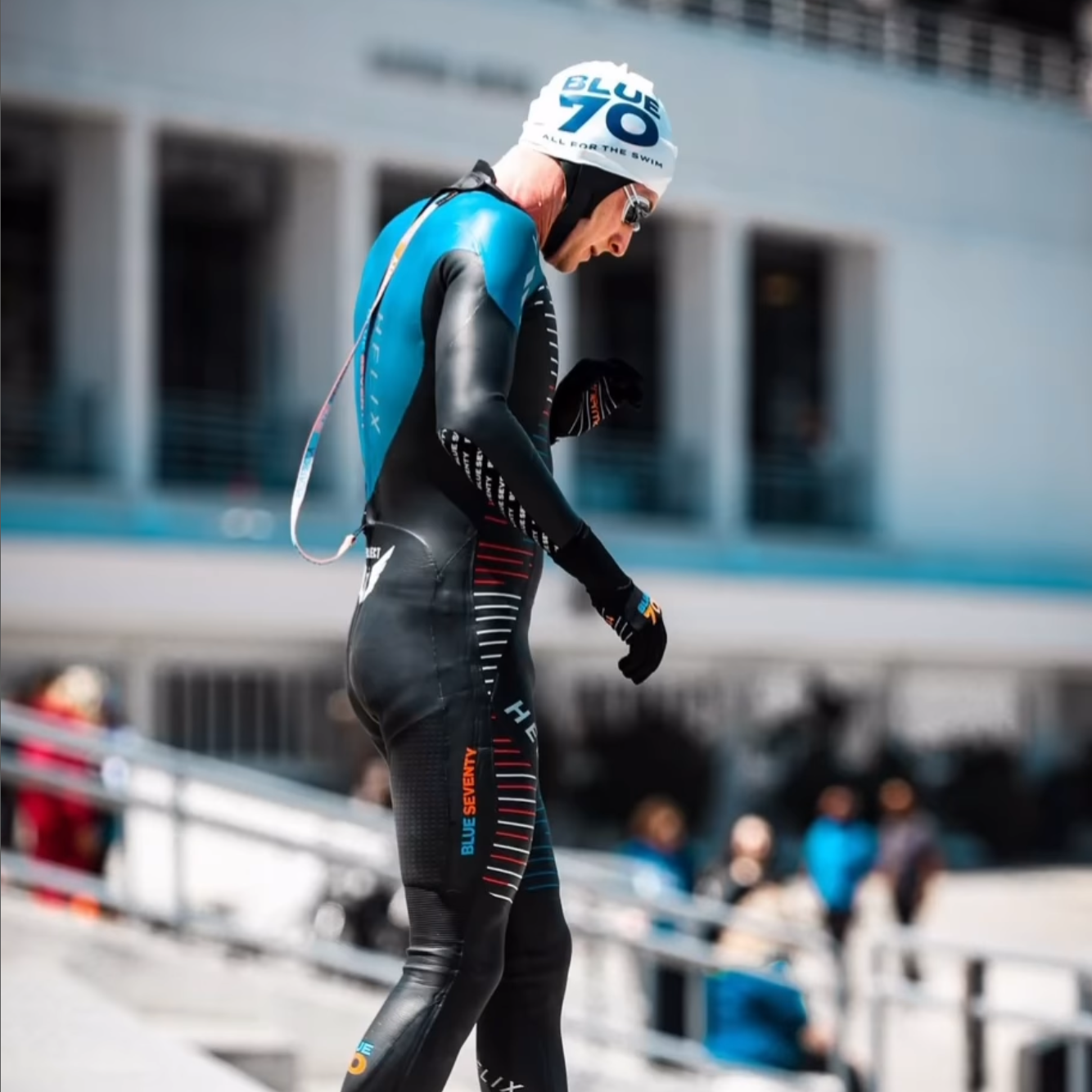
In transition, the front zip often feels faster. The pull is in front of you and easy to find while running. You do not need to reach behind your neck or ask a volunteer for help. Blue70's Femme Fit sizing adds extended zipper length for easier entry and faster transitions, and that detail matters more than front or back placement because entry difficulty usually comes from the hips and torso, not just the zip.
Neck comfort and shoulder fatigue
A high or stiff neckline can chafe when you rotate to breathe. Front-zip suits often place the neck closure lower or angle it away from the throat. Blue70 redesigned the Fusion in 2021 with a lower-sitting neckline for comfort without losing the neck seal. If you have a back-zip suit, the first fit check is whether the neckline sits flush without gaping and without pressing on your larynx.
Shoulder fatigue comes from fit. Any suit should feel snug on land and more comfortable in the water. Before buying, check that you can raise your arms overhead without the zipper pulling across the back or the chest.
How to choose in the Blue70 range
The zip type should not be your first decision. In the Blue70 line, model choice follows your training load and water temperature.
- Helix: race-day suit with the thinnest, most flexible neoprene. It is not ideal for heavy training use.
- Reaction: frequent and longer open-water swims.
- Fusion: shorter frequent swims, with a redesigned lower neckline.
- Thermal Reaction: cold water below roughly 56 to 58 degrees Fahrenheit.
- Sprint: entry-level full suit.
Once the model fits your week, the zip becomes part of the fit test. If the suit has a back zip, spend extra time on the shoulder panel. If it has a front zip, check the chest closure and neckline while you breathe and rotate.
Test the zip before race day
The best way to compare front and back zip comfort is to swim in the suit. Blue70's Test Swim policy lets you swim in a wetsuit and still return or exchange it, provided it comes back clean, dry, unmodified, and with tags and accessories. That means you can test a front-zip suit in a pool or open water and feel whether the closure pulls during your stroke.
After swimming, rinse the zip with fresh water, especially after salt or chlorine. Do not force a stuck zipper. The correct fix is to ease the fabric away from the zipper teeth and pull the tab steadily, not yank the neoprene.
For most swimmers, front zip suits give better shoulder and neck freedom. Back zip suits are easier to get into. The suit's warmth and buoyancy do not depend on the zip. Choose the Blue70 model that matches your training week, then use the zip fit test to decide between two suits in your size.
Dive in: start with the sizing tool, then take the suit for a Test Swim. It will not affect your return.