


Straight swimming in open water is a navigation skill, not a strength problem. You can own a powerful stroke and still drift off course because sighting, body position, and stroke symmetry steer you more than effort does. A Blue70 wetsuit changes how your hips and legs sit in the water. You still control the line. Use the suit to hold a high, stable body position, then build a sighting rhythm that keeps you aimed at the next fixed point.
Start with a Fixed Line, Not Just a Buoy
Before you put your face in the water, choose two fixed landmarks that line up with your intended direction. A tall tree, a roof peak, a flagpole, or a building edge works if it sits behind the first buoy. A single buoy is hard to judge at distance, and a moving boat or paddler gives you a moving target. Pick a back marker and keep your line on that marker as you swim. When you reach the first turn, reset on the next fixed landmark. In a race, walk or swim the start area so you know where the turn buoys sit relative to shore landmarks. Do this before every swim.
Sight by Lifting Your Eyes, Not Your Head
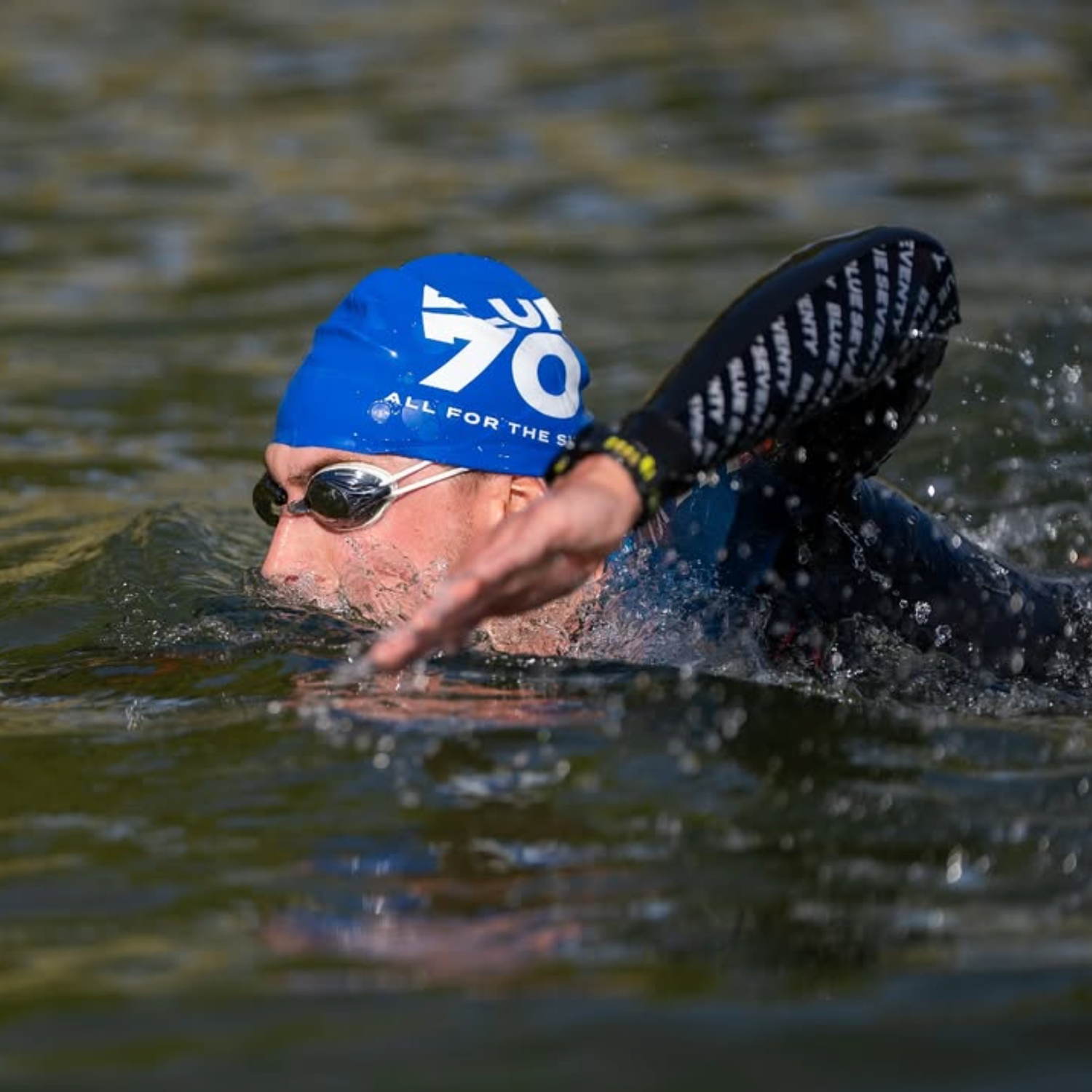
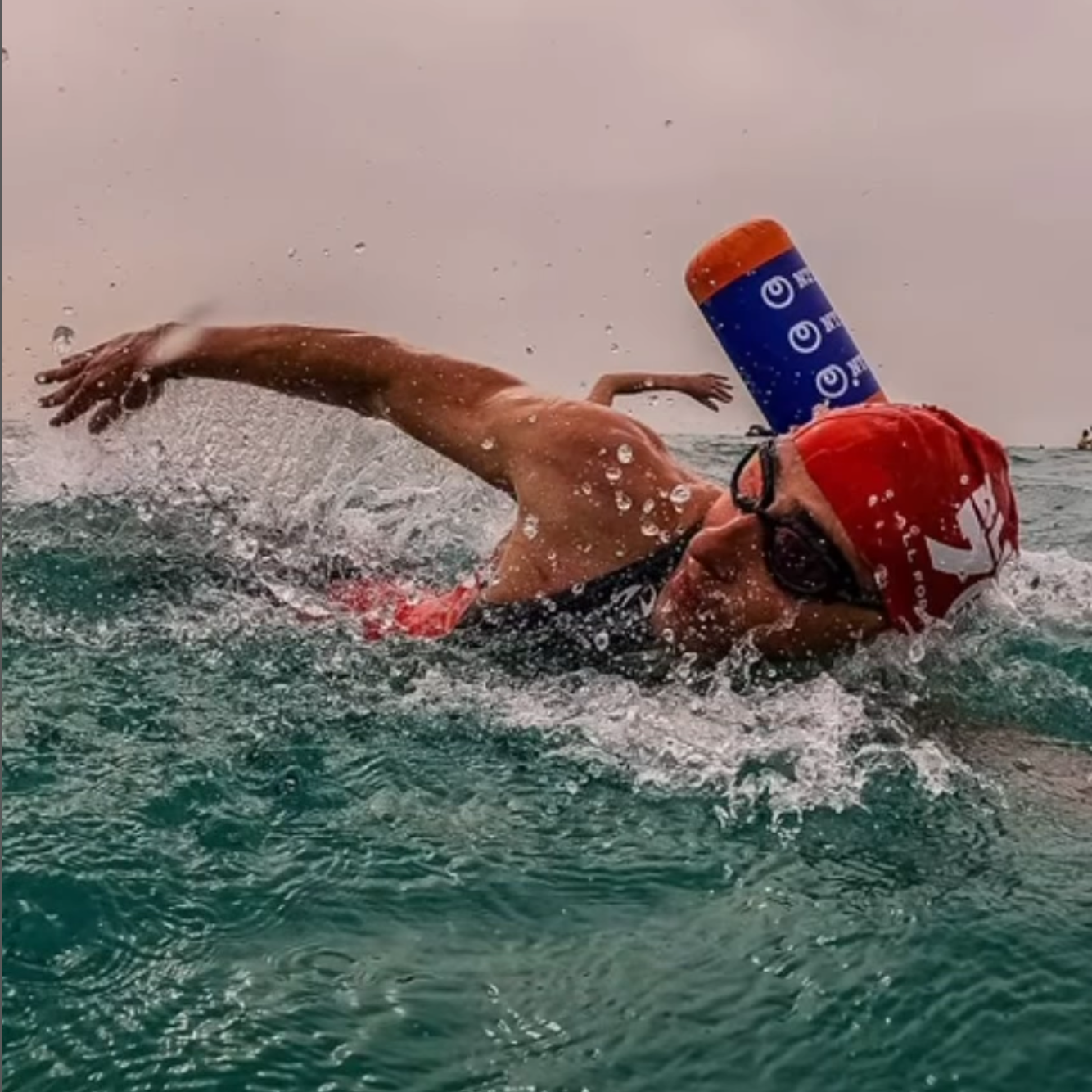
Most swimmers sight by pulling their whole head up, which drops the hips and legs. The wetsuit's buoyancy helps offset that drop, but it cannot fully correct a jerky sighting motion. Instead, press your chest lightly and roll your eyes forward like a crocodile, keeping your chin near the water. This gives you enough vision to check your line without breaking your body position. In calm water, sight every 6 to 10 strokes. In chop or current, sight every 4 to 6 strokes. The rhythm matters more than the exact count; pick a count you can hold for a full race or training lap. If you look up on every breath, you are over-sighting and losing rhythm. A lower neckline helps here. Blue70's Fusion redesign lowered the neckline for comfort without losing the watertight seal.
Balance Your Stroke from the Hands Through the Hips
Open water drift usually starts in the arms. If one hand crosses the centerline or the other hand exits wide, each stroke rotates you slightly. Over 400 meters, that small rotation becomes a big arc. Check your hand entry in a pool: left hand should enter in line with your left shoulder, right hand in line with your right. If either hand enters near your nose or across your chest, you are steering yourself sideways. Breathing side also matters. Swimmers who breathe only left tend to drift left because the right arm often shortens while the head turns. Practice bilateral breathing in the pool so that in open water you can breathe toward the conditions or away from chop without changing your line. A restrictive shoulder makes the drift worse because you shorten one arm to avoid the pull. Blue70 suits use flexible Yamamoto neoprene, and the Helix puts thin, flexible neoprene in the arms and shoulders to allow a full, even rotation.
Let the Wetsuit Lift Your Hips, Then Stop Fighting It
A Blue70 wetsuit adds buoyancy through the torso and legs, which helps keep your hips and heels high without kicking hard. That is good for straight swimming because a high, stable body line resists sideways wobble. If you kick too hard to compensate for sinking legs, you create extra rotation and use energy you need for sighting and navigation, so relax your kick, keep your core gently engaged, and let the suit do the lifting. The Helix includes LIFT buoyancy panels placed to support the body line, and the LIFT Buoyancy Short offers focused lower-body lift for training without a full suit. A suit that is too big will hold water and shift as you swim; a suit that is too small will restrict your shoulder and force uneven strokes. Get the fit right first.
Swim the Water, Not Just the Map
Current, wind, and chop move you even when your stroke is balanced. A straight GPS line between two buoys is not always the shortest line when a cross current pushes you sideways. To hold your intended track, aim slightly into the current. This is called a ferry angle, and it keeps your actual path over the ground straight while your body points slightly off-line. The same applies to wind chop. If waves push you left, sight on a point slightly right and let the conditions work against the drift. Do not try to overpower the water; adjust your aim and keep your stroke relaxed. Check your line more often in rough water, because drift happens faster and landmarks disappear behind swells.
Drills to Practice Straight-Line Swimming
- Pool centerline drill: swim 10 strokes with your eyes forward and your focus on hand entry, then stop and check if you are still on the black line. Repeat until you hold the line consistently.
- Sighting countdown: swim 300 meters in open water and sight every 6 strokes. Count strokes in your head to keep rhythm. If you drift, shorten to every 4 strokes.
- Landmark resets: swim from one buoy to the next, pick a fixed shore landmark behind the second buoy, and check it every 4 to 6 strokes. Do not chase the buoy itself; chase the landmark.
- Unilateral breathing sets: in the pool, breathe only right for 100 meters, then only left for 100 meters, then alternate every 3 strokes. This exposes asymmetry and gives you options for waves.
Fit and Flexibility: What Blue70 Brings to the Line
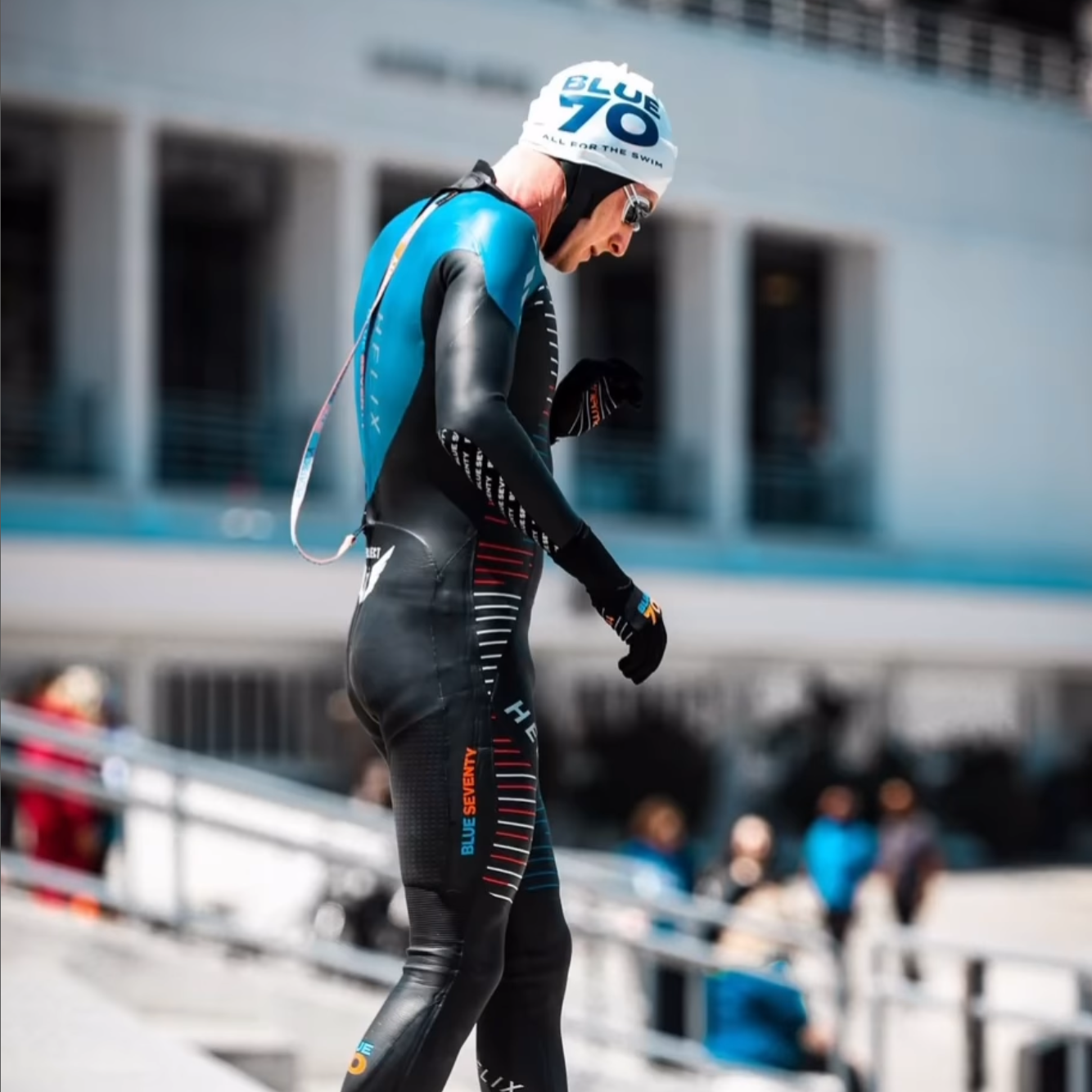
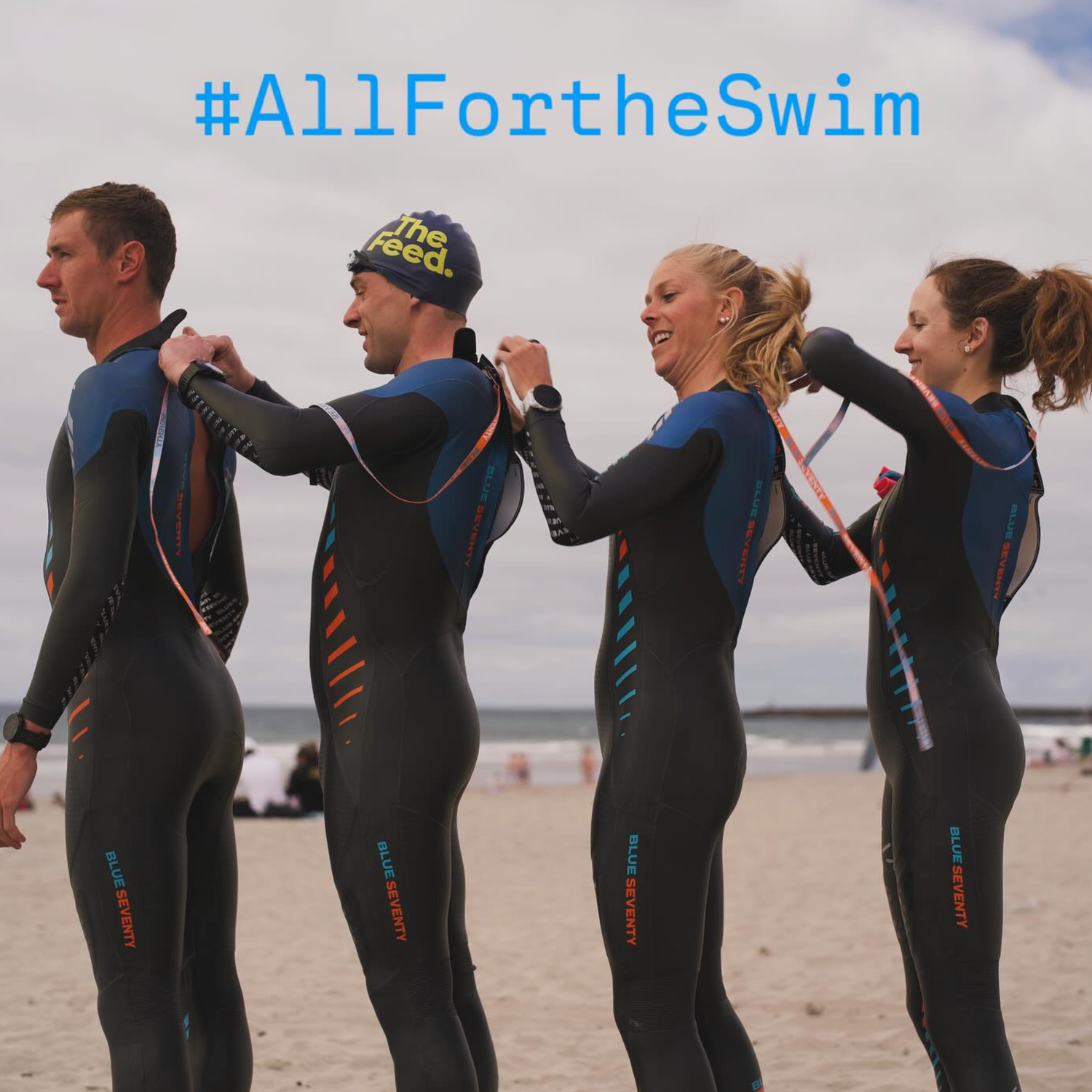
A swim-specific Blue70 wetsuit is cut for swimming, not surfing or scuba, so the arms and shoulders move through a full swim stroke. That matters for straight swimming because any restriction causes you to shorten or rotate unevenly. The Fusion provides a lower neckline for comfort and a watertight seal without forcing your chin high. The Reaction uses a higher-grade neoprene than the Fusion, suited to weekly open water training and longer swims. The Helix uses thin, flexible neoprene in the arms and shoulders and LIFT panels for body position. Women's Blue70 wetsuits use Femme Fit, which refines the pattern in the bust, torso, wrists, and ankles, and lowers the neckline. A suit cut for your shape stays put, so you spend less energy correcting and more energy holding your sight line. If you are unsure of fit, use the Blue70 sizing tool or visit a dealer. Blue70 allows you to swim test a suit and still exchange it if it's clean, dry, and unmodified.
Fix your sighting rhythm and your fit, and you remove the two biggest causes of drift. Start with the size chart, then take the suit for a test swim. Find your size in 30 seconds.