


Most snags are repairable with the right adhesive and a little patience. The fix depends on whether you have a pulled thread that only affects the outer jersey, or a hole that goes through the neoprene and needs to be closed and sealed.
Assess the snag first
Rinse the damaged area with fresh water and pat it dry with a clean towel. Look at the snag under good light.
If only the outer jersey thread has pulled, and the rubbery neoprene underneath is intact, you don't need adhesive. Snip the loose thread close to the surface with small, sharp scissors. Don't cut into the neoprene itself. A trimmed surface thread won't affect how the suit works.
If the snag has opened a clean puncture or a short slit through the material, move on to the repair steps. If the suit is new and you haven't worn it, contact support before repairing it yourself. A manufacturing issue is handled differently from a fingernail puncture.
Repair a small puncture or slit
Small punctures from fingernails and light scrapes are common around the ankles and wrists. You can fix these at home.
You need:
- Fresh water and a clean cloth
- A toothpick or small disposable applicator
- Blue70 Aquaseal neoprene cement
- Plastic wrap or wax paper
Steps:
- Clean and dry the damaged area completely. Sand, salt, chlorine, and body oil weaken the bond.
- Lay the suit flat on a clean surface. Slide a piece of plastic wrap or wax paper inside the suit behind the hole so the cement doesn't glue the front and back together.
- Apply a small amount of Blue70 Aquaseal to the edges of the tear or into the puncture. Use the toothpick to press the edges together or fill the hole. A thin application is easier to work with than a thick blob.
- If the tear is a slit, press the edges together and wipe away excess cement before it skins over.
- Let the suit sit flat and undisturbed for the full cure time listed on the Blue70 Aquaseal packaging. Don't speed it with a hairdryer, heater, or direct sun. Heat damages neoprene.
- After curing, flex the repaired area gently. It should bend with the suit. If a stiff ridge remains, you used more adhesive than needed. The repair can still work.
All Blue70 wetsuits use Yamamoto neoprene in 38, 39, and 40 cell. Higher-cell neoprene is more flexible, so the adhesive has to stay pliable. Blue70 Aquaseal neoprene cement is made for that. Household super glue, rubber cement, and shoe glue harden and crack when the suit stretches. Don't use them.
When to skip the glue
Skip the DIY repair if the tear runs along a seam, opens near the zipper, or is longer than a couple of centimeters. Don't pull it closed and glue it under tension. Email a clear photo to us@blueseventy.com. The support team can tell you whether it's a warranty issue or a repair job.
Blue70 wetsuits carry a one-year warranty against manufacturing and material defects for the original owner. Fingernail punctures, heel tears, zipper damage from force, and normal wear are not manufacturing defects. Those are at-home repairs, not warranty claims. Non-swimming use, such as surfing or kayaking, voids the warranty.
Prevent the next snag
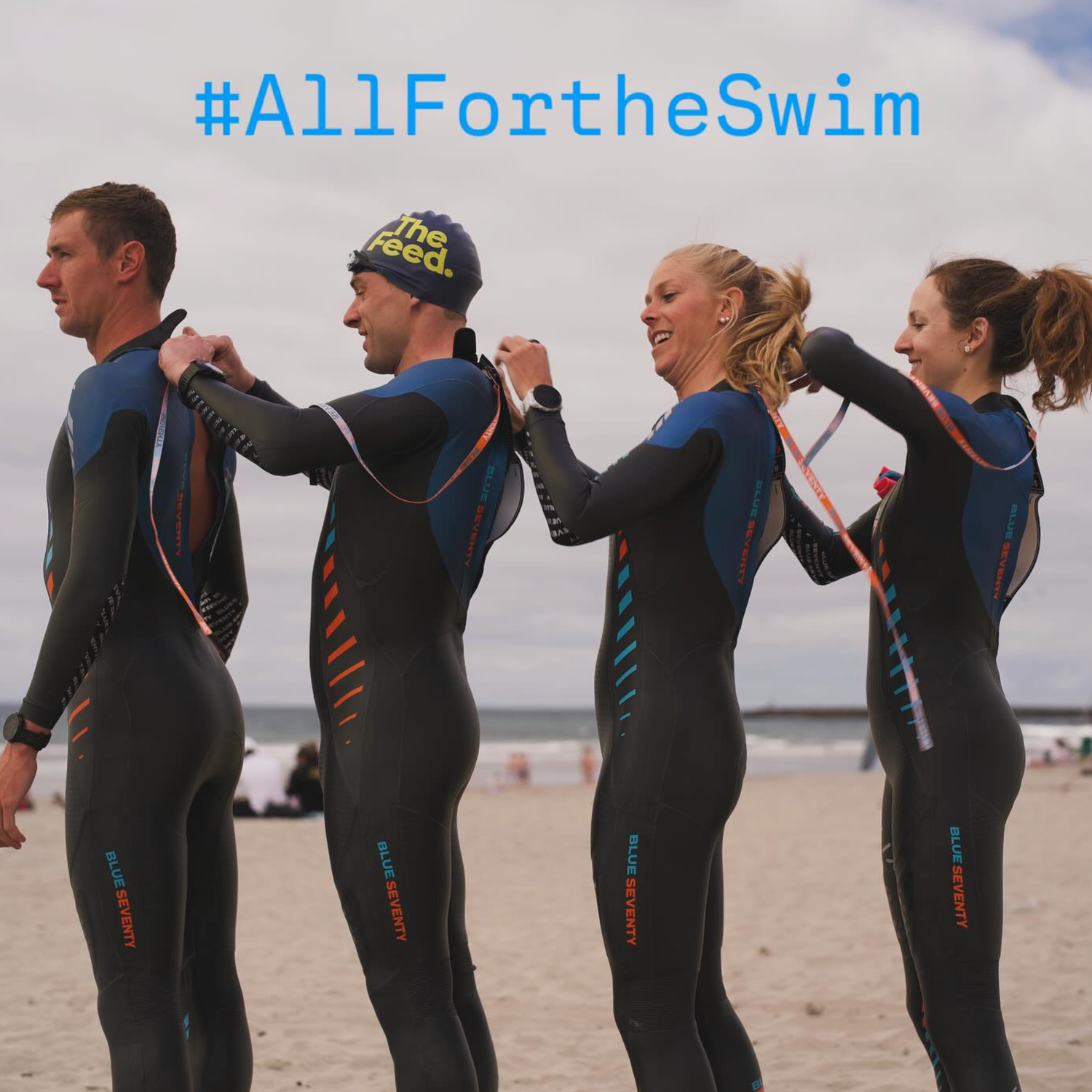
Most snags happen when a wetsuit is pulled on with fingernails. Use the pads of your fingers, not the tips. Work the suit up in small gathers instead of yanking. Keep timing chips, race belts, and hook-and-loop straps away from the neoprene.
Rinse the suit in fresh water after saltwater or chlorine. Dry it away from direct heat. Store it flat or loosely folded once it is dry. A small tube of Blue70 Aquaseal in your swim bag ends most race-weekend panic.
For a tear that needs more than a dab of cement, email us at us@blueseventy.com with a clear photo. We'll help you sort it.
Happy swimming.