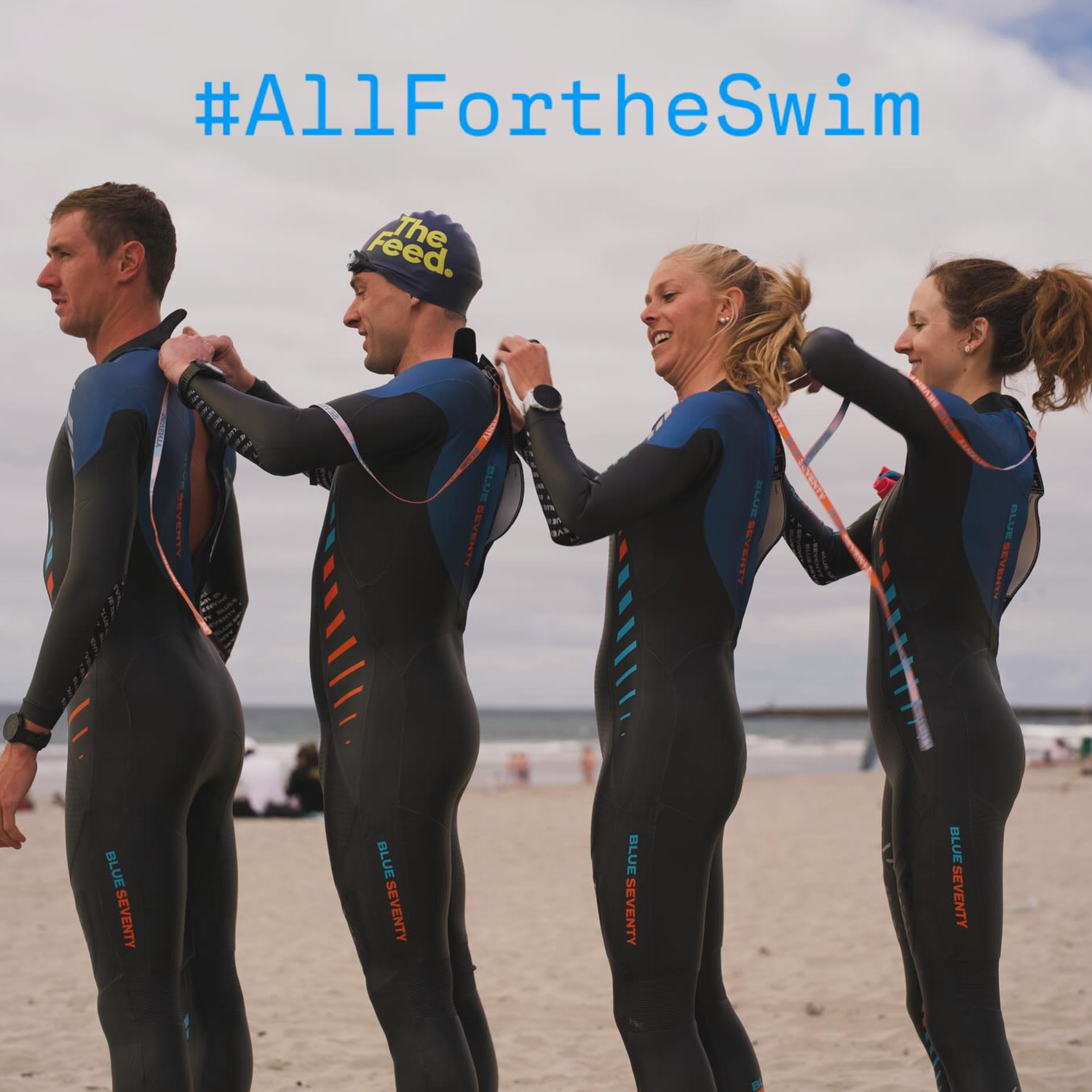



Direct sun is hard on neoprene. Protecting a Blueseventy wetsuit from UV is mostly a routine: keep the suit shaded when it is not in the water, rinse it with fresh water after each swim, dry it inside out out of direct light, and store it somewhere cool and ventilated. You don't need special sprays or covers; you need habits.
Why UV breaks down neoprene
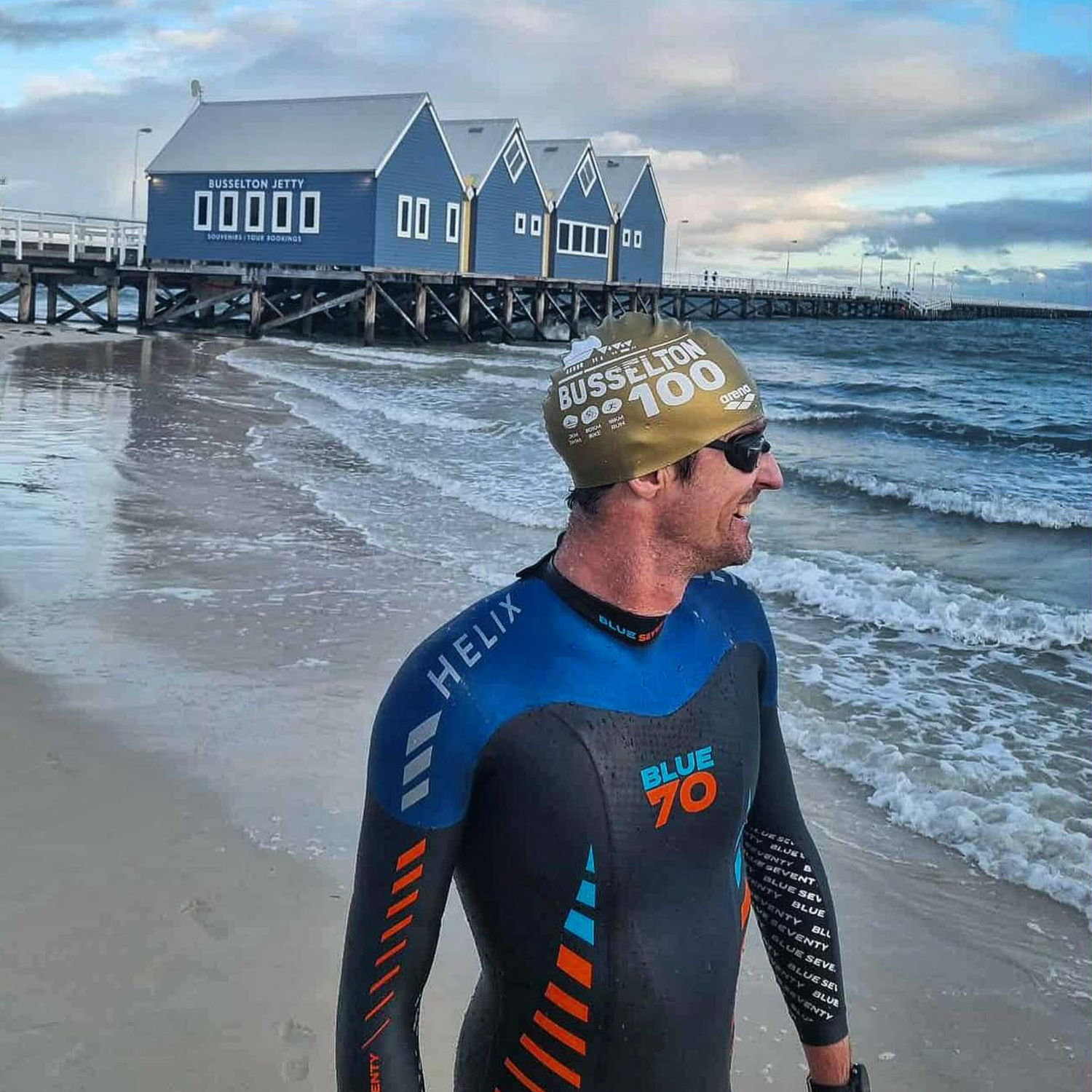
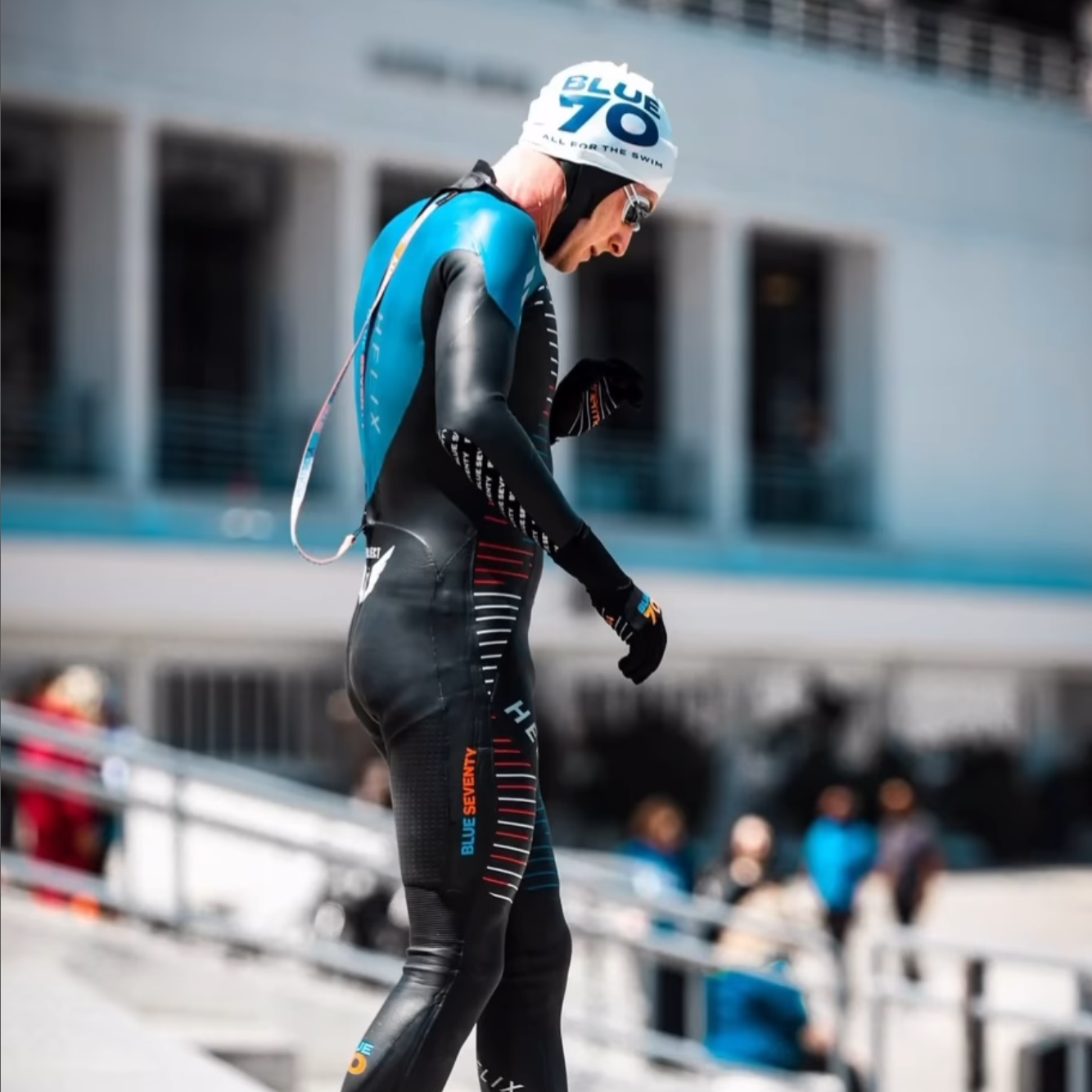
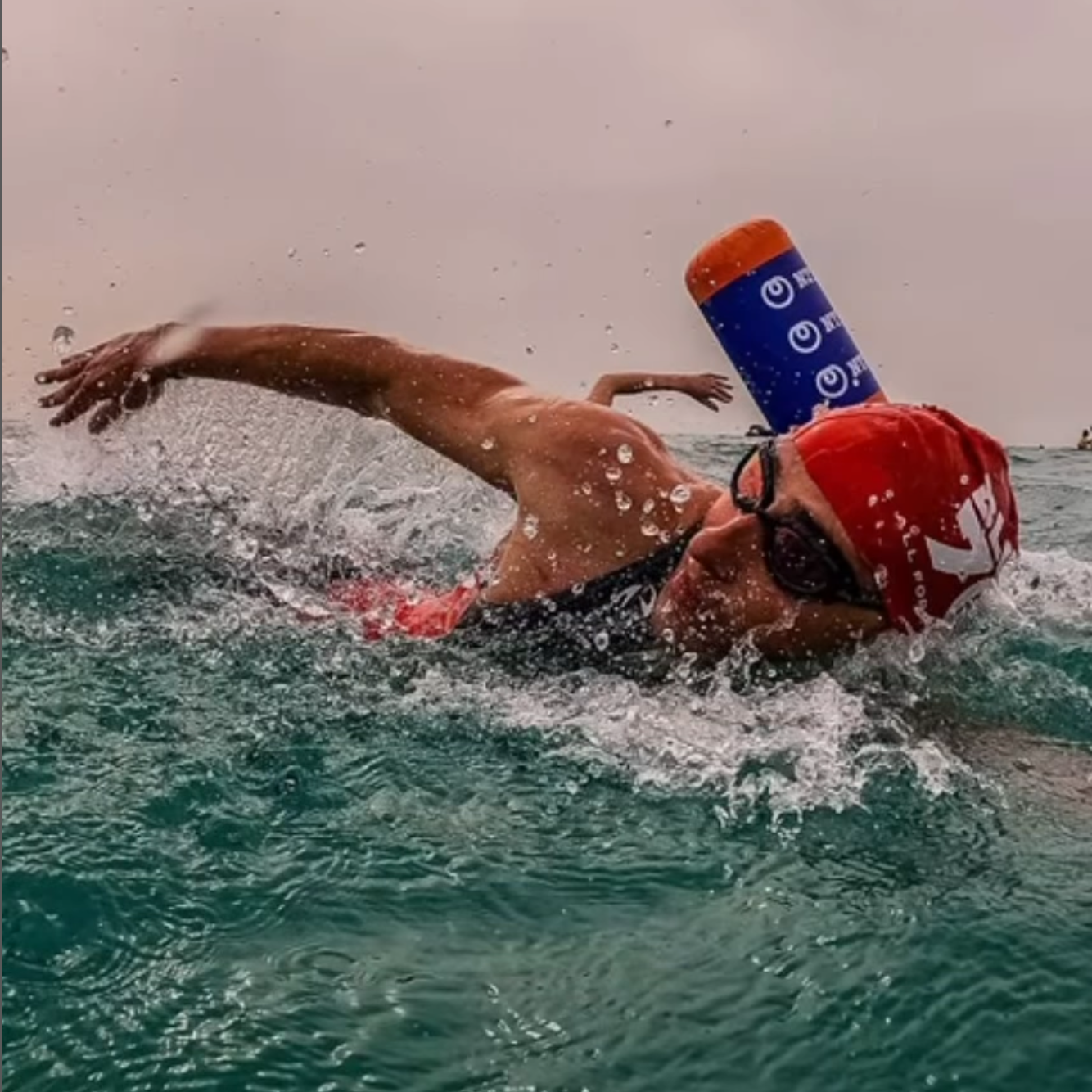
Neoprene is a form of rubber. Ultraviolet light damages the material's structure over time, causing it to fade, dry out, and lose its stretch. The damage appears first where the sun hits directly while you swim: the upper back, shoulders, and outer arms. Blueseventy suits use Yamamoto neoprene in 38, 39, and 40 cell grades. The higher cell count refers to flexibility, not UV resistance. A thin racing suit like the Helix needs shade between warm-up and race start as much as a training suit like the Fusion.
Rinse after every swim
Salt and chlorine left in the neoprene dry the material and make UV damage worse. Rinse the suit inside and out with fresh water right after you leave the water. Don't wring or twist it. Rinse the zipper and pull cord too. Plain fresh water is enough. Skip detergents and bleach. A quick rinse removes the residue that otherwise bakes into the suit when it dries in the sun. If you can't rinse right away, keep the suit wet and covered.
Dry in shade, not on a sunny deck
The worst place to dry a wetsuit is draped over a fence in direct afternoon sun while the suit is still full of water, because the outer layer gets hit by UV and heat at the same time. Turn the suit inside out for the first hour, or swap halfway through drying. Hang it over a wide rail or a padded suit hanger, not a thin wire hanger. If you are at a race or training site, cover the suit with a wet towel or keep it in a shaded transition spot. A wet towel is better. Never put a wetsuit in a dryer or over a radiator.
Avoid the hot car and sunny window
A closed car in warm weather gets hot quickly, and that heat dries out neoprene on its own. Don't leave a wet wetsuit in a closed car, even for a couple of hours after a race. If you have to transport it, put it in a ventilated mesh bag in the trunk or on a seat out of direct light. Keep it off the rear window shelf.
Store indoors and loose
Once the suit is completely dry, store it indoors, away from windows. Fold it loosely over a wide hanger or roll it in a mesh bag. Avoid folding it the same way every time; repeated creases can become weak spots. Don't store it in a sealed plastic bin if there is any chance the suit is still damp. Trapped moisture encourages mildew and damages the neoprene.
Race-day habits that protect the suit
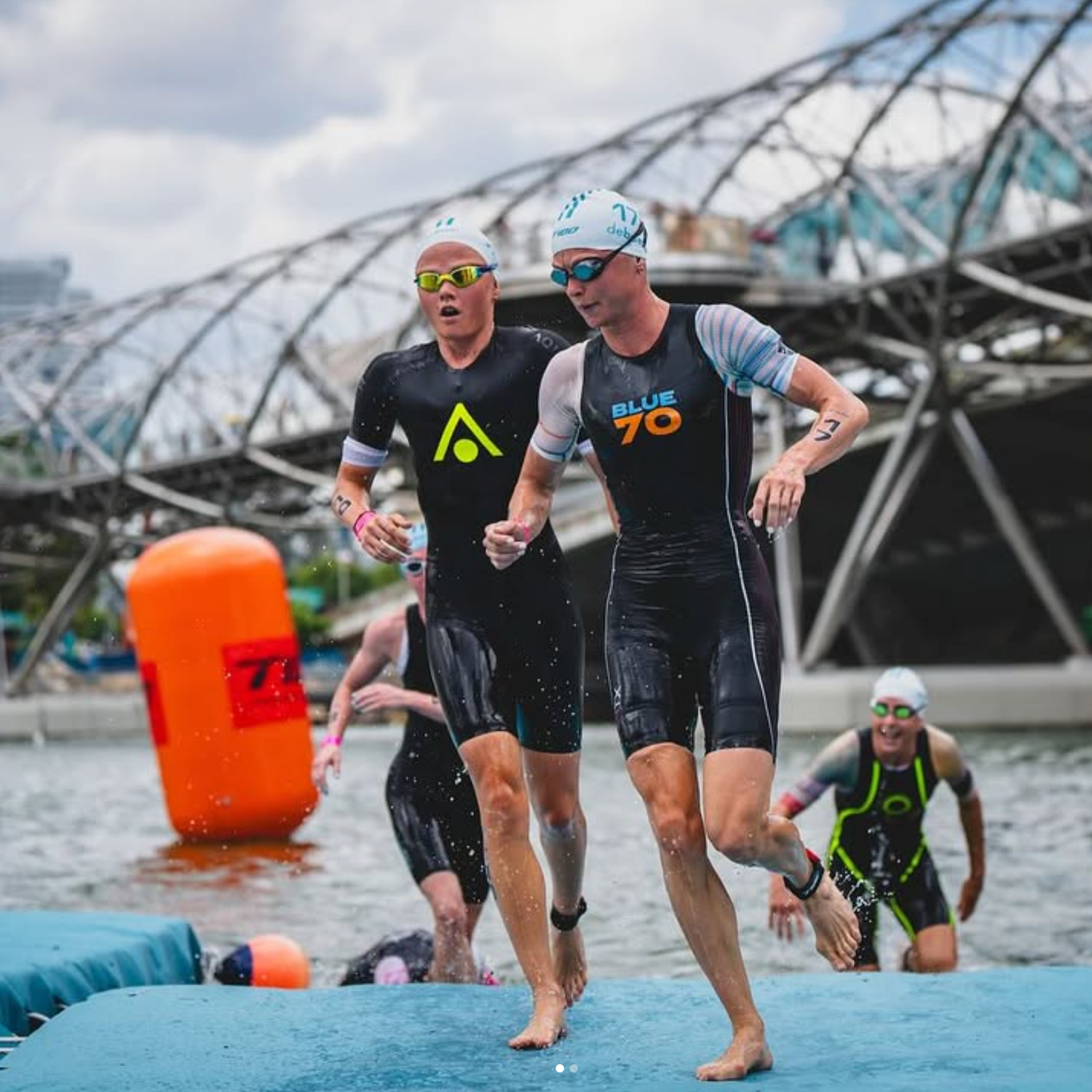
At a triathlon, the suit spends more time in the sun than the swim itself: before the start, in transition, and after the finish. Bring an extra towel or a light cotton shirt to cover the suit if it has to sit in transition. Wet the towel before you leave the swim start. Evaporation keeps the suit cooler than dry fabric alone. Keep the suit out of direct sun while you pull on your goggles and number belt.
Signs of UV damage and when to patch
UV damage appears first as fading on the upper back, shoulders, and outer arms. The neoprene often feels dry, stiff, or slightly crinkly when you flex it. You can patch small nicks and cuts with Blueseventy's neoprene cement. Deep cracks where the material has lost its stretch mean the suit is done. Cement will not restore flexibility. If you catch the damage early, shade and proper storage keep it from spreading.
Sun protection for a wetsuit comes down to four steps:
- Rinse the suit with fresh water after every swim.
- Dry it out of direct sun, inside out first.
- Cover it during races and transport.
- Store it fully dry in a cool, ventilated place.
If you have a small tear or fingernail puncture from handling, Blueseventy's wetsuit care range includes neoprene cement for quick repairs. For questions about a suit that has gone stiff or cracked, email us at us@blueseventy.com. Happy swimming.