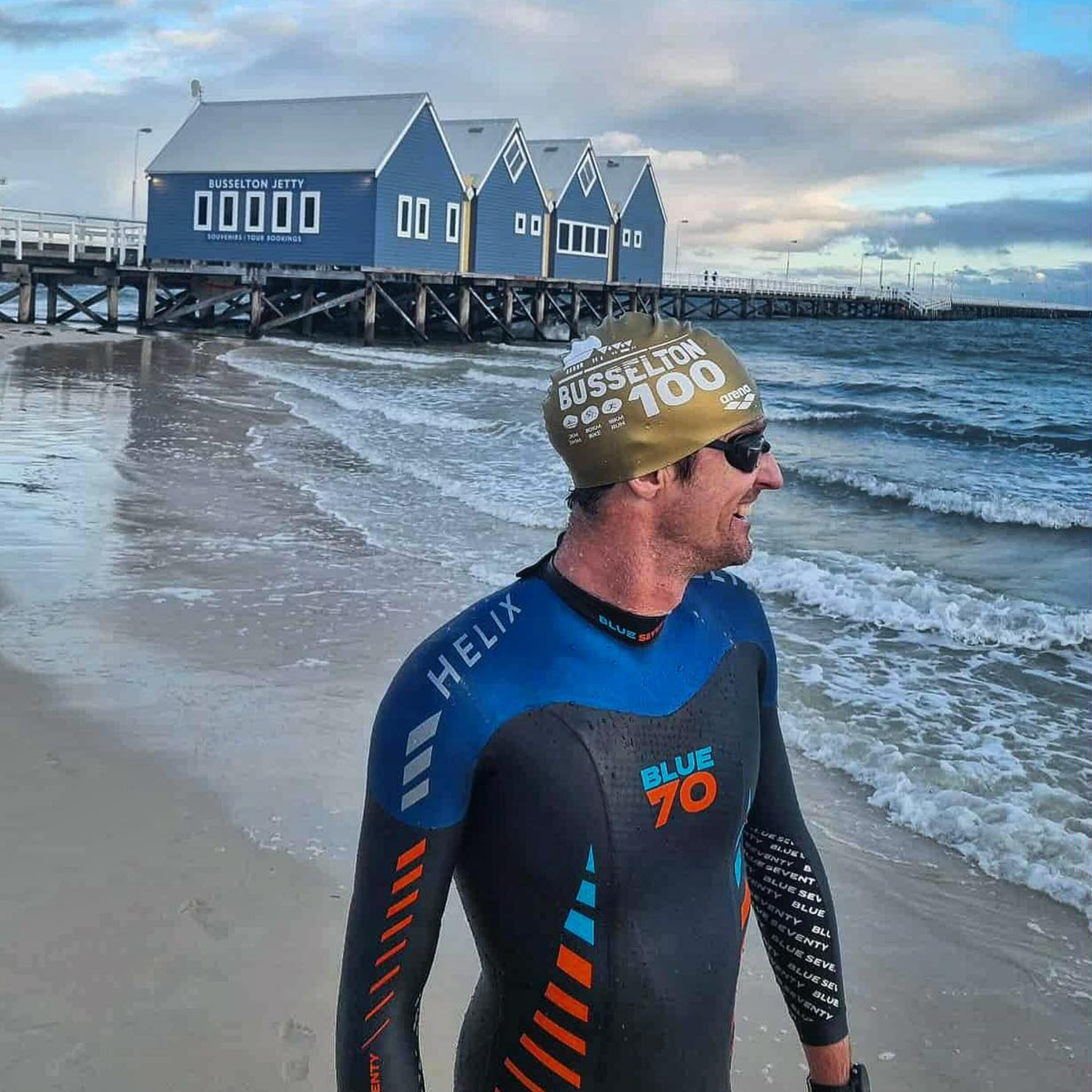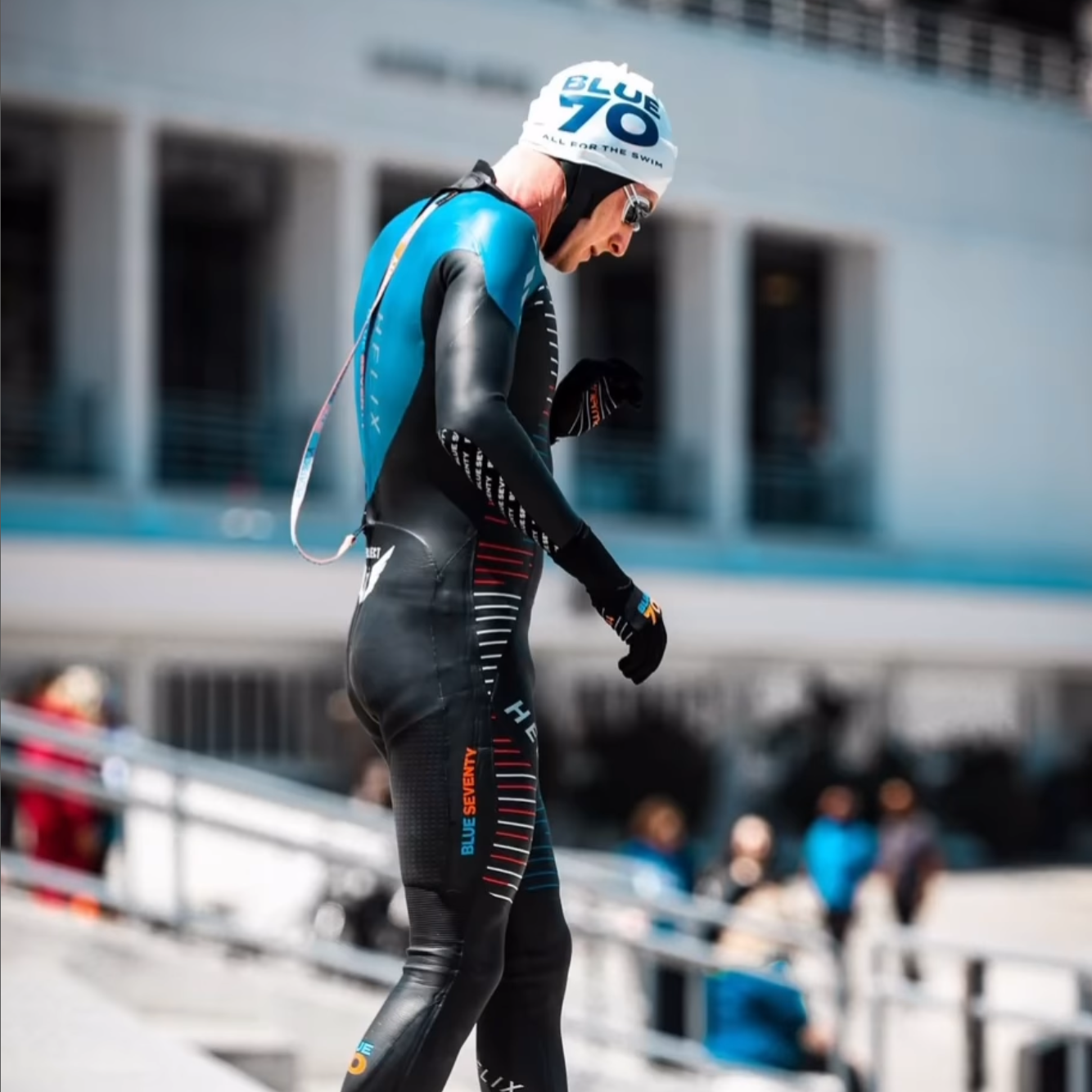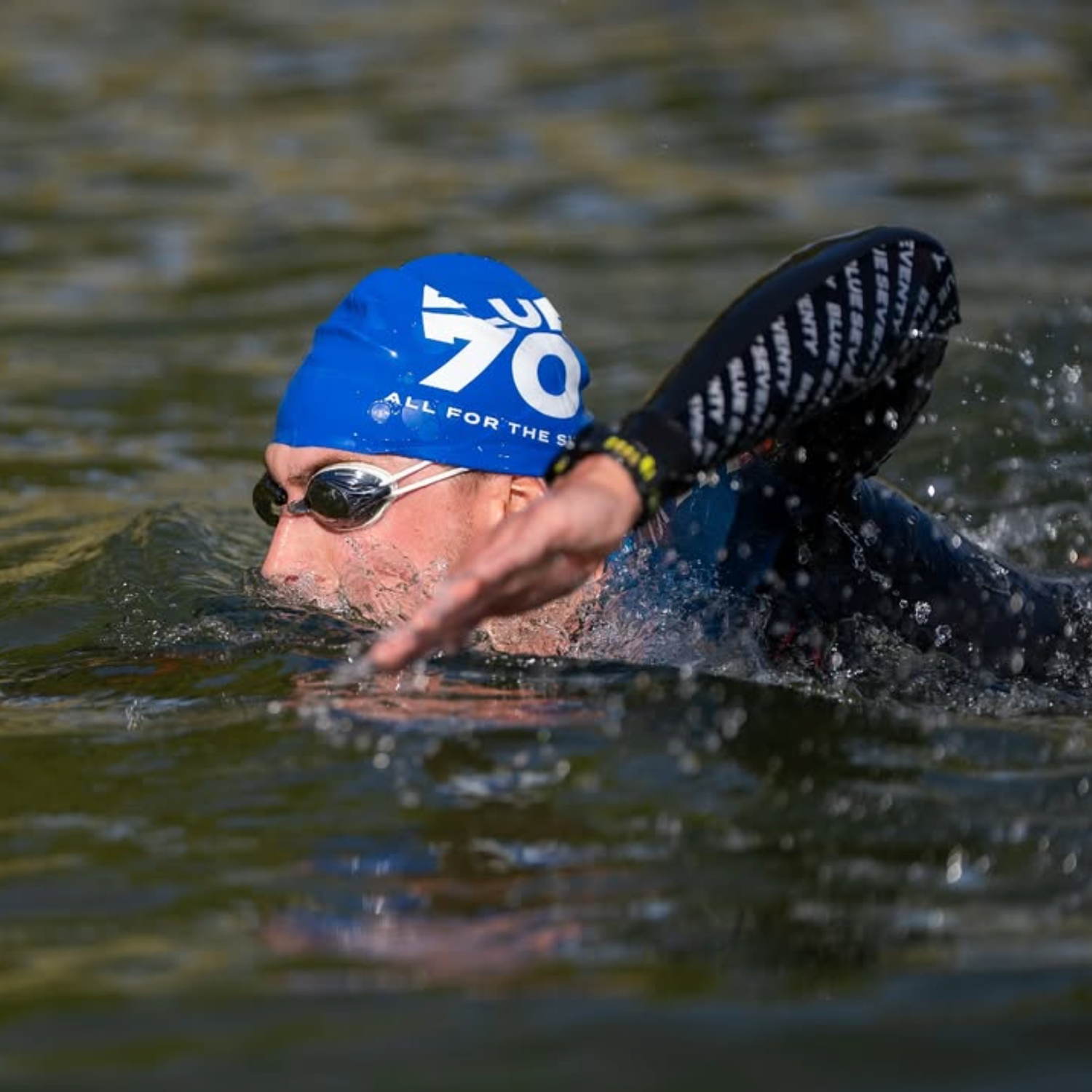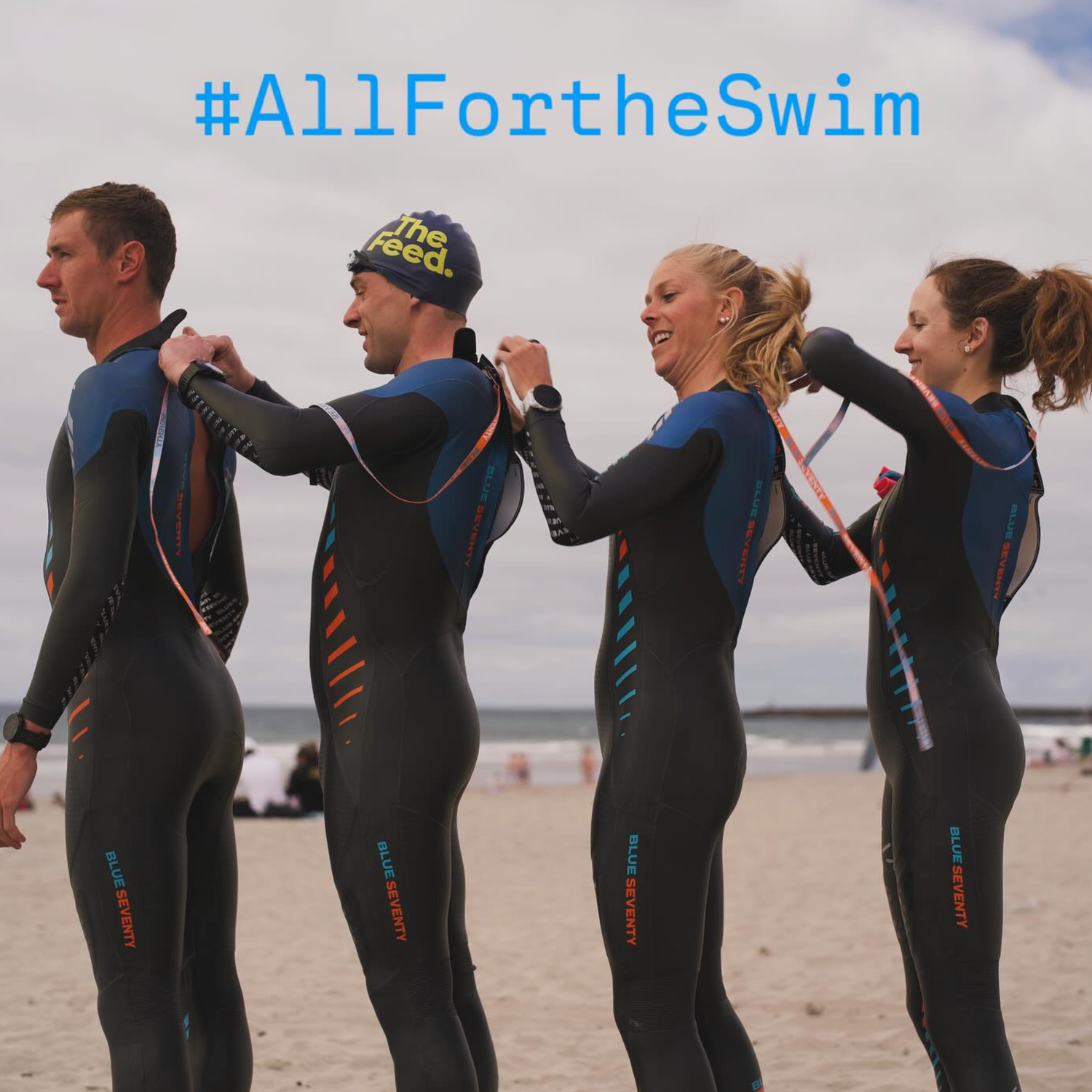



Start below the collar. Most neck leaks in a blueseventy wetsuit happen because the suit is not pulled fully up through the torso. The fix is to bring the suit up higher. When you finish putting on the suit, the collar should sit flush against your skin all the way around, with no folds, no trapped hair, and no rolled edges, because any gap in that line lets fresh water in with every stroke.
A small trickle of water around the neck is normal. A swim-specific wetsuit is designed to let a thin layer of water in, where your body warms it against your skin. What you want to avoid is a steady flush that refills every time you turn, sight, or breathe.
Why a neck seal matters
A swim-specific neckline has two jobs. It limits how much fresh water pours in, and it lets your head and shoulders rotate freely. Those goals can conflict if you over-tighten the collar by pulling it upward like a turtleneck. The neckline should not pinch your throat, and it should not sit so loose that you can slip a couple of fingers under it without touching skin.
blueseventy cuts its necklines for swimming. Surf and dive suits use a different collar shape and thickness, and a swim-specific collar is built to stay low while you rotate from side to side. The Fusion was redesigned in 2021 with a lower-sitting neckline, which kept the watertight seal while adding comfort. In the women's Femme Fit range, the neckline is also lowered to reduce chafing around the throat. A lower neckline means the collar sits in a more comfortable position while still touching skin all the way around.
Step by step: seating the collar
Work through these steps after you pull the suit on. Reseating the torso is often what fixes a neck leak.
- Remove jewelry and anything sharp. Use the pads of your fingers, not your nails, when you grip the neoprene.
- Work the suit up your legs and torso in small folds. Keep the material even on both sides.
- Close the zipper all the way. Then start at the hips and lower back and use flat palms to push the suit upward, taking out slack in the torso.
- Shrug your shoulders once. Lift the suit upward from the chest and upper back, not from the collar edge. This brings the neckline higher without stretching it.
- Smooth the collar flat. Run a finger around the outside and inside of the neckline to find folds, trapped hair, or a rolled edge.
- Test it on land. Turn your head left and right, look up, and swing one arm overhead. If the collar gaps at the back, you still have slack in the torso, so repeat step three.
Common neck leak fixes
- Water enters at the back when you push off or sight. The suit has slipped lower during the swim. Pull the leg and torso material up before you tighten the zipper, and check that the zipper flap is lying flat. Pulling only on the collar will not fix this and can stretch the neckline.
- Water enters at the front or under your chin. Check for a fold first. If the collar lies flat and you can still slide two fingers under the front without touching skin, the neck has too much room, which points to sizing rather than donning.
- Hair trapped under the seal creates a small channel. Put longer hair up before donning, and check that no strands are caught between your skin and the collar. A few hairs are enough to let water through.
- The neck chafes or feels like it is squeezing your throat. Check whether the suit is too small across the shoulders or too short in the torso. A wetsuit should feel snug on dry land, but you should still be able to turn your head, look ahead, and breathe without pressure on the front of your neck. If the collar presses hard enough to leave deep marks after five minutes, try another size or cut.
When the fit itself is the problem
Neck circumference is not measured on most size charts, so height and weight only get you part of the way. That is why blueseventy encourages a test swim. You can swim in the suit and still return or exchange it within the 30-day return window as long as it is clean, dry, and unmodified. Use that policy to find out whether a neckline fits during a swim. What feels snug on land often becomes more comfortable in the water.
For women, the Femme Fit pattern changes the neckline and zipper length to reduce chafing and make entry easier. If the neck has always rubbed or gapped with a standard cut, a women's-specific cut can reduce that pressure without making the seal looser.
Keep the neckline healthy
Rinse the suit in fresh water after every swim, and dry it away from direct sun. Do not fold the collar down for storage, and do not hang the suit by the neck from a thin hook. A sharp crease in the neckline can become permanent and let more water in.
Use only wetsuit-safe care products. Petroleum-based lubricants can damage neoprene. If you need a chafing balm, apply a small amount to your skin rather than the inside of the collar. For small nicks or tears in the neck area, a neoprene cement like Aquaseal can make a durable repair. Keep the repair area flat and clean before you start.
Get the neck to sit right before your next swim. If you still feel a constant flush after seating the collar correctly, use the blueseventy size charts and the test swim policy to check the fit. A good neck seal should feel like even contact.