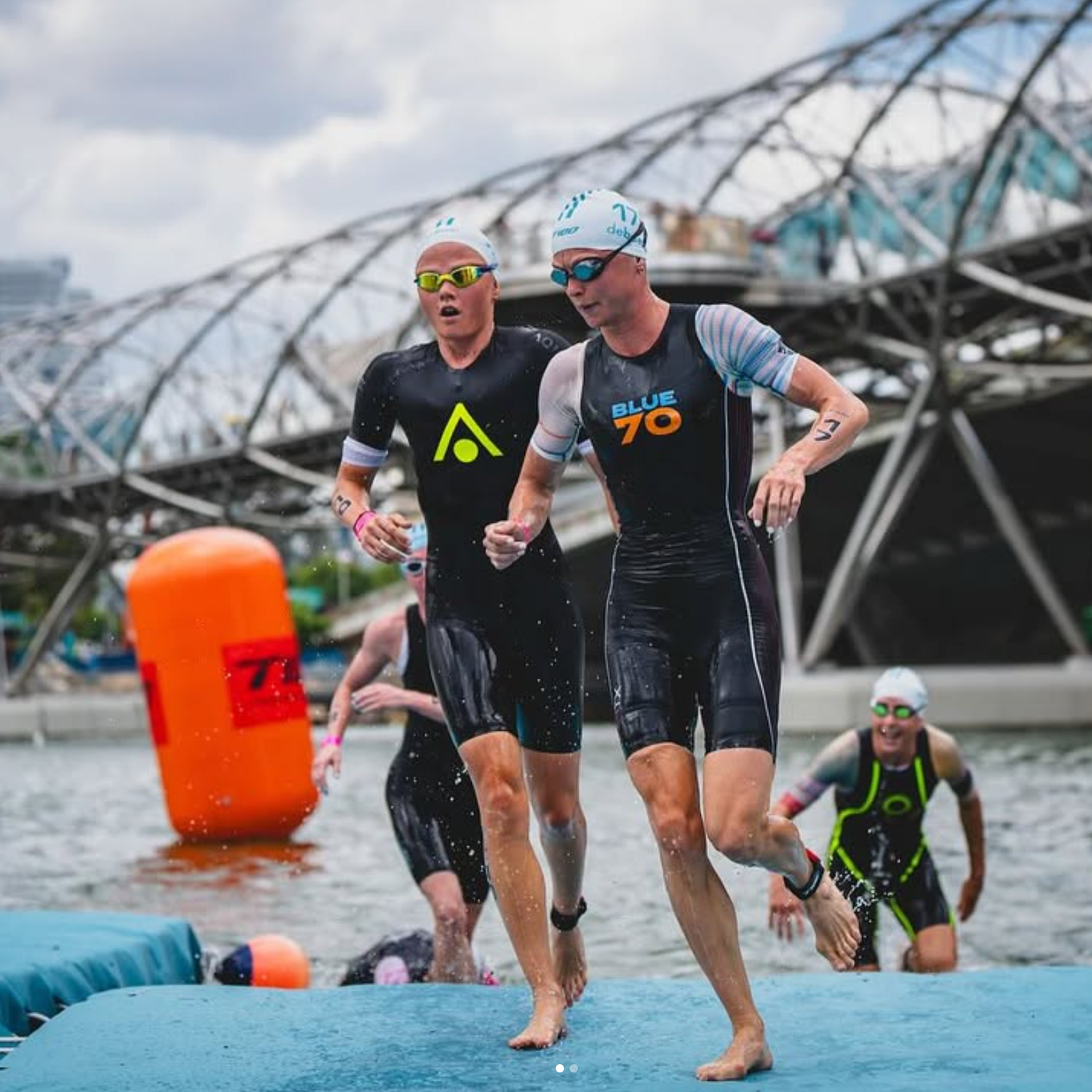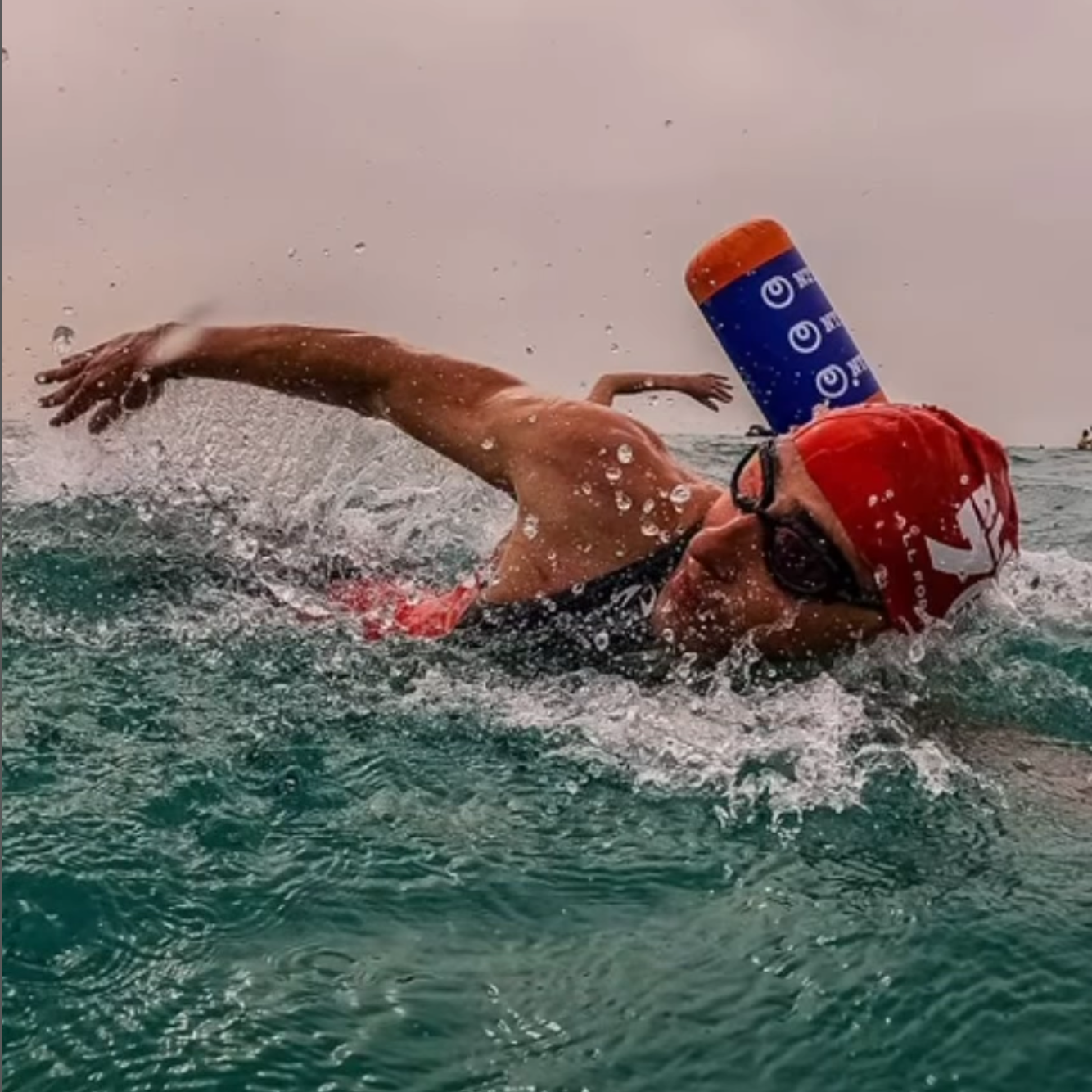



Rinse it, dry it fully, and store it where air moves. Mold grows in damp, still, dark spaces. For a blueseventy suit, a wet suit left in a bag, bin, or car can start to smell before your next swim. The suit is not waterproof. It lets a thin layer of water in on purpose, and your body warms that water. That same water has to leave the suit before it goes into storage.
Why mold gets a foothold
After you swim, the neoprene and the inner lining hold water, salt, chlorine, lake minerals, and body oils, and that damp mix becomes a place where mildew spores can grow if the suit goes into a bag or bin before it dries. Add still air and a dark place, and mold has what it needs. Remove any one of those three and you stop the cycle. Most mold problems come down to a suit that went into a bag or bin before it dried.
Rinse after every swim
Use cool fresh water. Rinse the outside first, then unzip the suit and flush the inside. The armpits, neck, cuffs, and crotch hold the most water, so give those areas a few extra seconds. If you swam in the ocean, rinse until you cannot feel salt on the lining. Salt crystals can abrade the neoprene as the suit dries. If you swam in a chlorinated pool, rinse sooner rather than later. Chlorine can degrade neoprene and seam adhesives over time. If the lake has no shower, bring a gallon of fresh water and rinse the suit before you drive home. If the lake leaves silt or algae in the seams, turn the suit inside out and rinse those seams with your fingers.
Wash it without wrecking the neoprene
Rinsing removes surface debris, but it does not remove every trace of sunscreen, body oil, or lake scum. Hand wash the suit in cool water with a wetsuit-specific cleaner or a small amount of mild soap. Do not use laundry detergent, bleach, fabric softener, or anything heavily scented. Those products can leave residue on the lining and break down the neoprene. Gently squeeze the soapy water through the suit. Do not wring or twist it, especially through the shoulders and arms. Rinse until the water runs clear. The Thermal Reaction has a zirconium jersey lining that holds more water than a standard lining, so give it a couple of extra fresh-water rinses.
Dry the inside first
Turn the suit inside out. Hang it at the waist over a wide hanger, a thick rail, or a drying rack. Do not hang it by the neck or shoulders with a narrow hanger; that stretches the neoprene and leaves creases. Let the inside lining dry before you turn the suit right side out. Then dry the outside. Unzip the suit fully while it dries, so the zipper area gets air. A fan at room temperature speeds things up. Keep the suit out of direct sun and away from radiators, heaters, and tumble dryers. Heat can make Yamamoto neoprene stiff and damage the seams. Do not put the suit in a washing machine or dryer. Do not wring it to force water out; press the suit gently instead.
Store it where air moves
Store the suit only after it is completely dry. Check the inside of the armpits, the neck seal, and the lowest part of the legs. A suit that feels dry on the outside can still be damp in those spots. Hang it in a cool, dry, ventilated space on a wide hanger, or fold it loosely at the waist. Do not store it in a plastic bag, a closed transition bag, a car trunk, or a bin with wet gear. If you need to pack it for a race, use a breathable bag and unpack it as soon as you can. If a basement or garage stays damp, store the suit somewhere else. Before you pack a suit away for the season, wash it, dry it fully, and check it once a month if the storage area is humid.
What to do if it already smells musty
If the suit already has a musty smell or visible spots, get it out of the bag. Rinse it, then hand wash it in cool water with a wetsuit cleaner. Use a soft cloth on visible spots. Do not use hot water, bleach, or a dryer. Rinse thoroughly and dry it inside out first, then right side out. If the smell persists after a full wash and dry, repeat the soak and rinse. Mold can stain neoprene, but cleaning removes the residue that causes most of the odor. If the material feels brittle, the seams are pulling, or the zipper has damage, email us at us@blueseventy.com before you use the suit again.
The time you spend rinsing after each swim saves the suit from days of damp storage. Happy swimming.