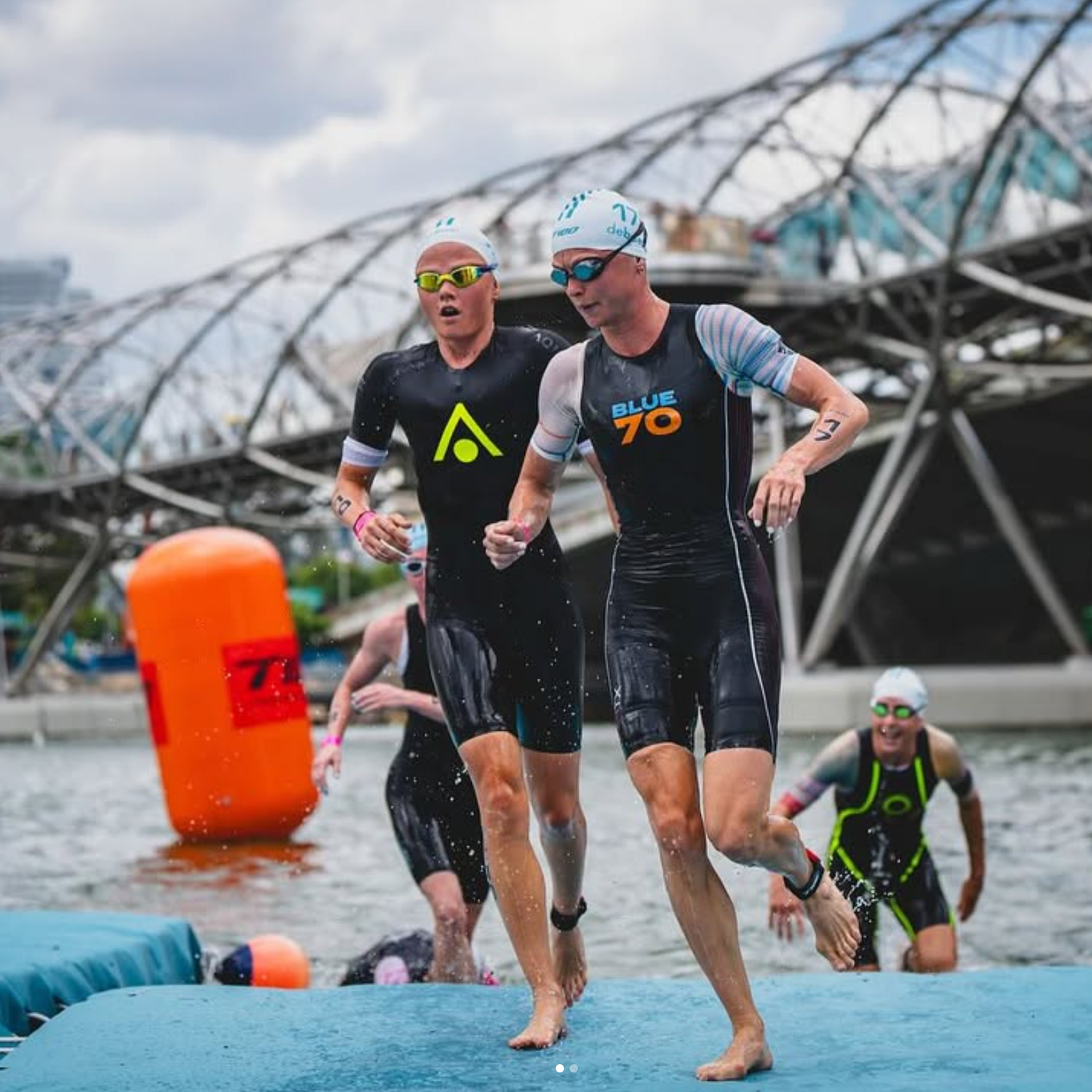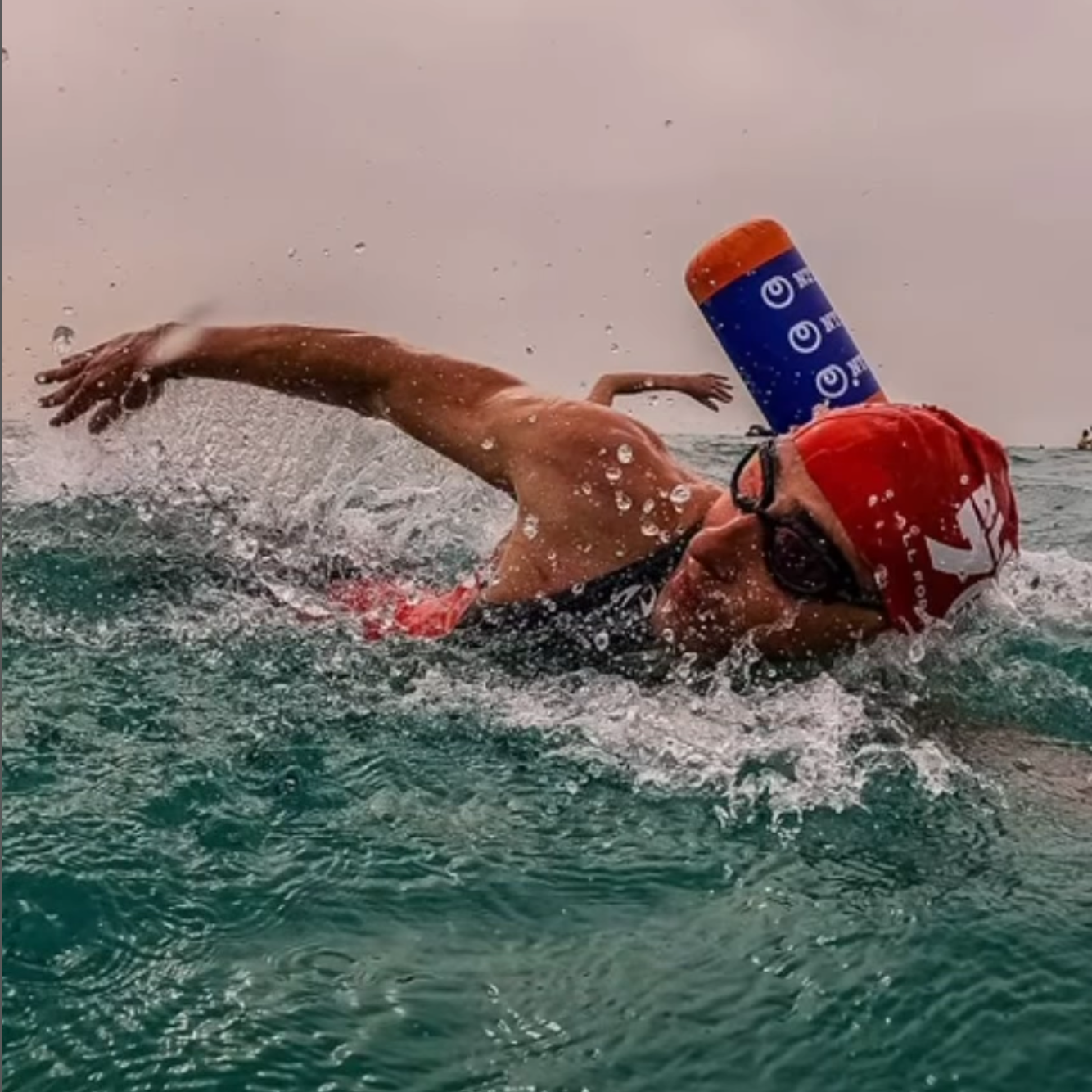



A wetsuit that climbs your legs usually points to one of three things:
- Too much neoprene through the legs
- A suit that was not pulled up high enough when you put it on
- Trapped air adding lift under the panels
The fix starts before you get wet.
Check the fit first
Too much room around the calves, knees, or thighs is the most common cause. Blueseventy builds wetsuits from Yamamoto neoprene in 38, 39, and 40 cell, and every one of those panels is buoyant. When a leg panel has extra circumference or extra length for your body, that material folds, pockets water, and works its way toward your hips as you kick.
A correctly sized blueseventy suit should feel snug on dry land and more comfortable once you are in the water. Use the height and weight size charts rather than picking a size by chest or waist alone. If you can pinch a deep fold of neoprene at the calf or ankle, or if the cuffs sit loose enough to gap, the legs have too much room. For women, Femme Fit refines the pattern at the wrists and ankles to reduce extra material and help the suit stay put through the leg.
Put the suit on high and slow
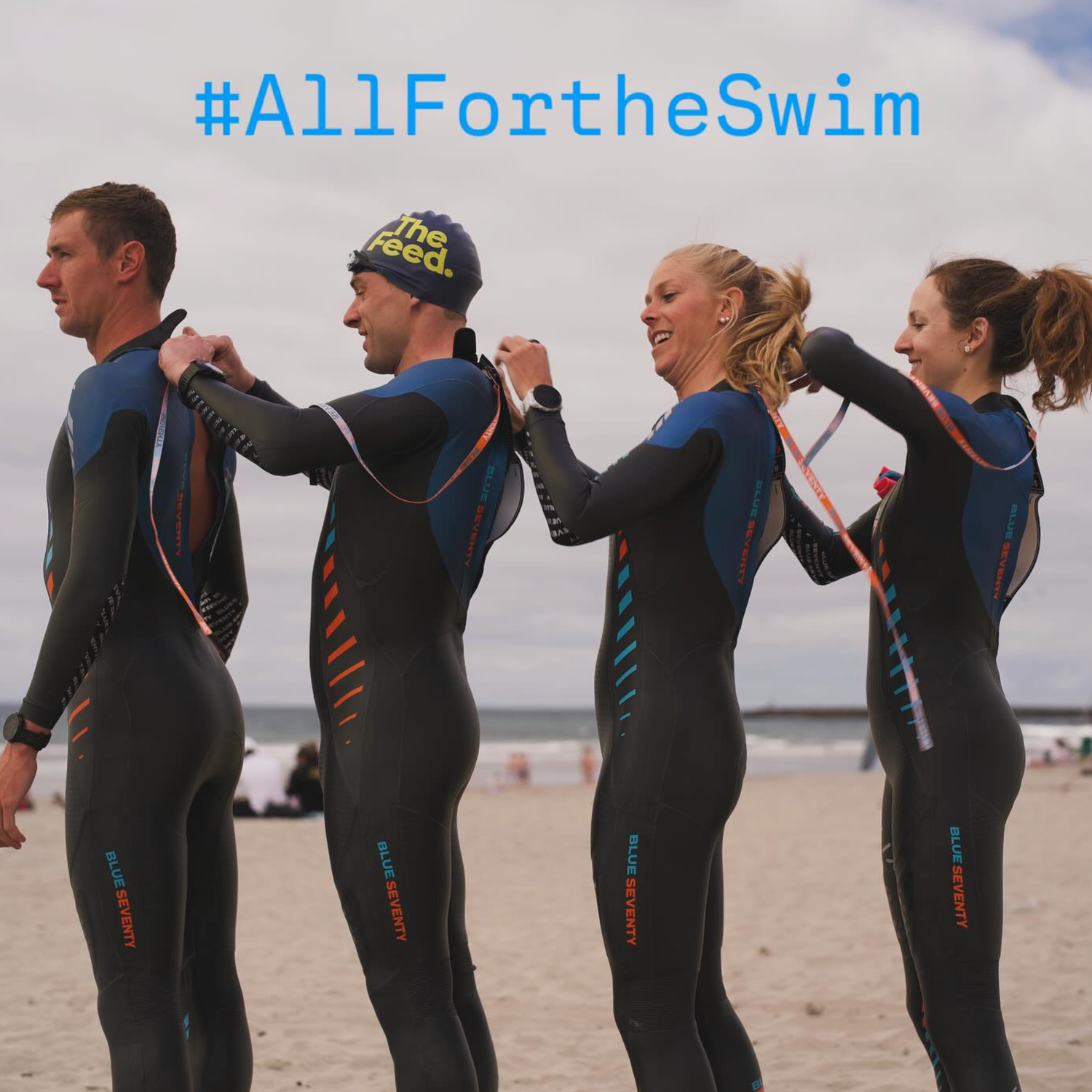
How you don the suit sets the position for the entire swim. Follow this sequence:
- Start at the ankles and work upward in small pinches, not one long pull from the waist.
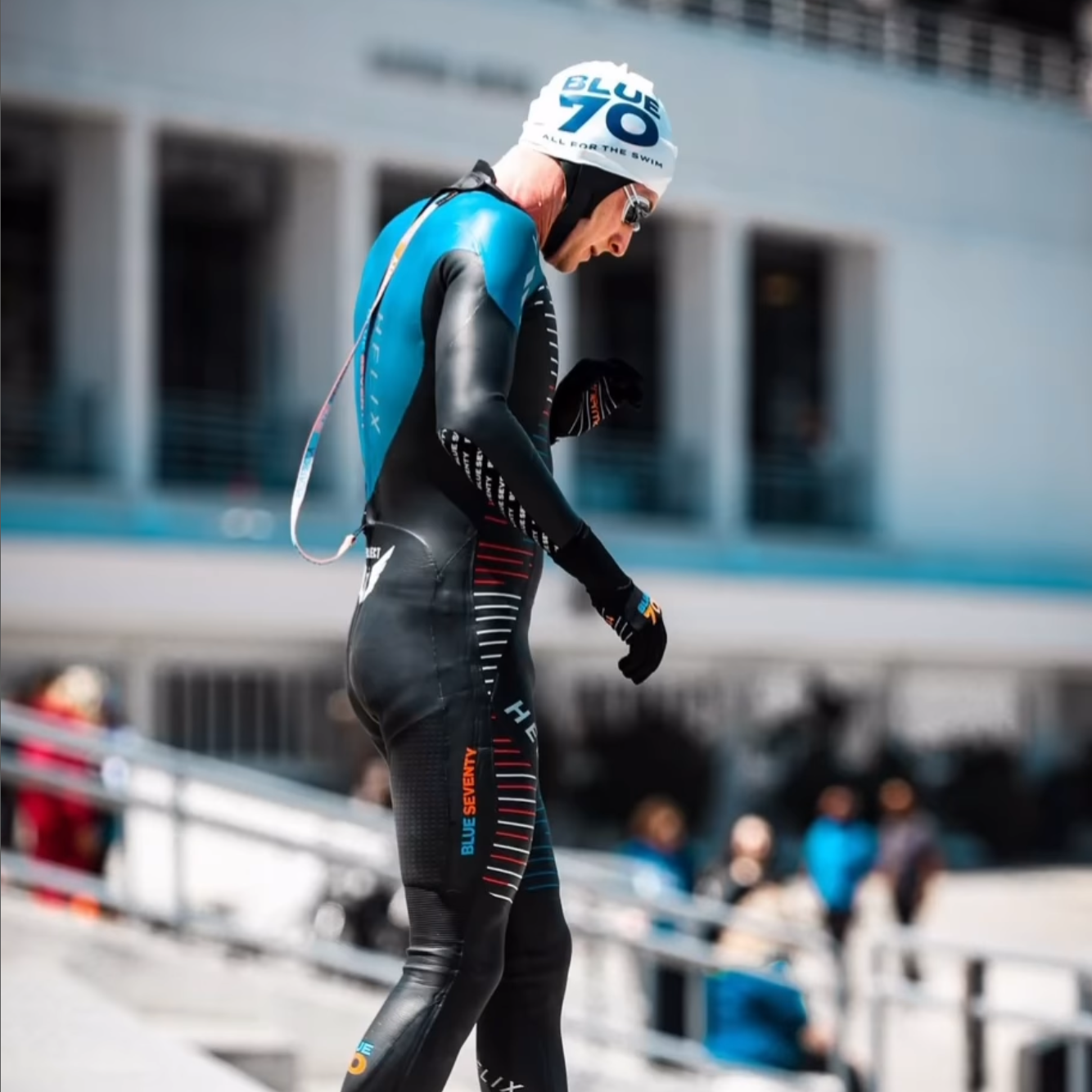
- Pull the neoprene up until the crotch sits fully against your body and the leg cuffs land just above your ankle bones.
- Use the pads of your fingers, not your nails.
If you leave the crotch low, the suit will pull down at the neck and shoulders and bunch behind the knees. Then every kick gives that bunched material a path upward. Fingernail punctures are a common new-suit injury and sit outside the warranty.
After you set the legs, do a few slow squats on land. If the neck pulls or the leg panels shift, the suit is not seated yet.
Release trapped air
Trapped air makes the leg panels more buoyant than they need to be. After you zip the suit, open the neck seal slightly, squat or lean forward, and let the air work out. A little water will enter. That thin layer is what your body warms to insulate you, so do not try to keep the suit dry.
If a pocket of air remains around your lower legs, lift each ankle opening just enough to release it, then smooth the panel back down. Do this before you start swimming. Air you release in the first minute will not work its way through the suit halfway into your session.
Separate fit from body position
Sometimes the suit stays put and your body position changes. Neoprene is more buoyant than your legs, so a good suit will raise your hips and legs relative to your torso. If the cuffs stay in place but your legs still feel high, the issue is usually posture or kick.
Press your chest slightly toward the water, keep your head neutral, and keep the kick long and small. That keeps your torso and legs working as one line instead of letting the legs ride up. This often appears in the second half of a swim, when the kick gets lazy and the legs start to float. A suit that fits will still provide that lift. The goal is to keep your body line level through the stroke.
When to change size or model
If the fit check shows too much material, the cleanest fix is a smaller size or a model with a different cut. Blueseventy's Test Swim lets you swim in a suit and still return or exchange it within 30 days of the ship date, as long as it is returned clean, dry, unmodified, and with the tags and accessories. Use that option instead of forcing a suit that does not fit.
For swimmers who train weekly and want a durable suit that stays put, blueseventy builds Reaction and Fusion for regular use. Helix is the race-day option. No model will fix a size that is too large.
If you are between sizes, start with the size charts and the fit guide. A suit that fits through the hips and legs feels snug in the changing room and calm in the water. Happy swimming!