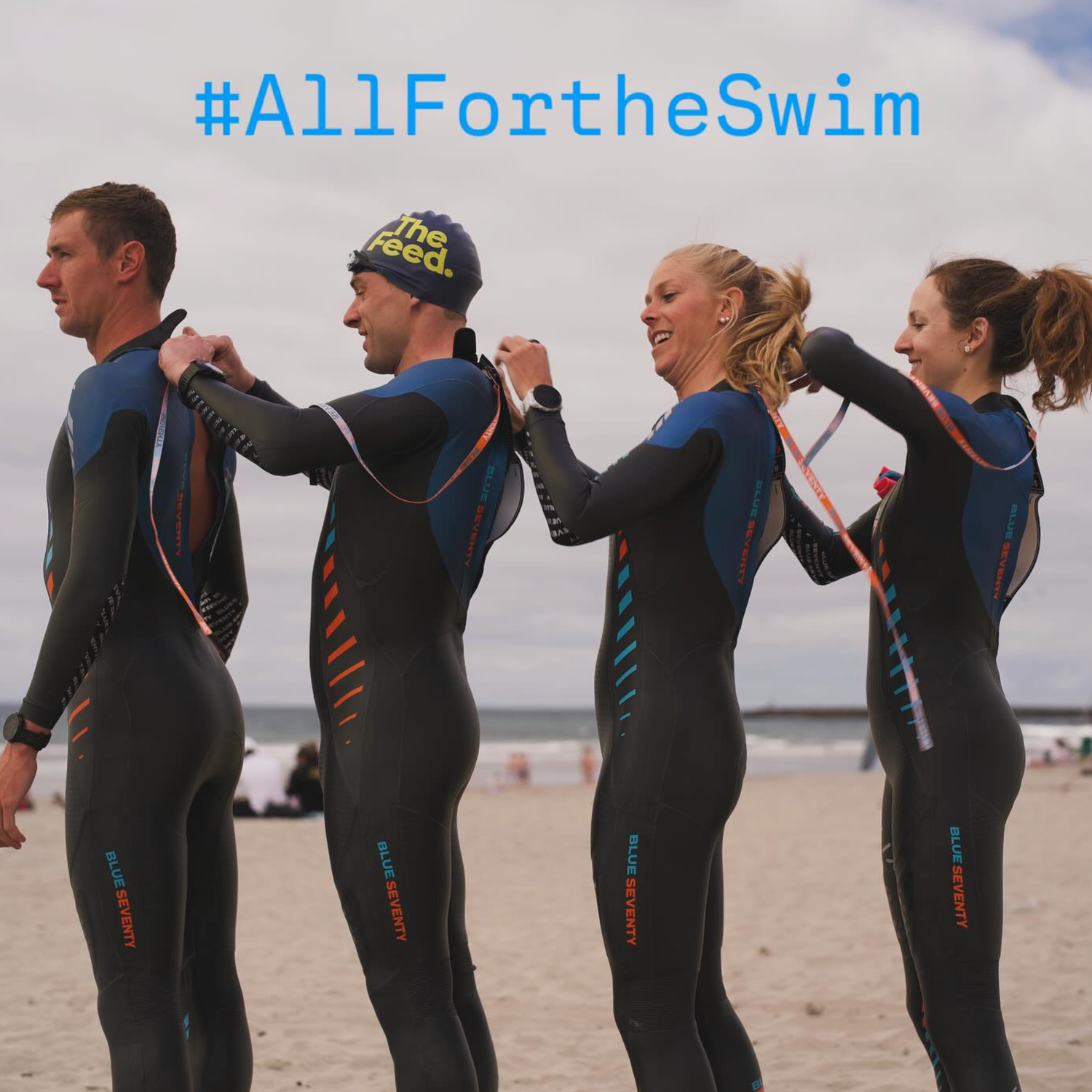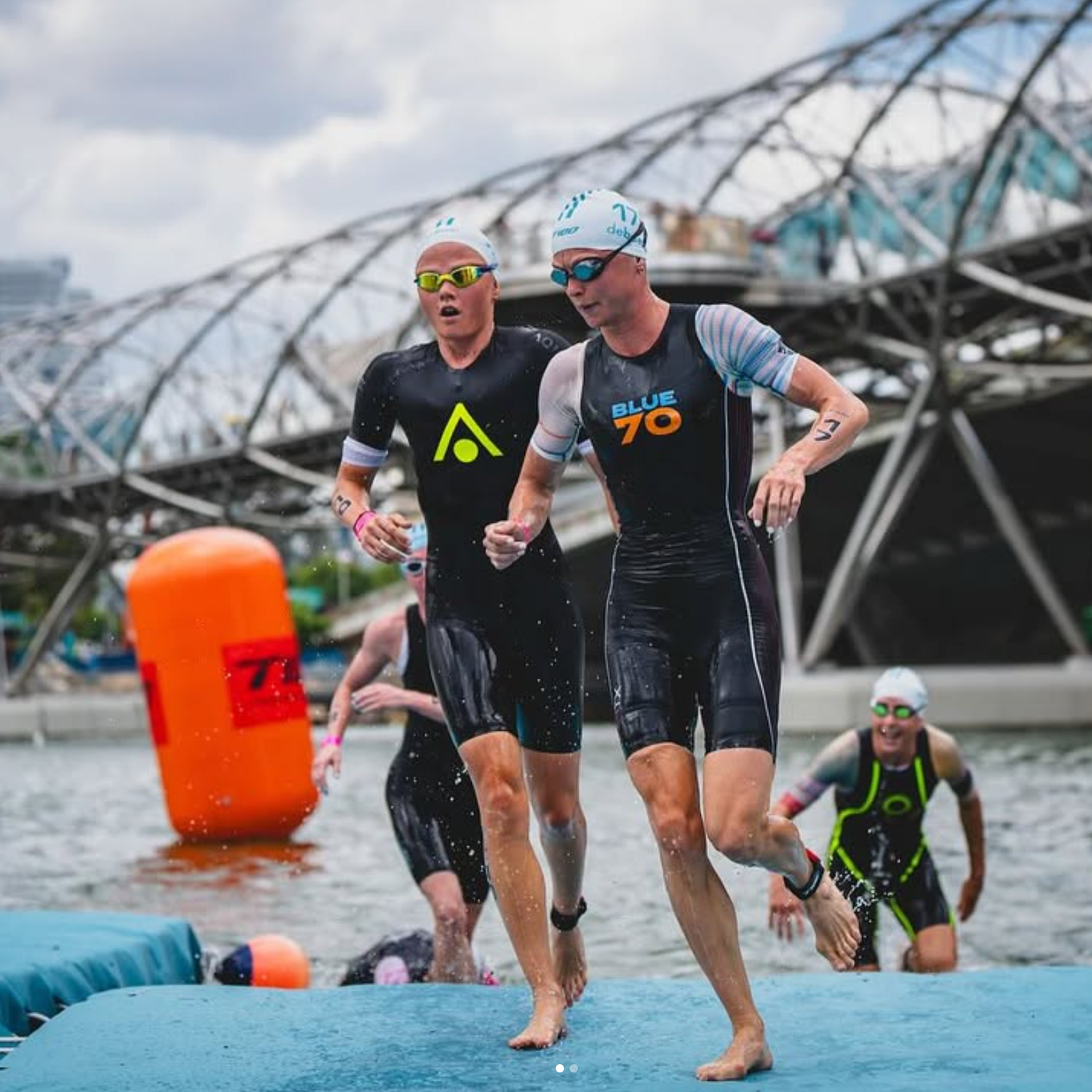



Fading happens when ultraviolet light breaks down the outer layer of neoprene. The color change is the part you can see. The material also gets stiffer and weaker over time, and that damage continues long after the suit looks faded. Blueseventy wetsuits use Yamamoto neoprene in 38, 39, and 40 cell grades, and higher cell numbers mean more flexibility, which is exactly what you want in the shoulders and arms during a long open water swim. Every one of those neoprene grades is vulnerable to UV breakdown.
Why Sun Fades a Wetsuit
UV light attacks the outer skin of the neoprene first. Fading is the visible symptom of that damage. A faded suit is not just less colorful. It is losing flexibility and tear resistance. You will usually notice it on the shoulders and upper back first, because those areas face the sun most often when you swim in open water.
Rinse Before You Leave the Water
Salt, chlorine, sunscreen, and body oil all speed up neoprene breakdown. Rinse the suit in cool fresh water as soon as you can after every swim. A quick rinse at a beach shower or race site is better than waiting until you get home. If you swim in a chlorinated pool, rinse the suit twice. Turn it inside out and rinse the lining too.
Dry in the Shade, Not on the Car
Wet neoprene dries slowly, and direct sun speeds the damage while it dries. Lay the suit flat over a drying rack or a wide plastic hanger in the shade. Turn it inside out once the outside feels dry, so the inner lining dries completely. Do not wring the suit. Do not hang it by the shoulders on a thin hanger, because the wet weight stretches the neoprene and can pull on the seams.
Store It Out of the Light
Store the suit in a cool, dry place away from windows and fluorescent lights. A closet or gear bin works well. Keep it folded loosely or on a wide hanger. Do not store it in direct sunlight, even through glass, because UV still gets through. If you can see sunlight hitting the suit in storage, move it.
Travel and Race-Day Habits
A hot car is worse than sunlight. A wet suit left in a trunk on a summer day bakes in heat that degrades neoprene and weakens seams. After a race, rinse the suit if you can. If you cannot rinse right away, at least get it out of the wet transition bag and drape it in shade at the next stop. For travel, use a breathable mesh bag, not a sealed plastic bag.
When Fading Has Already Started
Fading itself cannot be reversed. Once UV has broken down the outer layer, no wash or treatment restores the original color or flexibility. The goal is to stop further damage. If the suit has small nicks or tears, Blueseventy offers Aquaseal neoprene cement for repairs, but that treats cuts, not sun damage. A faded suit can still work for training if it has not become stiff or cracked. Check the shoulders and armpits. If the neoprene feels crunchy or brittle, it is time to replace it.
Quick Prevention Checklist
- Rinse in cool fresh water after every swim.
- Dry in the shade, inside and out.
- Store in a cool, dark place.
- Never leave a wet suit in a hot car.
- Hang on a wide hanger or lay flat.
Take care of the suit, and it will take care of your swim.