


Fog is condensation. It forms when warm, humid air from your skin and eyes meets a cooler lens. A wetsuit raises your skin temperature and holds heat around your neck and face, especially before you enter cold water. That makes the air inside the goggle cup warmer and wetter. The water outside cools the lens. The result is a fogged view at the exact moment you need to sight a buoy.
Fog prevention is a short routine you repeat every swim: clean lenses, a thin anti-fog film, correct fit, and heat management. Do those four things and the fog stays manageable.
Why a wetsuit increases goggle fog
A wetsuit keeps your core warm by trapping a thin layer of water next to your skin. That same insulation holds body heat around your neck, chin, and face. On shore, a zipped suit can make you sweat before you get in the water. Sweat and warm skin raise the humidity inside the goggle cup. When you are waiting on shore in a zipped suit, the warm air that the neoprene holds around your chest and neck rises toward your face and adds moisture to the small space inside each goggle cup. In cold water below about 56°F, the temperature gap between your face and the water is wider, so condensation forms faster.
Clean the inside lens before every swim
New swim goggles usually have a factory anti-fog coating. It is thin and wears down over time. To make it last, treat the inside lens gently. Rinse it with cool fresh water before the first use and after every swim. Do not rub the inside with your fingers, a towel, or a t-shirt. That strips the coating and adds tiny scratches that hold moisture.
If the lens gets sunscreen or skin oil on it, use a drop of mild soap and warm water. Rinse until the water runs clear. Soap film left on the lens can fog more and sting your eyes. Do not use toothpaste, abrasive cleaners, or rough cloths. Scratched lenses fog faster than smooth ones.
Apply a thin anti-fog layer
Even with a factory coating, you will usually need a top-up before swimming. Two options work.
- Use a commercial anti-fog drop or spray made for swim goggles. Put one small drop or short spray on the inside of each lens. Spread it with a clean fingertip, then dip the goggles in cool water once. You want a thin film, not a pool of product.
- Use saliva. Spit a small amount into each lens, rub it across the inside surface with a clean finger, and rinse once in cool water. This leaves a thin film that makes water spread evenly instead of forming droplets. It is not a permanent coating, so reapply it when the goggles start to fog again.
Fit goggles before your face gets hot
A good seal matters, but a tight strap is not the answer. Over-tightening distorts the goggle frame and can break the seal. It also presses the lens closer to the warm skin around your eyes, which can encourage fog. Put goggles on before you start sweating. If you have been standing in a zipped wetsuit, splash cool water on your face first, wipe the skin around your eyes dry, then set the goggles in place.
Blue70 Contour goggles are available in multiple frame and lens combinations. Getting the right shape for your eye sockets means you do not need to tighten the strap hard. A comfortable seal is easier to keep clear because you are not constantly adjusting it.
Manage wetsuit heat on shore
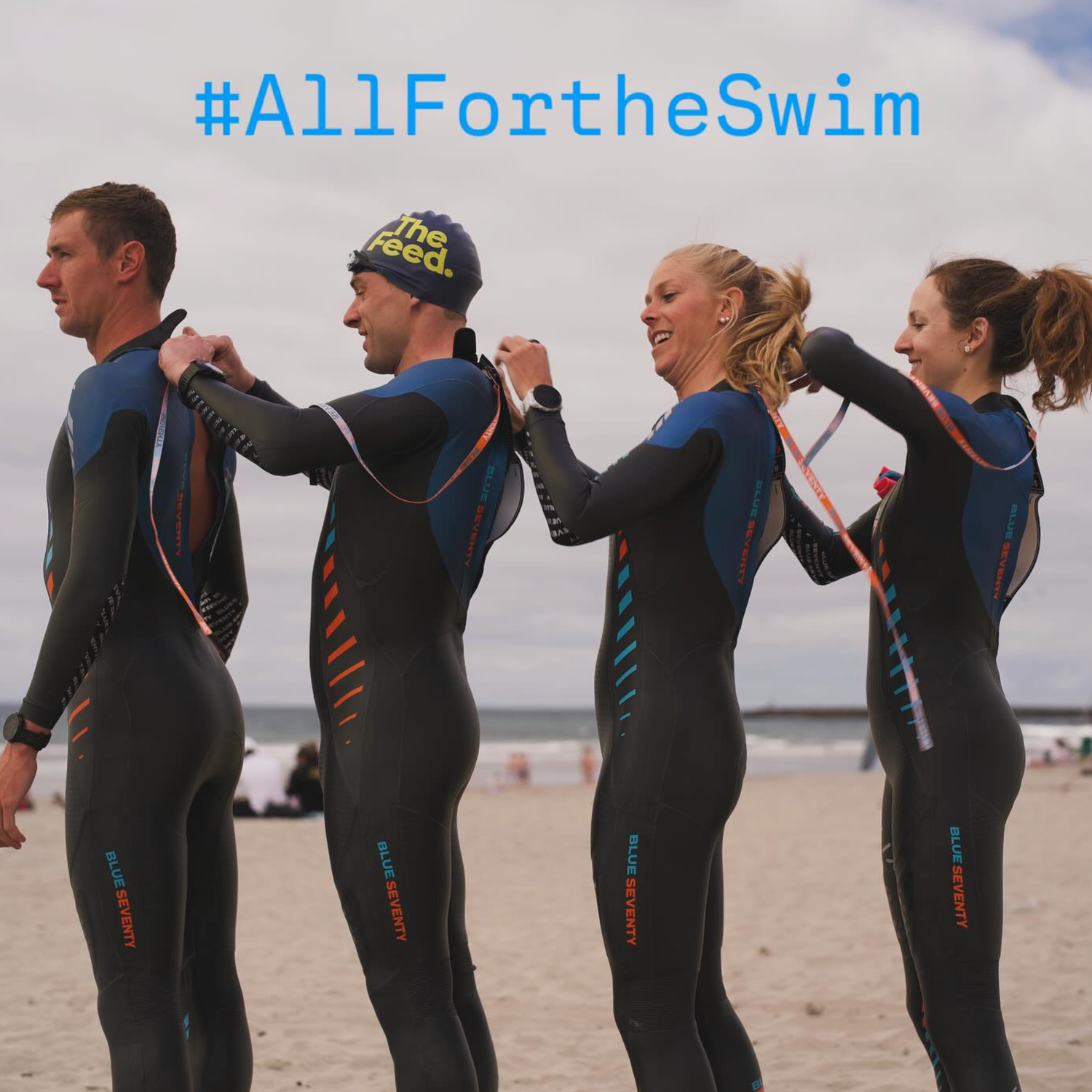
The warmest part of a fog problem often happens before you enter the water. A full wetsuit holds heat while you stand at the shore or in transition. Open the neck or leave the zipper down until just before your start. If you are waiting in the sun, move into shade and let some heat escape through the neck. A few minutes before the swim, splash cool water on your face, neck, and wrists.
For a race, you may suit up early. If you have time before the start, open the neck and pour a little water inside the suit to drop your skin temperature. The wetsuit will trap that water and warm it, which is how insulation works. You want to avoid standing in a fully zipped suit for 20 minutes while your face heats up.
Rinse and dry after swimming
After each swim, rinse your goggles in cool fresh water. Salt, chlorine, sunscreen, and skin oil all break down the anti-fog surface. Let the goggles air dry in a ventilated spot. Do not store them wet in a sealed bag or leave them in a hot car. Heat can warp the lens and shorten the life of the strap and coating. Store them where air can move over the lens.
Know when to reapply or replace
Anti-fog coatings wear with use. If you clean the lens, apply a fresh anti-fog film, and the goggles still cloud within a few minutes, the inner surface might be scratched or the coating gone. Reapply more often before you replace the goggles, but a heavily scratched lens is not worth fighting. The Blue70 Contour starts at $37, so replacing a worn pair is less painful than losing sight of the next buoy.
Pre-swim fog prevention checklist
- Rinse the inside lens with cool fresh water.
- Dry the skin around your eyes.
- Apply a thin anti-fog drop or saliva film.
- Set the goggles in place without over-tightening.
- Keep your wetsuit neck open until just before the start.
- After the swim, rinse and air dry.
Fogging will still happen on particularly cold or humid days. Expect that. The practical goal is to reduce how often it happens and to keep your sighting line clear when it counts. Build these steps into your wetsuit routine and you will spend less time clearing lenses and more time swimming.
If you want a goggle that seals without heavy strap pressure, the Blue70 Contour line has multiple frame and lens options. Start with the fit, then use this routine before every swim.