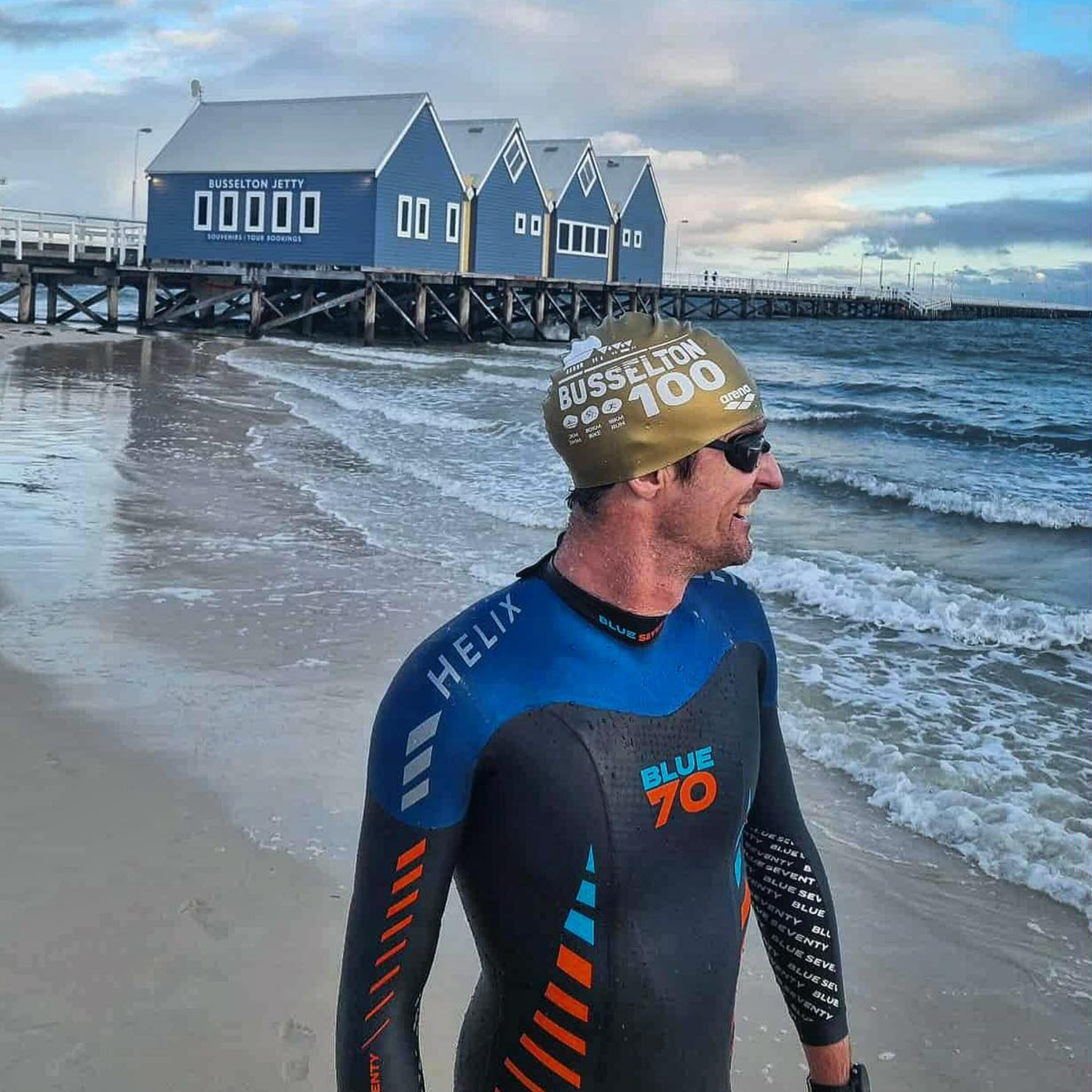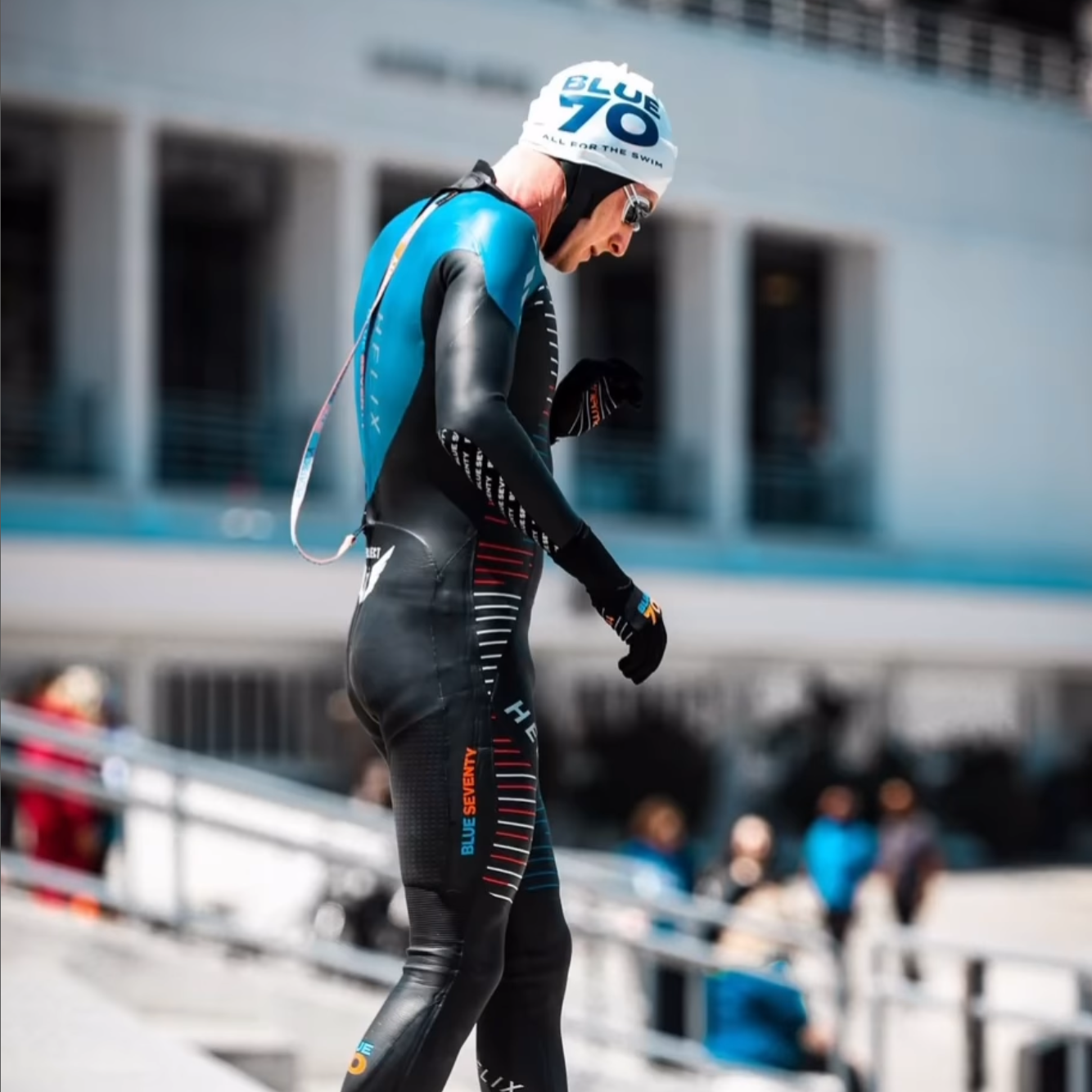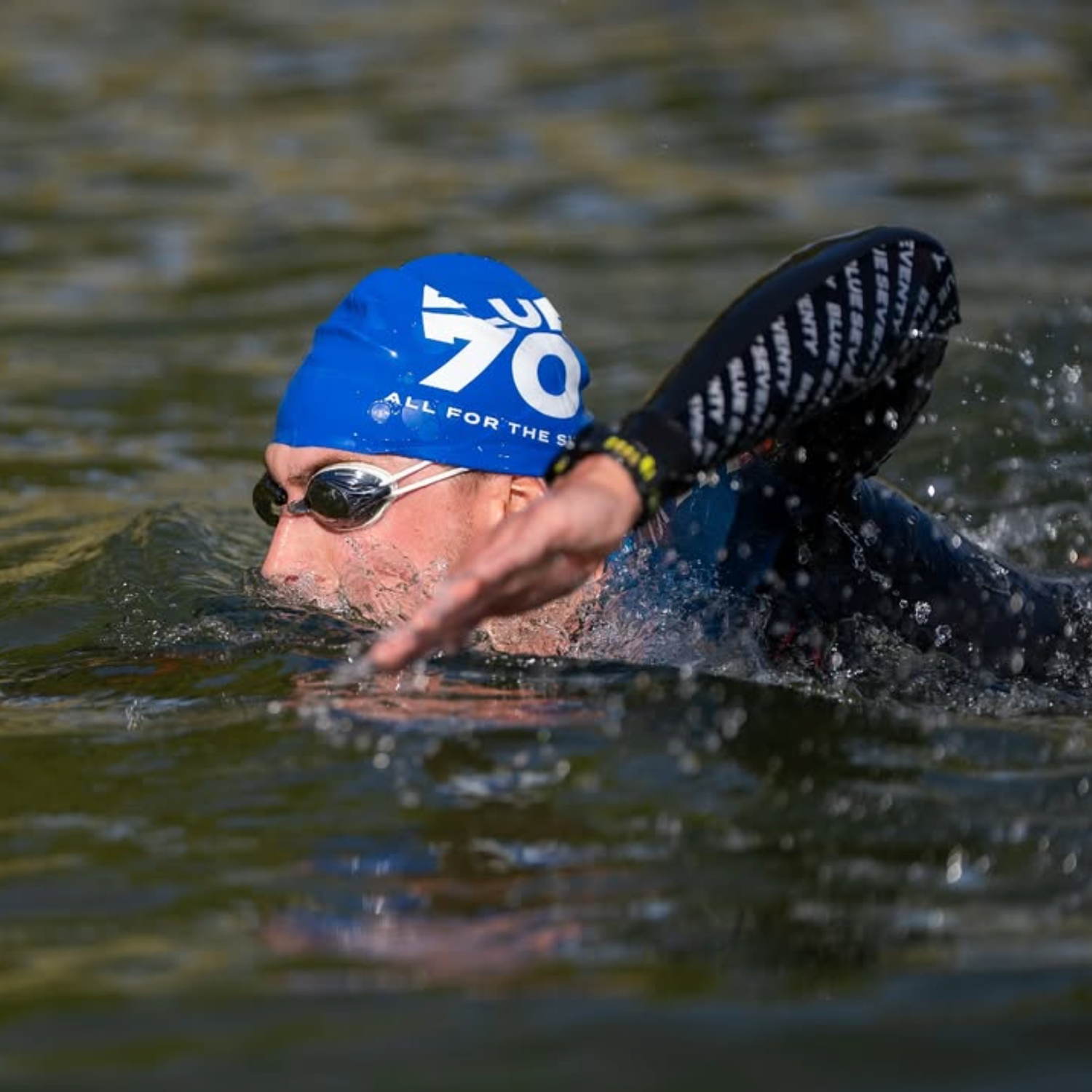



Fogged goggles are a lens problem. Your blueseventy wetsuit is doing its job: adding thermal protection and helping you hold better body position in open water. It does not fog the lens. Fog forms when warm, moist air from the skin around your eyes hits a cooler lens and condenses into tiny droplets. A wetsuit keeps your core warmer, so that temperature difference can be a little bigger. The fix is lens prep and goggle fit.
Why the wetsuit is not the culprit
Swim goggles seal around the eye socket. They do not cover your nose, so exhaled breath stays outside the lens. The moisture that fogs a swim goggle comes from the skin and tear film around your eyes. When you wear a blueseventy wetsuit, your body stays warmer than it would in a swimskin or bare skin. That extra warmth can raise the humidity inside the goggle, which makes condensation form a bit faster. The lens fogs because water vapor turns into small droplets that scatter light. Anti-fog treatments work by flattening those droplets into a thin, clear film.
Prep the lens before you get in
Start with a clean lens. Oils from your fingers leave smudges that fog up quickly. If the goggle is new, rinse the inside with fresh water and let it air dry. Then use one of these methods:
- Put one small drop of baby shampoo or purpose-made anti-fog solution in each lens.
- Rub it over the entire inside surface with a clean fingertip.
- Dunk the goggle once in clean water to remove the excess. Do not rub the lens after this.
- Put the goggles on and adjust the strap.
Do not use toothpaste, abrasive cleaners, or a towel on the inside of the lens. Scratches create places for droplets to cling.
If fog appears mid-swim
The quick fix in open water is saliva. Spit into each lens, rub it around with a clean finger, then dunk the goggle in the water to rinse the excess. This leaves a thin film that breaks surface tension. It is not elegant, but it works well enough for a race or a training set.
Keep a small bottle of anti-fog or a drop of baby shampoo in your transition bag if you want a reapplication between swims. Avoid wiping the inside of the lens with a towel or your fingers while the goggle is wet. That removes the film you just applied.
How goggle fit affects fog
A goggle that is too tight does not automatically fog less. It usually makes you adjust the strap more, and every adjustment means your fingers touch the lens. A good seal comes from the frame shape matching your eye socket, not from cranking the strap. Adjust the nose bridge if the goggle has one. The strap should hold the goggles in place without pressing hard enough to leave marks for long.
The blueseventy Contour goggle starts at $37 and comes in multiple frame and lens combinations, which helps you get that seal without overtightening. If your current goggle fogs even after proper prep, the frame may not fit your face.
Care after the swim
Rinse the goggles in fresh water after an ocean or chlorine swim. Let them air dry and store them in a case. Factory anti-fog coatings wear off over time. When fogging returns, reapply your chosen solution. If the lens is scratched, replace the goggle.
Your wetsuit is not the reason your goggles fog. Treat the lens before you swim, keep your fingers off the inside, and get a frame that seals without overtightening. Happy swimming.