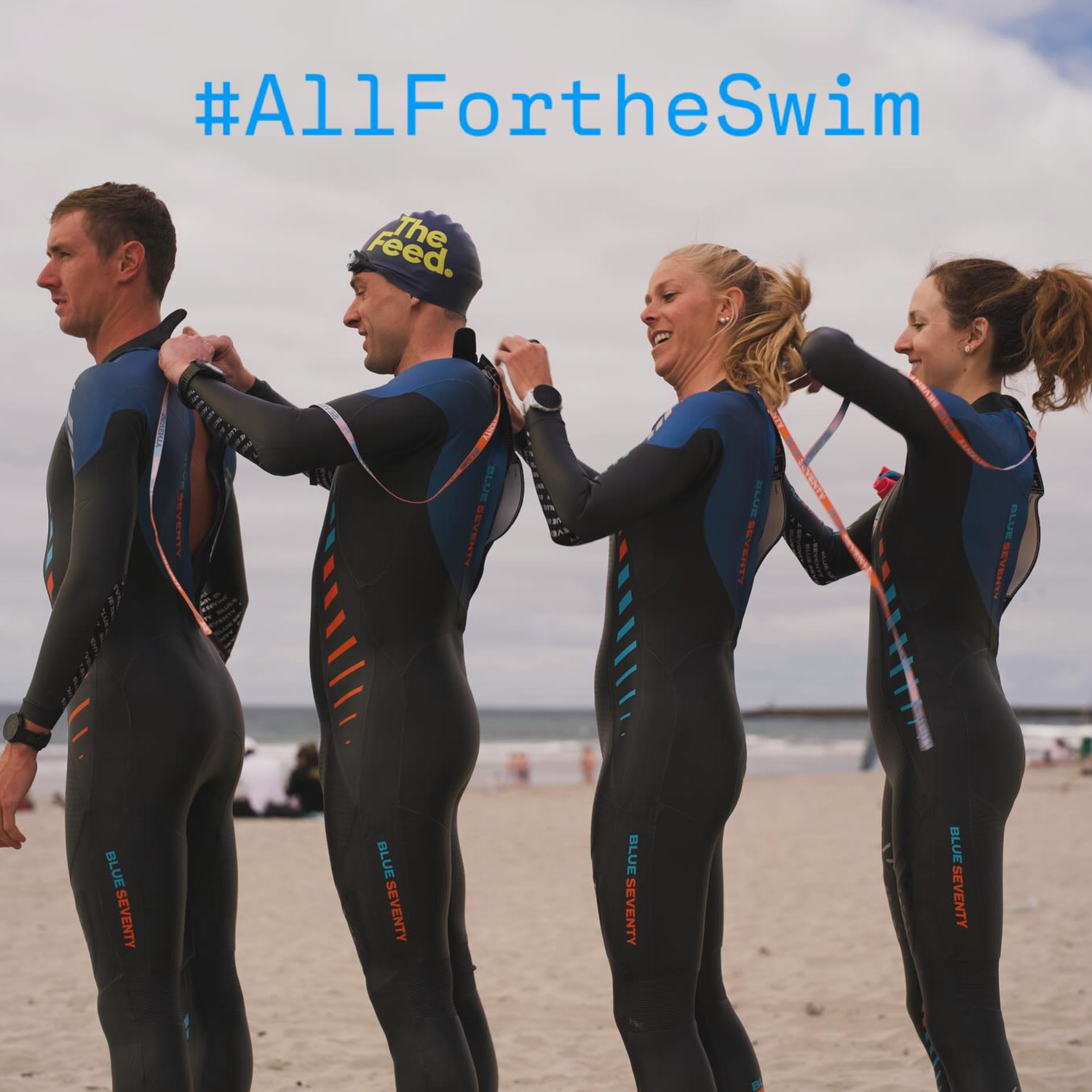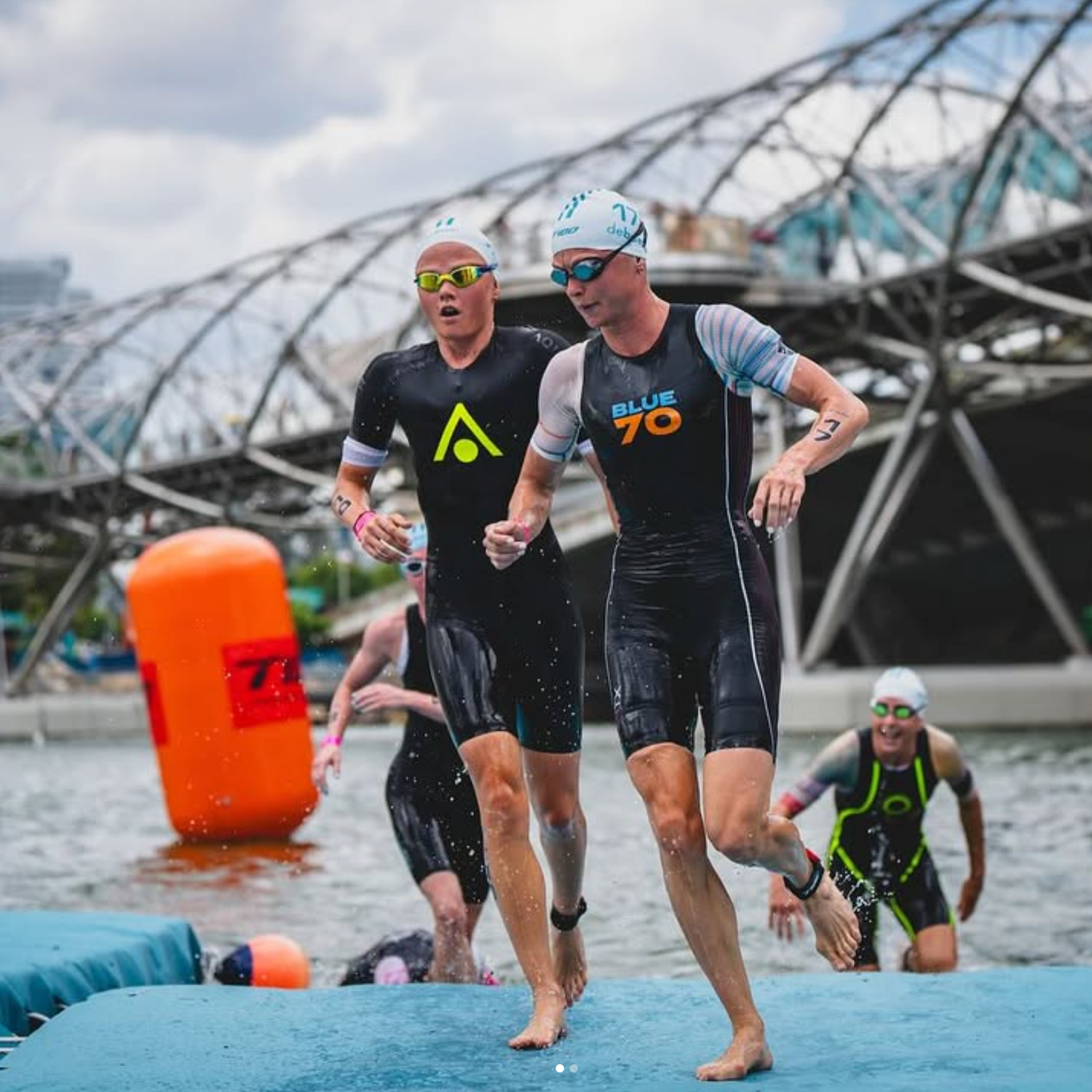



For a swimmer who is short and small-framed, the hard part is finding a suit cut short enough through the torso, arms, and legs. The body panels can't bunch, the neckline has to sit at the base of the neck, and the shoulders have to stay free. blueseventy women's wetsuits use Femme Fit, a pattern system cut for women's proportions rather than scaled down from a men's block. That is the starting point.
Why a women's-specific cut matters for a petite swimmer
A suit that is too long through the torso gathers at the lower back or pushes the neckline up under the chin. A suit that is too long in the arms or legs folds at the wrists and ankles. Those folds create drag and make the suit feel restrictive. Femme Fit changes the pattern shapes in the bust, torso, wrists, and ankles. For petite swimmers, the lowered neckline reduces pressure under the chin. The extended zipper makes a snug suit easier to get into and out of, gives more room through the hips, and speeds transitions.
Start with height and weight, then check torso length
Use the size chart for the model you are considering. Height and weight put you in a range, but they don't tell the whole story. If you land at the bottom of a range or across two sizes, prioritize torso length and shoulder width. A suit that is slightly long in the leg can be pulled up at the cuff. A torso that is too long cannot be fixed. The neck seal and the shoulder fit matter more than leg length, because a poor shoulder fit leads to fatigue and a poor neck seal lets water move through the suit. When you are between sizes, the smaller size is usually the better starting point for a petite swimmer because neoprene stretches when it gets wet and the suit should feel snug on dry land.
What Femme Fit changes in the suit
Femme Fit is applied across every women's blueseventy wetsuit, from the entry-level Sprint to the cold-water Thermal Reaction. The key pattern changes are:
- Refined shapes in the bust, torso, wrists, and ankles. Less extra material where petite swimmers often get bunching.
- A lowered neckline. This reduces chafing and pressure under the chin.
- An extended zipper. This makes entry easier, accommodates wider hips, and speeds transitions.
Models that work well for smaller frames
Pick by water temperature and training frequency. Any women's model can be cut for a petite frame, so choose the suit that matches where and how often you swim.
- Sprint: entry-level full-sleeve suit. A good first wetsuit if you are new and want to test open-water swimming without a large purchase.
- Fusion: mid-range best seller. The 2021 redesign added a lower-sitting neckline, which many shorter swimmers find more comfortable. It suits shorter, frequent swims.
- Reaction Sleeveless: removes arm-length fit issues. A warm-water option above about 70 to 72°F and an easier suit to put on.
- Glide Short John: short john cut with the least coverage. Another warm-water choice for swimmers who want minimal neoprene.
- Thermal Reaction: fully lined with Zirconium jersey for cold-water swimming below about 56 to 58°F. It adds meaningful thermal protection and still uses Femme Fit.
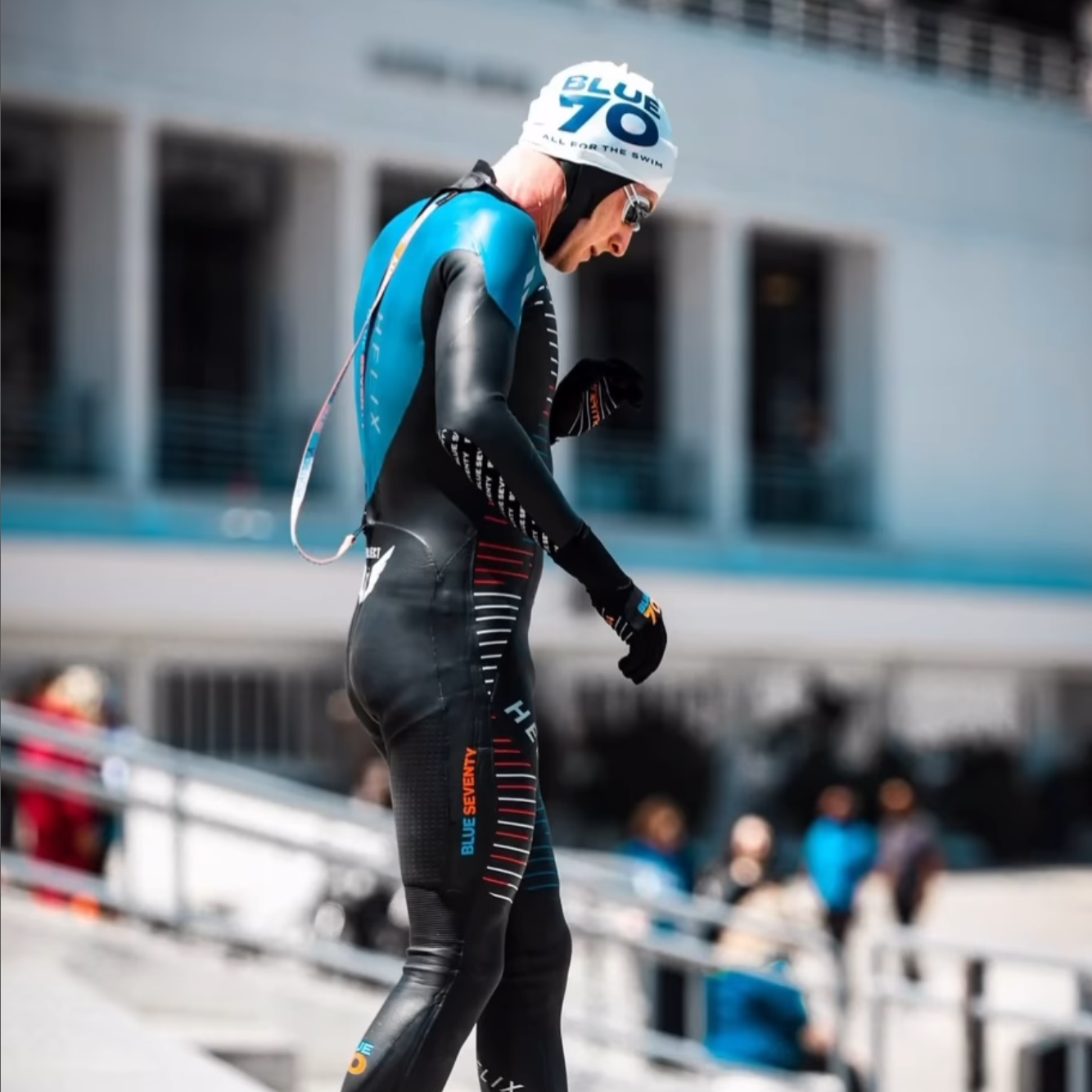
- Helix: the flagship race suit. The arm and shoulder neoprene is thin and flexible, but that same thin material breaks down more quickly with heavy training. If you race and want the lightest option, it works. For frequent training, Reaction or Fusion holds up better.
How the suit should fit on dry land and in the water
On dry land, a snug fit is normal. You should have to work the suit up gradually. Once it is on, stand straight and check a few points:
- Neck: the neckline should sit at the base of the neck, snug but not so tight it restricts breathing or swallowing.
- Shoulders: the panels should sit smoothly. When you raise your arms, you should feel stretch, not a fight.
- Torso: you should not be able to pinch large folds of neoprene at the lower back or stomach. If you can, the suit is too big and will hold water.
- Legs and arms: cuffs should reach near the wrist and ankle without thick folds at the elbow or knee.
Use the pads of your fingers, not your fingernails, when pulling the suit up. Donning a wetsuit too fast or yanking from the top stretches shoulder seams and throws off the fit. An improperly donned suit, especially through the shoulders, causes fatigue during a swim.
Use the Test Swim to confirm fit
Dry-land fit tells you part of the story. Water changes how neoprene feels and moves. blueseventy allows you to swim in a wetsuit and still return or exchange it within 30 days of the ship date if the suit comes back clean, dry, unmodified, and with tags and accessories. For a petite swimmer, this reduces the risk of buying the wrong size. Swim for 15 to 20 minutes. Pay attention to the neck, shoulder freedom, and any bunching across the lower back. If the suit feels too long through the torso or too tight through the shoulders, exchange it for another size or model.
For a short, small-framed swimmer, start with Femme Fit because the pattern changes address the places where standard suits fit poorly. Choose the model by water temperature and training frequency. Then take a test swim. Use the size chart and fitting guide on the site, and if you're still between sizes, contact us for help choosing. Find your size in 30 seconds with the sizing tool, or take a test swim in your new suit. Happy swimming.