


Panic in a wetsuit usually starts with pressure around the neck and the feeling that your breathing is restricted. The suit is doing its job, but that does not make the sensation any less real. You can reduce the panic response by getting the fit right, putting the suit on without fighting it, and building tolerance in shallow water before you swim.
Start with the fit
A swim-specific wetsuit should feel snug on dry land and more comfortable once you are horizontal in the water. A snug suit should feel supportive. It should not feel suffocating or collapse your throat when you stand upright.
Blue70 wetsuits are cut for swimming, not for sitting on a surfboard. The neck should sit at the base of your throat, not across your windpipe. If you are between sizes, use the size chart rather than guessing. The size tool on the site asks for height and weight and returns a starting size in about 30 seconds.
Put the suit on without rushing
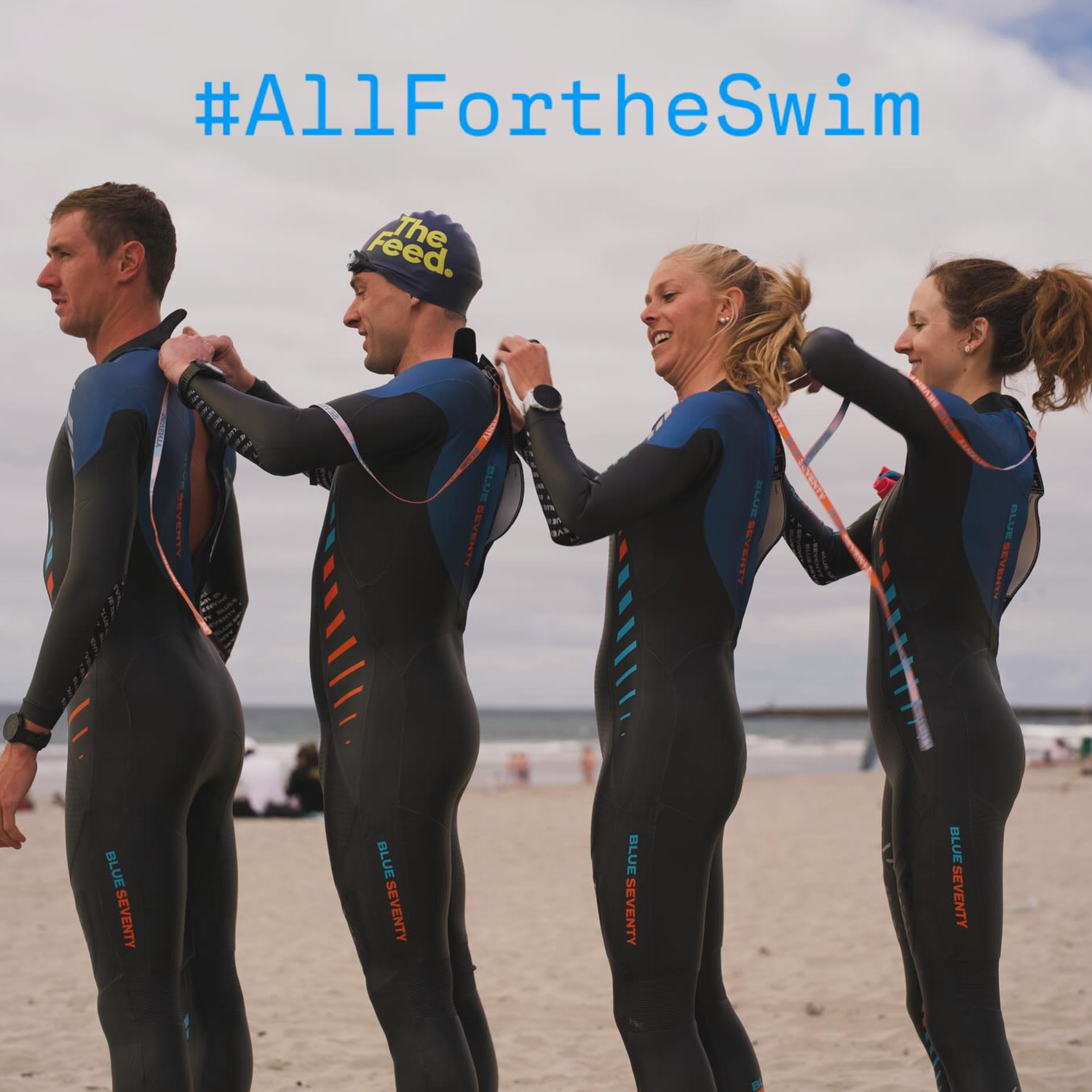
Most donning panic starts in the first two minutes. Dry skin catches on neoprene, the suit rides low, and the neck feels tight because the shoulders have not been worked into place.
- Dry your arms and legs before starting. Use a plastic bag over your hands and feet if the suit sticks.
- Pull the legs up gradually. Use the pads of your fingers, not your fingernails.
- Work the torso up and settle the suit into your crotch and underarms.
- Bend forward, reach both arms overhead, and roll your shoulders to move excess neoprene up out of the armpit and into the shoulder area.
- Zip the suit last. If your suit has a neck closure, close it before zipping.
This takes two or three minutes. Rushing is what turns a snug suit into a throat squeeze.
Start in shallow water
Enter the water where you can stand. Walk in to waist depth, splash water on your face, and exhale slowly through your nose. Let your breathing settle before you swim.
Bend your knees and lie back. The suit's buoyancy makes staying horizontal easier. Practice rolling from your back to your front and back again. If the neck feels tight when you turn your head, stop and float on your back. Stretch your neck and take five slow breaths.
Start with a short easy swim: 50 to 100 meters. Stop while you feel calm, not after the panic has already arrived. Repeat that distance across a few sessions before you add more.
Use your breathing as a reset
The panic response makes breathing quick and shallow, which tightens the chest and makes the suit feel worse. Slow the exhale. Exhale for twice as long as you inhale, and let the breath out while your face is in the water. A long exhale helps settle the nervous system and gives your brain a task.
If panic builds in open water, roll onto your back. Keep your face out of the water, kick gently, and count five slow exhales. Do not start swimming again until you can breathe through your nose with your face relaxed.
Choose a neckline with more room
If the neck remains the trigger, look for a suit with a lower-sitting neckline. The Fusion wetsuit was redesigned in 2021 with a lower neckline specifically to reduce throat pressure without losing the watertight seal.
Women's Blue70 suits use Femme Fit, which includes a lowered neckline, a refined bust and torso pattern, and a longer zipper for easier entry and less pull across the shoulders. These fit changes can be the difference between a suit you tolerate and a suit you forget you are wearing.
Practice before race day
Panic rarely disappears on race morning. Put the suit on at home for ten minutes. Wear it around the house. Do a pool session or a lake swim in it. Use the same donning sequence every time.
Blue70 allows a test swim. You can swim in a wetsuit and still return or exchange it within 30 days, provided it comes back clean, dry, unmodified, and with tags and accessories. That takes the pressure off the first session: you are not stuck with a suit that makes you feel unsafe.
Know when to stop and get help
A wetsuit should feel snug and supportive. It should not cause chest pain, lightheadedness, or difficulty breathing when you are standing still. Buoyancy does not replace a safety plan. The wetsuit is not a personal flotation device. If you feel faint, have chest pain, or cannot catch your breath, get out of the water and get medical help.
For persistent panic, work with a swim coach or a sport psychology professional. They can build a gradual water exposure plan and help you separate the suit's pressure from the throat constriction that signals real danger.
Find your size in 30 seconds, then take the suit for a test swim.