


A height and weight chart gets you into the right box. It will not tell you whether the neck seals, whether the hips move freely, or whether you can close the zipper without help. For a lot of women, wetsuit sizing fails in three places the chart never asks about: bust, hips, and torso, and each of those failures changes how the suit performs from the first stroke to the last. Fit starts there.
The first triathlon wetsuits were built on unisex patterns. Unisex often meant a men's block scaled down. The chest, waist, and hip numbers changed, but the neckline, armhole, and zipper placement stayed close to the original. That works for some swimmers. It fails quietly for many women.
Why a Unisex Pattern Falls Short
A women's wetsuit cut from a men's block creates predictable trouble spots. The neckline gaps and lets water in. The wrist and ankle openings sit too wide, so water flushes through on every stroke. The hip measurement matches the chart while the bust measurement does not, so the suit pulls across the chest and bunches at the waist. The zipper stops short of the hip curve, which makes entry harder and transitions slower.
Each of those failures costs time and energy. A suit that holds water makes you swim heavier. A suit that restricts the hips limits your kick. A suit that fights you in transition adds seconds you worked all season to save.
What Femme Fit Changes
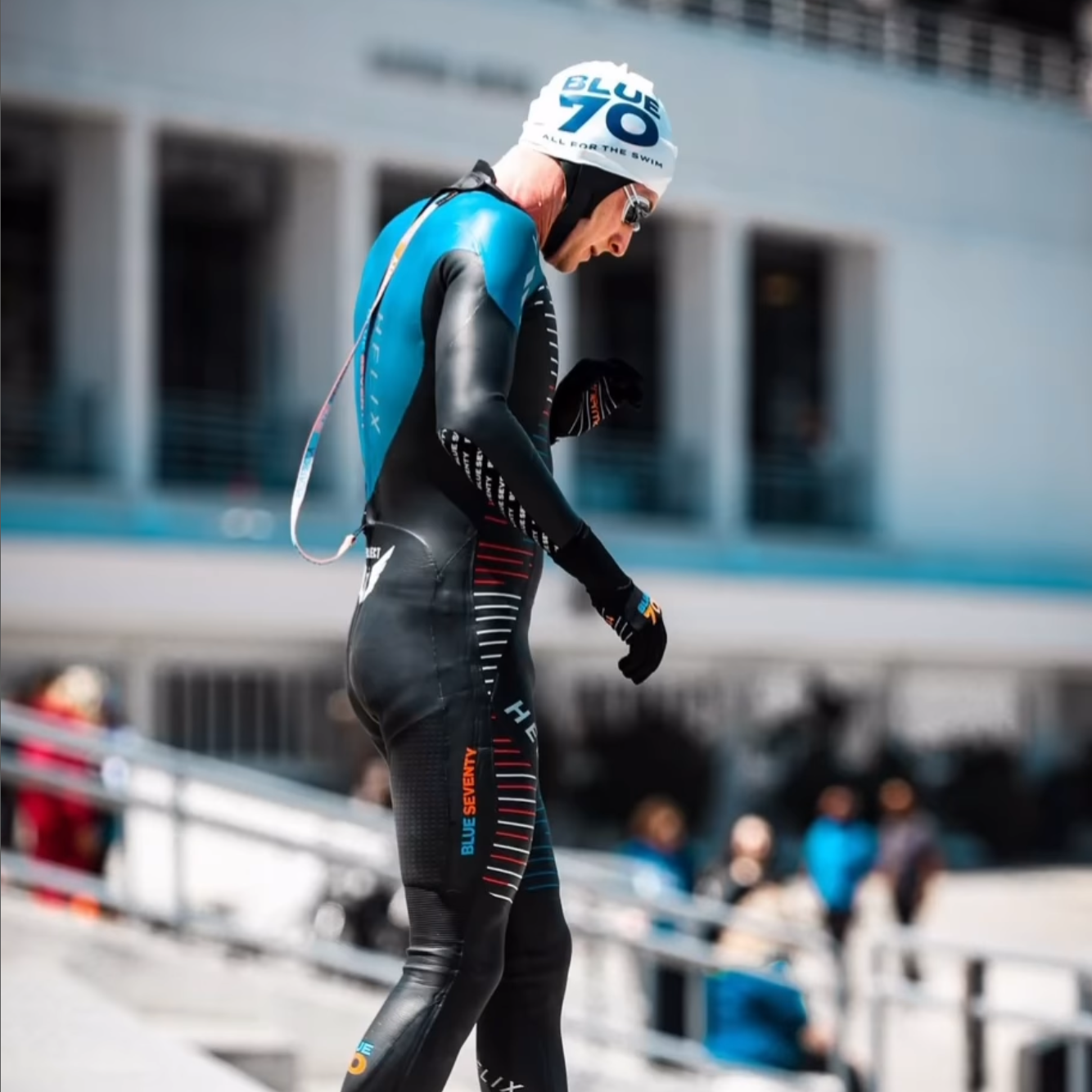
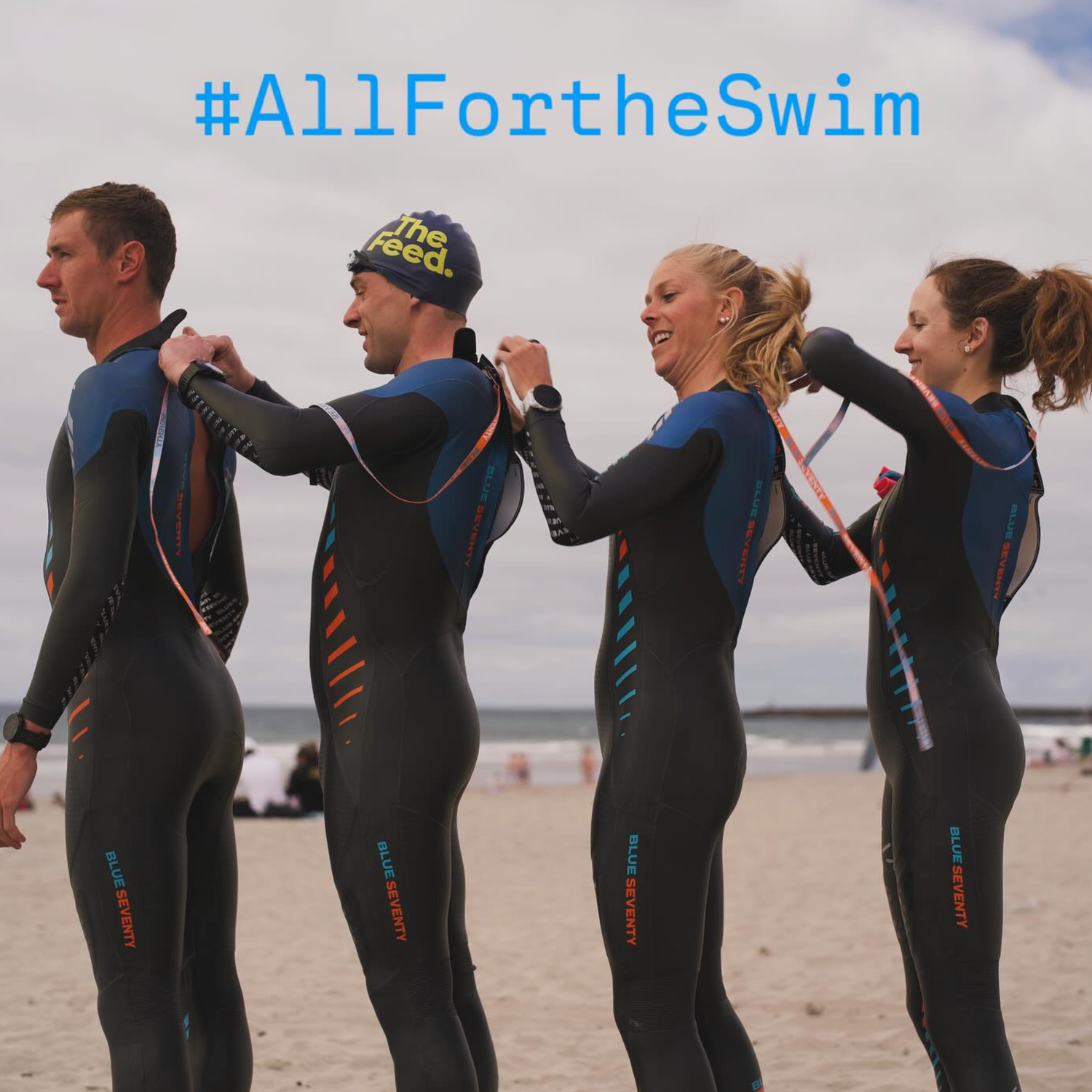
blueseventy answered that pattern problem with Femme Fit. It is available on every women's blueseventy wetsuit. Femme Fit corrects the pattern itself. The bust, torso, wrists, and ankles get a refined cut. The neckline sits lower to reduce chafing and pressure. The zipper is extended. That extra length makes the suit easier to put on and gives the suit enough room around the hips to seal without fighting. It also shortens the exit path when you strip the suit off in transition.
The material matters as well. All blueseventy wetsuits use Yamamoto neoprene in 38, 39, and 40 cell grades. A higher cell number means more flexibility. That flexibility matters most through the shoulders and underarms, where a stiff panel tires your arms faster than a flexible one. In 2014, the Femme Fit range expanded to 15 women's wetsuit sizing options.
How to Measure Before You Order
Start with the height and weight chart. Then take four measurements:
- Bust at the widest point.
- Hips at the widest point.
- Torso from the shoulder seam to the crotch.
- Wrist and ankle circumference if you often find sleeves and legs too long.
If your height and weight fall in one size but your hip measurement falls in the next, size for the hips and bust first. A suit that is tight across the hips will restrict your kick. A suit that is loose through the torso will hold water and reduce the lift that puts your legs higher.
A wetsuit should feel snug on dry land and more comfortable in the water. If you can take a full breath without restriction, the suit is not too tight. If your shoulders rotate freely through a full stroke, the upper body fit is right.
Putting the Suit On Without Damage
The order you put the suit on changes the fit. Follow this sequence:
- Pull the suit up over your hips and settle the neoprene into place at the crotch and lower back before you touch the arms.
- Use the pads of your fingers, not your nails, to work the suit up.
- Slide one arm in at a time.
- Reach back for the zipper cord and finish the pull.
Fingernail punctures are one of the two most common ways swimmers damage a new wetsuit, and they usually happen during donning. The other is heel tears from yanking the ankle opening. A women's suit with an extended zipper gives you more cord length to finish the pull without help. An improperly donned suit, especially through the shoulders, causes fatigue before you finish the first loop of the swim.
The Test Swim Check
A wetsuit that feels right in the living room often feels wrong after 400 meters. That is why blueseventy lets you swim in your wetsuit and still return or exchange it within 30 days of the ship date. Swimming in the suit does not affect your ability to get a refund, as long as the suit comes back clean, dry, unmodified, and with tags and accessories.
Use that policy before race day. Take the suit to a pool or a calm lake. Swim easy. Check the neck for gaps, the hips for tightness, and the shoulders for restriction after 15 minutes. If the suit passes that test, it is race-ready. If it does not, you are not stuck with it.
Find your size in 30 seconds, then take it for a test swim. Happy swimming.