


Ask any triathlete their swim pace per hundred meters and they'll rattle it off without thinking. Ask how long it takes them to strip a wetsuit, and you'll usually get a shrug. That's a real gap, and closing it doesn't require a single extra lap in the pool.
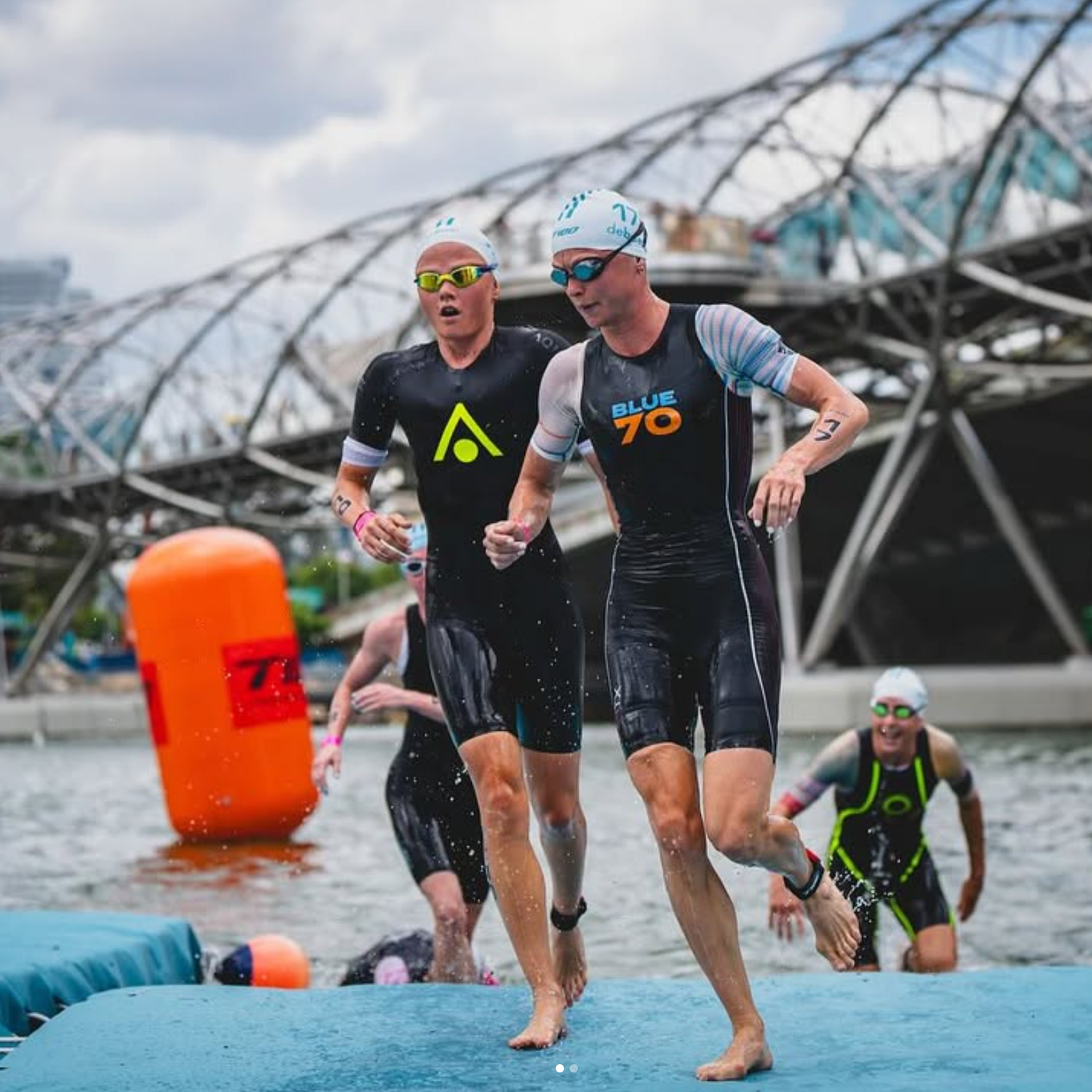
T1 has three phases: the exit run, the wetsuit strip, and the scramble into bike gear. Coaches drill the exit run constantly, sprinting athletes up a beach or dock until it's automatic. The strip itself rarely gets the same treatment. Most people plan to "figure it out" once the zipper's down. That's backwards, because the strip is mechanical. There's a right order to it, and getting that order right matters more than speed or determination.
The Sequence That Actually Works
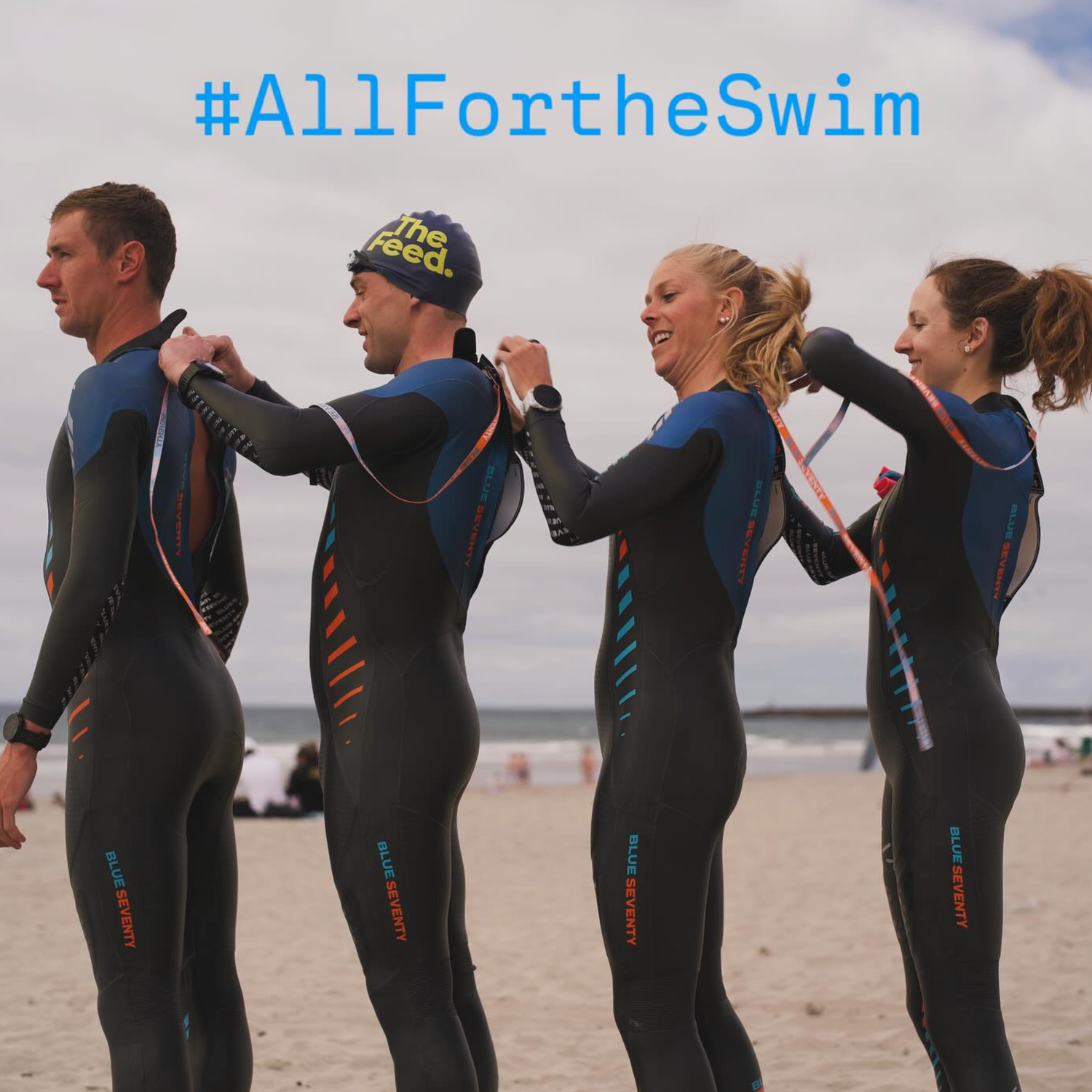
Start pulling the zipper cord while you're still running toward transition, not after you've stopped at your bike. It should come down with one hand, without breaking your stride.
Free both shoulders and arms before you touch the waist. Trying to shove the suit down past your hips while your arms are still stuck in the sleeves wastes motion, and it's exactly how a sleeve ends up bunched and inside-out at the wrist. That single snag is the biggest time sink in the whole process.
Roll the suit down to your waist. Don't yank it. Neoprene wants to hold the shape it was molded in, and rolling uses far less force than pulling, while also keeping material from bunching up behind the knee.
Then there's the ankle, where things usually fall apart. Stand on the suit near your own ankle, or sit and pin the leg with your opposite foot, and pull free using your body weight instead of your hands. This is the spot where wet neoprene fights hardest, right when your legs are least cooperative from the swim.
Why the Ankle Is the Bottleneck
Wetsuit ankles are built thin on purpose. That thinner panel preserves your kick, but it also means less structural rigidity to release cleanly from skin, and wet skin adds friction on top of that. The result: a job that should take ten seconds turns into thirty.
A thin layer of lubricant at the ankles and wrists before you enter the water cuts that friction in a meaningful way. It costs two minutes before the gun goes off, and it solves a problem most athletes try to fix with brute force instead.
Practice Dry Before You Practice Wet
Almost nobody rehearses the strip before race morning. Fewer still rehearse it dry. But dry practice is where the sequence becomes muscle memory: which arm comes out first, which hand finds the zipper, where your hands go next. Run through it at home, ten times, in under a minute each time. That pattern holds up under race-day adrenaline far better than anything improvised on a beach for the first time.
Wet practice matters too. Neoprene behaves differently soaked: heavier, clingier at the ankle, harder to predict as it folds. Cold, water-pruned fingers also change your coordination in ways a warm living room never will.
- Use a Test Swim session to run the full sequence in real conditions
- Time yourself, then time yourself again a week later
- Note where you get stuck, whether it's the ankle, the shoulder, or the zipper
Blue70's Test Swim policy exists for exactly this kind of practice. You can wear the suit in open water and still return or exchange it, so there's no reason to save your first wet run-through for race morning.
Fit Isn't Only a Swimming Variable
Triathletes judge wetsuit fit almost entirely by how it swims: shoulder mobility, chest compression, feel through the catch. Fit deserves the same attention on the way out.
A suit that fits snugly through the torso and legs releases more evenly than one with loose material bunching at the knee or ankle. Slack neoprene doesn't roll cleanly. It folds on itself and catches. That's one reason Blue70's fitting guidance calls for a suit that feels tight on land and only settles into comfort once you're in the water. A suit that's already loose out of the box will feel looser still once wet, and that slack costs you seconds during the strip.
The extended zipper length on Femme Fit models was originally built to make entry easier and accommodate a wider range of hip shapes. It pays off again on the way out. A longer zipper opening means less material has to stretch over the hips during removal, which is one less friction point in a sequence that's already working against the clock.
What a Few Seconds Is Actually Worth
No need to overstate this. A slow strip costs seconds, not minutes, for most people. But those seconds are pure loss. Unlike swim pace or bike power, transition time has no fitness ceiling attached to it. You don't need to train harder to shave time off a wetsuit strip. You need a rehearsed sequence and a bit of prep at the ankles and wrists.
For age-groupers racing in fields decided by tight margins, that's time sitting on the table for free. For first-timers, it's one less unknown to carry into race morning, a motion that's automatic instead of something to solve in front of a crowd.
A Simple Pre-Race Routine
- Apply lubricant at the ankles, wrists, and neck before you enter the water
- Run the unzip-and-shoulder sequence through your head during the final stretch of the swim
- Exit the water already moving into the sequence, not stopping to think about it
- If you haven't practiced the wet version yet, build it into your next open water swim
Most wetsuit content focuses on the swim itself, and that's fair. That's where the suit does its real work of improving body position and cutting drag. But the suit's job isn't finished until it's off and in your hands. How quickly that happens is a skill like any other in this sport, and it's worth treating it like one.