


The morning of a big race, you’ll see athletes agonising over tire pressure and sock choice, but the wetsuit‑vs‑speedsuit decision often gets a quick, almost dismissive nod. “A speedsuit is just a wetsuit without arms, right?” Not exactly. The truth is, these two pieces of kit solve two completely different problems. One lifts you. The other slips you through the water with as little resistance as possible. Understanding that difference-and the pool‑to‑open‑water evolution that created it-will stop you showing up to a warm‑water swim in a rubber sauna, or a cold‑water start without the buoyancy you trained with.
The Real Difference: It’s Not About the Sleeves
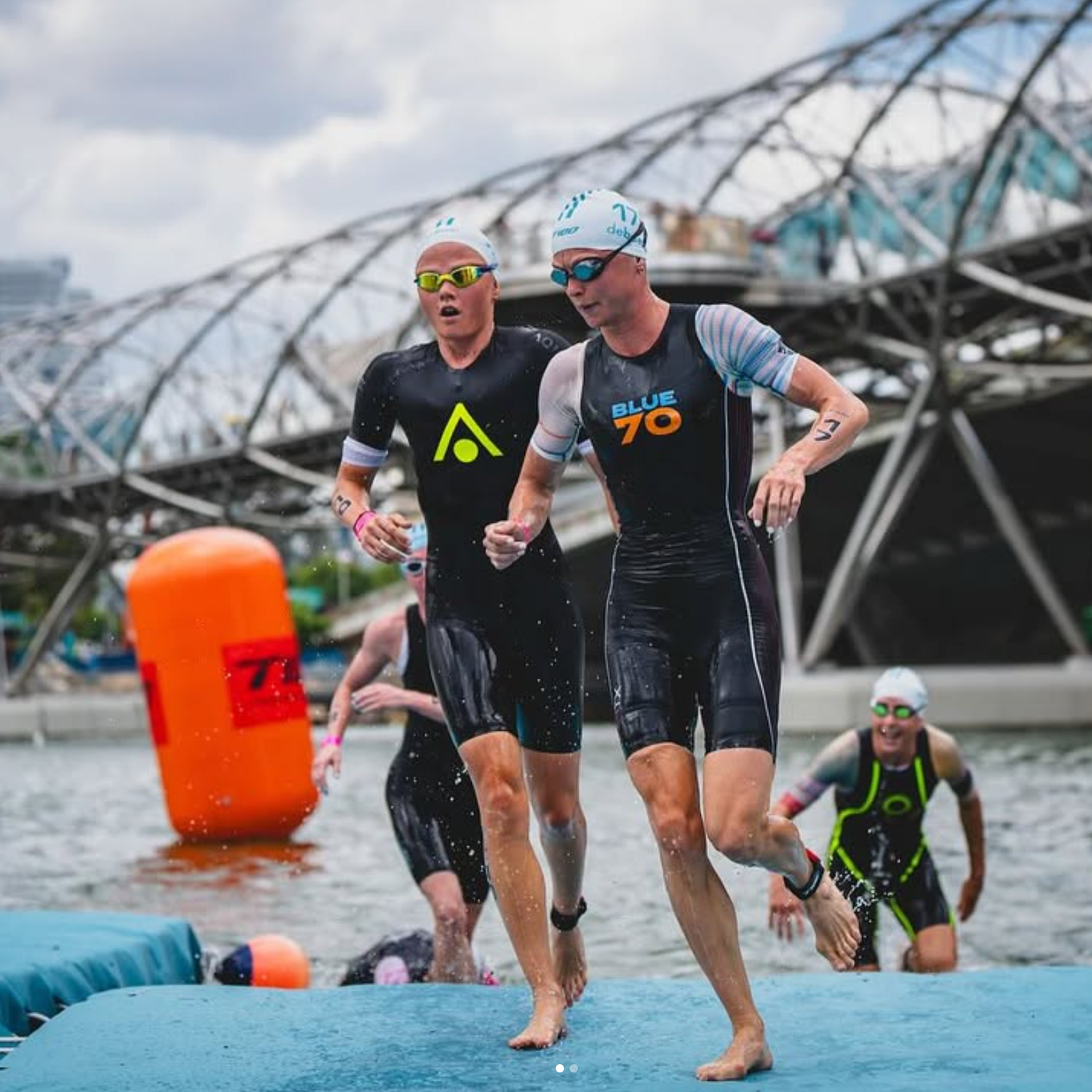
A triathlon wetsuit does three jobs: it adds buoyancy, it insulates, and it cuts through the water more cleanly than bare skin. That buoyancy is the star of the show. It lifts your hips and legs, which immediately improves your body line and reduces drag. In cold water, the thin layer of water your body warms becomes a thermal buffer. A speedsuit, on the other hand, provides no meaningful buoyancy and almost no warmth. Its sole focus is hydrodynamics-slipping through the water with less friction. That’s why a speedsuit often feels even tighter than a wetsuit and why it preserves the raw feel for the water that you’d get in a racing brief or tech suit. You aren’t floating any higher; you’re simply moving forward more efficiently.
The Swimskin’s Surprising Origin
If you trace the modern speedsuit back to its roots, you end up not in a lab, but in the hot, glassy water of Kona. When the Ironman World Championship swim is non‑wetsuit, elite athletes still need every possible second shaved off. In the mid‑2000s, blueseventy took the same Yamamoto neoprene know‑how and obsessive panel‑by‑panel construction that went into our triathlon wetsuits and created a garment that was purely about speed. That suit-named pointzero3-carried Kona champions across the line in 2006 and 2008. It wasn’t a stripped‑down wetsuit; it was a purpose‑built hydrodynamic skin.
By 2016 the idea had evolved again. We launched the industry’s first short‑sleeved swimskin, adding a small but significant amount of arm coverage to reduce drag even further. No buoyancy was introduced, no heat was trapped-just a faster shape moving through water. The same philosophy drives every blueseventy speedsuit today: let the swimmer feel the water exactly as they’ve trained, but let them move through it with less resistance.
The Physics That Forces the Choice
In cool water, buoyancy is your single biggest performance lever. Panels of NBR foam-like the LIFT inserts in our Helix and Reaction wetsuits-are placed right where most swimmers carry sinkable mass: the hips and thighs. Get that body position level, and frontal drag drops dramatically. That’s why we say “buoyancy equals speed.” It isn’t a sales line; it’s the physics of swimming. Beginners often see the biggest leap in pace, but even the strongest age‑groupers post better times with less energy once their legs are lifted.
When water climbs above roughly 70-72°F, a full wetsuit becomes a liability. You risk overheating, and race organisers often prohibit wetsuits altogether. With no buoyancy permitted, the advantage shifts to hydrodynamics alone. This is where a speedsuit earns its keep. It reduces surface drag, so every stroke carries you a little farther, but it won’t correct a sinking lower body. If your swim stroke relies heavily on wetsuit lift, you’ll want to mix in some non‑wetsuit open water practice or pool work in a speedsuit before race day.
When to Pull One Out of Your Bag
Here’s the simple field‑test logic our athletes use:
- Water below ~56-58°F: You need serious thermal protection. A cold‑water suit like the Thermal Reaction, with its full Zirconium jersey lining, gives you that added buffer.
- 56-68°F: This is the sweet spot for a performance or training wetsuit. Race day? Grab the Helix. Training several times a week? The Reaction is built to handle that frequency.
- Above 70-72°F: A full suit can get uncomfortable fast over long distances. Sleeveless suits and swimskins become the go‑to, and race rules will often require non‑wetsuit swimwear. [VERIFY: current USAT/Ironman temperature thresholds.]
If you’re standing on the beach unsure, do the gut check: can you hold a high‑hip kick without help? If the answer is yes and the water is warm, a speedsuit is faster. If you want that free body‑position lift and any chill protection, the wetsuit is the call. And remember that a speedsuit often stays on through T1 and onto the bike-there’s no peel‑and‑dash, which changes your transition rhythm entirely.
Fit: It Should Feel Different, Not Wrong
Both suits must be snug, but the sensations differ. A wetsuit should feel tight across the shoulders when you’re vertical on dry land, and then ease up as soon as you’re horizontal and the water slips inside. A speedsuit will feel even tighter all over-it’s compressing for speed, not insulating. The sizing philosophy stays consistent across both, though. Our Femme Fit patterns, for instance, reshape the suit through the bust, torso, wrists, and ankles specifically for female athletes, whether it’s a Helix or a swimskin.
One thing that surprises a lot of swimmers: you can take a blueseventy wetsuit for a test swim and still return or exchange it within 30 days as long as it’s clean, dry, and tagged. Competition suits have slightly different exchange rules, so check the details before you commit, but the message is simple-get in the water and feel it work.
Trust Built Over Decades, Not Sales Pitches
In 2022, at the Ironman World Championship in St. George, blueseventy athletes Braden Currie and Lionel Sanders finished second and third overall. Both have put their trust in our wetsuits and swimskins through countless race mornings. Behind that trust is a thread that runs all the way back to the first pointzero3 in Kona and forward to every Helix that helps an age‑grouper beat the cut‑off. The suit choice isn’t about brand loyalty; it’s about matching the tool to the conditions. That’s the quiet confidence you see when an athlete walks to the water line knowing their equipment will simply disappear into the swim.
What’s Next for Speedsuits
The swimskin category keeps pushing into smarter fabrics, bond‑seam construction that ditches heavy stitching, and coverage shapes that challenge old assumptions. Expect these suits to keep getting faster while doing nothing to compromise the swimmer’s feel. Because at blueseventy, every swimskin still carries the DNA of that original wetsuit line-and the same question we’ve asked for decades: how can we make you move through water more efficiently today?
The Bottom Line
A wetsuit is for lift, warmth, and body‑position advantage. A speedsuit is for minimal drag when buoyancy isn’t allowed or needed. They aren’t interchangeable; they’re two distinct answers to two different swims. Decide based on the water you’re actually facing, not a favorite piece of gear. You trained for the conditions, not for the suit. The suit just meets you there.
Stop guessing about size. Use our sizing tool to get your match in seconds, and remember that you can always give your wetsuit a test swim-that’s what the policy is for. Dive in.