


A wetsuit has exactly one moving mechanical part. Everything else works by stretching and recovering: the neoprene panels, the jersey lining, the glued seams. The zipper is different. It has teeth, a slider, a pull tab, and tape bonded under tension to the neoprene around your neck and spine. It's also the piece most likely to fail first, and usually the reason has more to do with how you put the suit on than how long you've owned it.
Most swimmers treat zipper trouble as one problem: it's broken, time for a shop visit or a new suit. That's a mistake. A zipper can fail in at least four distinct ways, and each one comes with its own fix, its own cost, and its own root cause. Knowing which one you're looking at saves money. On a race morning, it can save a lot more than that.
Why the Neck Curve Takes the Damage First
Zippers resist force pulling along the length of the coil pretty well. That's the direction your hand moves when you zip up or down. What they don't handle well is lateral shear, force pushed sideways across the teeth. Swimming loads a zipper both ways at once. Every freestyle stroke rotates your torso and flexes your shoulders, and the sharpest curve in most back-zip designs sits right at the base of the neck. That's exactly where rotation piles up stress.
Donning technique makes it worse. Yank the zipper closed while the suit is still bunched at the shoulders, and you're pulling the slider through a tight radius under load. Do that every single time you suit up, across a full season of training swims and race mornings, and you've run thousands of shear cycles through a few centimeters of tape and coil.
Blue70 tackled part of this head-on with the 2021 Fusion redesign, which lowered the neckline to ease that curve while keeping the seal watertight. It's a small geometry change. But it reflects a real principle: reduce the curve, and you reduce the fatigue.
Four Ways a Zipper Actually Fails
Not every zipper problem is the same problem wearing a different face. Here's how to tell them apart.
- Slider wear. The slider is the small housing that rides the coil and locks the teeth together. It wears down over time, especially from sand and salt grinding against it during open-water entries and exits. A worn slider lets the coil separate just behind it even when the zipper looks fully closed. This is the easiest failure to fix, and a replacement slider solves it outright without touching the tape.
- Coil or tooth misalignment. If one stretch of the zipper won't stay closed no matter how many times you run the slider over it, a tooth has likely bent or popped loose rather than snapped off. Sometimes careful work with pliers puts it back. More often, by the time it's visible, the coil needs replacing along with the slider.
- Tape delamination. This one looks like a zipper problem but is really a bonding problem. The fabric tape the zipper is sewn and glued to separates from the neoprene, usually starting at the top of the neck curve, right where flex cycles run highest. A new slider changes nothing here. The whole assembly, tape included, needs to come out and be replaced or properly re-bonded.
- Pull cord or leash failure. The cord you grab to self-zip from behind takes direct, hard yanking, often from cold hands moving fast. It snaps or pulls free from its anchor more often than any other part fails. It's also the cheapest and fastest fix: a new leash costs little and installs in minutes.
The Cold-Water Hand Problem
There's a physiological wrinkle here that's easy to miss. Hand dexterity drops measurably in cold water as blood flow to the extremities constricts to protect core temperature, a well-documented response to cold immersion. A swimmer who can tie a knot without thinking in 60-degree air loses that fine motor control within minutes once water temperatures fall into the high 50s, roughly the point where Blue70 recommends a purpose-built thermal suit in the first place.
Put those two facts together and you get a pattern. Swimmers yank harder and less precisely on a zipper pull right when their hands are least capable of controlled force, often while climbing out of the water and heading for transition. That's the mechanical reason pull cords seem to fail disproportionately at race starts and finishes rather than during an ordinary pool session.
Donning Technique as Prevention
Most zipper damage is avoidable. The fix isn't a product. It's a sequence.
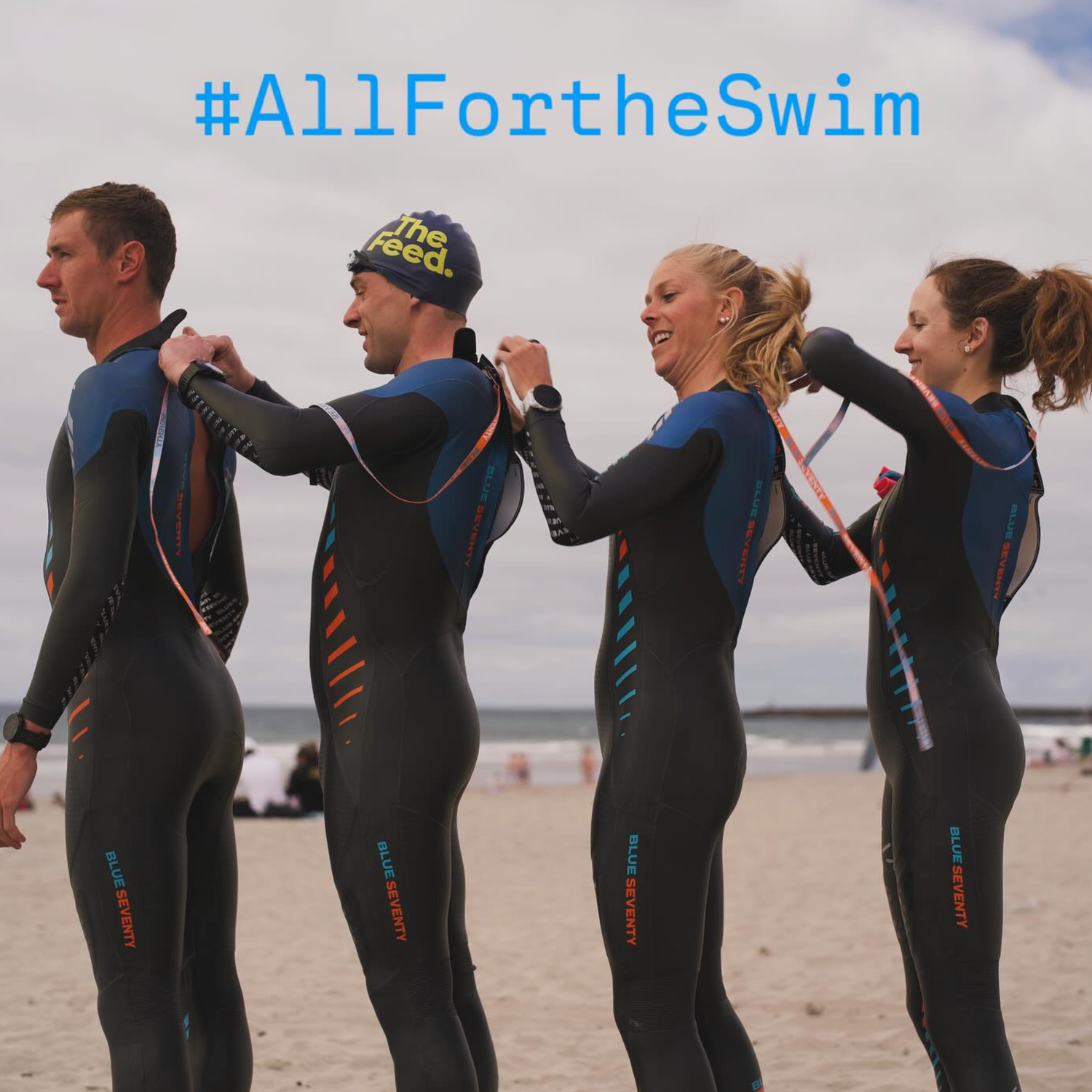
- Pull the suit up to the waist first and work each leg into position before touching the upper body.
- Bring the suit over the shoulders by pulling fabric up from the torso, not by hauling on the arms or collar.
- Settle the shoulders and neck fully before you reach for the zipper. A bunched collar forces the zipper to close under a sharper bend than it was built for.
- Pull the zipper closed in one smooth motion instead of several short, forceful tugs.
- Rinse the zipper and lubricate the coil lightly after saltwater or sandy swims, then store the suit unzipped.
That last habit matters more than it looks like it should. A suit stored zipped, especially in a damp bag, keeps the tape under constant low-level tension and traps grit against the coil. Storing it unzipped costs nothing and quietly removes a steady source of wear.
What Belongs in a Repair Kit, and What Doesn't
A sensible zipper repair kit covers the cheap, mechanical failures: a replacement slider sized to match the coil, a spare pull cord and anchor, coil lubricant, and a small set of pliers for careful tooth realignment. These are reasonable jobs to tackle yourself. Swapping a slider or a leash takes about as long as toweling off after practice.
Tape delamination is a different kind of job. Re-bonding zipper tape to neoprene without proper clamping and cure time usually produces a seal that looks fine and leaks again within a few swims. That work belongs with a professional repair service, not a weekend fix.
It helps to know where warranty coverage stops, too. Blue70's one-year warranty against manufacturing defects doesn't cover zipper damage caused by force, which describes most of what's listed above. A snapped pull cord from a hard yank or a bent coil from zipping over bunched fabric counts as wear from use, not a material defect, so it sits outside the warranty's repair remedy. That's not a reason to skip asking, though. Blue70's support team can look at a suit and tell you plainly whether you're facing a ten-minute slider swap or something that needs to be sent in.
When Repair Beats Replacement
The math shifts with the age of the suit. A zipper failure early in a suit's life, especially on a mid-range model like the Fusion or Reaction, is almost always worth repairing. The neoprene, panels, and seams are still intact, and the zipper is a contained, fixable piece. A suit nearing the end of its working life anyway, with stiff neoprene or thinning catch panels, might be telling you something different: that it's time to retire the suit rather than sink more money into it.
Swimrun adds its own twist. Repeated donning and doffing across a single race, sometimes a dozen times or more between water and land sections, puts far more zipper cycles through a suit in one event than a triathlete sees in a month of ordinary training. That's part of why the Alliance SwimRun is the only Blue70 suit warrantied specifically for swimrun use. It's built for that duty cycle, zipper stress included, rather than a triathlon suit asked to do a job it was never designed for.
The Takeaway
A zipper problem isn't one problem. It's four, each with its own fix, its own cost, and its own cause rooted in how the suit gets donned, stored, and used over time. Learn to tell a worn slider from a delaminating tape seam, and you'll retire fewer suits over a part that was never the real issue, and you'll get fewer surprises on race morning when cold hands meet a stubborn zipper pull.
Not sure which failure you're dealing with? Blue70's support team can help you work through it before you decide between a repair kit and a new suit. Bring a close-up photo of the zipper when you reach out. It tells them more than a description ever could.