


That raw, stinging line around your neck after a long lake swim rarely starts with sensitive skin. It starts with a collar that has settled into the wrong spot and then rubs the same patch for every breath, every sight, and every head turn. Solve the fit problem first, and the need for a neck rash guard often fades.
The skin around your neck is thin. It moves through a wide range as you sight and breathe. Cold water stiffens neoprene. That stiffened collar edge drops into the deepest crease at the base of your neck and stays there. Add salt, fine sand, or chlorine-dried skin, and the friction turns into a raw line by the time you reach shore. A swim-specific wetsuit has to handle constant head rotation, so the collar needs to sit lower and move with you. A collar that works like a dive neck seal presses too tight on the surface and rubs hard in the water.
Where the Collar Sits Matters More than Anything Else
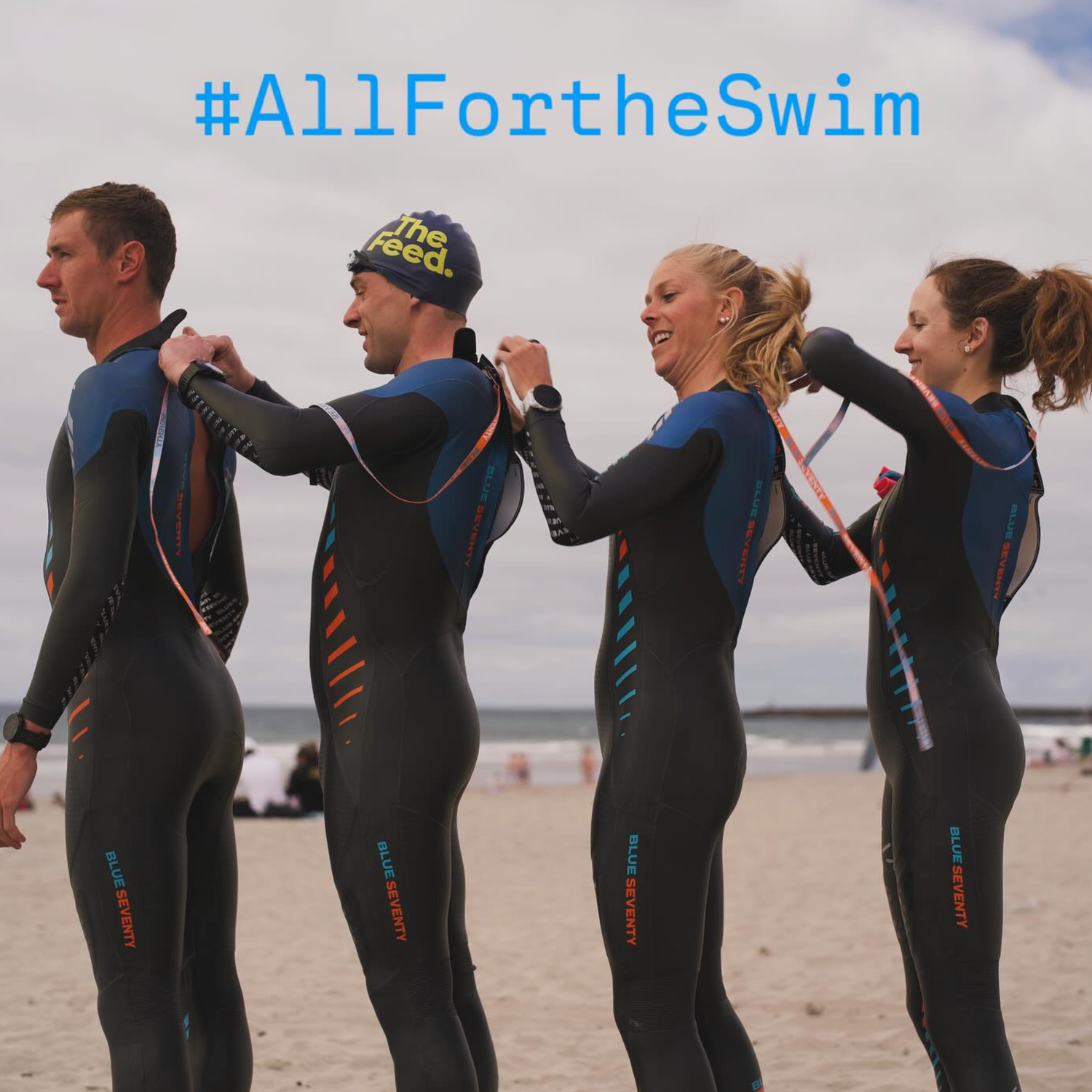
blueseventy lowered the neckline on the Fusion in 2021. The reason was simple: keep the water out without the edge sawing into your neck. A lower-sitting collar rests on a smoother part of the neck and catches less during sighting. The Femme Fit line applies the same idea. Those suits have a lowered neckline and an extended zipper, which reduces pressure around the neck, torso, and bust.
Material plays a role too. blueseventy wetsuits use Yamamoto neoprene in 38, 39, and 40 cell grades. Higher cell numbers mean more flexibility. A collar that flexes follows your neck. A stiff or folded collar works like a dull edge at the same contact point for the entire session.
The Donning Mistake That Creates a Collar Problem
Most neck chafing shows up later in the swim, after your body warms and the suit settles. The cause is often how you put the suit on. If you yank it up only by the arms or the collar, the neckline can sit too low in front or twist to one side. A twisted collar presses a seam edge into your skin. Once the suit is wet, that edge moves with every breath and every sight.
Do this instead:
- Pull the suit up through the hips and torso before you touch the shoulders.
- Use a flat palm, not fingernails, to raise the material.
- Settle the collar so it lies flat with no fold.
- Have someone draw the collar up from the center on a rear-zip suit while you roll your shoulders back once.
That sequence takes less time than it sounds. It prevents the fold that turns a comfortable collar into a problem ten minutes into the swim.
What a Neck Rash Guard Can and Cannot Do
A thin neck rash guard or gaiter adds a low-friction layer between the collar and your skin. It works when the suit fits correctly and the guard sits smooth. It fails when the collar is too tight or twisted. The guard bunches, slides, and swaps one pressure point for another. Keep it thin enough that it does not change how the neckline fits, and pull it smooth before the collar goes over it.
Friction-reducing products belong on your skin, not on the inside of the suit. Apply them to the neck and any fold points, and keep them away from the zipper. Reapply after exits and entries in saltwater. No product fixes a folded collar or a suit that is too small.
Dry-Land Fit Checks Before You Swim
Put the suit on with the sequence above and stand in front of a mirror. Run through these checks:
- The collar should sit flat with no fold anywhere around your neck.
- Raise both arms overhead. The suit should stay close to your neck without pulling away at the back.
- Turn your head slowly as if sighting to both sides. The collar edge should not catch, lift, or pinch.
A suit should feel snug on dry land and more comfortable in the water. That is normal. A collar that leaves a red line before the swim starts is too tight. A collar that gaps when you turn your head will let water pool inside and rub. The neckline seals. It should never squeeze like a strap.
Care After Chafing and When the Suit Is the Culprit
If your neck is already raw, rinse the skin with fresh water, pat it dry, and give it time to recover before the next swim. Skip alcohol-based products on broken skin. For the suit, rinse the collar after salt or chlorinated sessions and dry it flat. Never hang the suit by the neckline. That stretches the opening and changes the fit.
If a suit still chafes your neck after the fit checks and a proper test swim, the problem is the suit. That is what the Test Swim policy covers. You can swim in a blueseventy wetsuit and still return or exchange it within 30 days if it comes back clean, dry, unmodified, and with tags. Use that option. Do not force a collar that does not match your neck.
Start with the Collar, Not the Accessory
A neck rash guard reduces friction on a collar that already sits right. It will not fix a twisted, folded, or too-tight neckline. What fixes that is a lower-sitting collar and flexible higher-cell neoprene, both built into swim-specific suits like the Fusion and the Femme Fit line. If the suit fails the dry-land checks, try the next size or a different model. Your skin notices the collar first. Make the collar right first, and the next swim feels like an afterthought.
Happy swimming.