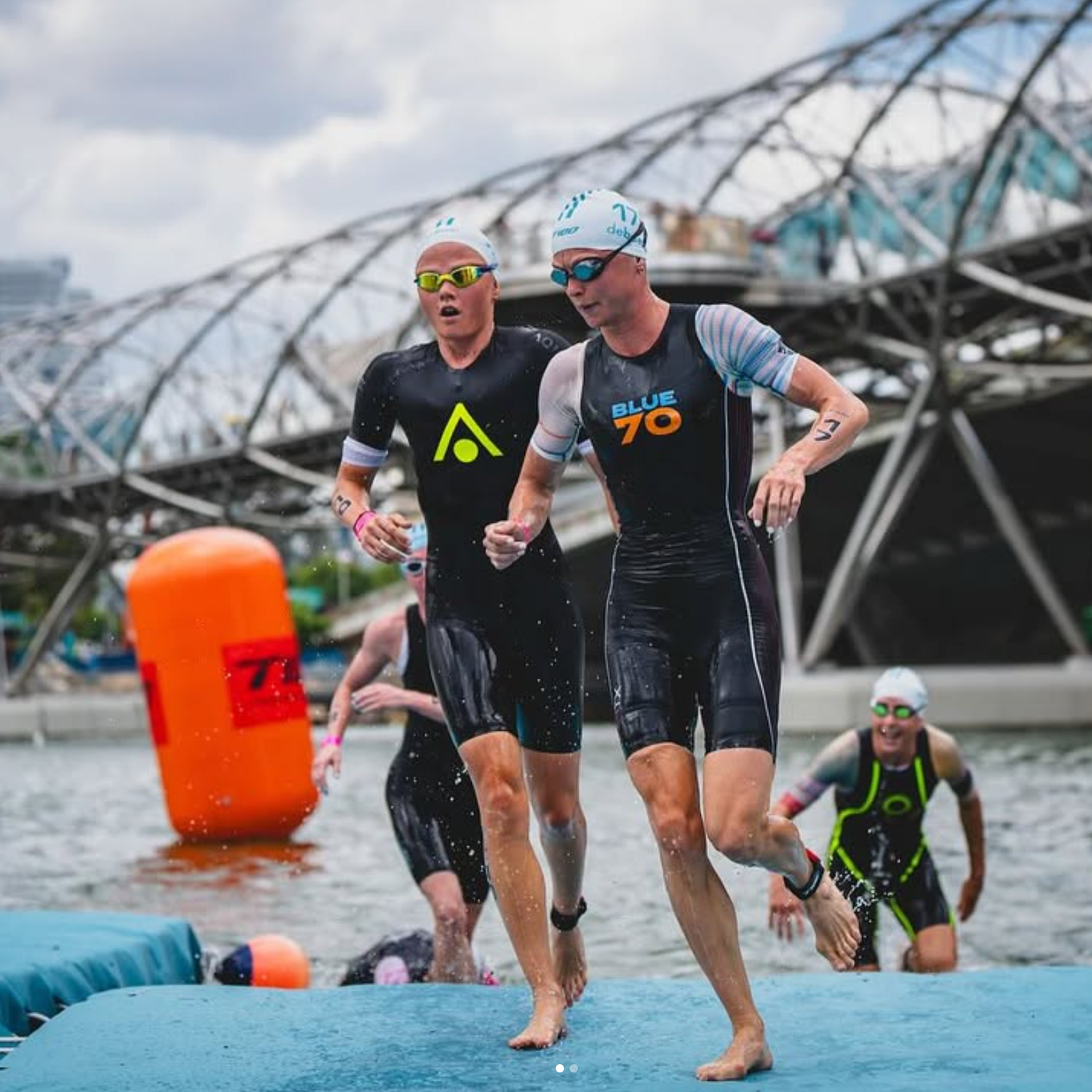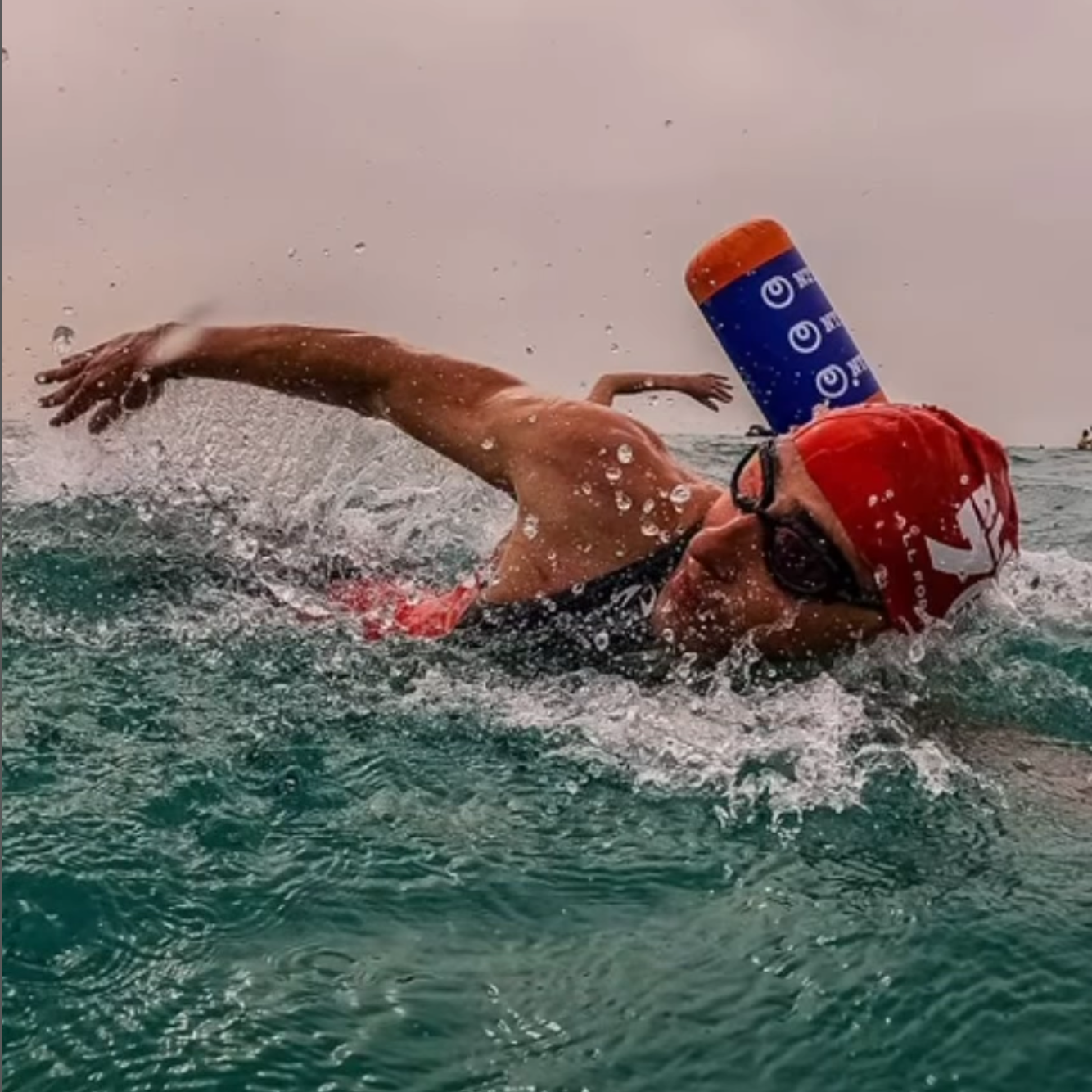



A wetsuit sized for a 250-pound swimmer isn't a stretched-out copy of the one sized for a 150-pound swimmer. Most size charts hide that fact behind two numbers: height and weight. Neither one tells you the ratio between torso length and chest circumference, or between shoulder width and bicep size. Those ratios shift as body size increases. And they decide whether a wetsuit gets out of the way of your stroke or fights you for the whole swim.
This matters for every swimmer. It matters more if you're on the larger end of the size range, because the usual fitting shortcut, find something that fits your chest and check the arms and legs after, assumes every measurement on your body grows at the same rate. It doesn't.
Why Standard Sizing Breaks Down at Larger Sizes
Pattern grading is the process of scaling one base size up or down to build a full size run. Add two inches to the chest, add a proportional inch to the sleeve, repeat. That works fine across a narrow middle band of body types. Near the edges of the range, it falls apart: torso length stops tracking chest circumference in a straight line, and shoulder width stops tracking bicep size the same way.
Blue70's Femme Fit line is a good example of a different approach. Instead of shrinking a men's pattern down, Femme Fit refines the pattern shape itself at the bust, torso, wrists, and ankles, and lowers the neckline to cut down on chafing at the collarbone. That's a proportional fix, not a size fix. The same idea, adjusting shape instead of just multiplying dimensions, is exactly what larger frames need across the whole size range. That's why Blue70 builds a sizing tool and detailed size charts: to catch swimmers whose torso-to-limb ratio doesn't match a chart built around average proportions, wherever they fall on the scale.
Where Buoyancy Actually Does Its Work
Neoprene adds buoyancy. That's simple physics, true for every swimmer who zips one on. What changes with body composition is where that added lift actually earns its keep.
Fat tissue is less dense than water. Muscle tissue sits close to water's density or slightly above it. A swimmer carrying more body fat through the hips, thighs, and torso already rides higher in the water than a lean, heavily muscled swimmer wearing the identical suit. That comes down to tissue density, nothing else. It also means the legs and hips, the area where a wetsuit typically does its heaviest lifting for a lean athlete, may already be reasonably well supported before the neoprene does anything.
So the job the suit needs to do shifts. The priority isn't adding more lift to legs that already float fine. It's keeping the torso streamlined so bunched or loose neoprene doesn't create drag where your hips are already sitting high, and preserving full shoulder rotation so your catch and pull aren't fighting a restrictive sleeve. Blue70's fit doctrine still applies here: snug on dry land, more comfortable once you're submerged. What moves is the emphasis inside that doctrine, away from maximum leg buoyancy and toward torso streamlining and shoulder freedom.
Four Fit Points That Cause the Most Problems
Four specific areas generate most fit complaints on larger frames, and none of them show up on a standard height-weight chart.
- Neckline. Too tight and it restricts breathing and turnover. Too loose relative to torso circumference and it floods on every stroke, adding drag and dead weight through the swim. Blue70's lower-sitting neckline, built into the 2021 Fusion redesign, keeps the watertight seal without choking a thicker neck.
- Zipper rise and back panel length. This is the dimension standard grading gets wrong most often. Torso length doesn't scale evenly with chest circumference, so a suit that fits your chest fine can still ride short in the back, pulling at the crotch and shoulders with every stroke.
- Shoulder-to-bicep ratio. A larger bicep relative to shoulder width can create a tourniquet effect at the upper arm even when the shoulder joint itself has plenty of range. You feel fine reaching forward and struggle on recovery, where circulation and cuff pressure matter most.
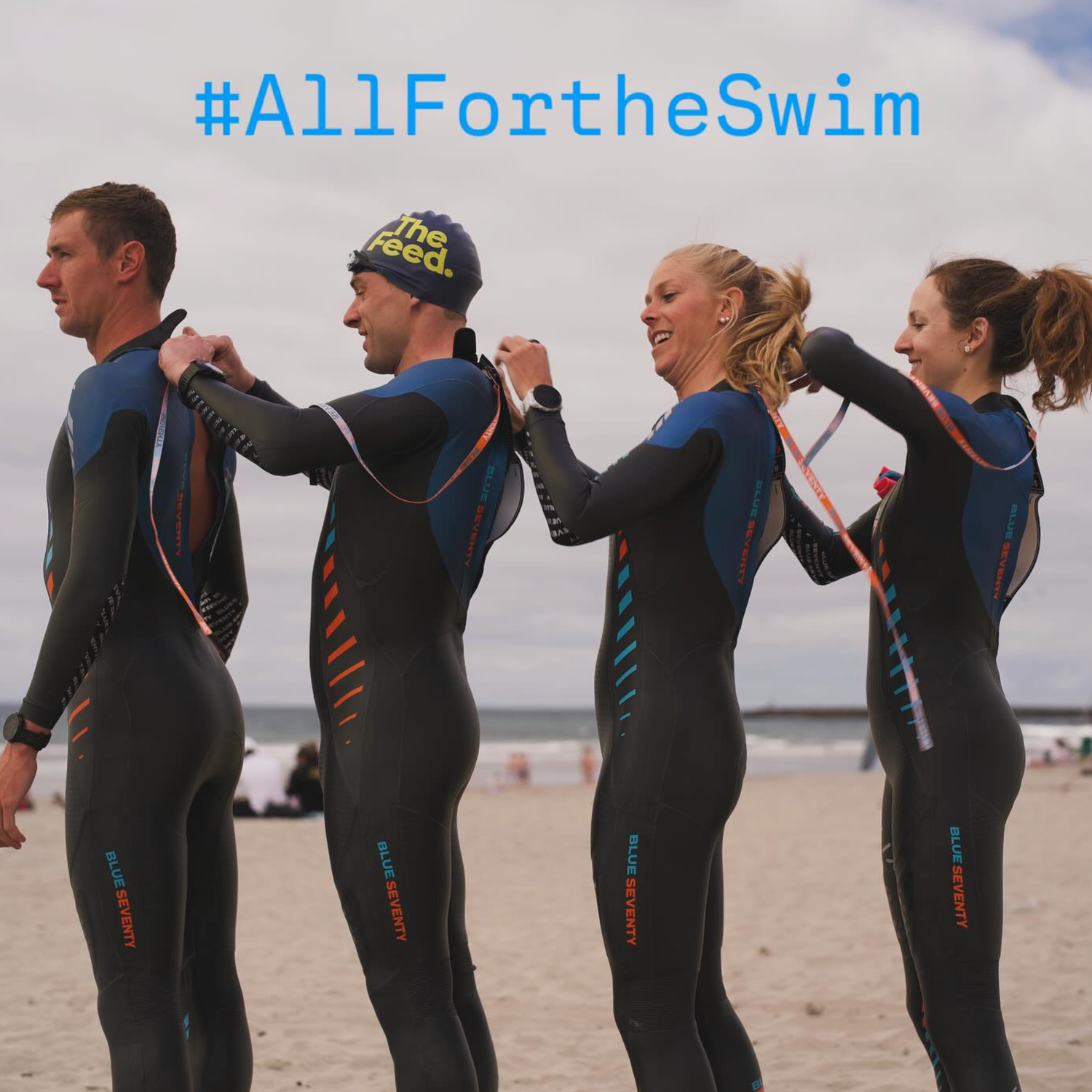
- Wrist and ankle seals. These need enough compression to stop water flushing in without cutting off circulation on a longer swim. Extended zipper length, another Femme Fit feature, also speeds up getting the suit on in the first place. That matters more the larger the surface area you're pulling neoprene over.
Neoprene Grade and Where the Flex Panels Sit
Blue70 builds its wetsuits from Yamamoto neoprene, graded in 38, 39, and 40 cell. Higher cell counts flex more but wear thinner and more delicately. Blue70 says this plainly about its flagship Helix: the thinnest, most flexible panels deliver excellent feel for the water but break down faster under frequent training use.
That trade-off carries extra weight on a larger frame. More surface area under tension during each stroke cycle means more repeated stretch on the same panels, swim after swim. A suit built for minimal-drag racing may not hold up to three weekly training swims the way a suit like Reaction or Fusion will, since those models use higher-durability neoprene through the body while keeping flexible panels at the shoulders for rotation. Panel placement matters more than the thickness number on the label. Where is the flexible, higher-cell neoprene positioned, and does it line up with where your torso actually needs to move?
Getting the Suit On Without a Fight
Putting on a wetsuit is a mechanical problem before it's anything else. More surface area to pull over means more places for things to go wrong.
- Work the suit up your legs and torso in small sections. Don't yank from the collar.
- Use fingertips and flat palms against the neoprene, never fingernails. Fingernail punctures are one of the most common damage types, and they're not covered under warranty.
- Take extra time at the shoulders. Most restriction complaints trace back to a suit rushed on and never properly seated at the shoulder seam, not to the actual cut of the suit.
Extended zipper length shortens this whole process. That matters in a race-morning transition line just as much as it does on a Tuesday evening swim.
Test the Fit Before You Trust It on Race Day
None of this replaces actually swimming in the suit. A pattern that reads correctly on paper can still feel wrong once your shoulder rotates through a full stroke cycle under load.
Blue70's Test Swim policy exists for this exact reason. Swim in the wetsuit, and it can still be returned or exchanged within 30 days as long as it comes back clean, dry, with tags and accessories intact. If you're working outside the middle of a standard size chart, that policy turns a guess into a low-risk trial. Start with the sizing tool and size charts. Order based on torso length and circumference measurements, not weight alone. Then use the test swim to confirm shoulder freedom and back panel length before race day arrives.
Keeping a Well-Fitted Suit in Good Shape
Once the fit is right, keeping it right comes down to protecting the neoprene from damage that has nothing to do with swimming. Rinse the suit in fresh water after every ocean or chlorine swim. Dry it fully before folding. Store it away from direct heat. Avoid folding at the same crease points every time, since that stresses neoprene at the exact panels doing the most flexing during a stroke.
A suit that fits well and gets this basic care will hold its shape, and its stretch, far longer than one left balled up in a swim bag after every session.
Getting the fit right isn't about finding a bigger version of a standard suit. It's about finding one built with the right proportions from the start. Start with the size charts, use the sizing tool, and take the Test Swim before race day.
Happy swimming.