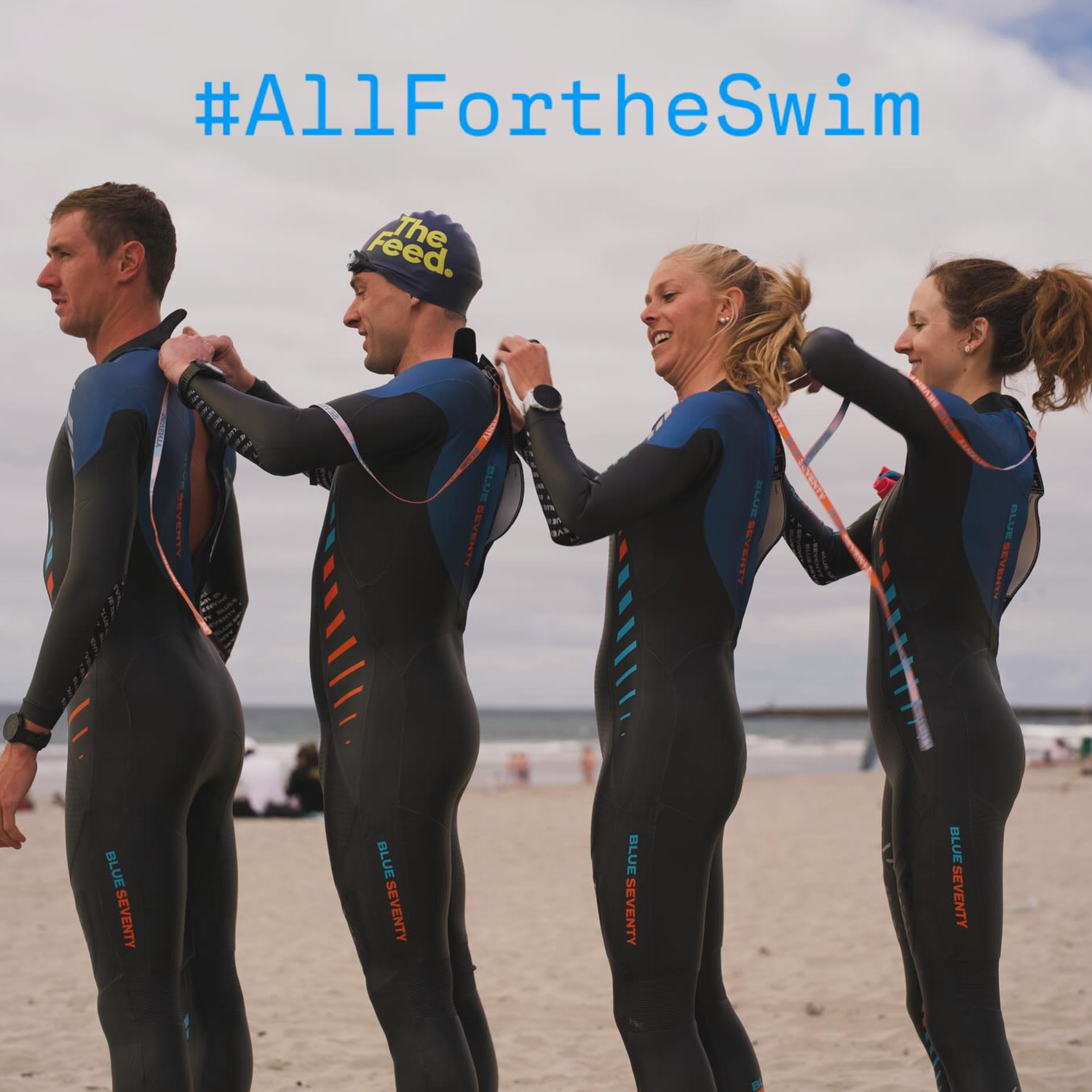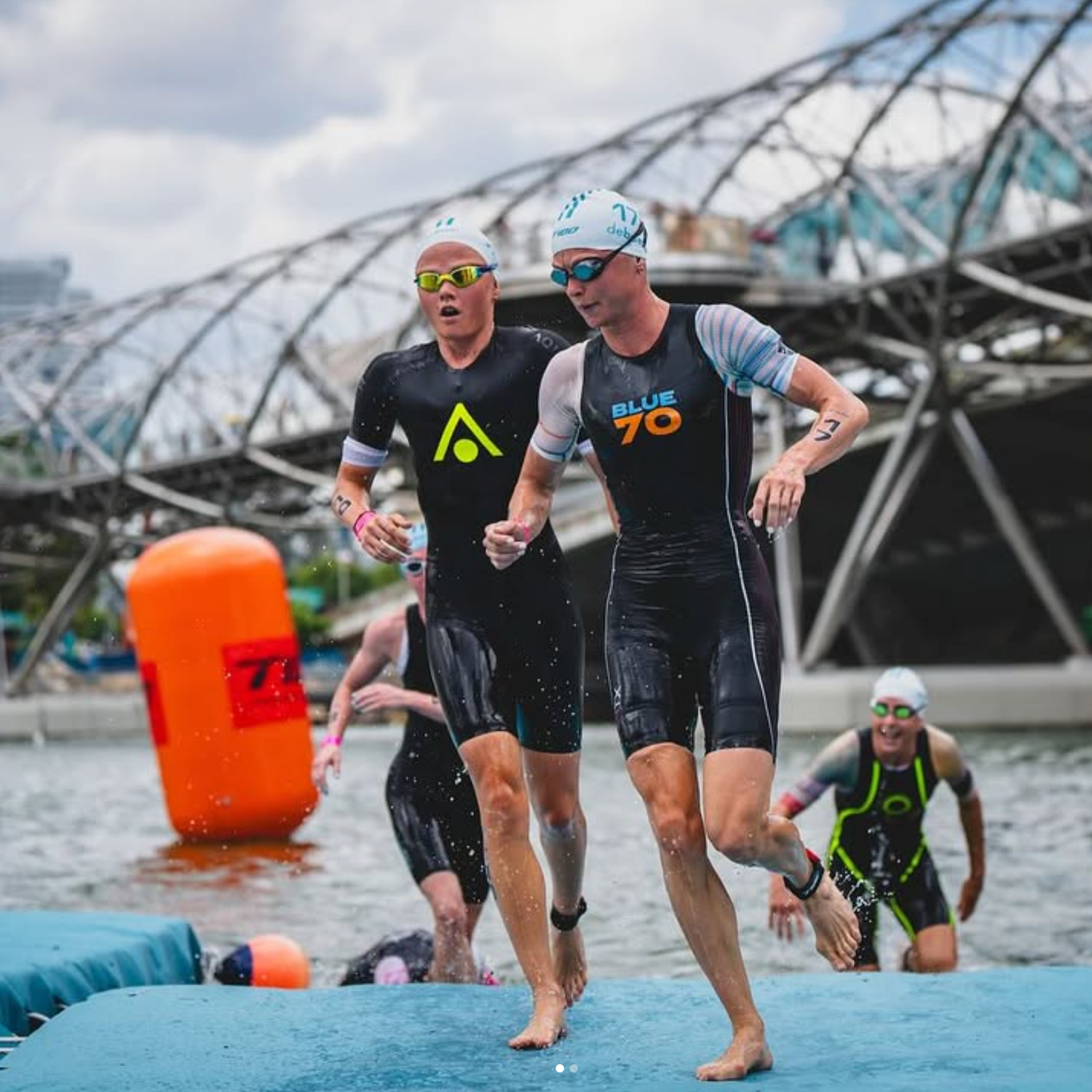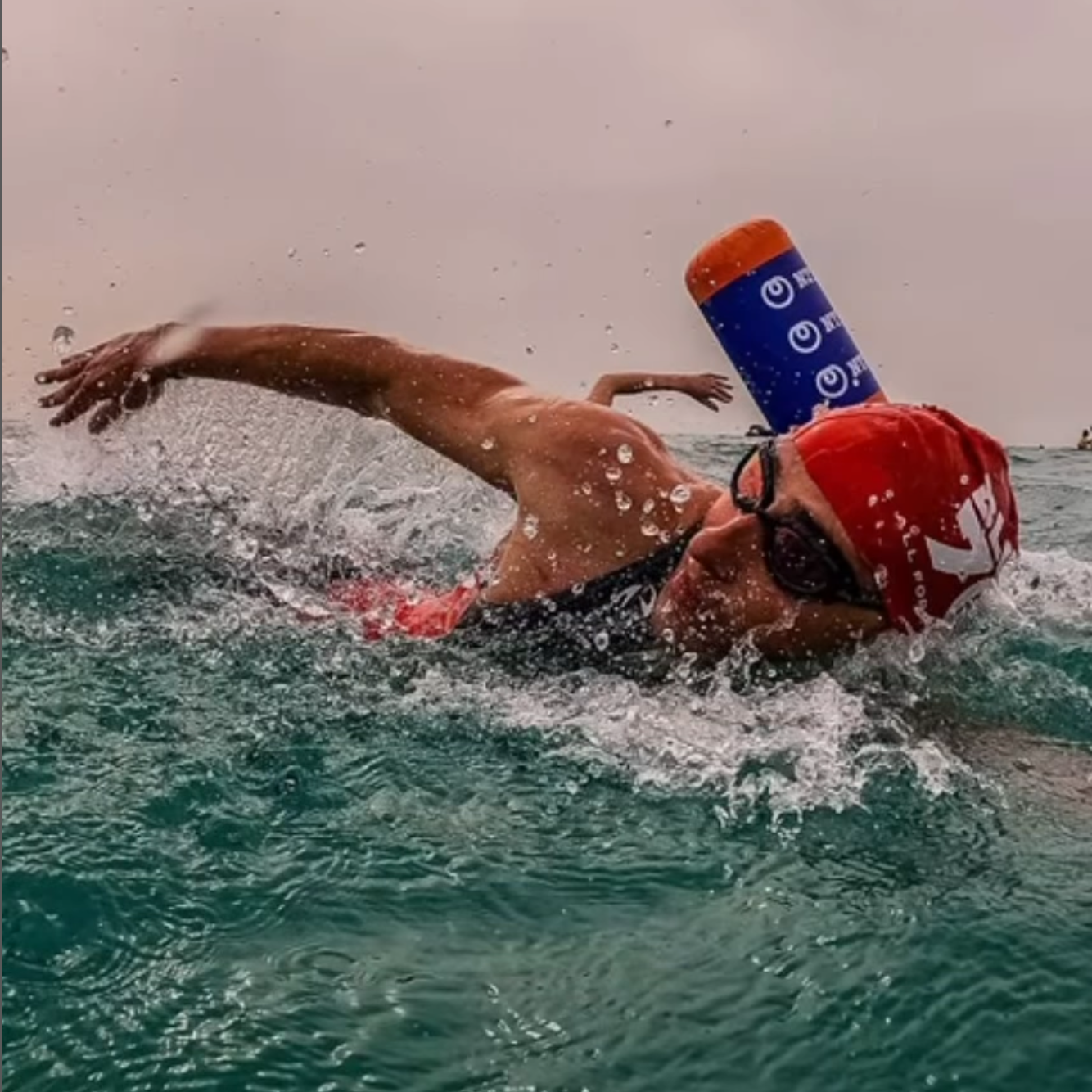



You can finish a triathlon without a wetsuit. Plenty of athletes do. But a swim-specific suit changes how your body sits in the water, and for many triathletes that change is the difference between a relaxed swim and a fight against sinking legs.
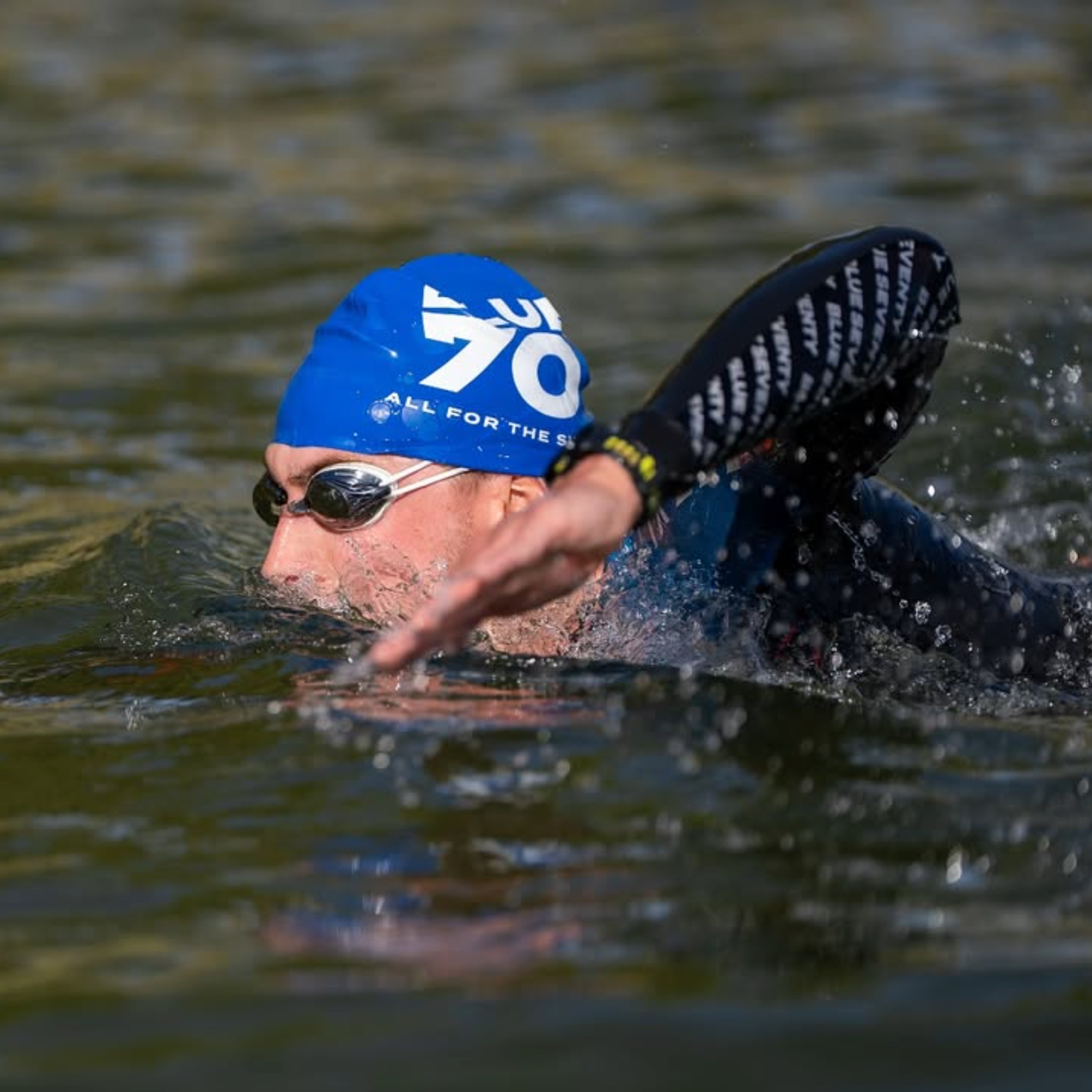
Blue70 makes wetsuits and swimwear for swimming, not surfing, not scuba. That focus matters because a triathlon wetsuit is built around a freestyle stroke. The shoulders need room to rotate. The chest needs to stay flexible enough for a full breath. The hips and legs need lift.
A Wetsuit Does Two Jobs
A wetsuit lets a thin layer of water inside. Your body warms that water, and that layer provides insulation. It does not create a dry barrier. At the same time, the neoprene adds buoyancy to your hips and legs. That lift helps you hold a more horizontal body position, which reduces drag and lets you kick less.
Blue70 suits use Yamamoto neoprene in 38, 39, and 40 cell grades. A higher cell number means more flexibility in the arms and shoulders. For a swimmer, that flexibility translates to less fatigue over a long race. No wetsuit replaces swim fitness. But good buoyancy can make the fitness you have show up better in open water.
Buoyancy equals speed. A quieter kick and a flatter body line mean less frontal drag. Newer swimmers feel the biggest difference because their legs sink without support.
Water Temperature Narrows the Choice
Start with the water you will swim in. Below about 56 to 58 degrees Fahrenheit, a purpose-built thermal suit is designed for cold-water swimming and adds thermal protection. The Blue70 Thermal Reaction uses a Zirconium jersey lining for that reason. Between roughly 58 and 70 degrees, a standard full suit with flexible shoulders works for most training and racing. Above 70 to 72 degrees, a full suit can become too warm over longer swims. A sleeveless suit or a swimskin becomes the better call.
Your race's rules matter more than any general chart. Wetsuit legality limits vary by race organizer and sanctioning body, and they change between seasons. Check the current rules for your specific event before you buy. If a wetsuit is allowed, you still have a choice. If it is not allowed, no material will change that.
How Your Training Week Points to a Model
Frequency matters as much as race day. A suit you use once a year for a sprint race has different requirements than a suit you swim in every Saturday. The first can be thinner and more delicate. The second needs to tolerate repeated donning, chlorinated rinses, and sunlight.
Blue70's wetsuit line is organized around that difference.
- Sprint ($325): The entry-level full suit. First-timers and shorter races.
- Fusion ($420): The mid-range best seller. A 2021 redesign added a lower-sitting neckline for comfort without losing the watertight seal. It suits shorter, frequent swims.
- Reaction ($680): Higher-grade neoprene for frequent, longer swims. If you train in open water once a week or more, this is the durability-minded choice.
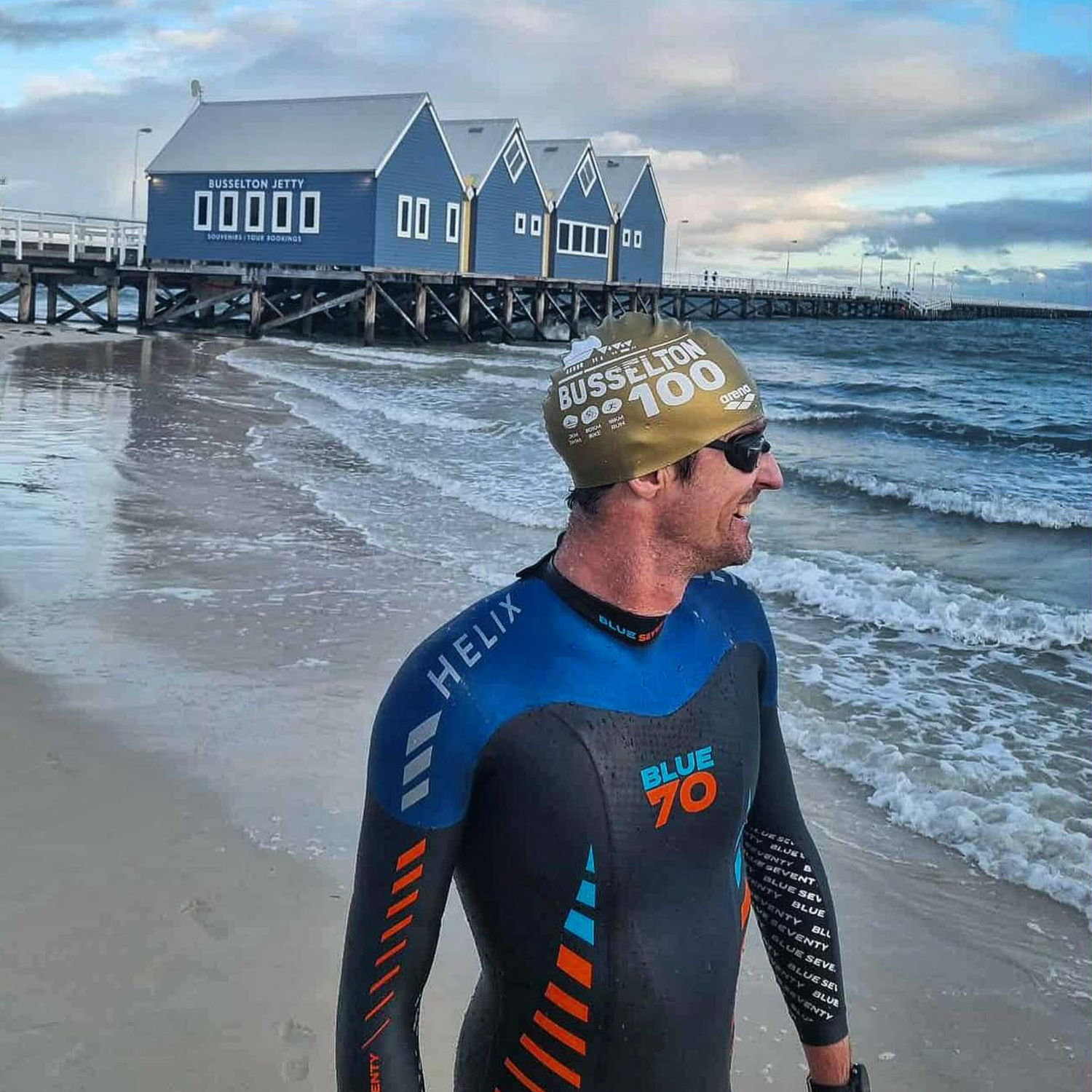
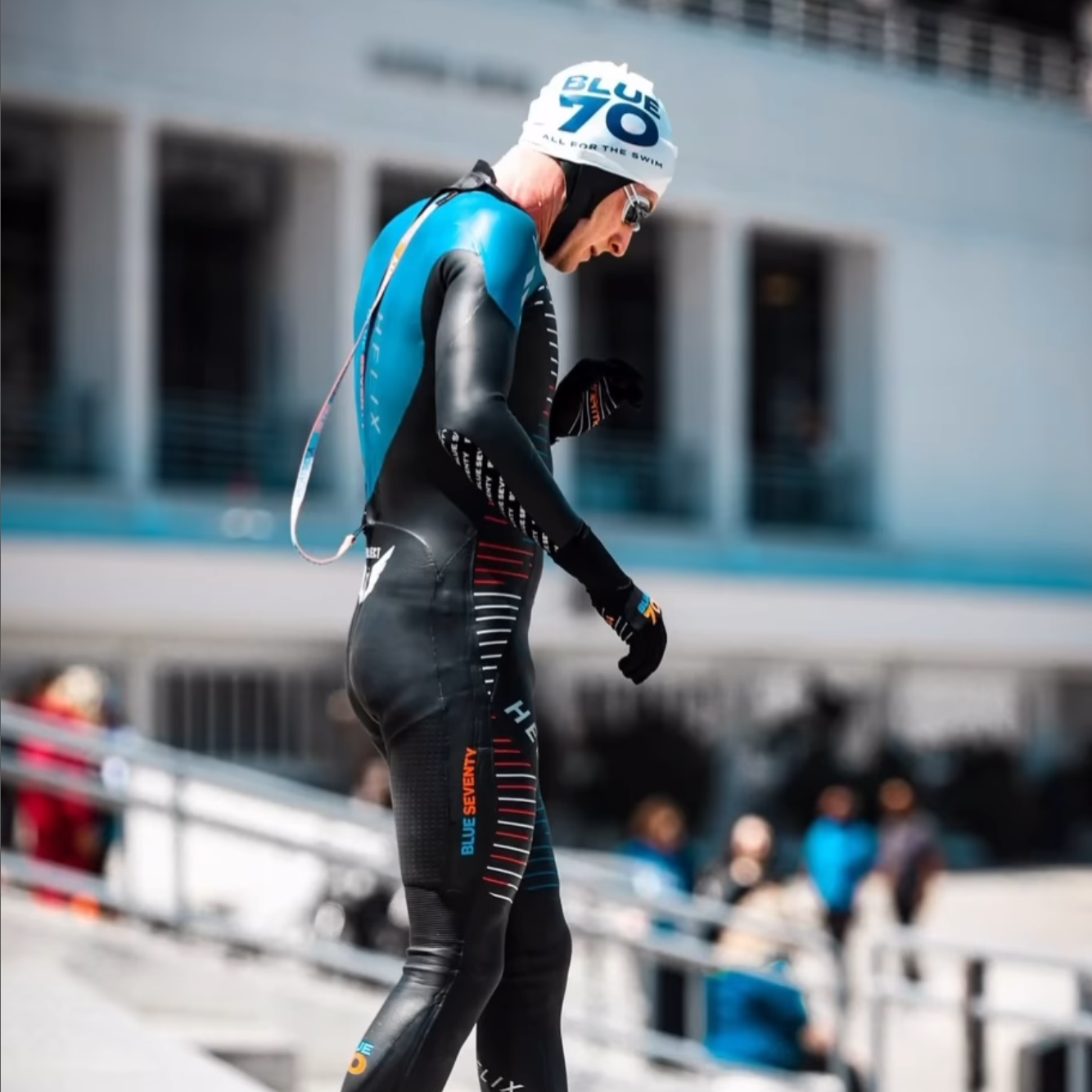
- Helix ($995): The race-day flagship. Thin, flexible neoprene in the arms and shoulders. A permeable catch panel has preserved feel for the water since 2010. Blue70's own guidance is plain: this suit is not for heavy training use because delicate neoprene breaks down more quickly.
- Thermal Reaction ($785): The cold water option. Zirconium jersey lining adds thermal protection for swims below about 56 to 58 degrees Fahrenheit.
- Reaction Sleeveless ($395): For warm water or an easier fit. Removes arm restriction for athletes who overheat in full sleeves or want more shoulder freedom.
No single suit fits every training week. The right pick depends on how often you swim, how far you go, and how much you value durability against race-day weight.
When a Wetsuit Is Not the Answer
You do not need a wetsuit for pool swimming. You may not need one for a short, warm-water race if your swim is already strong and you are comfortable in open water. A wetsuit also will not fix poor sighting, panic, or a swim that has not been practiced.
If your budget is tight, a wetsuit is rarely mandatory for entry-level races. Spend that money on a few open water swim sessions, a well-fitting goggle, and time in the water. A swim-specific wetsuit is a performance tool. Use it to support the swim fitness you already have.
No Blue70 wetsuit is a Coast Guard-certified personal flotation device. It does not replace cold water acclimatization, a swim buddy, or a safety plan.
A Short History of Swim-Specific Design
The modern triathlon wetsuit was not borrowed from surfing. Blue70's timeline starts in 1993, when the company was founded as Direct Innovations and developed one of the world's first triathlon wetsuits. The company became Blue70 in 2005, and the Helix has been the flagship race suit since then. In 2012, the Helix was first out of the water in both the men's and women's triathlon at the London Olympics, and Blue70 athlete Alistair Brownlee won gold.
That history explains the design priorities: shoulder mobility, catch feel, and buoyancy placement. Those are built around a freestyle stroke, not lifted from a dive suit.
Five Questions Before You Spend
Answer these before you buy.
- What is the expected water temperature at your race?
- Does your race allow wetsuits, and under what rules?
- How many open water swims do you plan per month?
- Do your legs sink when you swim without a wetsuit?
- Are you willing to spend ten extra minutes learning to put the suit on correctly?
If the answer to question four is yes, you will notice the biggest change from a full suit. If the answer to question three is once a week or more, durability should outrank race-day weight. If the answer to question five is no, fix that before spending more money. A poorly donned suit causes shoulder fatigue faster than any material choice.
A well-fitted Blue70 wetsuit should feel snug on dry land and more comfortable once you are horizontal in the water. When you pull the suit up over your hips and shoulders correctly, you should feel compressed at first. That compression should ease as you begin swimming. The 30-day return policy includes a test swim. If the suit does not feel right after you swim in it, you can return or exchange it as long as it is clean, dry, and unmodified.
The Short Answer
You do not need a wetsuit to call yourself a triathlete. You need one when water temperature, race rules, training frequency, or body position make it worth the investment. For many swimmers, the biggest value is the way the suit lifts your legs and helps you practice in the same position you want to race in.
Find your size with the size chart. Then take it for a swim.