


Yes, a swim-specific wetsuit changes three parts of your stroke before you take your first stroke: body position, shoulder load, and feel for the water at the catch. That means the suit affects your technique, often in helpful ways, but it will not fix a flawed stroke on its own.
Body position changes before your stroke does
A wetsuit adds buoyancy in the hips and legs first. In a swim-specific Blue70 suit, that lift comes from the neoprene and, on some models, from targeted panels. The Helix has LIFT buoyancy panels, and the LIFT buoyancy short uses NBR foam to place lift in the hips and thighs. When your lower body rides higher, you do not have to kick as hard to keep your legs from sinking, and for many swimmers that frees the upper body to focus on a longer, more patient pull. It also reduces drag, which is why we say buoyancy equals speed.
The change can feel odd. If you usually fight sinking legs, you may notice your kick timing shifting because your legs are already up. Some swimmers over-rotate or lose the connection between kick and pull. Others find the stroke feels smoother because the body is flatter. Give yourself a few sessions before changing your stroke.
Blue70 suits use Yamamoto neoprene in 38, 39, and 40 cell grades. The higher the cell number, the more flexible the neoprene.
Shoulder flexibility dictates what your stroke can do
The main place a wetsuit can interfere with technique is the shoulders. Neoprene across the shoulders and upper back resists overhead reach, recovery, and entry. If that resistance is too high, the recovery shortens, the hand crosses the centerline, and the high-elbow catch drops, leaving you with a shorter, more fatiguing stroke than the one you trained.
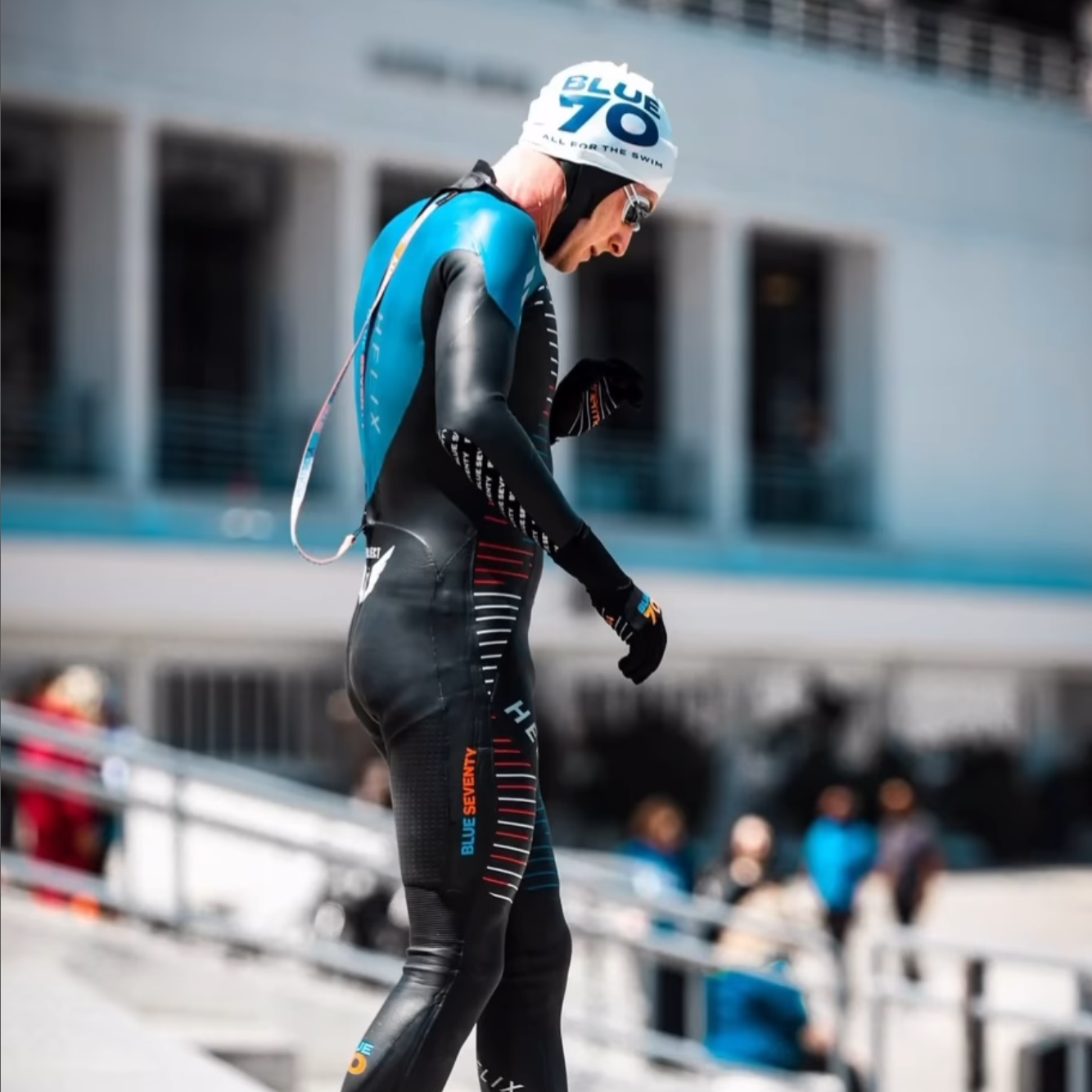
The solution is a suit cut for swimming. Blue70 builds the arms and shoulders with flexible neoprene so the suit moves with a swim stroke, not against it. The Helix uses thin, flexible neoprene in the arms and shoulders for race-day range of motion. The Reaction uses a higher-grade neoprene than the Fusion, which gives frequent swimmers more flexibility and durability for longer sessions. The Fusion 2021 redesign lowered the neckline, which reduces neck restriction and helps keep head position relaxed during breathing.
If your shoulders still feel tight after checking the fit, the Reaction Sleeveless removes shoulder material entirely. You keep torso lift while your arm stroke moves without a sleeve. It is a warm-water option, but it also suits swimmers who want minimal upper-body restriction.
Feel for the water at the catch
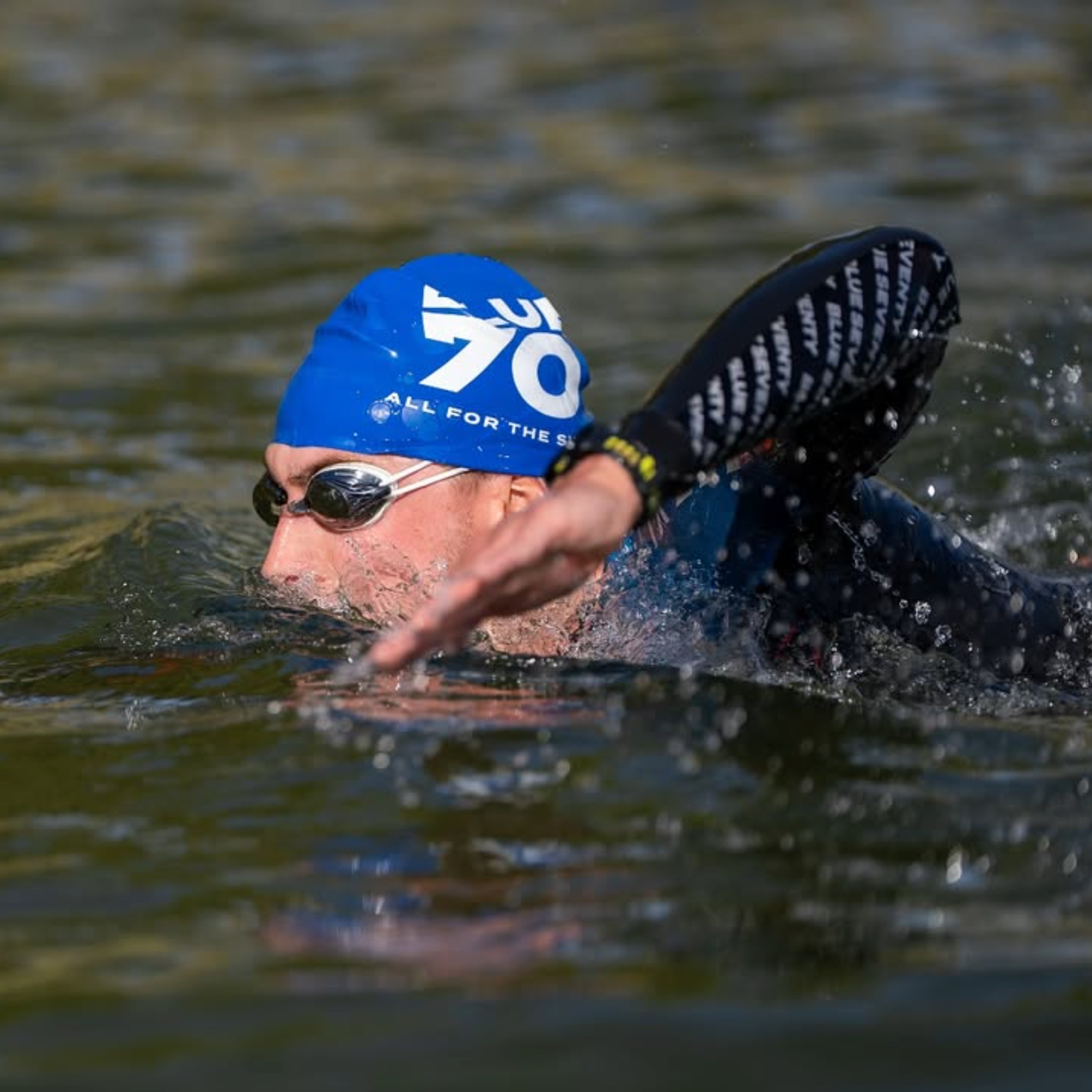
A thick layer of neoprene can dull the feeling of water pressure on your forearm, and that can make the catch feel disconnected. The Helix addresses this with a permeable catch panel on the forearm. Blue70 introduced it in 2010. Water moves through the panel so your forearm still senses the pull, and that feedback helps you hold a connected catch instead of spinning your arms through the water.
A poor fit can do the opposite. Excess material around the torso shifts as you rotate, so the pressure on your arms and chest changes stroke to stroke, and you end up adjusting your pull to a suit instead of to the water. A suit that is too loose lets water sit between the neoprene and your skin, and a suit that is too tight through the chest restricts rotation. Both show up as technique problems before you can name them.
Fit and donning change the stroke more than the suit does
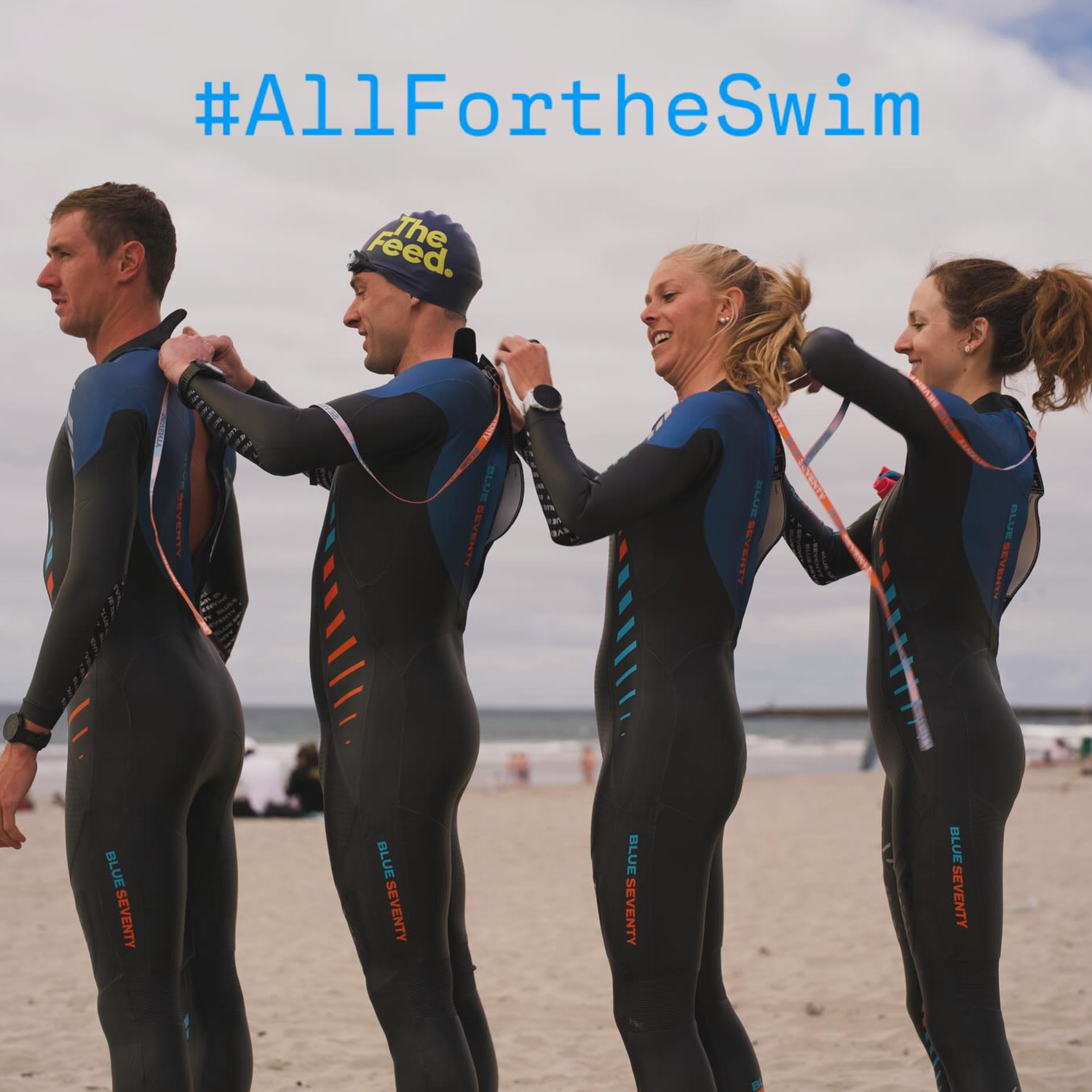
A Blue70 suit should feel snug on dry land and more comfortable in the water. Snug does not mean short. If you put the suit on and leave the torso sitting low, the shoulders carry extra neoprene and your overhead reach shortens. Pull the legs up high first, then work the torso up before you put your arms in. Use the pads of your fingers, not your nails, and make sure the suit is seated in the crotch and armpits.
The fit guide and size charts on the Blue70 site will get you to the right starting point. The sizing tool narrows the options in about 30 seconds. If you are between sizes or unsure, take a test swim. Blue70 allows you to swim in a wetsuit and still return or exchange it if the suit is clean, dry, unmodified, and has tags and accessories. That policy matters for stroke technique because you cannot judge shoulder freedom or body position while standing in a living room. The women's suits use Femme Fit sizing, with refined bust, torso, wrist, and ankle patterns, a lowered neckline, and a longer zipper for easier entry and faster transitions.
Which Blue70 suit matches your stroke and training
- Helix: the race-day suit. Thin, flexible arms and shoulders, permeable catch panel, LIFT buoyancy panels. Save it for race day because the thin neoprene will break down faster with heavy training use.
- Reaction: frequent training and racing. Higher-grade neoprene than Fusion, enough flexibility for longer open-water sessions.
- Fusion: mid-range suit for shorter frequent swims. Lower-sitting neckline for comfort without losing the watertight seal.
- Thermal Reaction: cold water. Fully lined with Zirconium jersey for added thermal protection. Cold water still requires acclimatization and a safe plan; the suit adds thermal protection, not a license to swim alone in cold water.
- Reaction Sleeveless: warm water or unrestricted arm stroke. Torso lift without shoulder material.
- Sprint: entry-level suit for getting into the sport.
If you swim once a week or more, the Reaction or Fusion will hold up better than a race-day suit. If you are chasing every second, the Helix is built for that. The right choice is not about price alone; it is about how often you swim and how much shoulder freedom you need.
Practice in the suit before you race in it
The first wetsuit swim can feel awkward because your body position changes. You are not swimming wrong; you are swimming on a different platform. Spend the first few sessions on long, relaxed 100s and focus on two things: keeping a long body line and holding the catch through the pull, instead of trying to hit your normal pool pace. Add short pickups only after the suit feels normal.
If your shoulders fatigue faster than usual, check the fit and donning first. A low-sitting suit is the most common cause. If the water is warm enough and you still feel restriction, the Reaction Sleeveless is worth considering.
A wetsuit affects your stroke technique by changing where you float, how your shoulders move, and what your forearm feels. A swim-specific suit like the ones Blue70 makes is designed to work with those changes, not against them. The suit cannot fix a stroke. It gives you a better body position to work from.
If you are not sure where to start, use the sizing tool or check the fit guide. Take a test swim. It will not affect your return.