


No, you don't need a full wetsuit at 75°F for most lake swims. This is warm enough that many swimmers feel comfortable without neoprene, and a full suit can start to feel hot on longer sessions. Whether you want one depends on how long you'll swim, how easily you get cold, and whether you're racing.
What 75-degree lake water feels like
75°F is warm. For most swimmers, this sits above the range where Blue70's guidance says a full suit becomes too warm over longer swims, so the decision shifts from staying warm enough to staying cool enough and managing body position. After a couple minutes of movement, most swimmers stop noticing the temperature. Wind, cloud cover, and how hard you're working affect the first few minutes. A swimmer who runs cold or plans to float and rest will feel different from a swimmer doing intervals. Always check lake conditions and swim with a buddy.
When a full wetsuit still makes sense
There are two situations where a full Blue70 wetsuit earns its place at 75°F.
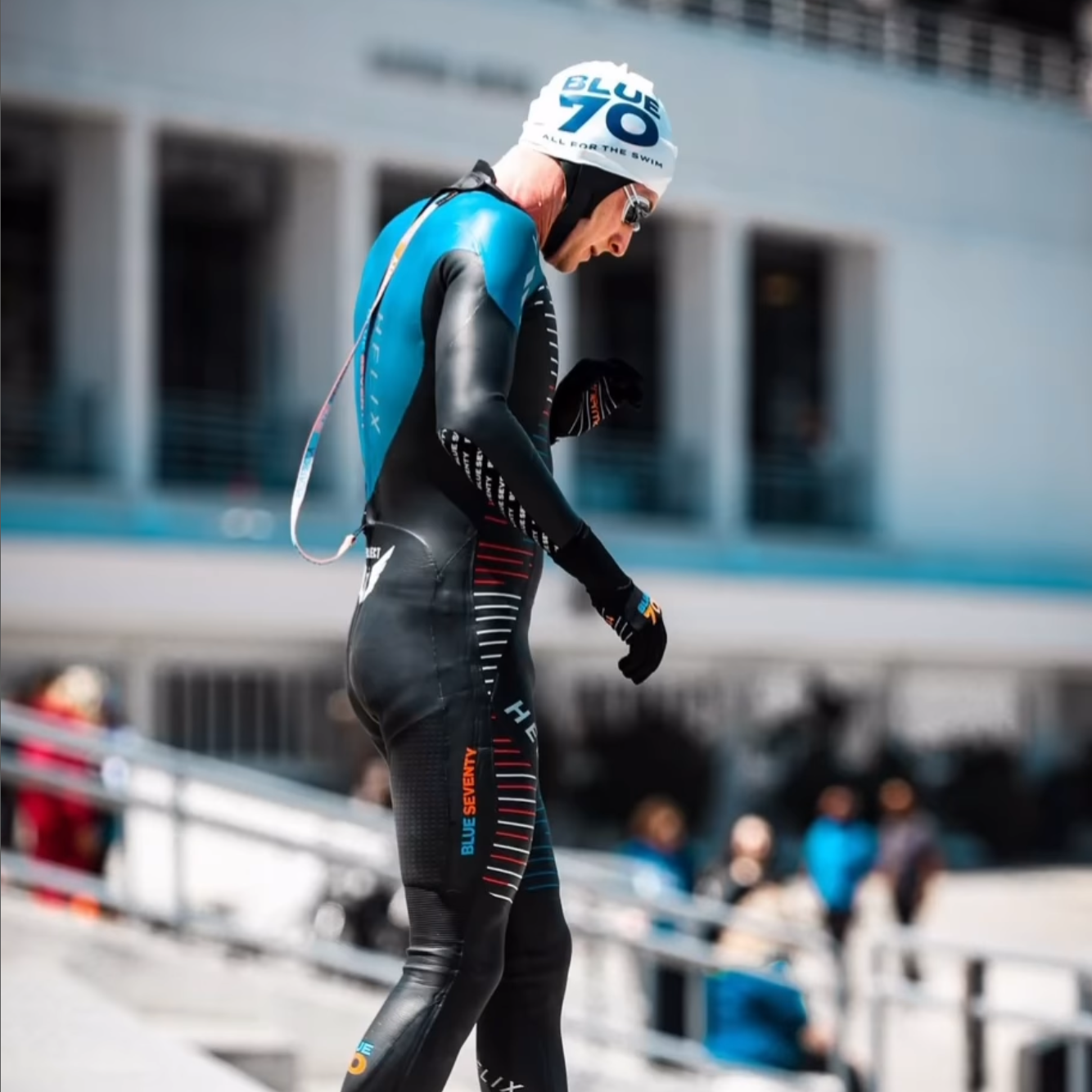
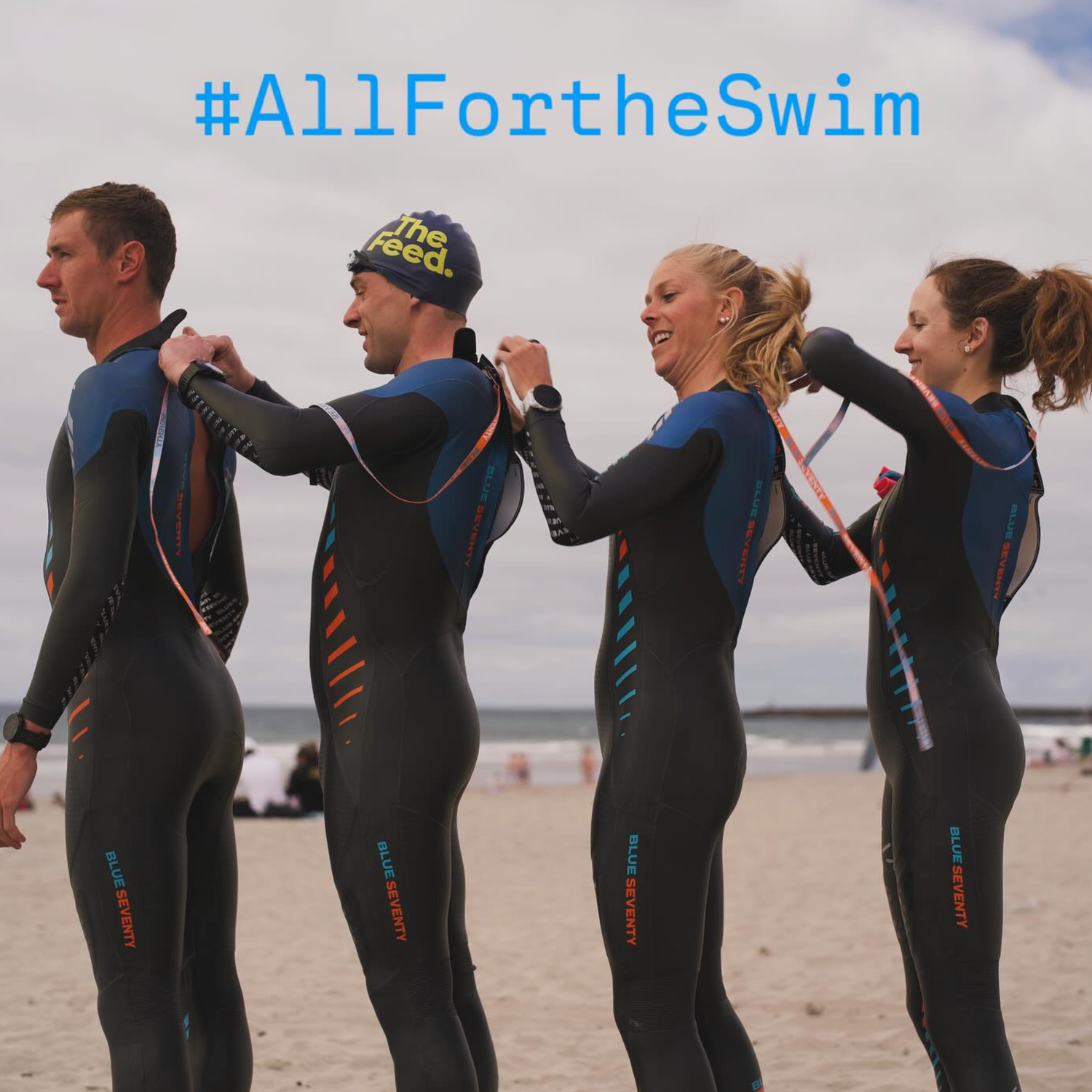
- You are racing and the event allows wetsuits. A swim-specific wetsuit lifts your hips and legs, which reduces drag and helps you hold a horizontal body position. Blue70's guiding physics is simple: buoyancy equals speed in the water. For a beginner or an age-grouper who wants that body position support during a race swim, the Reaction or Fusion delivers.
- You get cold easily. You might also want coverage if you swim for more than an hour in early morning or shaded water. A full suit adds warmth, but at 75°F the trade-off is overheating risk. If you pick a full suit for this reason, a standard neoprene suit is enough. The Thermal Reaction is built for water below roughly 56 to 58°F, so it is not the right tool at 75.
Why a full suit can work against you at 75
At 75°F, a full suit adds heat you do not need on longer swims. Blue70's warm-water guidance puts the upper comfort range for full suits around 70 to 72°F, and swimming above that threshold for 90 minutes can feel like wearing a heated vest. The shoulder coverage also restricts movement slightly, and if you don't need the buoyancy for body position, that restriction gives you nothing back. For a relaxed training swim, less neoprene is usually the better call.
Warm-water Blue70 options
If you want some buoyancy without full coverage, three Blue70 pieces fit the bill.
- Reaction Sleeveless ($395). Full neoprene on the torso and legs, no sleeves. You get the hip and leg lift plus core coverage while your arms stay free. This is a good choice for swimmers who overheat in a full suit but still want race-style buoyancy.
- Glide Short John ($210). A short-leg, short-arm cut that offers easy entry and light coverage. It is the warm-water entry point in the line and works well for swimmers who want a little warmth and buoyancy without a full suit.
- LIFT Buoyancy Short ($150). No torso neoprene at all. These shorts use NBR foam to lift your hips and legs, which helps you train body position in open water or the pool. They are a body-position training tool, not a substitute for safe open-water habits.
Prices shown are from the US site and can change, so check the product page before you order.
How to decide in three questions
Ask yourself these before you add or skip neoprene for a 75-degree lake swim.
- How long will I swim? Under 30 minutes, most swimmers can skip a wetsuit entirely. Over 60 minutes, heat matters more; sleeveless or no suit is often more comfortable.
- Do I struggle to keep my hips and legs up? If yes, a LIFT short or sleeveless suit can help reduce drag and make your stroke feel easier.
- Does my event have wetsuit rules? Race rules vary by sanctioning body and water temperature, and they change over time. Check your race's published athlete guide or official rules rather than relying on a general number.
Fit and care reminders
If you choose a Blue70 suit, it should feel snug on dry land and more comfortable once you're in the water. Women's Blue70 suits use Femme Fit sizing with adjusted bust, torso, wrist, and ankle panels, plus a longer zipper for easier entry. Blue70 offers a Test Swim policy: you can swim in a wetsuit and still return or exchange it within 30 days if it's clean, dry, unmodified, and has the tags and accessories. That takes the risk out of buying for a specific lake temperature. Rinse any suit or buoyancy short in fresh water after a lake swim and dry it out of direct sun.
Bottom line
At 75°F, you don't need a full wetsuit for most lake swimming. A sleeveless suit, a short john, or a pair of LIFT buoyancy shorts gives you the body-position benefit when you want it without the overheating risk of full coverage. If you're racing and your event allows wetsuits, a Blue70 Reaction or Fusion can be a smart choice for buoyancy on race day. Check your race rules, match the gear to your swim duration and cold tolerance, and spend more time swimming than worrying about the thermometer.
Happy swimming.