


Ask a group of triathletes or open-water swimmers about custom wetsuit sizing, and you will hear the same frustrations: the neck feels too high, the shoulders feel loaded, the hips feel off, or the suit zips up but never disappears in the water. Most of the time, that does not point to a need for a one-off wetsuit. It points to a fit problem that has not been diagnosed correctly.
A swim-specific wetsuit is not like everyday apparel, and it is not judged the same way. It has to sit close to the body, support position in the water, allow a clean shoulder stroke, and provide added thermal protection for the conditions you actually swim in. That is why the right question is rarely, “Do I need custom?” The better question is, “What part of the fit system is breaking down?”
That shift in thinking changes everything. A lot of swimmers assume the answer is a special build because standard sizing has felt wrong before. In practice, the bigger issue is often poor donning, the wrong model for the job, or a size choice based on standing comfort instead of swimming function.
Why swimmers ask for custom sizing in the first place
The request usually starts with a real problem. Maybe the suit feels tight across the chest. Maybe the shoulders burn early in the swim. Maybe the lower back feels strained before the first buoy. Those complaints are valid, but the source is not always where you feel it.
A wetsuit works as a connected system. If the legs are not pulled high enough, the hips sit low. If the hips sit low, the torso gets dragged down. If the torso sits low, the shoulders take the tension. The swimmer feels it in the arms and assumes the upper body fit is wrong, when the problem started at the ankles and quads five minutes earlier.
Fit errors travel. One missed step in setup can affect the whole stroke.
Why a snug fit is usually the right fit
Many first-time buyers make the same mistake: they judge the suit on dry land, standing upright, taking shallow breaths, and trying to decide whether it feels “comfortable.” That test has limited value. Swimming changes your posture, changes how the neoprene settles, and changes where tension shows up.
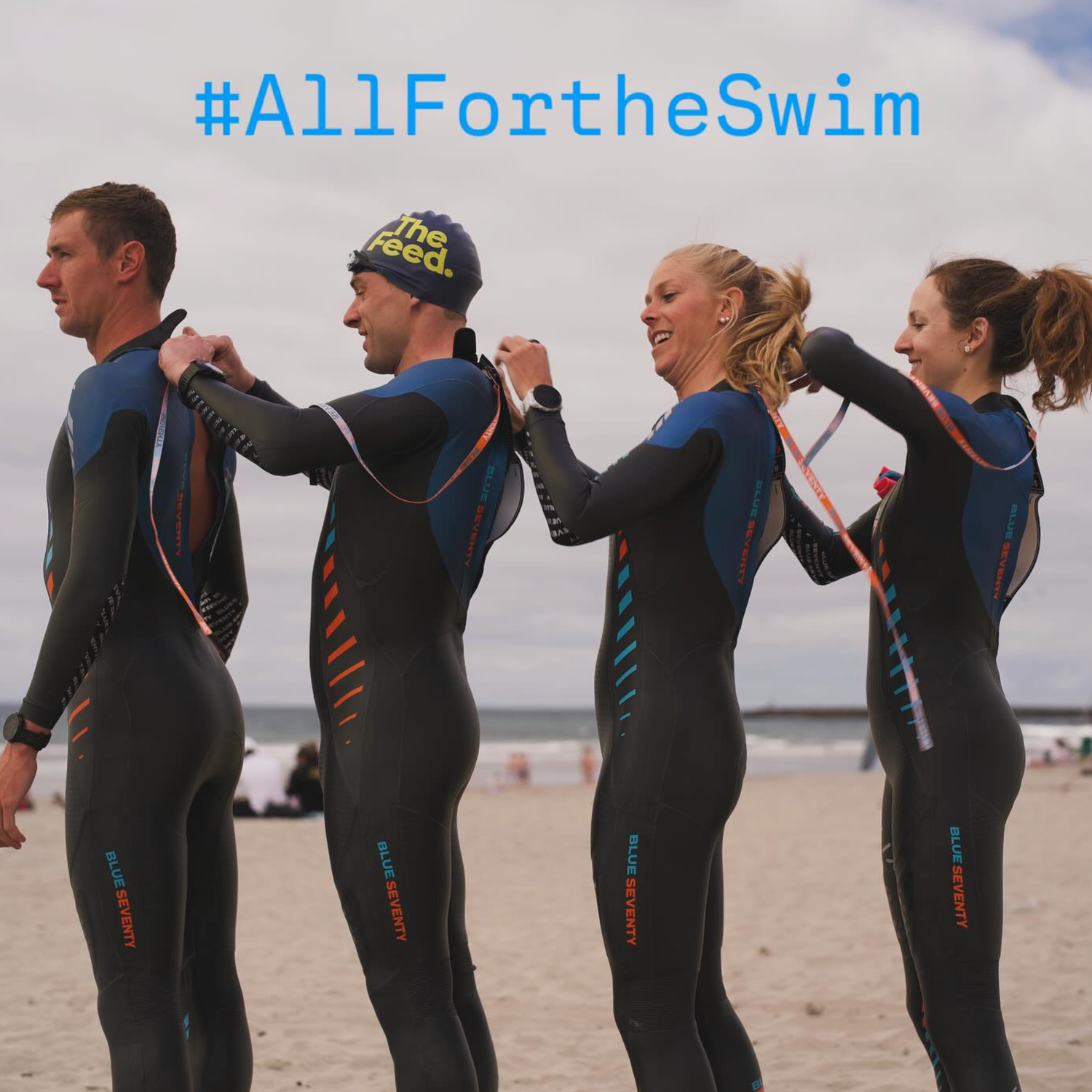
BlueSeventy’s fit guidance is straightforward: a wetsuit should feel snug on land and more comfortable once you are in the water. That is normal. Swim-specific neoprene is meant to fit closely. A loose fit creates water pockets, reduces support, and moves buoyant sections away from the places they are meant to work.
Snug is not the same as wrong, though. A sharp pressure point at the neck, major bunching behind the knees, obvious loose material in the lower back, or shoulder restriction that remains after careful donning all deserve attention. General compression does not.
Wetsuit sizing changed when brands started designing for swimming
The history of triathlon and open-water wetsuits explains a lot about the custom sizing conversation. Early suits had a simpler task: get swimmers into neoprene that worked better in the water than gear built for other uses. As wetsuit design matured, patterning became more precise. Shoulder flexibility became more intentional. Buoyancy placement improved. Necklines changed. Size ranges expanded.
BlueSeventy’s history follows that same path. The brand has long focused on swim-specific design built around comfort, freedom from restriction, and speed through better body position. In 2014, BlueSeventy expanded Femme Fit to 15 women’s wetsuit sizing options. That was not a cosmetic update. It addressed fit through refined pattern design in the bust, torso, wrists, and ankles, with a lowered neckline for comfort and reduced chafing and an extended zipper length to ease entry.
That kind of development matters more than the label custom. Better patterning solves real fit problems before an athlete ever needs to think about bespoke construction.
Patterning matters more than people think
Two wetsuits can share the same size label and feel completely different in the water. The reason is patterning. Pattern shape determines where the suit sits on the torso, how the shoulders rotate, how the neckline seals, how cleanly the suit comes off in transition, and where stress builds during the stroke.
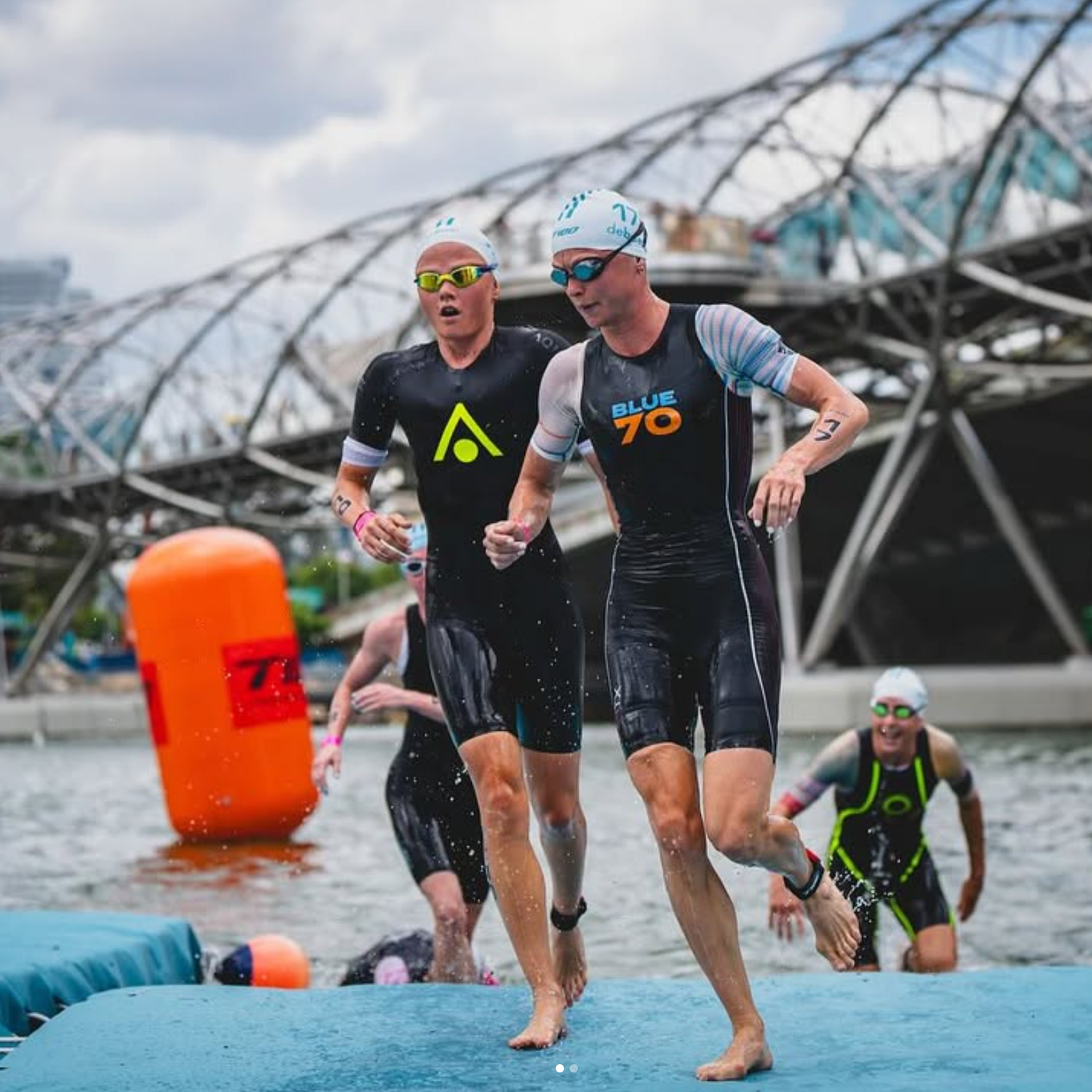
That is one reason women’s-specific fit has been so important. A better pattern changes more than comfort. It can improve entry, reduce chafing, free up the shoulders, and make the suit easier to remove in T1.
For men and women alike, this is the practical takeaway: if a wetsuit feels wrong, sizing up is not always the fix. Sometimes the better answer is a different fit architecture.
Body position matters more than the mirror test
BlueSeventy says it simply: buoyancy equals speed. That does not mean a wetsuit guarantees a faster split. It means buoyancy improves body position, and better body position can reduce drag. Swimmers who struggle to keep their hips and legs high usually feel that benefit first.
But the suit can only do that job if it sits where the design intended. If the torso is too long, buoyant sections can sit low. If the body length is too short, shoulder tension shows up on every stroke. If the forearm fit is sloppy, feel for the water can suffer.
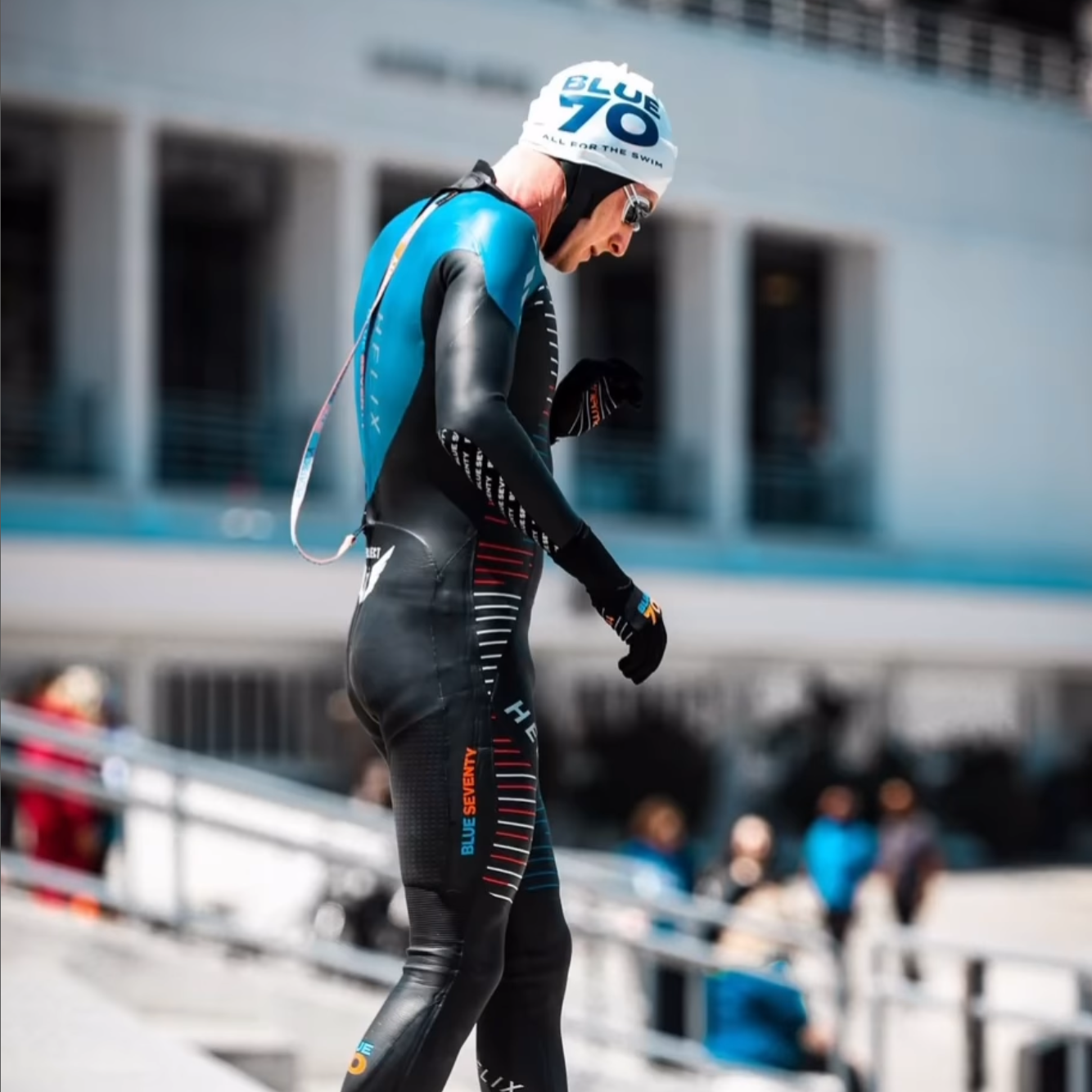
BlueSeventy’s Helix is a clear example of how design and fit depend on each other. It uses very flexible neoprene in the arms and shoulders, a permeable catch panel to preserve feel for the water, and LIFT buoyancy panels added in 2018. Those features are there for race-day performance, but they only work as intended when the size is right and the suit is positioned correctly.
The same principle applies through the line. Reaction suits frequent and longer swims. Fusion is a strong option for shorter frequent swims and includes a lower-sitting neckline introduced in its 2021 redesign. Thermal Reaction is fully lined with Zirconium jersey for colder-water swimming. A fit discussion only makes sense when the suit is matched to the kind of swimming you actually do.
The shoulder test beats the zipper test
A lot of swimmers stop evaluating a wetsuit once they get it zipped. That is where the useful evaluation should start.
Once the suit is on, simulate your stroke. Reach overhead. Rotate your torso. Mimic your freestyle recovery. If the suit still feels like it is pulling hard across the shoulders after you have fully worked the material upward through the legs, hips, and torso, then you have learned something important.
The shoulders tell the truth quickly. They also get blamed for problems that start lower in the suit.
When “custom” really means “I’m between solutions”
There are swimmers who sit on the edges of size charts. Some are tall and light. Some have broad shoulders and a smaller waist. Some women have had repeated trouble with chest or torso fit. Some athletes have limited shoulder mobility and need more care in how a suit is chosen and positioned.
Those cases are real. Even then, the best next step is often not a bespoke build. It is a more careful process.
- Check the donning first. A suit that sits low will feel smaller and stiffer than it is.
- Match the model to the use. Race-day flexibility, training durability, warm-water comfort, and cold-water insulation do not come from the same design priorities.
- Use swim posture to judge fit. Standing still in a bedroom is not the test.
- Pay attention to location. Neck pressure, calf bunching, chest compression, and shoulder restriction each point to different fit issues.
- Test it in the water. That is where the wetsuit reveals itself.
Women’s fit changed the conversation
One of the strongest examples of better sizing solving a so-called custom problem is women’s wetsuit fit. For a long time, many female athletes were trying to make generic patterns work through the bust, hips, torso, and neckline. The issue was not that their bodies were unusual. The issue was that the pattern was wrong for them.
BlueSeventy’s Femme Fit approach addressed that directly. Refined pattern design in critical fit zones, a lowered neckline, and an extended zipper all target real swimming and transition problems. That is not marketing language. It is fit engineering.
It also points to where wetsuit sizing is going: better body-specific patterning, broader fit options, and smarter tools that help athletes choose the right size the first time.
How to tell if the fit is right
Before deciding that standard sizing cannot work, run through a short checklist.
- The suit feels snug, not strained.
- The material is pulled high through the legs and torso.
- The neckline sits close without sharp pressure.
- The shoulders can move through a freestyle recovery without a hard pull.
- There is no large pocket of loose neoprene behind the knees or in the lower back.
- The model matches your real use case.
Water temperature is part of that decision. BlueSeventy’s guidance is clear here. Below about 56 to 58 degrees Fahrenheit, a purpose-built thermal suit adds meaningful warmth. Above about 70 to 72 degrees Fahrenheit, a full suit can feel too warm over longer swims, which is where a sleeveless option can make more sense.
The first swim gives you better information than the fitting room
This is where a lot of uncertainty clears up. A suit that feels tight on land may feel smooth and natural once you start swimming. A suit that seems fine when dry may start tugging at the shoulders or collecting water after a few hundred meters.
Get in the water.
BlueSeventy’s Take a Test Swim option exists for that reason. You can swim in the wetsuit and still return or exchange it if it comes back clean, dry, unmodified, with tags and accessories. For first-time buyers, that takes a lot of pressure out of the sizing decision. For experienced swimmers, it gives the right kind of feedback: real feedback.
Where wetsuit sizing is headed
The future of wetsuit sizing will likely come from better segmentation rather than old-fashioned bespoke manufacturing. Better women’s ranges. Better tools for athletes who sit between chart sizes. Better guidance on donning. Better in-water fit assessment. Better swim-specific patterning built around how swimmers actually move.
That is a useful direction, because the goal is not a wetsuit that feels relaxed in a changing room. The goal is a wetsuit that supports your body position, preserves your stroke, and matches the water you swim in.
For most triathletes and open-water swimmers, custom wetsuit sizing is really a search for precision. The good news is that precision usually comes from the right size, the right model, the right pattern, and the right setup. That is where better swims start.
If you want to sort out your next fit decision, start with the size charts, review the fitting guide, and then take it for a swim before race day. That process tells you more than any label ever will.