


You've swum the distance. Your stroke held up, your sighting was clean, and you hit the beach right on pace. Then you stand in transition, tugging at a zipper pull that suddenly won't cooperate, watching seconds tick by on a skill you never actually trained.
Here's the part most triathletes miss: the zipper isn't usually the problem. Your hands are.
What the swim does to your hands before you even reach T1
Swimming sends blood where the work is happening: shoulders, lats, core, hip flexors. Your hands and wrists sit lower on that priority list the whole time. Add water temperature, even well inside wetsuit-legal range, and you've got skin that's been cooling for the length of an entire swim leg.
Cold-water physiology research, much of it from occupational and marine studies, shows a consistent pattern. As skin temperature drops, fine motor control and grip strength drop with it. Fingers that handled a zipper pull just fine on dry land get measurably slower and clumsier once they're cold and the body has been redirecting blood elsewhere for twenty, thirty, forty minutes.
That's the whole story behind the T1 fumble. The zipper you practiced with in a warm garage the night before is not the zipper you're operating on race morning. Your hands changed. The task didn't.
Which means a wetsuit built for race-day removal has to work for compromised hands, not confident ones.
Design details that either help you or fight you
A few construction choices make a real difference here, and they're worth checking on your own suit before your next race.
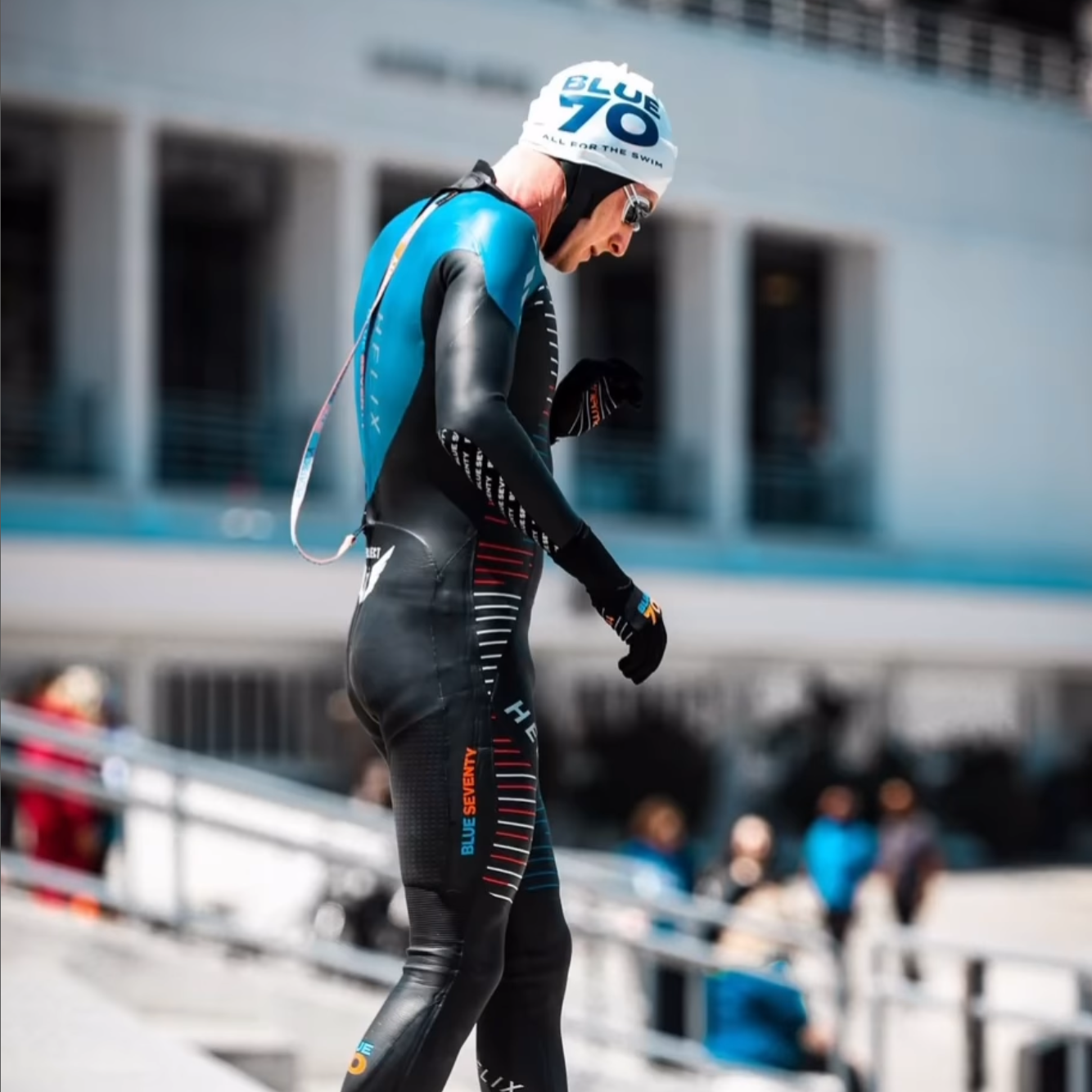
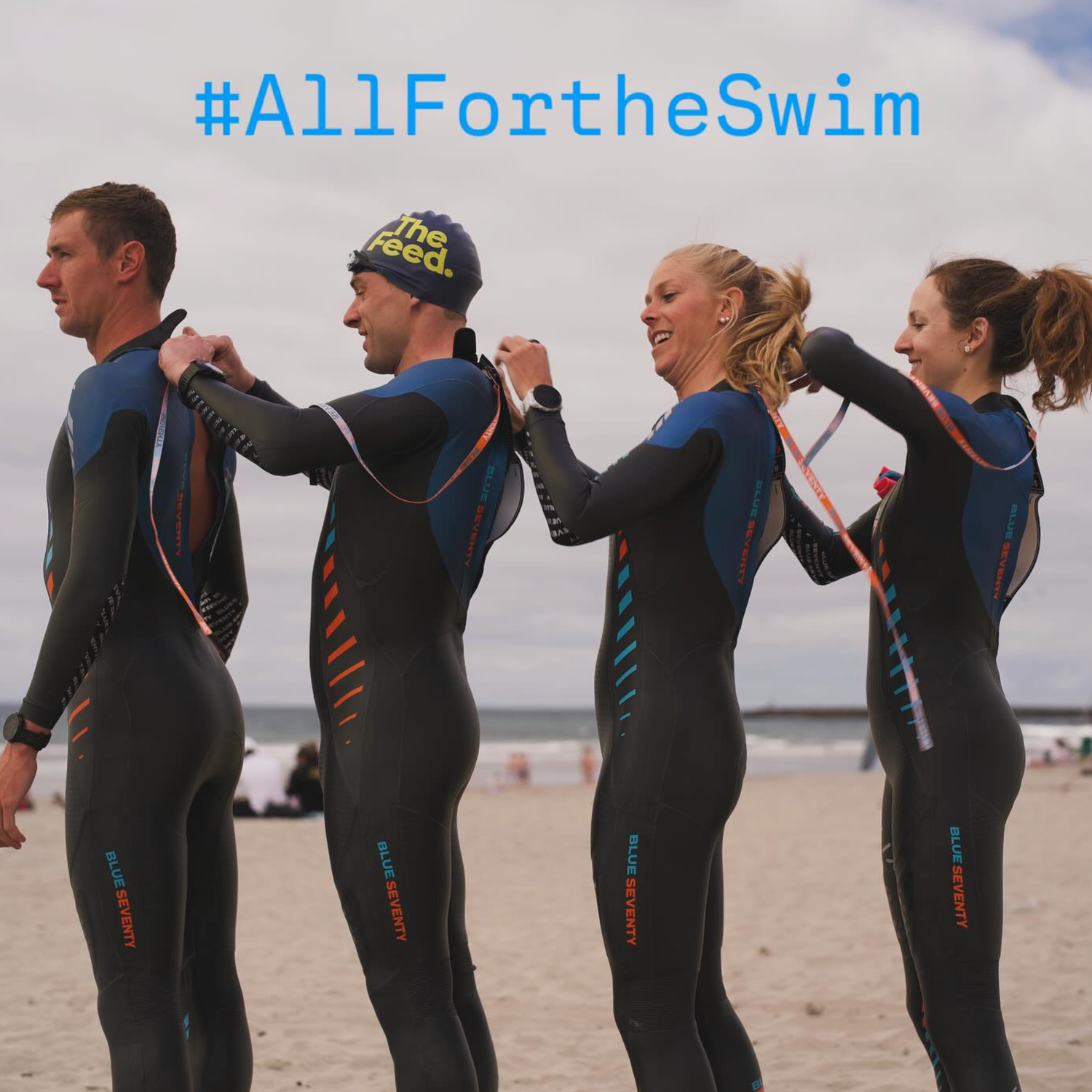
- Zipper pull size and placement. A small, discreet tab looks tidy on a hanger. It's much harder to find and grip once your fingers aren't working the way they were an hour earlier. A larger pull, built to be found by feel rather than sight, is designed for the hands you'll actually have in transition.
- Neckline geometry. A neckline that sits too high or grips too tight can snag on your chin or ears mid-pull, costing you seconds while you wrestle fabric past your face with hands that aren't cooperating. Blue70's Fusion went through a neckline redesign specifically to sit lower and cut down on chafing, without losing the watertight seal. That change helps on the swim. It helps again on the way off.
- Panel flexibility at the cuffs. Ankles and wrists are where suits bind hardest. Blue70 builds every wetsuit from Yamamoto neoprene rated at 38, 39, or 40 cell, and higher cell counts mean more flexibility. Thinner, more supple panels at the exit points let the suit peel away instead of fighting you for the last few inches.
None of this replaces practice. But a suit that's already working against you at the ankle is one more obstacle your tired hands don't need.
Fit does double duty
Blue70's standard guidance is simple: a wetsuit should feel snug on dry land and get more comfortable once you're in the water, as the neoprene relaxes slightly with body heat. That advice usually gets framed around hydrodynamics and swim speed. It matters just as much in T1.
A properly fitted suit stays put through the whole swim. A suit that's loose or shifts around arrives at the beach twisted, and a twisted suit is slower to remove no matter how good the zipper is. Get the sizing right before race day, using an actual size chart instead of guessing.
If you're not sure your current suit fits the way it should, take advantage of Blue70's Test Swim. You can swim in the suit and still exchange or return it, as long as it comes back clean, dry, and unmodified. Better to find out now than mid-race.
Train the exit like it's part of the swim leg
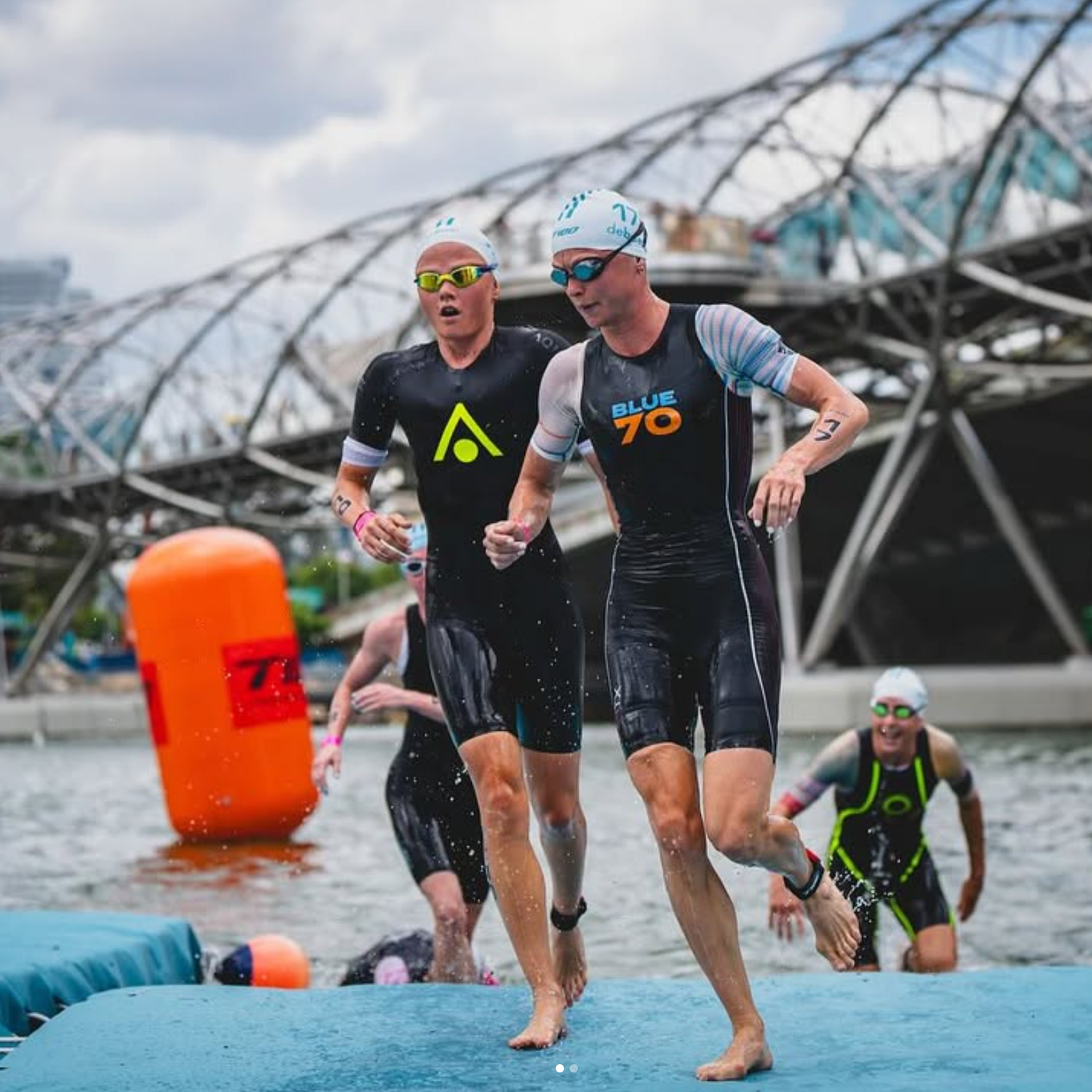
Wetsuit removal is a skill. Treat it like one.
- Once a month, finish an open-water or pool swim in your actual race suit with a full, timed exit, not just a casual climb-out.
- Follow the same sequence every time: unzip completely, push the suit off both shoulders and arms first, roll it to your waist, then step out heel-first while standing on the ankle of the suit to help pull the leg free.
- Time yourself. A reasonable target for an experienced age-grouper is under 20 seconds from waterline to suit fully off. Track your own number and chip away at it over a season.
- Do at least one rehearsal straight out of genuinely cold water, not a warm garage. That's the condition your hands will actually be in on race day.
- Film it if you can. Most swimmers are surprised to find they're losing more time at the ankle cuff than at the zipper.
The five minutes before the gun
A handful of small habits cut down on friction before it becomes a problem.
- Apply a thin layer of lubricant at your ankles and wrists the night before or morning of the race. It helps the suit slide instead of grip.
- Run a quick zipper and shoulder-mobility check during warm-up, not for comfort but to confirm everything moves freely under a bit of pressure.
- Rehearse the shoulder-first removal motion once, dry, in the minutes before your start. Load it as a reflex now, so you're not thinking through it later with cold hands and an elevated heart rate.
The takeaway
A fast wetsuit exit isn't a zipper problem. It's a physiology problem, and your suit's design and fit either work with it or against it. Choose a wetsuit sized correctly for your body, with a neckline and zipper built for hands that won't be at their best, and then rehearse the exit under real conditions. That closes a gap most triathletes never think to train.
If you're not certain your current suit fits the way it should, for the swim and for the exit, Blue70's size charts and fitting guide are a solid place to start. Take it for a Test Swim and check the whole sequence, water to transition, before race day forces the issue.
Happy swimming.