


Most advice about a wetsuit for 55 degree water focuses on one thing: warmth. That matters, but it misses the harder part of the swim. In 55°F water, the first thing many athletes lose is not courage or fitness. It is stroke quality. Breathing gets sharp, the catch feels vague, and pacing can unravel before the swim has settled. A good swim-specific wetsuit for these conditions needs to provide added thermal protection, but it also needs to help you keep swimming well once the cold starts changing how your body moves.
That is why 55°F deserves a different conversation. Blue70’s published guidance places water below about 56 to 58°F in the range where a purpose-built thermal suit adds meaningful warmth. For swimmers and triathletes, that threshold is useful because it shifts the question away from simple comfort and toward performance in real conditions. If the suit is warm enough but your shoulders tighten, your breathing stays high, or water moves too freely through the torso, the swim still gets expensive.
Why 55°F feels so different in the water
Cold water changes mechanics early. You often notice it in the first few minutes, well before the swim reaches any steady rhythm. Hands and forearms can lose feel for the catch. Stroke length shortens. The first hard effort feels harder than expected. Those effects matter because they change how efficiently you move through the water, and efficiency becomes even more important when the environment is asking more from you.
A wetsuit that works well at 55°F has to support more than buoyancy. It needs to preserve freedom from restriction through the shoulders and chest, maintain a close fit through the torso, and reduce the sort of flushing that can make a cold swim feel colder as time passes. That is where swim-specific design starts separating a decent experience from a frustrating one.
The better question to ask before you buy
Instead of asking, “Will this keep me warm?” ask a more useful question: Will this let me keep my stroke together after twenty or thirty minutes in 55°F water? That is the standard that matters in training and on race day.
At this temperature, the best wetsuit choice usually balances three things:
- Added thermal protection for longer exposure in cold water
- Buoyancy that supports body position and reduces drag
- Shoulder flexibility so your stroke does not shorten under tension
If one of those pieces is missing, you usually feel it quickly. A warm suit that fights your stroke is still a problem. A flexible suit without enough thermal support can also become a problem once the cold has had time to matter.
Why a thermal lining matters at 55°F
Wetsuits are not waterproof, and they are not meant to keep you dry. They allow a thin layer of water in, and your body warms that layer to create insulation. In 55°F water, the inside of the suit becomes a bigger part of the conversation because the lining affects how well that warmth is retained over time.
That is one reason Blue70 built the Thermal Reaction as a purpose-built cold-water option. It is fully lined with Zirconium jersey, a synthetic wool lining designed for added warmth in colder swims. This matters because cold-water performance is not only about the outer neoprene. The interior feel of the suit shapes comfort during sustained effort, not just during the first minute when the water feels sharpest.
A good thermal lining also helps with something athletes do not always think about until race morning: decision-making. When swimmers get cold early, they often rush the pace, shorten the stroke, or lose patience with sighting and breathing control. A suit designed for cold water can help you stay calmer and more deliberate, which usually leads to a better swim.
The fastest option is the one you can still swim well in
Triathletes often chase the lightest shoulder feel they can find, and there are good reasons for that in many conditions. But 55°F water changes the calculation. The right choice is not only the suit that feels best while standing on the beach. It is the suit that still lets you hold form after the cold has worked on your breathing, timing, and upper-body rhythm.
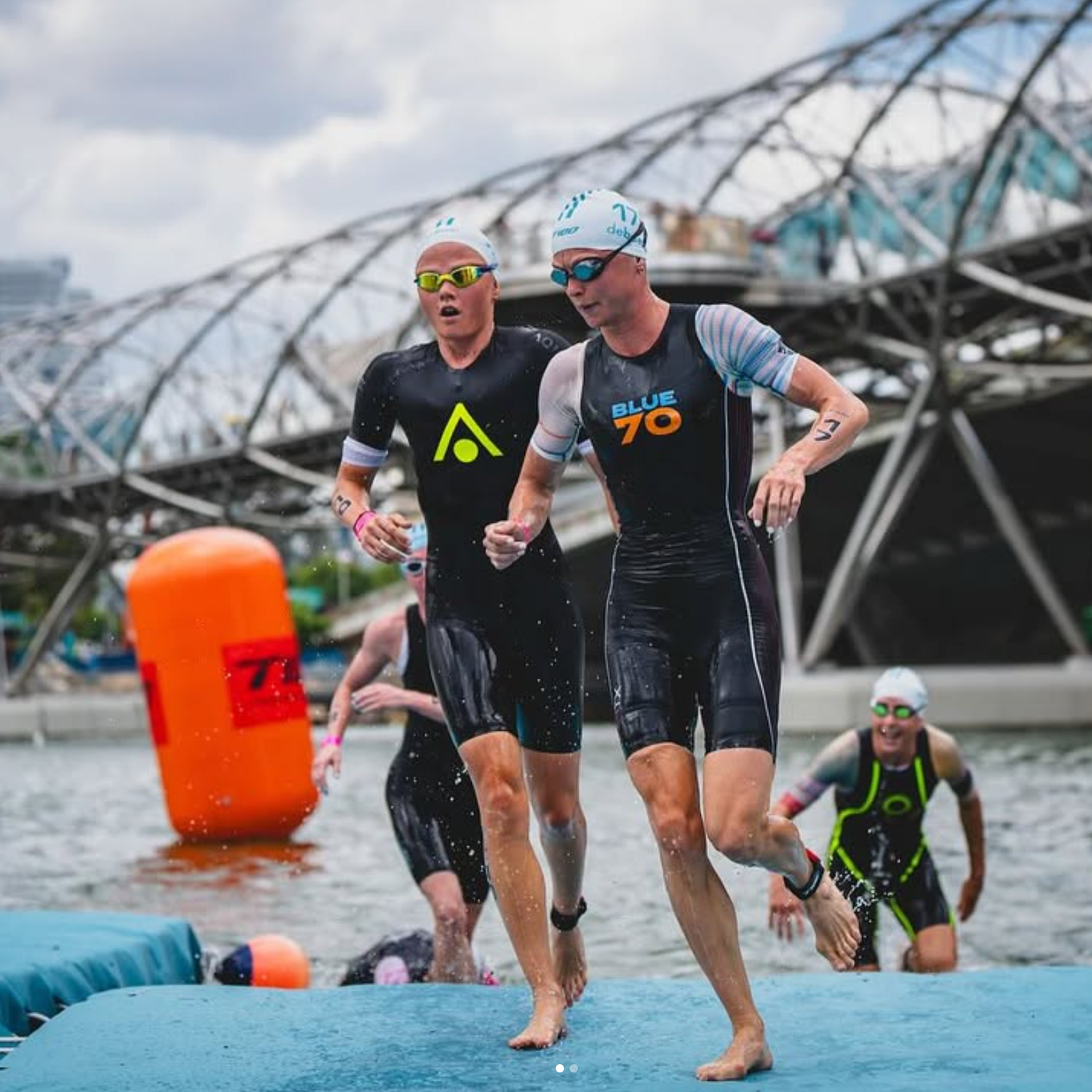
Blue70’s Helix, priced at $995 on the US site as of 2026-07-25, is the flagship race suit. It uses very thin, highly flexible neoprene in the arms and shoulders, includes a permeable catch panel, and uses LIFT buoyancy panels. It is built for race-day performance and strong feel for the water. Blue70 is also upfront about the trade-off: the Helix uses delicate neoprene and is not the best choice for heavy training use.
For athletes swimming regularly in 55°F water, the condition often points more clearly toward the Thermal Reaction, priced at $785 on the US site as of 2026-07-25. That suit was designed for cold-water swimming, and at this temperature the thermal build is often the smarter call for both training and racing.
Fit matters more when the water gets colder
A poor fit always costs something, but cold water magnifies the cost. If the suit is loose through the torso, more water can move through it, which reduces thermal efficiency and distracts you stroke after stroke. If the shoulders are not fully set before you zip up, the upper body carries tension that should have been pulled higher from the legs and hips. If the neckline feels high or tight when your breathing is already elevated, the opening minutes can feel far more stressful than they should.
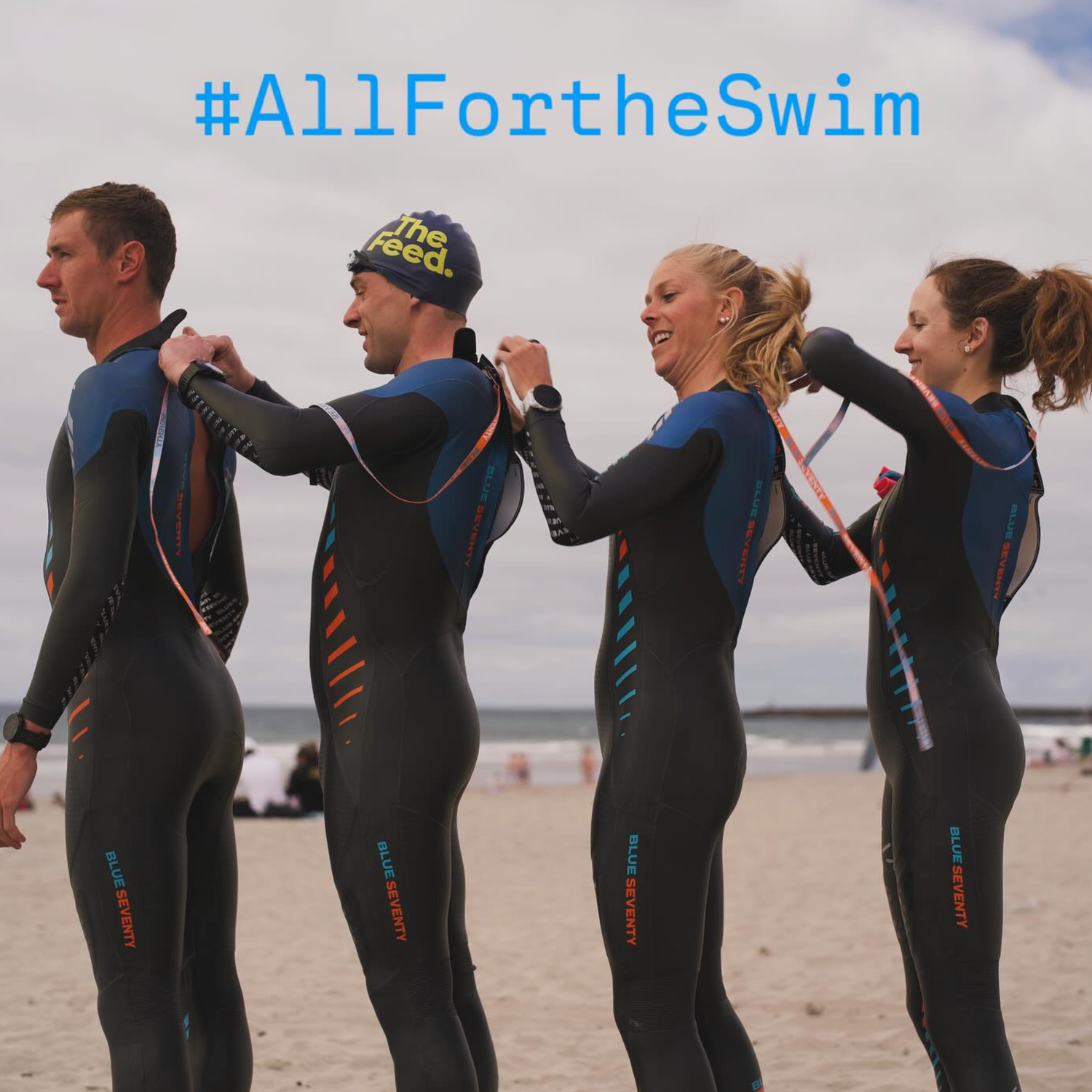
A proper fit should feel snug on land and more comfortable in the water. That second part matters. Many swimmers judge a wetsuit too early, before they have taken the time to pull the suit fully into place.
How to put the suit on for cold-water swimming
- Pull the suit high through the calves first.
- Work the material gradually over the quads and hips.
- Set the torso before you worry about the shoulders.
- Pull enough material upward that the shoulders feel free, not loaded.
- Zip only after the suit is fully seated through the body.
That process sounds basic, but it often determines whether the stroke feels smooth or restricted. At 55°F, small fit mistakes feel larger because the water does not give you much margin.
For women, cut and patterning can matter even more if previous suits have felt restrictive through the bust or torso. Blue70’s Femme Fit design refines fit through the bust, torso, wrists, and ankles, uses a lowered neckline for comfort and reduced chafing, and includes an extended zipper length for easier entry and faster transitions. In cold water, those details affect comfort, mobility, and how quickly you can settle down and swim.
Pacing is part of your cold-water setup
A wetsuit for 55°F water does not solve everything by itself. Your pacing plan matters just as much. Many swimmers attack the first few hundred meters too hard because they want to get through the initial shock quickly. Usually that creates more trouble. Breathing rises, stroke timing slips, and the swim takes longer to come under control.
A better opening looks like this:
- Start controlled.
- Give your breathing time to settle.
- Keep the stroke long and deliberate.
- Build into race pace instead of forcing it immediately.
This approach works well with a swim-specific wetsuit because the buoyancy is already helping your body position. Blue70 says it plainly: buoyancy equals speed in the water. You benefit most from that buoyancy when your stroke stays organized enough to use it well.
How to train for 55°F water
Choosing the right wetsuit is only part of the equation. Cold water rewards athletes who prepare for the condition instead of only tolerating it.
- Build exposure gradually. Do not make your first cold swim of the season your longest one.
- Practice the first five minutes. That is the part of the swim where breathing and pacing usually go wrong.
- Rehearse useful effort. You need to know what race pace feels like in cold water, not only what easy swimming feels like.
- Work on sighting. Cold hands and tighter shoulders can change timing and head position.
- Simplify transition setup. Cold hands can make small tasks slower in T1.
Cold-water swimming also deserves respect beyond gear choice. Thermal comfort depends on water temperature, exposure time, air temperature, swim intensity, and the individual athlete. A wetsuit provides added thermal protection, but it does not remove the need for good judgment, acclimatization, and a realistic plan for the session or race.
Which Blue70 wetsuit makes sense for 55°F water?
For most swimmers and triathletes, the cleanest answer is the Thermal Reaction. Blue70 designed it for cold-water swimming, and the fully lined Zirconium jersey construction matches the demands of water in this range.
Here is the simple breakdown:
- Regular open-water training at 55°F: Start with the Thermal Reaction.
- Triathlon racing in 55°F water: Start with the Thermal Reaction if your goal is to preserve comfort and stroke quality through the full swim.
- Frequent cold-water use: Choose for the condition first, then make sure fit and shoulder setup are dialed in.
That recommendation lines up with Blue70’s published guidance that below about 56 to 58°F, a purpose-built thermal suit adds meaningful warmth.
What the right 55°F wetsuit really gives you
The real job of a cold-water wetsuit is not just helping you tolerate the water. It is helping you protect your stroke. At 55°F, cold water tries to shorten reach, rush breathing, and pull you out of rhythm. A well-fitted swim-specific thermal wetsuit supports body position, reduces drag, and adds the thermal support needed to keep your mechanics from falling apart.
If you are deciding what to wear for 55°F water, choose with that in mind. Buy for the stroke you want to hold once the cold has had time to matter.
If you want to test fit in real conditions, Blue70’s Take a Test Swim program allows you to swim in a wetsuit and still return or exchange it, as long as it comes back clean, dry, unmodified, and with tags and accessories. You can also use the size charts or review the fit guide before you get in the water.