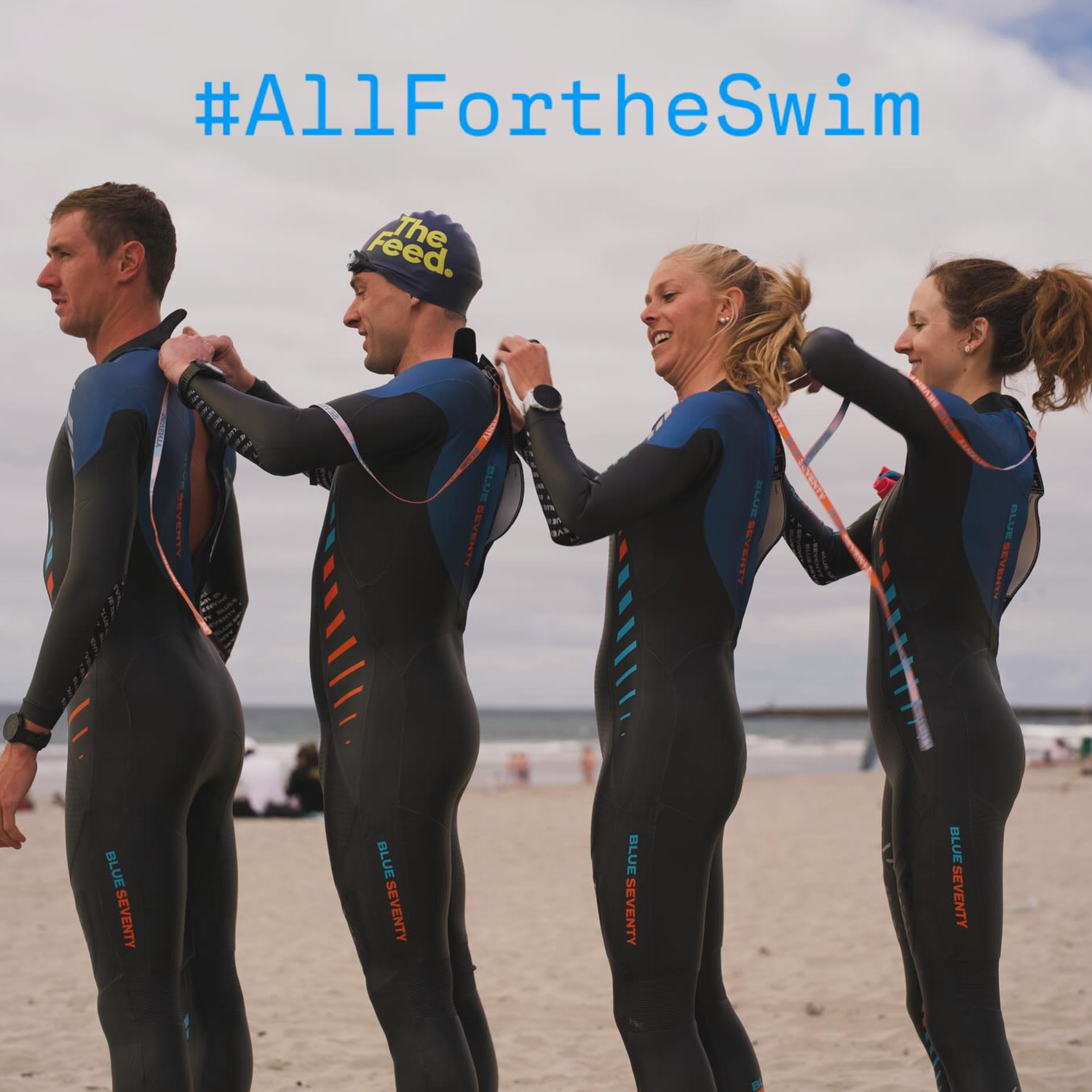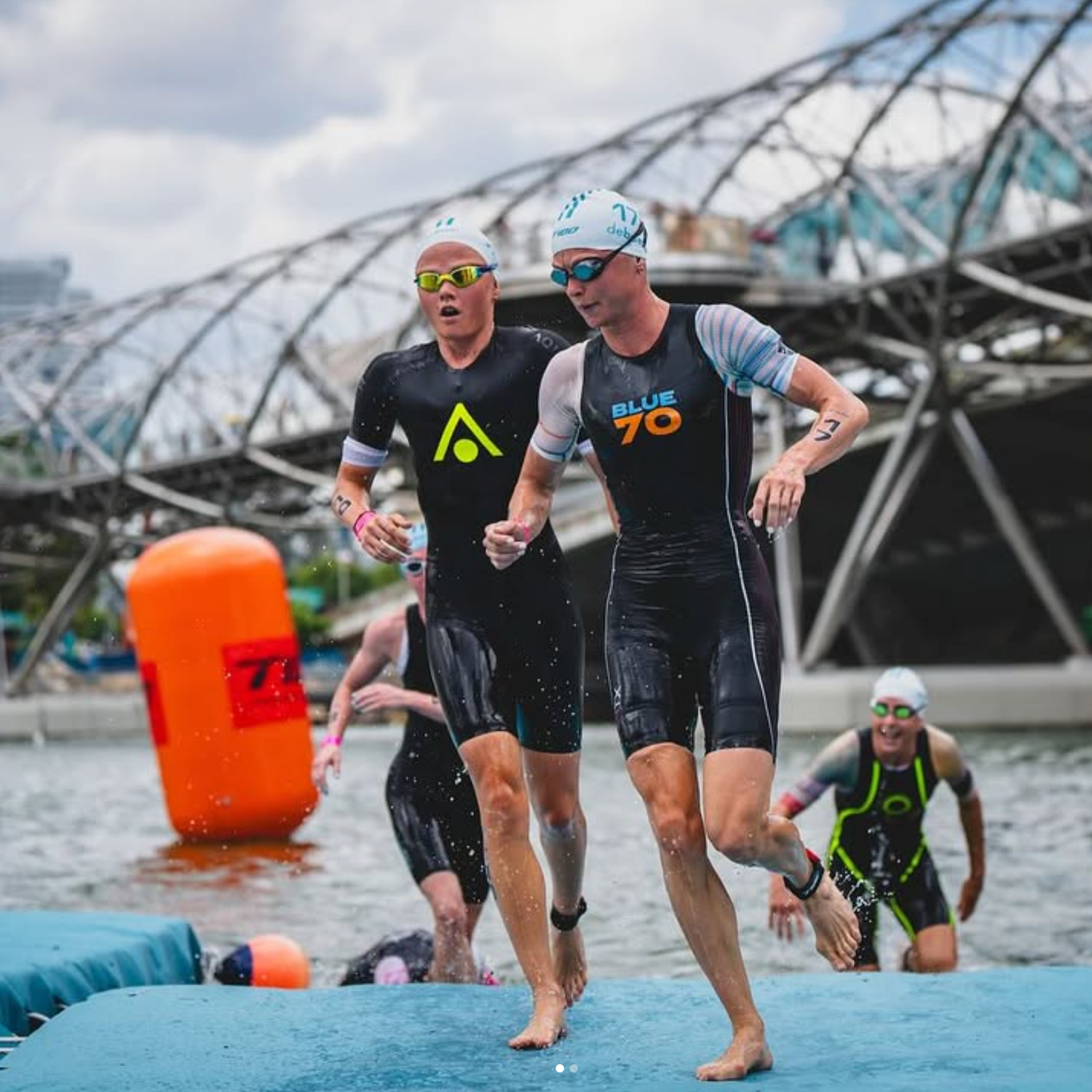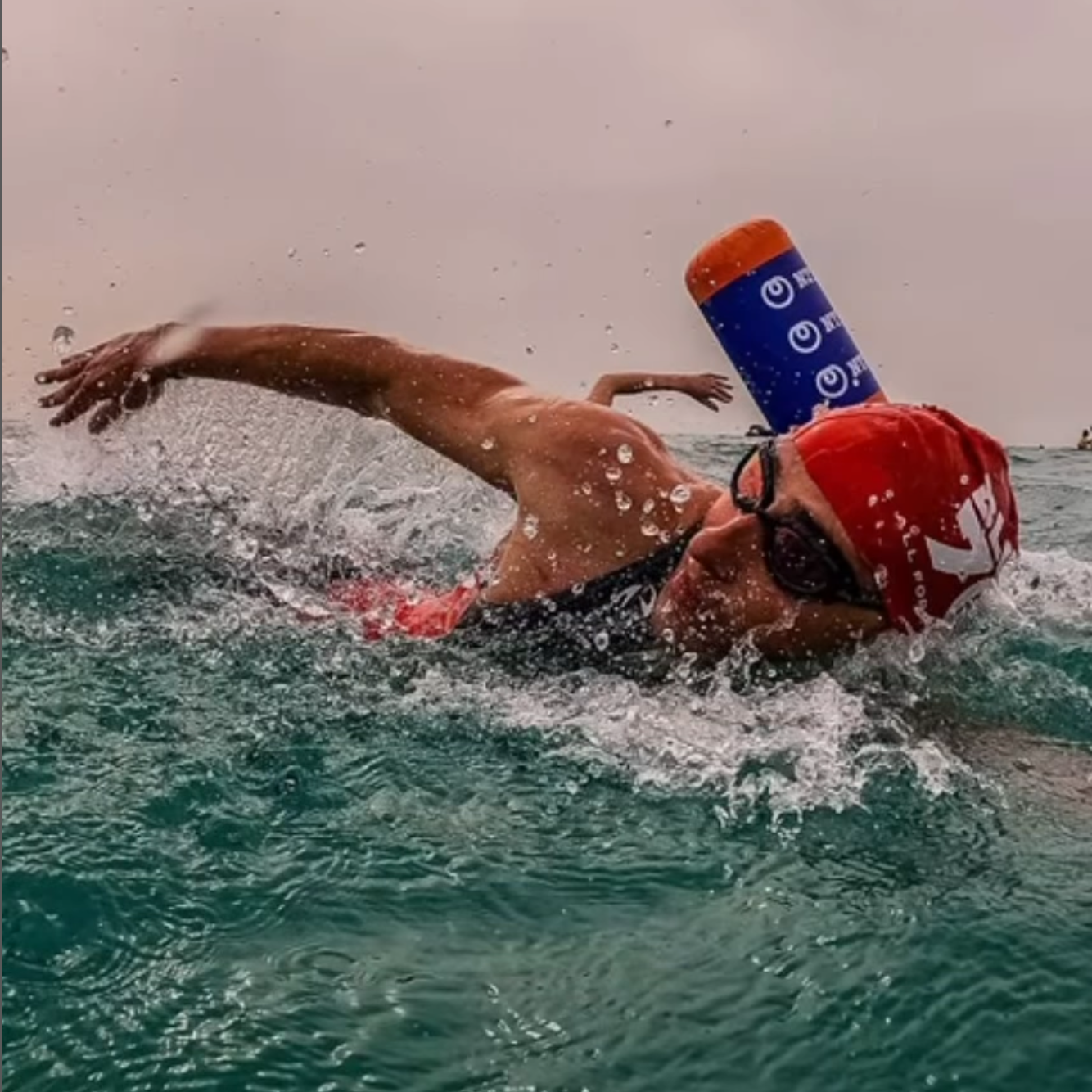



A heated lap pool is the wrong place for a wetsuit. At blueseventy, we build triathlon and open-water wetsuits, and we would still rather see you wear a practice suit for laps than put your race neoprene through a chlorinated pool session. Three practical factors sit behind that advice: temperature, chlorine, and what buoyancy does to your stroke.
A lap pool runs warmer than a wetsuit wants
Most lap pools sit in the high 70s Fahrenheit or above. Our product guidance draws the upper comfort line for a full wetsuit around 70 to 72 degrees for longer swims. A wetsuit traps a thin layer of water against your skin. Your body warms that layer. When the surrounding water is already near skin temperature, the suit can't shed that heat, so you carry it through the session instead. You fatigue sooner, your stroke falls apart, and the workout loses value before you hit your planned distance. At the cold end, a purpose-built suit like the Thermal Reaction, with its fully lined Zirconium jersey, exists for water below roughly 56 to 58 degrees. A lap pool is nowhere close to that.
Chlorine attacks neoprene, seams, and zipper tape
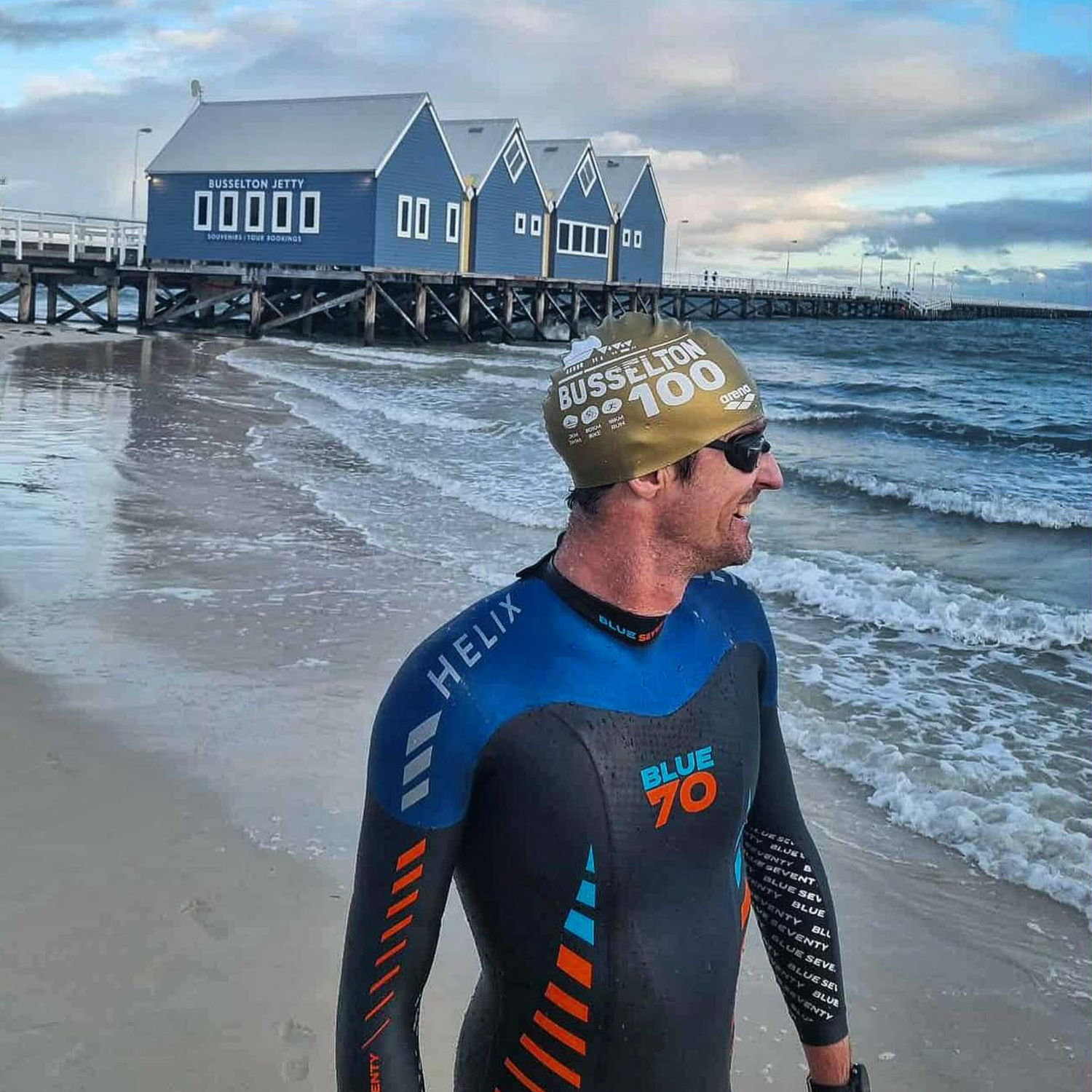
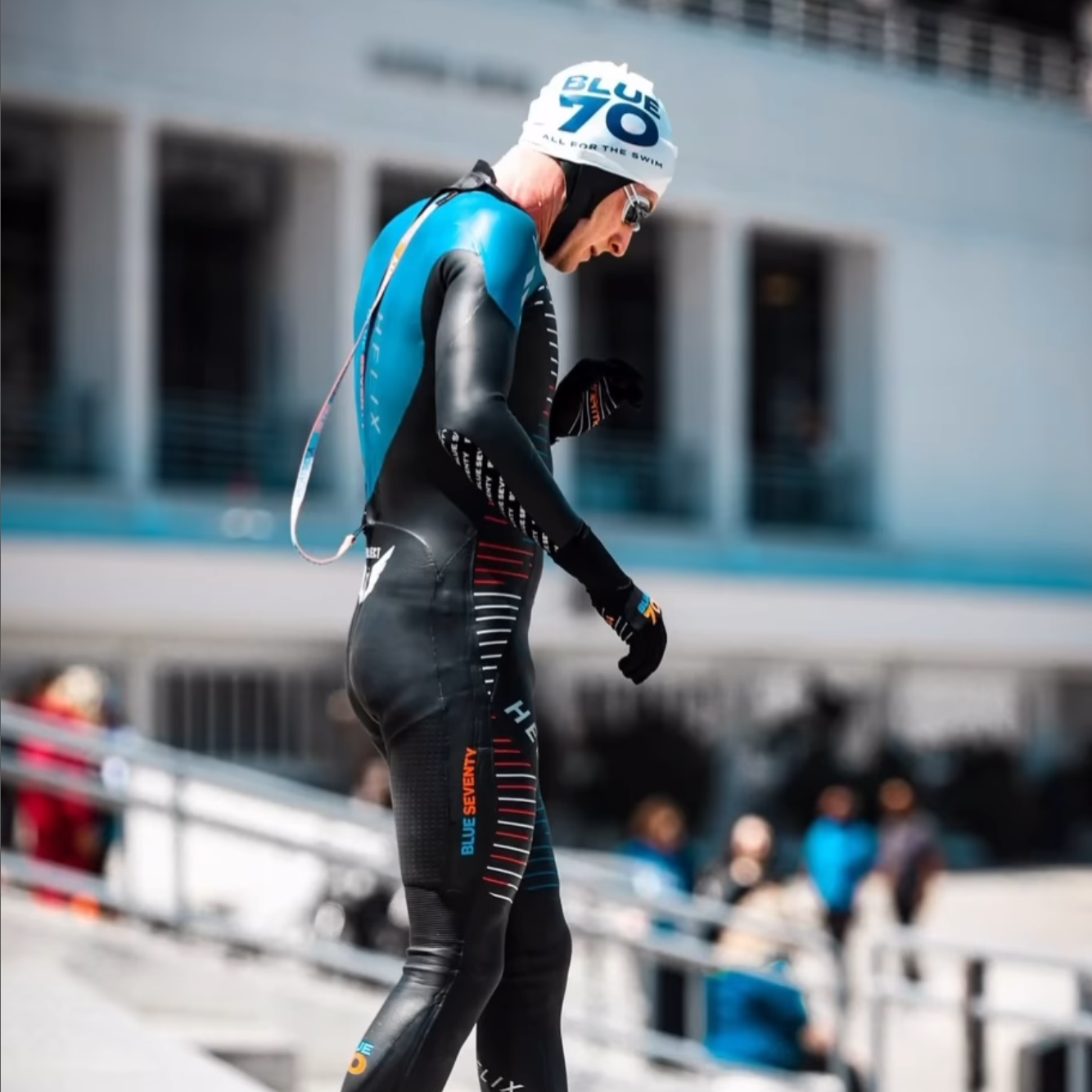
Neoprene is a closed-cell foam. The gas inside gives it buoyancy and flexibility. Pool chlorine is an oxidizer. Repeated exposure attacks the rubber, dries it out, and stiffens the shoulders over time. Glued seams and zipper tape take the same hit. That is why our warranty does not cover chlorine damage, heat damage, or ordinary wear and tear. A swim-specific wetsuit uses Yamamoto 38, 39, or 40 cell neoprene, with higher cell counts meaning more flexibility in the shoulders and arms. The Helix pairs high-flex neoprene with thin, race-day panels, and that construction is built for a single morning of open-water racing, not for the repeated, daily chlorine exposure you would give it in a heated lap pool. Fill a training block with pool laps in that suit and you will shorten its useful life.
Buoyancy changes what a lap swim teaches you
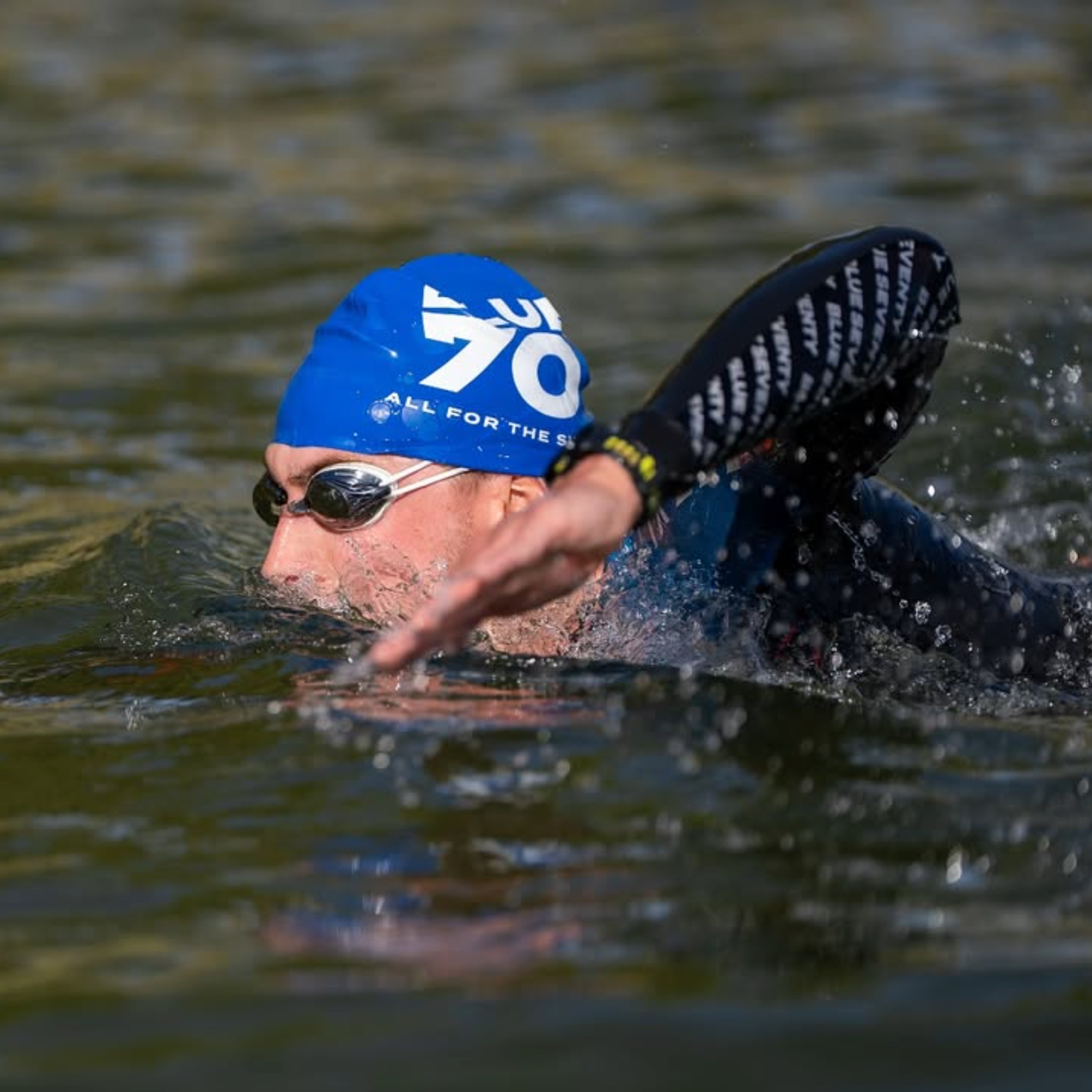
A wetsuit lifts your hips and legs. In open water, that is an advantage: better body position, less drag, and less demand on the kick. In a pool, that same support works against the skill you came to build. You press your chest less, you engage your core less, and your leg sink gets hidden instead of fixed, so pulling the suit off after a month reveals the same old body position you started with. The kick you didn't train hasn't come back on its own. If you want targeted hip lift during a pool set, a buoyancy short like our LIFT short adds that lift without wrapping your torso in neoprene and leaves your arms free to move.
The one pool use that makes sense
There is a narrow exception. An unheated outdoor pool in early spring or late fall can sit in the 60s. If you have no lake or ocean access and you need to complete a cold-water workout, a wetsuit will help. Use a suit you are willing to retire early, not your primary race suit. Rinse it inside and out with fresh water immediately after you get out. Expect it to wear faster than the same suit would in open water. That is a trade-off, and it will not extend the suit's life.
What to use in the pool instead
Lap swimming rewards unsupported training. Use a practice swimsuit for most sets. Add a pull buoy, kickboard, or buoyancy short for specific drills. Work on body position through floating, push-offs, and breathing balance. If the goal is warmth, choose a warmer pool or a shorter session instead of adding neoprene.
If you still take a wetsuit to the pool
Rinse the suit in fresh water within minutes of leaving the pool. Turn it inside out and rinse again. Hang it flat or over a wide rail to dry away from heat and direct sun. Don't wring it, don't leave it in a hot car, and don't rinse it in hot water. Check the seams and zipper before your next open-water set. A pool session rarely ruins a suit in one day. The damage accumulates over repeated sessions, and it shows up later as stiff shoulders, a cracked neck seal, or a zipper that refuses to close smoothly no matter how carefully you treat it before a race.
A wetsuit is a tool, and like any tool it works best when matched to the job. Heated lap pools are for unsupported training and technique. Open water is where neoprene earns its place. When you're ready to buy for open water, use our size charts and fit guide to match a suit to your measurements. For now, leave the neoprene in your bag and let the pool do its job.