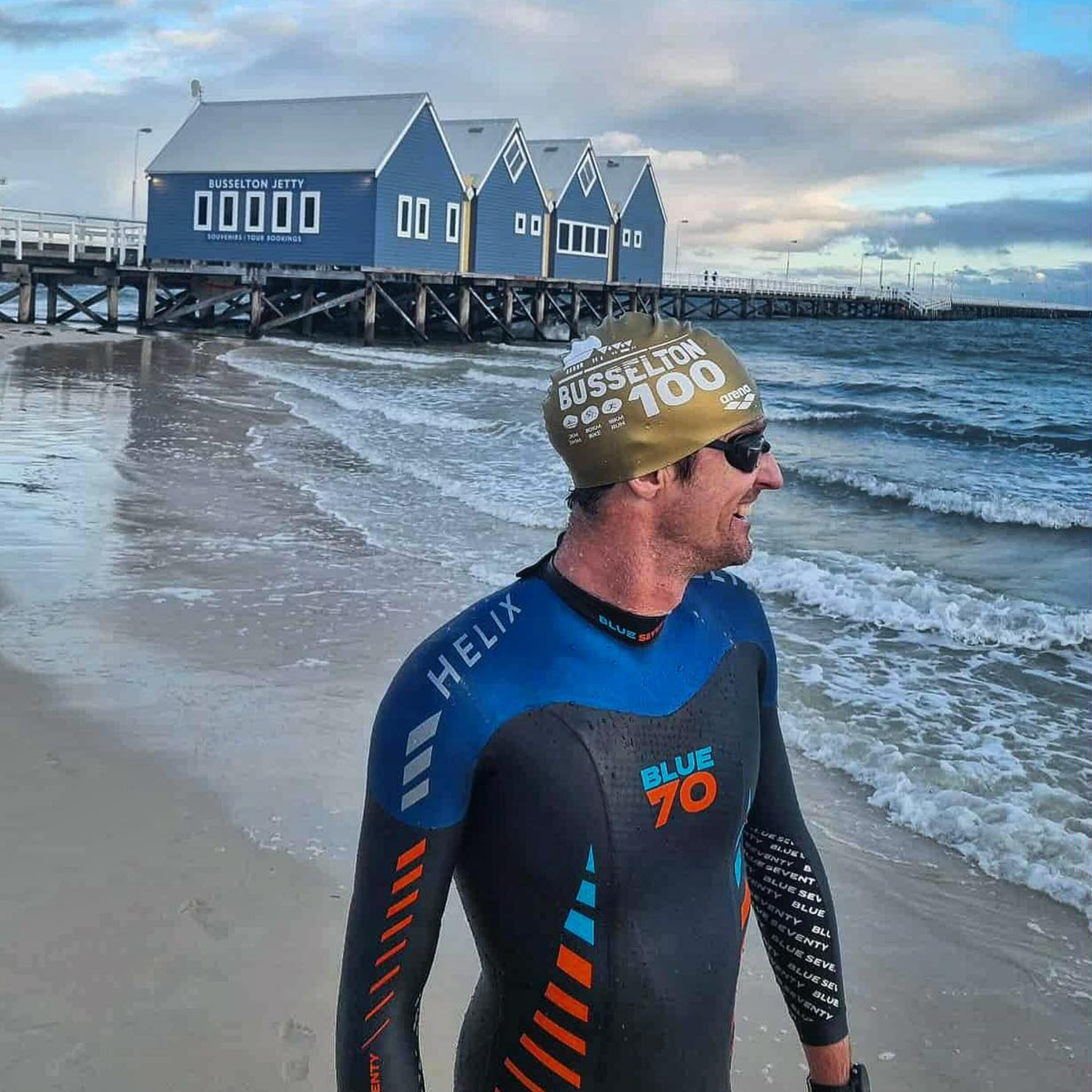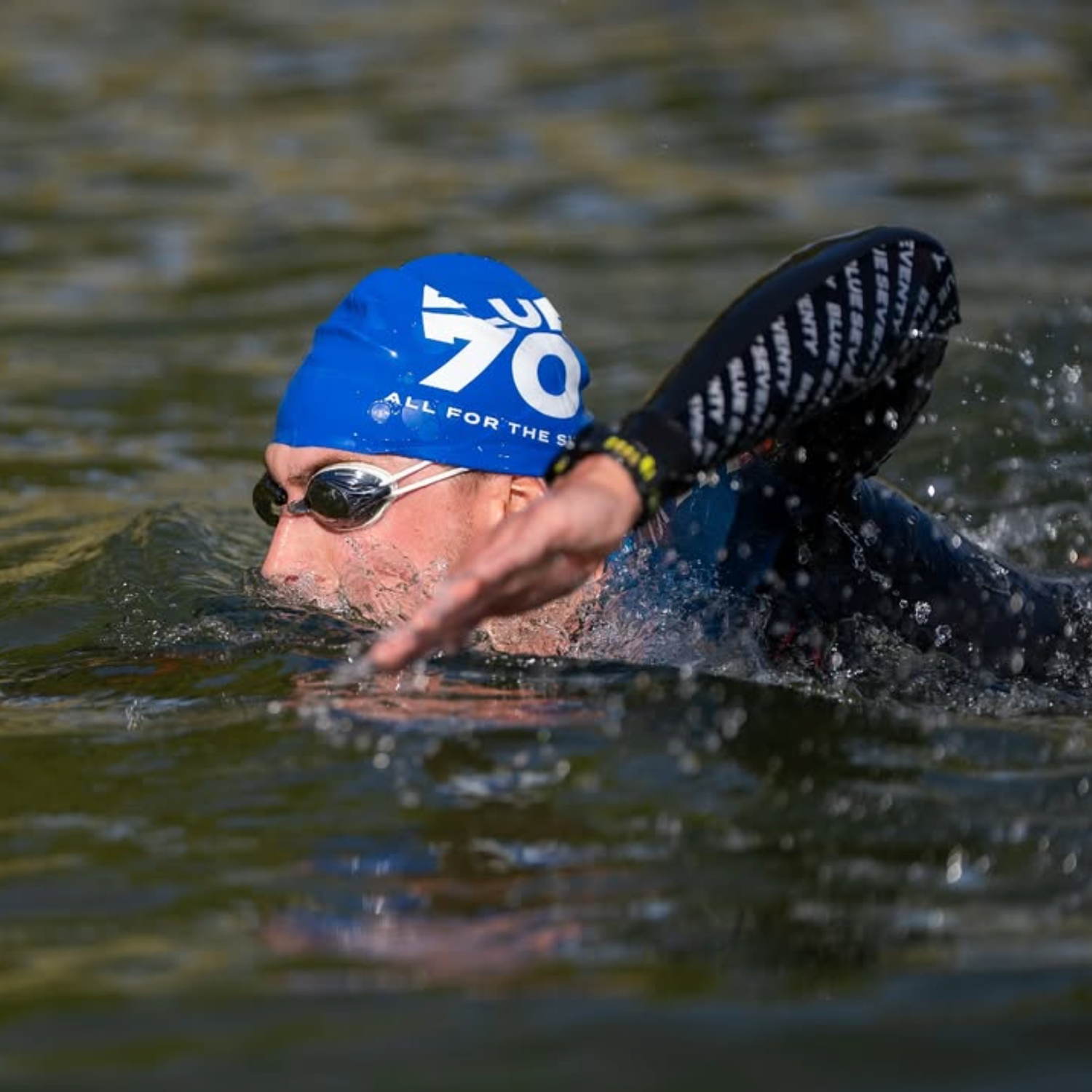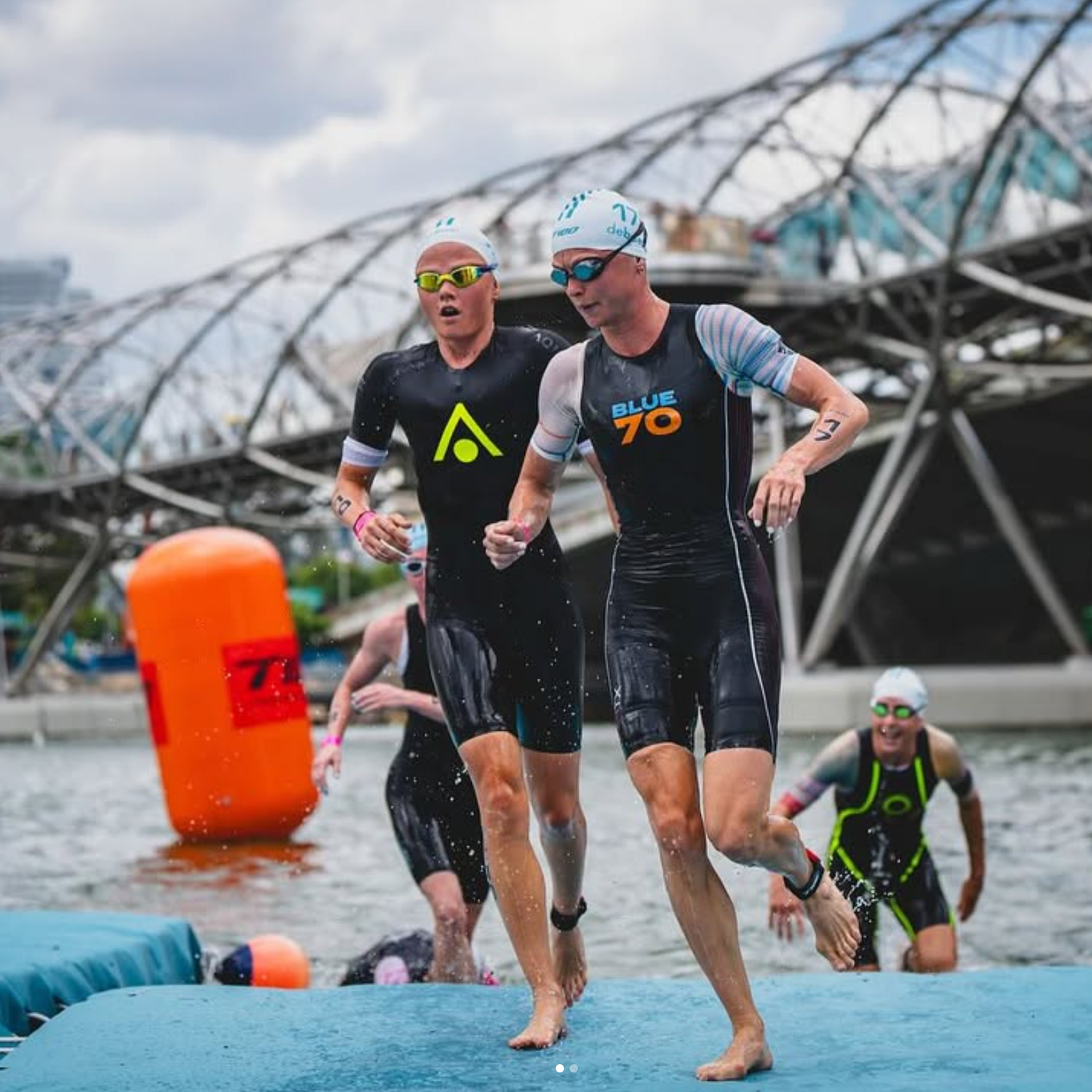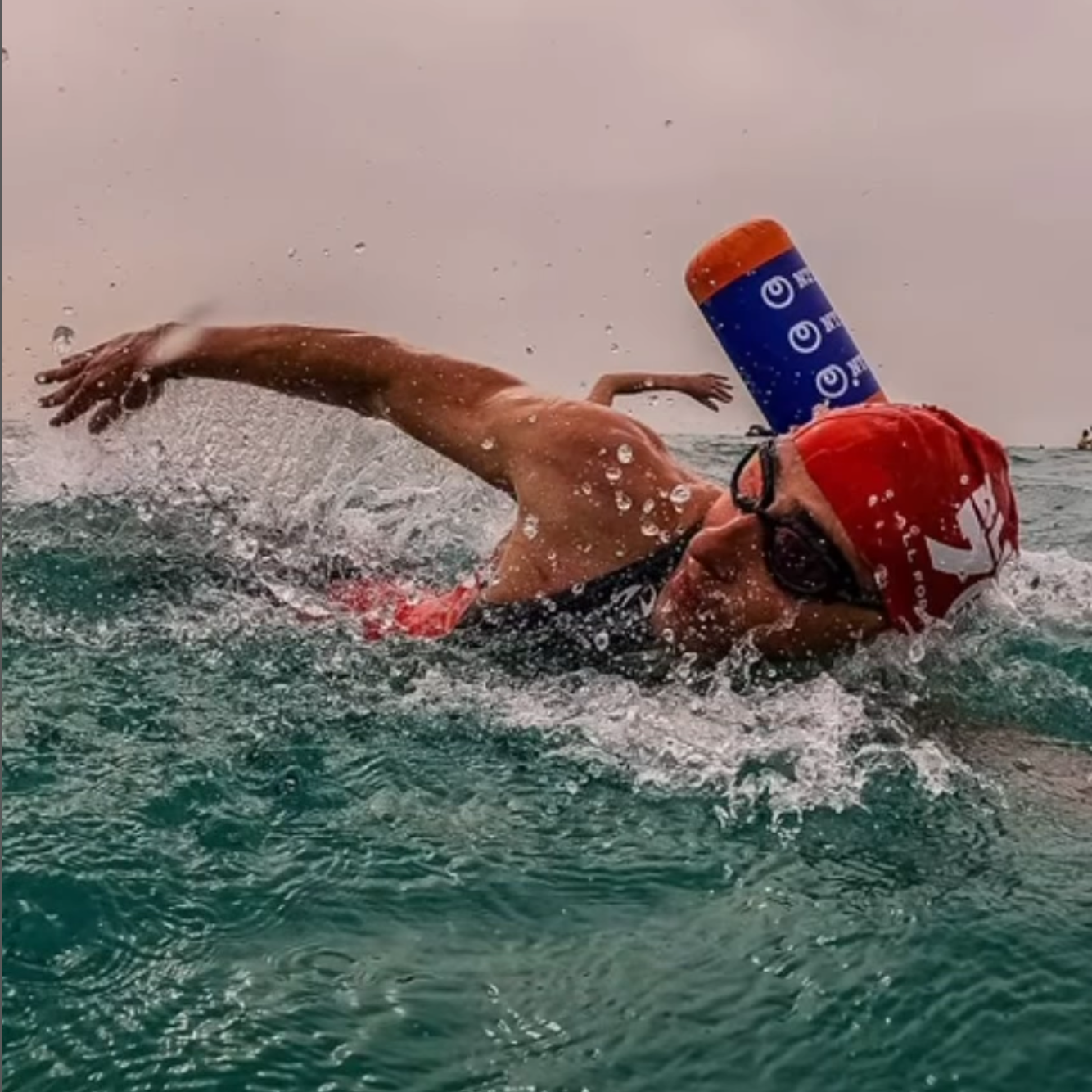



Most swimmers and triathletes ask whether a chest zip or back zip is faster, warmer, or easier to repair. At blueseventy, we start somewhere else. The zipper's job is entry and seal. Its location changes how you get in and out, and it changes the seam layout around the shoulders and neck. Those changes matter. They matter less than the panel shape, neoprene grade, and neck seal you choose alongside it.
Where the Back Zip Came From
Back zips came first because triathlon wetsuits borrowed heavily from watersport construction. A long spine zipper is simple to build and easy to explain. Early triathlon wetsuit design in the 1990s blended surf and dive patterns with swim-specific cuts. blueseventy started in that era, developing one of the first triathlon wetsuits as the category formed.
Swim-specific design then pulled away. Freestyle repeats overhead reach every stroke. A suit built for that movement needs a different seam map. Moving the zipper off the spine lets the upper back stay as one continuous panel, with fewer seams crossing the shoulder blades. That shift changed more than convenience. It changed how the suit behaves during the catch.
What Chest Entry Changes in the Water
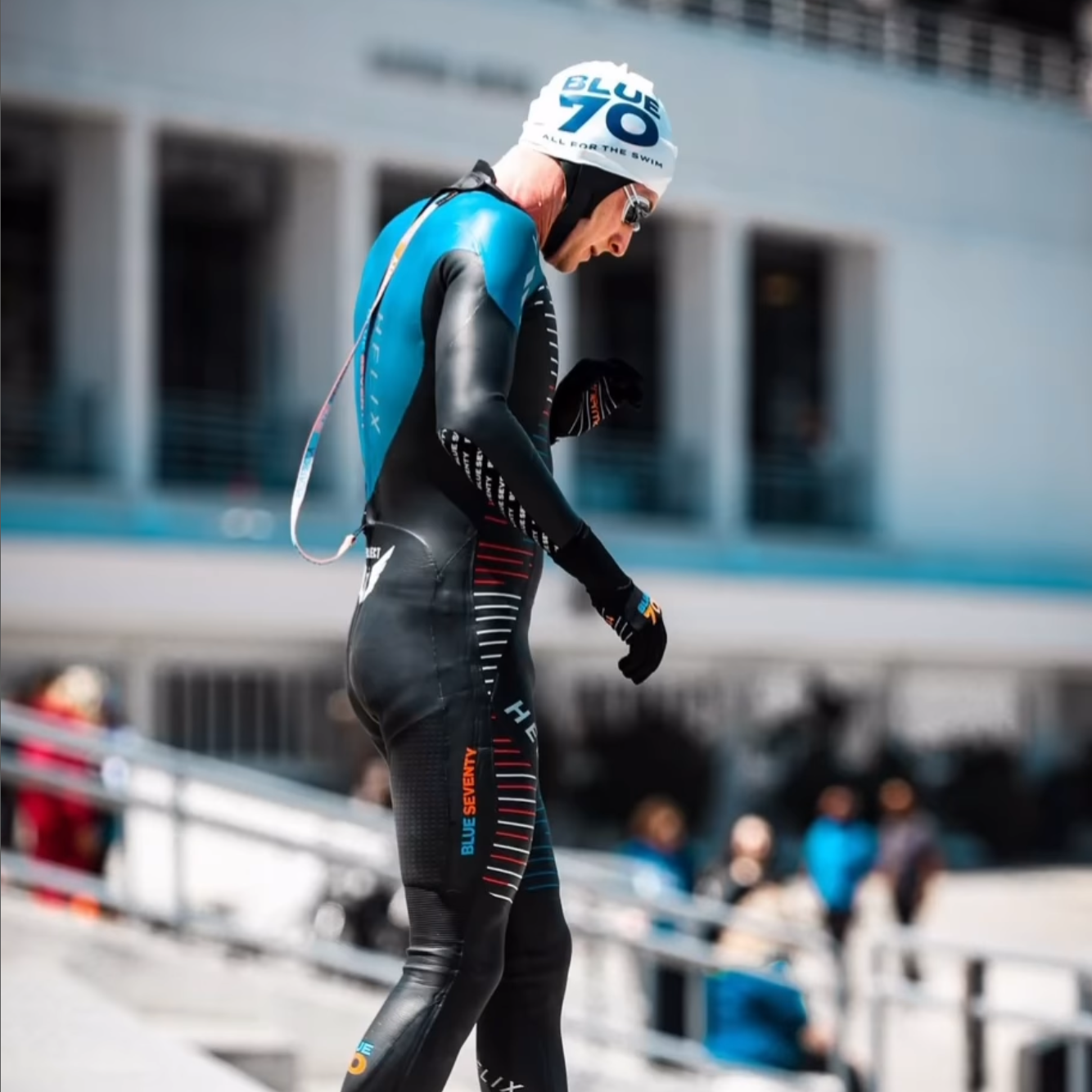
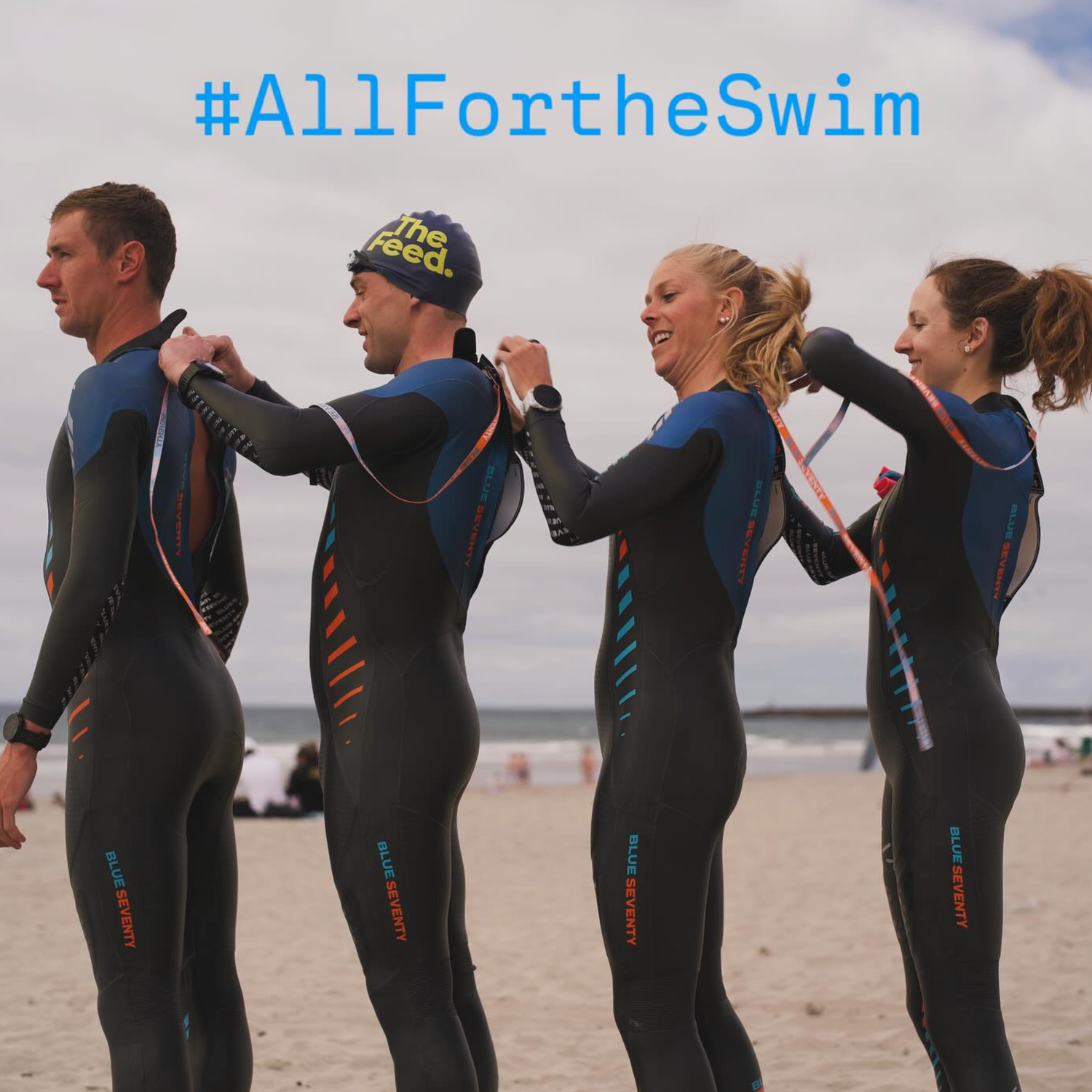
Chest entry changes two physical details that affect swimming. Designers moved the zipper track off the spine, so the upper back can stay as one continuous panel. On chest-entry suits, the neck opening often sits lower and closer, which reduces cold water flush. The entry sequence also changes: you work the suit up to the hips, then the shoulders, then close the front. That takes practice.
The zipper opens and closes. You gain speed from the panel shape and buoyancy profile around it. On the Helix, the thin Yamamoto neoprene in the arms and the catch panel on the forearm do more for feel than the zipper location. LIFT buoyancy panels add lower-body lift without adding shoulder stiffness. Across the line, the neoprene grades range from 38 to 40 cell Yamamoto. Higher cell numbers flex more, and shoulder comfort depends on that grade as much as on seam placement. A chest entry lets those features sit on a cleaner back panel.
The Fit Test That Matters More Than Zip Placement
Before you choose a zip, try this sequence.
- Pull the legs up first.
- Work the torso into place.
- Settle the shoulders last.
- Close the zipper without forcing it.
A good suit feels snug on dry land and frees up once water reaches the neoprene. Stand tall and sweep both arms through a slow freestyle catch. Notice whether a seam or zipper track digs across the shoulder blade. If it does, the panel shape is wrong for you, regardless of zip type.
Then check the neck. A neck that gaps lets water in. A neck that pinches will distract you after 800 meters. You want a seal that sits flush without choking.
The shoulder is a ball-and-socket joint. Freestyle repeats flexion, internal rotation, and horizontal adduction. A suit that resists those movements makes the rotator cuff and deltoid work harder to hold your catch. That extra work shows up as stroke breakdown in the second half of a swim. It rarely looks like a zipper problem. For women, the Femme Fit pattern is the bigger variable before zip selection. The Femme Fit pattern adjusts the bust, torso, wrists, and ankles so the suit does not pull across the chest or slide at the cuffs. That changes how the shoulders move more than whether the zipper sits front or back.
Take a swimmer with broad shoulders and a short torso. She might choose a back zip because it looks familiar. If the back panel pulls across her scapulae, she shortens her stroke without noticing. A chest entry with a continuous back panel removes that seam line. The difference shows up after 1,500 meters, not in the store.
Durability and Repairs Around the Zipper
Both zip styles fail the same way. We see yanked teeth, torn tape, fingernail punctures near the pull, and creases at the zipper track. The warranty covers manufacturing and material defects for one year, but not fingernail punctures, heel tears, or zipper damage from force. Handle the suit by the pads of your fingers, not your nails. When you zip, make sure the neoprene is smoothed flat. Never force a zipper closed. If it binds, stop, reset the panel, and try again.
For small nicks near the zipper track, Aquaseal neoprene cement can bond the two edges. If the zipper tape tears away from the neoprene, a professional repair is the safer route. Rinse the suit after salt or chlorine, dry it inside and out, and store it flat or hung from the waist.
How to Choose Without Obsessing Over the Zip
Match the suit to your training week first.
- Competitive racers: Helix or Reaction.
- Frequent training, once a week or more: Reaction for longer swims, Fusion for shorter frequent swims.
- Budget-conscious first timer: Sprint.
- Warm water or less shoulder coverage: a sleeveless suit.
Above roughly 70 to 72 degrees F, a full suit can feel too warm over longer swims. That points many swimmers toward a sleeveless cut or a swimskin instead.
Once the model fits your week, try both zip styles if you can. Many swimmers find a clear preference after a few minutes of donning and shoulder sweeps. That preference is personal. It reflects your shoulder shape and transition habits. Triathletes tend to ask about transition speed, so the zipper becomes a T1 conversation. Open water swimmers ask about cold water flush and chafing over three hours. Pool swimmers rarely wear a wetsuit. Knowing which camp you are in tells you whether to care about the zipper at all.
Our design team has reduced seams in high-movement zones. The chest entry is one result of that direction. It is a tool for a better panel layout. Speed gains sit in the panel shape and buoyancy profile.
Order the suit that matches your training week. Use the Test Swim policy to swim in it before committing. If the neck or shoulders do not feel right after a real swim, exchange it within 30 days.