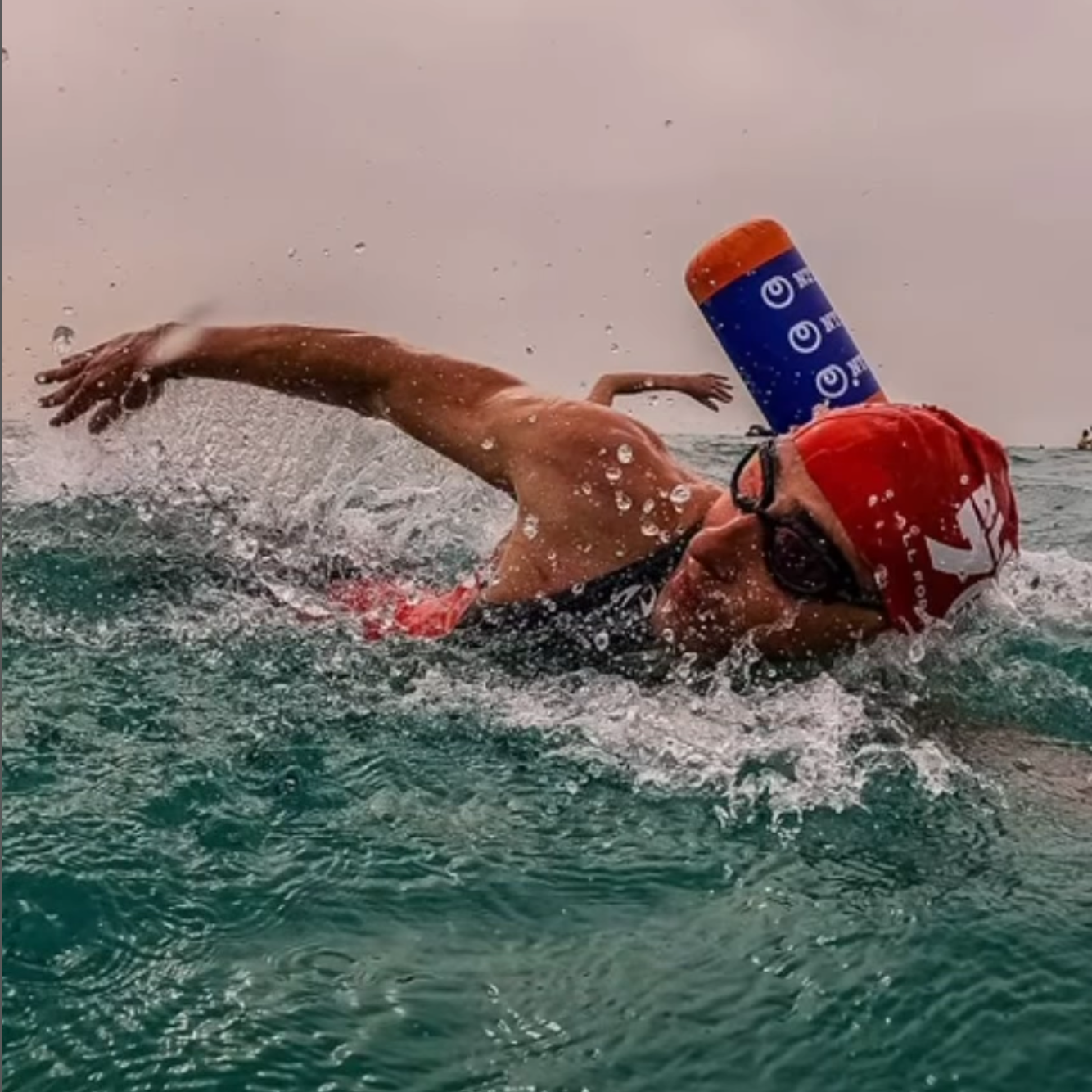



Ask five wetsuit shoppers what makes one suit better than another, and at least two will mention where the rubber came from. Petroleum-based neoprene versus limestone-based neoprene has become a talking point across the industry. It's the wrong question if you actually want to know why your shoulder feels tired at the second buoy.
Neoprene is polychloroprene, a synthetic rubber foamed with microscopic gas cells that trap air. Those cells are what give a wetsuit its buoyancy and its warmth. The chloroprene itself can start from petroleum-derived acetylene or butadiene, or from calcium carbonate pulled out of limestone. Both processes land at the same polymer. Once that rubber gets foamed, sliced, and laminated into panels, no lab test of flexibility or tear strength can tell you which feedstock it came from.
Blue70 builds its wetsuits from Yamamoto neoprene, made in Japan using a limestone-based process the company has run for decades, long before feedstock sourcing turned into a marketing line across the industry. That history matters for supply chains. It has almost nothing to do with how the suit performs on your shoulder at stroke 900.
The number that actually matters: cell count
Yamamoto grades its neoprene by cell count, and Blue70's current lineup runs 38, 39, and 40 cell material depending on where it sits in the suit. A higher cell number means more, smaller gas cells packed into the same volume of rubber. More cells, smaller and more numerous, produce a thinner, more pliable sheet at a given thickness.
Your shoulder moves through more range of motion during a swim stroke than almost any other joint action in the sport. Catch, pull, recovery, over and over, for the length of a race. Neoprene resists that motion in direct proportion to how stiff it is. Stiffer rubber means more resistance on every single cycle. Over 1,500 meters of open water, that resistance adds up. You feel it in the last 400 meters, right when you need your stroke rate to hold.
Where Blue70 spends its cell count
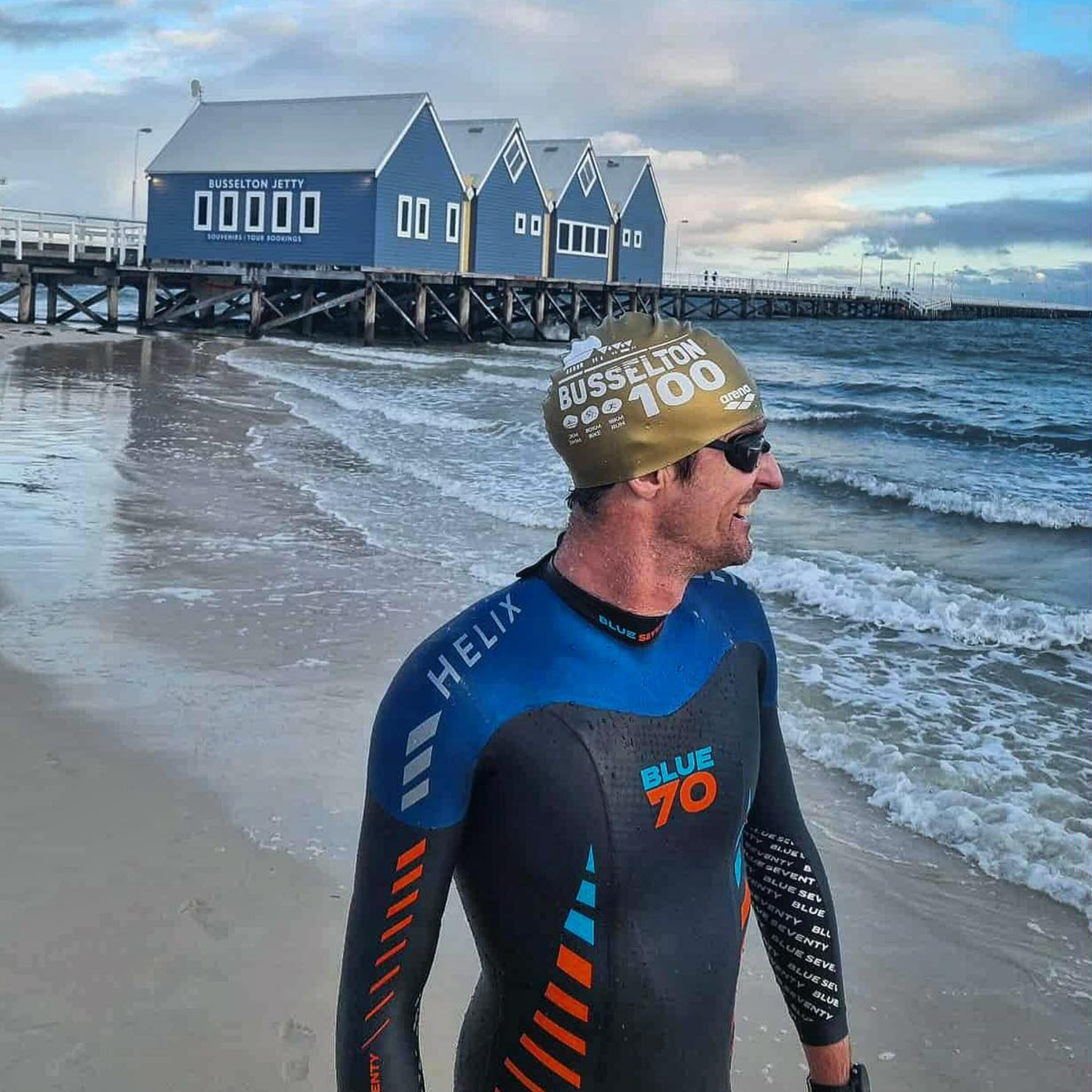
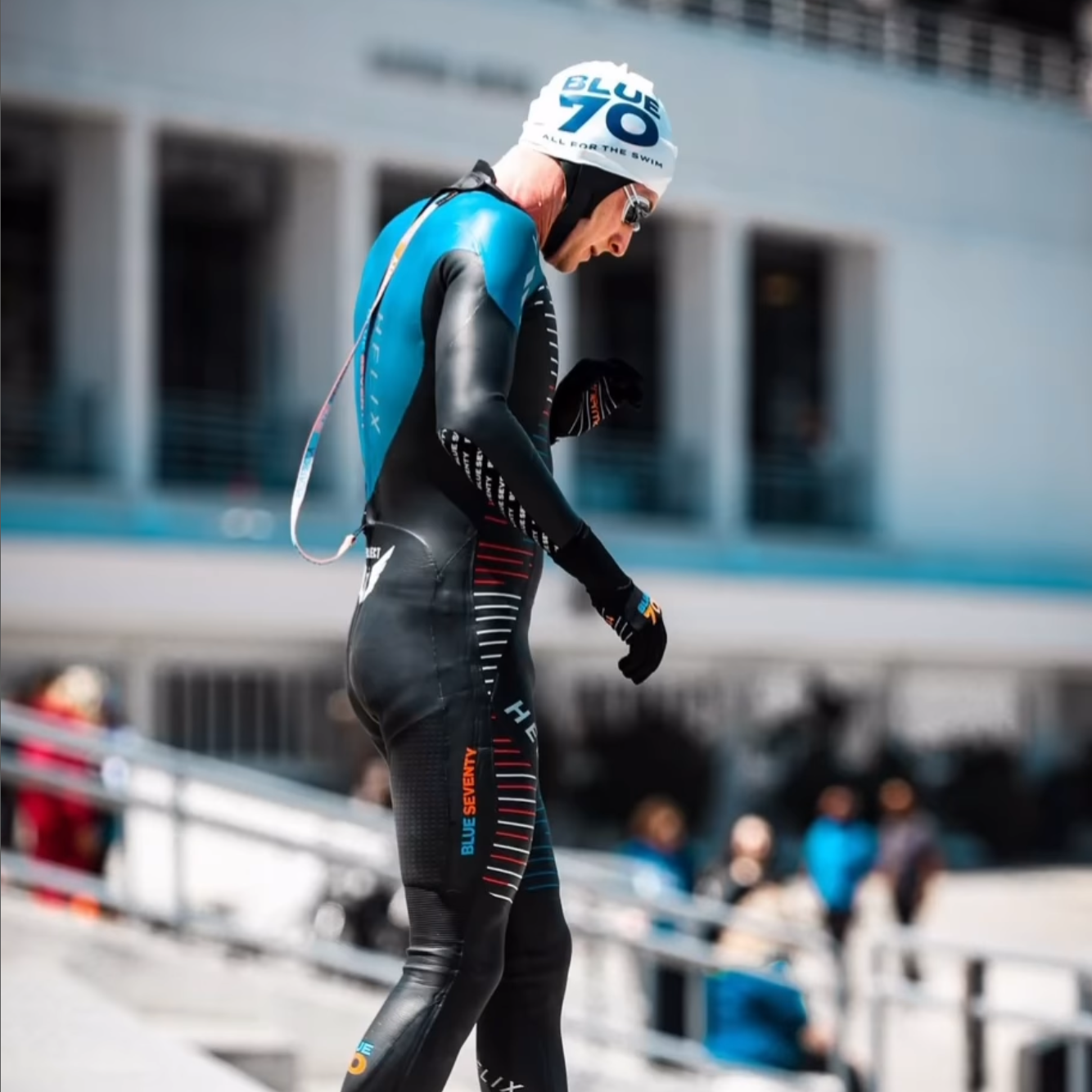
This is why panel placement carries as much weight as the cell grade itself. The Helix, Blue70's flagship race suit at $995, uses thin, high-cell neoprene through the shoulders and upper arms, putting the flexibility where the joint needs it most. A permeable catch panel across the forearm, part of the Helix design since 2010, preserves feel for the water exactly where a swimmer needs to sense pressure against the hand.
That thin, flexible neoprene comes with a real tradeoff, and Blue70 says so rather than burying it in fine print. Thinner panels wear faster under repeated donning, doffing, and general training abrasion. A triathlete swimming open water four times a week will break down a Helix's shoulder panels faster than someone racing in it six mornings a year. That's why Blue70 points frequent trainers toward the Reaction ($680) or Fusion ($420), both built with tougher-grade neoprene through the body in exchange for slightly less flex at the joint. The Sprint ($325) extends that same durability logic further down the price range for swimmers who want buoyancy without race-day flexibility demands.
None of that decision tree has anything to do with whether the base rubber started in a petroleum refinery or a limestone quarry. It has everything to do with cell count, and where a manufacturer chooses to spend it.
What the lining adds (a separate decision entirely)
Cell structure governs the foamed rubber. A different material choice, the interior jersey lining, governs warmth and interior durability. Blue70's Thermal Reaction laminates a full Zirconium synthetic wool lining across the interior, adding insulation without adding bulk to the neoprene layer underneath. That matters once water temperatures drop toward the 56 to 58°F range, where a standard suit starts losing its edge. At the other end, above roughly 70 to 72°F, a full suit over a long swim can trap enough heat that a sleeveless design becomes the smarter call.
Ask a wetsuit brand about lining construction. Feedstock sourcing tells you a lot less.
Care that has nothing to do with where the rubber came from
Foamed chloroprene rubber breaks down the same way no matter which feedstock made it. UV exposure degrades the polymer chain over time. Chlorine and salt left to dry on a suit speeds that up. Sharp, repeated folding weakens cell walls right at the crease.
- Rinse your suit in fresh water after every swim, salt or chlorine.
- Hang it to dry away from direct sun.
- Store it loosely rolled, not folded at a hard crease.
These habits cost nothing and they extend the working life of any cell grade you own.
Fingernail punctures and heel tears remain the two most common ways swimmers damage a brand-new suit, and neither connects to rubber sourcing at all. Trim your nails before you pull a suit on. Roll the leg up from the cuff instead of yanking it. Slide a plastic bag over your foot first if your heel tends to snag the material. Blue70's one-year warranty covers manufacturing defects, but it doesn't cover fingernail punctures, heel tears, or damage from non-swimming use like surfing or scuba diving, so prevention matters more than a warranty claim ever will.
Fit still beats every material spec
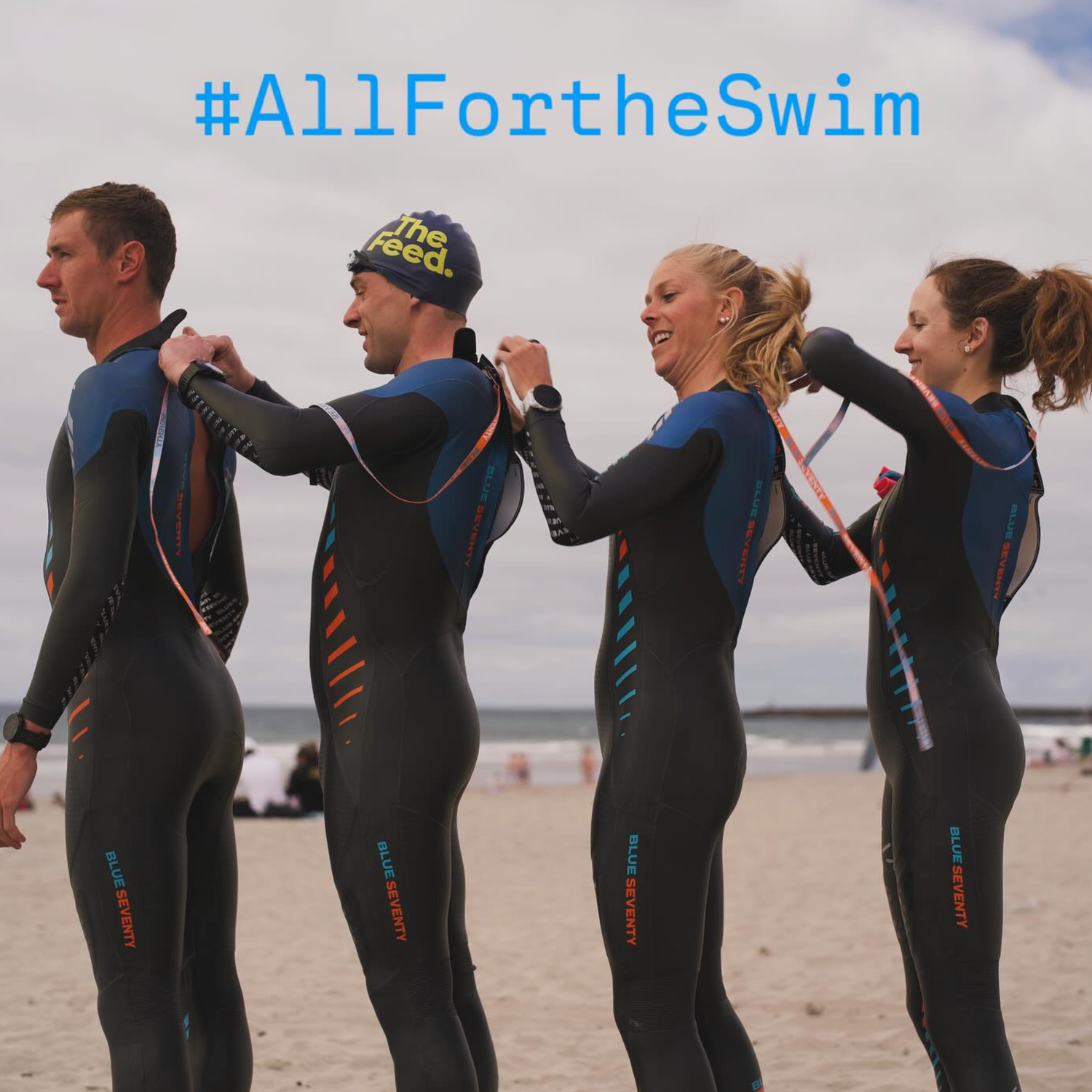
A suit built from the highest cell-count neoprene on the market will still swim badly if it's the wrong size. Blue70's fit doctrine is simple: a wetsuit should feel snug, almost restrictive, standing on dry land, and more comfortable once you're moving through water and the neoprene starts working with your body instead of hanging loose against it. A suit sized too big pools water at the chest and lower back, adds drag, and lets the shoulder seams shift right where you need them locked down. No cell grade fixes a sizing mistake.
If you're not sure of your size, Blue70's online sizing tool and printed size charts take out most of the guesswork before you buy. The Test Swim policy goes one step further: you can swim in a Blue70 wetsuit and still exchange it, as long as it comes back clean, dry, and with tags attached. That's worth a lot to anyone who has never felt neoprene against skin in open water before.
Where sourcing conversations are actually useful
Feedstock diversification is a real shift happening across the wetsuit industry, and it's worth watching for environmental reasons. But it's a supply chain story, not a performance one. The engineering that decides how a suit feels on your shoulder at the 1,000-meter mark sits downstream of feedstock entirely: cell count, panel thickness, where the manufacturer places thin flexible neoprene against tough durable neoprene, and how the lining performs at the water temperature you'll actually swim in.
Next time you're comparing wetsuits, ask about cell grade in the shoulder panels. Ask where the buoyancy-focused thick neoprene sits versus the thin flexible panels. Ask how the lining holds up at your local water temperature. Those questions get you to performance. The feedstock question is fine to ask, but it won't change how your catch feels at stroke 900.
Take a Test Swim in a Blue70 wetsuit and feel the cell structure for yourself. It won't affect your ability to exchange or return it if the fit isn't right.