


No. If a race is declared non-wetsuit legal, you cannot wear a wetsuit during the swim. When a race organization makes that call, the ruling applies to every type of neoprene coverage, including sleeveless suits and buoyancy shorts. It also applies on race morning even if the water feels cold to you. Check the current written rule for the organization running your race, then listen to the athlete briefing.
What non-wetsuit legal means
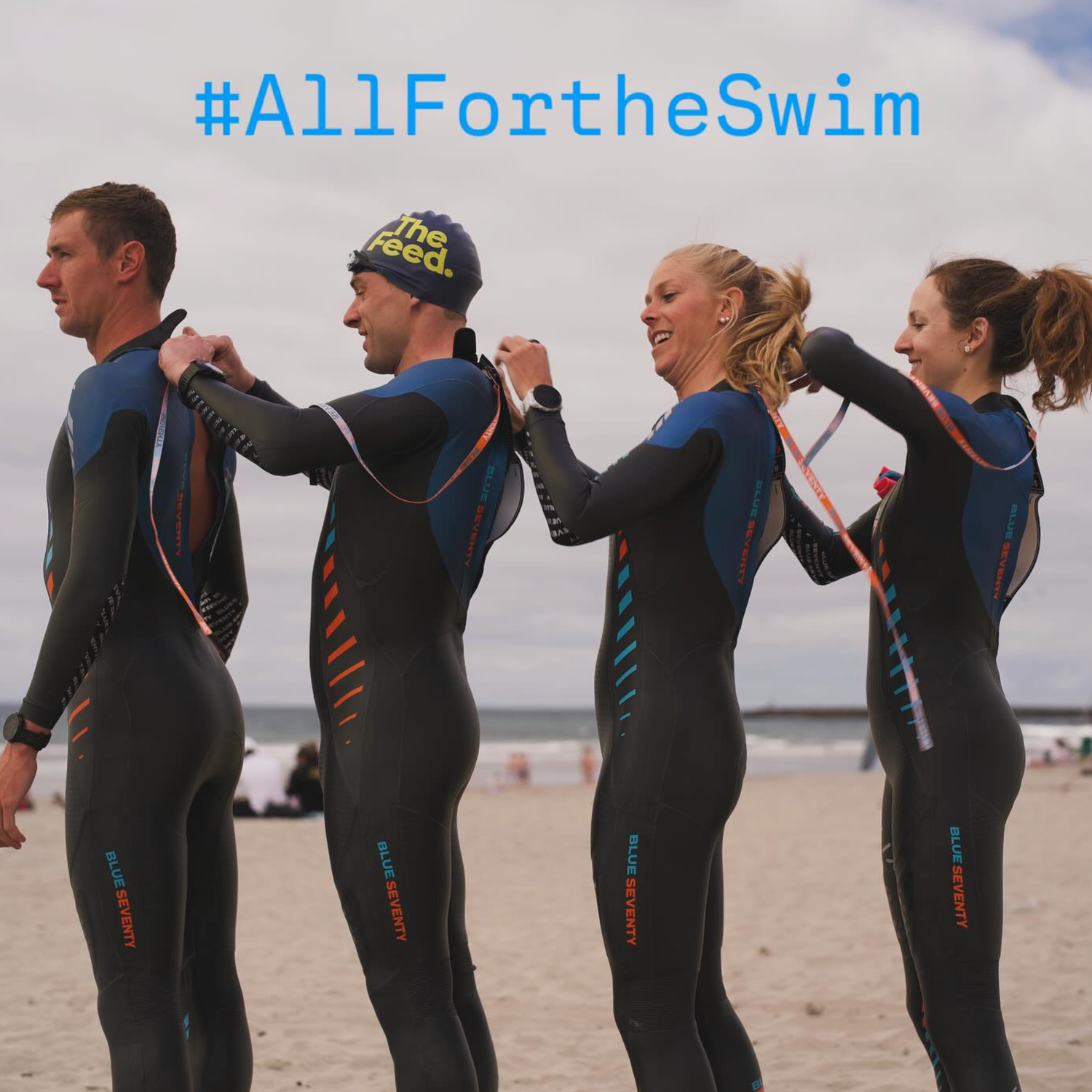
A wetsuit is a neoprene garment that lets a thin layer of water inside. Your body warms that layer to provide thermal protection, and the neoprene adds buoyancy. Non-wetsuit legal removes those tools from the swim start. A Blue70 Reaction Sleeveless and the Thermal Reaction are both wetsuits. A LIFT Buoyancy Short is a buoyancy garment, not a swimskin, so check the rule before using one. Sanctioning bodies usually tie wetsuit legality to water temperature, but the cutoffs vary by organization and can change season to season. Don't rely on a temperature chart you read last season.
What you can wear instead
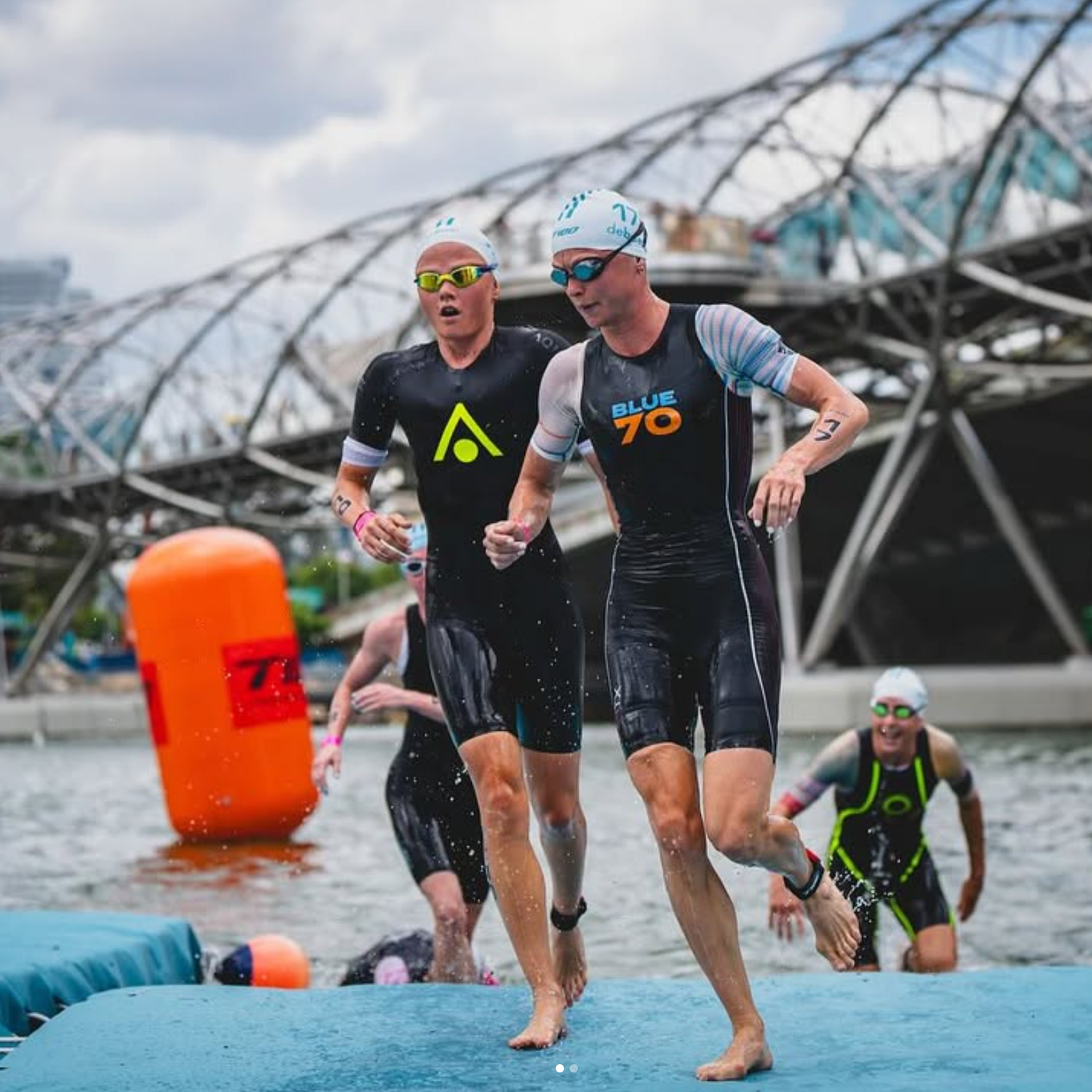
A swimskin is the race-day option for non-wetsuit legal swimming. It contains no neoprene insulation and adds no buoyancy. It provides a smooth hydrophobic surface designed to improve hydrodynamics and help reduce drag. Blue70's swimskin lineage runs from the pointzero3 to the PZ4TX, built for warm-water racing. Check the race's swimskin rule before you commit, because some sanctioning bodies have separate language for technical swimskins.
How to prepare
If you train only in a wetsuit, the first non-wetsuit legal start can feel like a different sport. Practice in the swimskin or in your normal training suit as race day approaches. Focus on body position without neoprene buoyancy. A steady kick and engaged core keep your hips high. Do a few open-water starts and sighting drills in the swimskin so the feel is familiar. In warm water above roughly 70 to 72°F, a full suit can also become too warm over longer swims, so the swimskin often matches the conditions better than a wetsuit would.
Race-day checklist
- Read the current sanctioning-body rule for wetsuit cutoffs and swimskin allowances.
- Confirm the race director's announcement at the athlete briefing.
- Pack the swimskin you trained in.
- If the race organization rechecks water temperature on race morning and changes the ruling into wetsuit-legal range, you can switch. Don't assume that will happen.
Wearing a wetsuit when the race is non-wetsuit legal can lead to a penalty or disqualification.
Blue70 options for non-wetsuit swims
Blue70's swimskin family gives you the smooth surface without neoprene buoyancy. Pair it with a Contour goggle for sighting. If you need help choosing, start with the Blue70 size charts. Happy swimming.