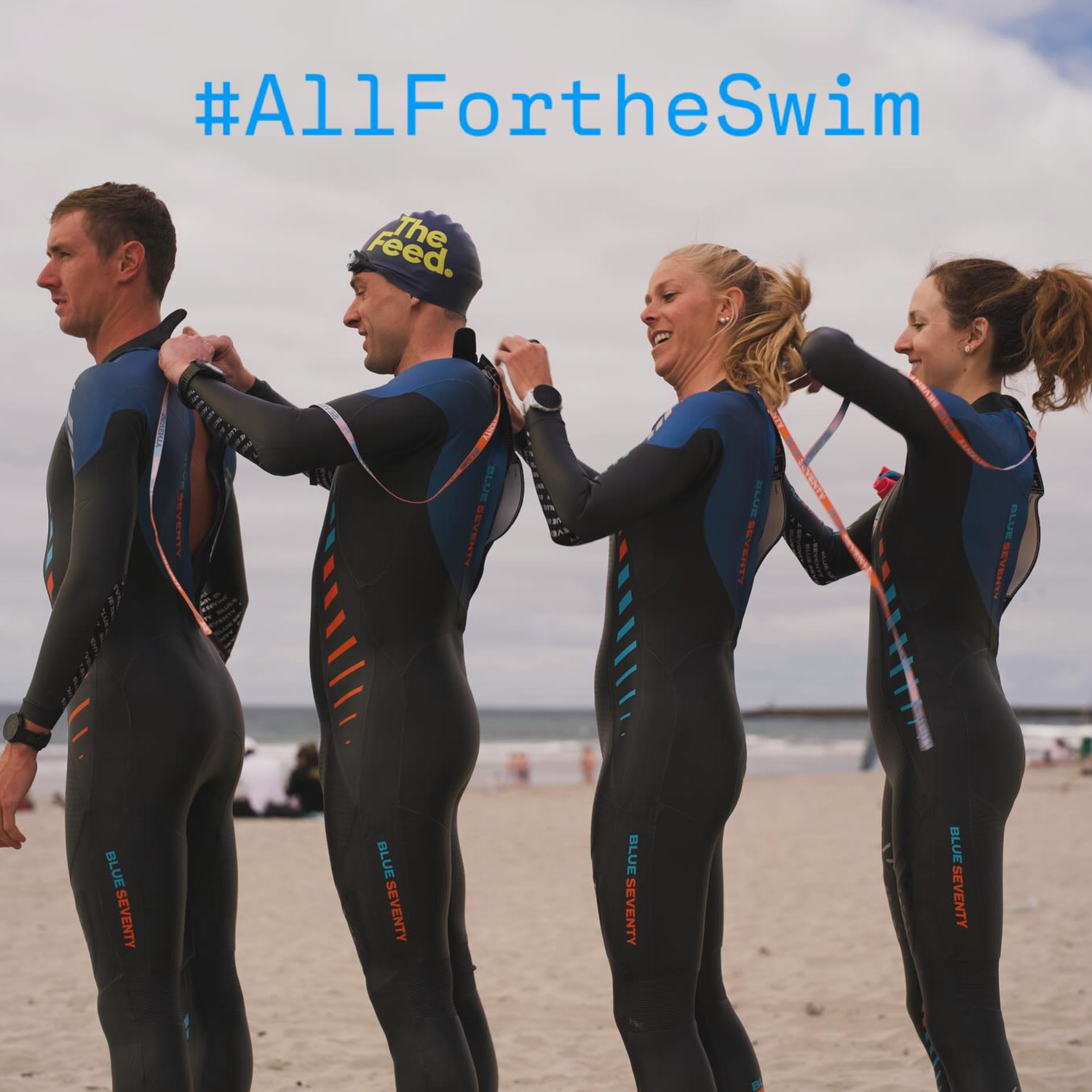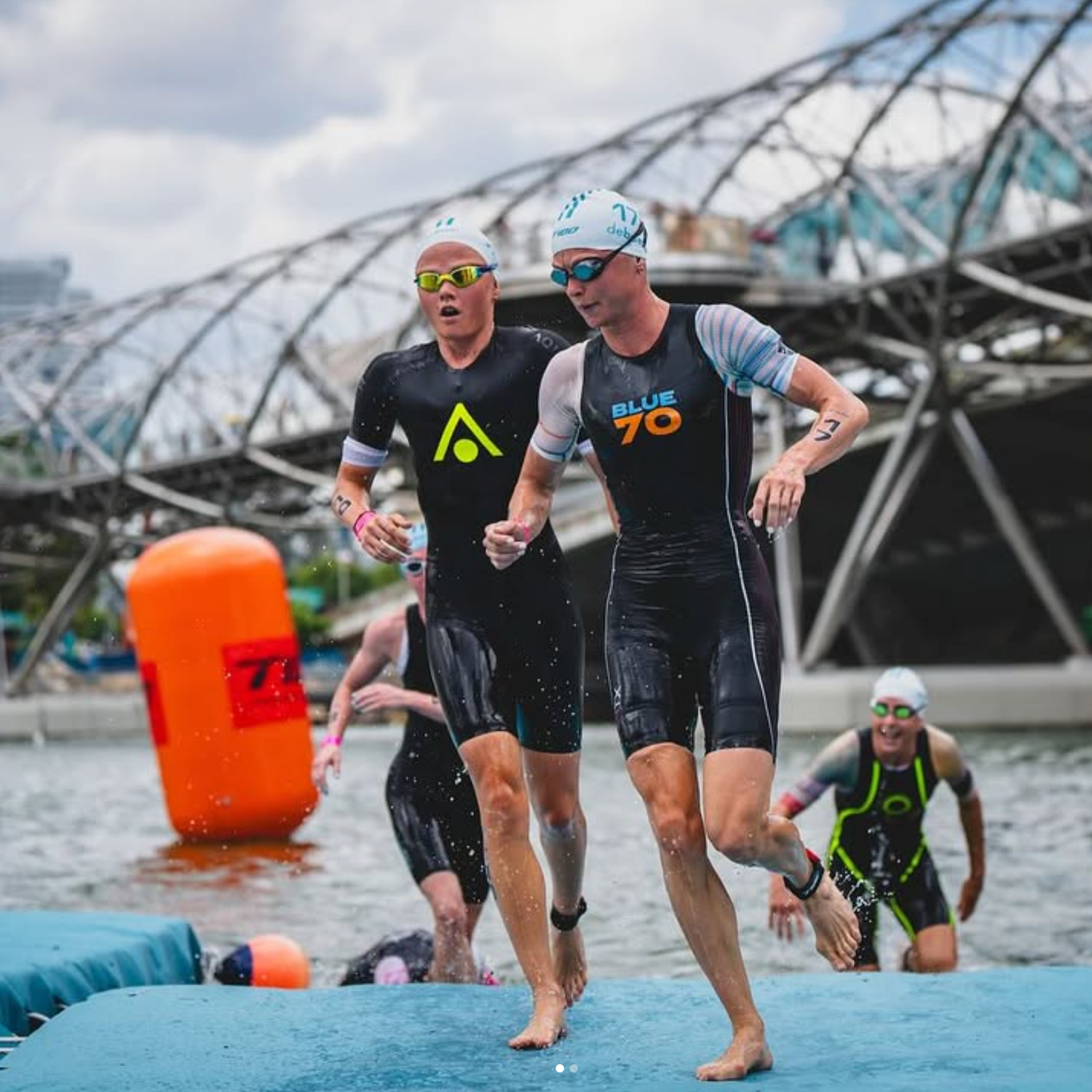



Yes. A Blue70 wetsuit works the same in the dark as it does at noon. The material, fit, and buoyancy do not shift with sunset. What changes is how carefully you plan for water temperature and visibility.
Choose your wetsuit by water temperature
Night does not require a different neoprene grade. It does require you to know the water temperature, because cold water is less forgiving when you cannot see the shore or read your own fatigue as easily. Use the same temperature bands you would use for a daytime swim.
- Below roughly 56 to 58°F: Thermal Reaction has a full Zirconium jersey lining that adds thermal protection for cold-water swimming.
- High 50s through the 60s: Reaction or Fusion gives you flexibility and durability for frequent training or racing, and both models are cut for swimming rather than adapted from another sport.
- Above roughly 70 to 72°F: a full suit can feel too warm on longer swims, so a sleeveless or shorter style works better at night too.
What the wetsuit does after dark
Blue70 wetsuits use Yamamoto neoprene in 38, 39, and 40 cell grades. Higher cell numbers mean more flexibility. That flexibility matters at night because you cannot see the water surface as clearly, and a suit that restricts your shoulders forces you to work harder. The added buoyancy also helps hold your hips and legs higher, which reduces drag and lets you keep a steadier stroke. A wetsuit does not keep you dry. It allows a thin layer of water in, and your body warms that layer. That is how the thermal side works.
A wetsuit adds buoyancy, but it is not a personal flotation device. Use a swim buoy and lights for visibility and safety after dark.
Build a visibility plan for the route
- Wear a bright swim cap.
- Attach a small submersible light to your goggle strap or the back of the cap.
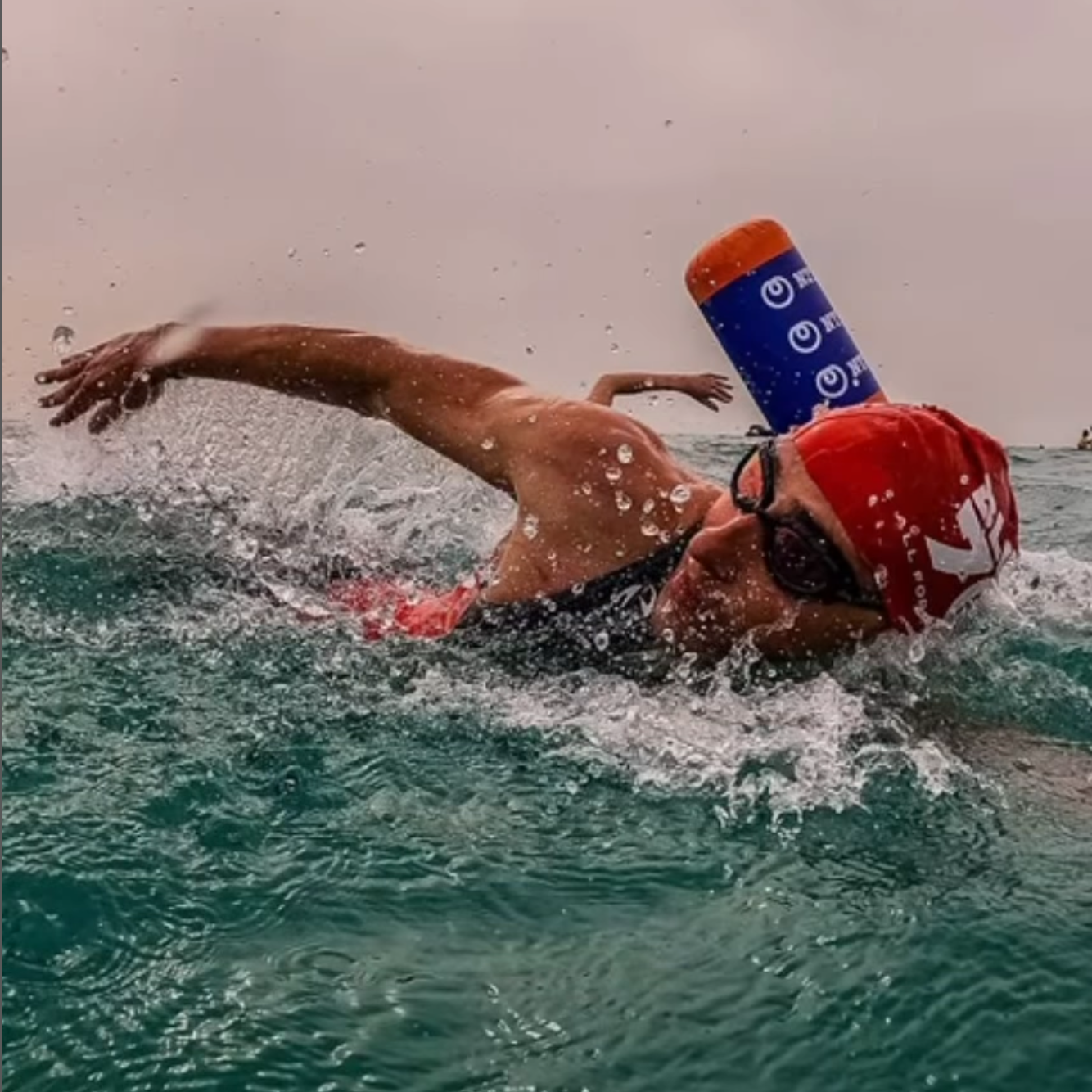
- Tow a bright inflatable swim buoy, with a light clipped inside or strapped on top.
- Put lights on the lead and sweep swimmers in a group, not just the middle.
- Keep the route close to shore and within an area you have seen in daylight.
- Note fixed landmarks, dock lights, or streetlights that help you sight.
- Do not swim alone. Bring at least one other swimmer.
- Leave your entry point and expected return time with someone on shore.
Rinse and inspect the suit when you finish
Night swims often end in low light, which makes it easy to skip basic care. Do not skip it.
- Rinse the outside and inside of your Blue70 wetsuit with fresh water after salt, lake, or pool swims.
- Hang it over a wide rail or hanger, let it dry inside out first, then right side out, and keep it out of direct sunlight.
- Check the suit for fingernail punctures and small tears before you pack it.
Rocky entries and dark water make small damage more likely, and catching a puncture early means a quick neoprene cement repair instead of a bigger fix later. Blue70's wetsuit care range includes neoprene cement for those repairs. Fingernail punctures and heel tears are not covered under the one-year warranty.
Sizing and returns before you commit
If you are still deciding, start with the temperature range and your usual training volume. Competitive racers and frequent open water swimmers often choose Helix or Reaction. Frequent training on a tighter budget points to Fusion or Sprint. For cold water, Thermal Reaction is the purpose-built option. Use the sizing tool on the Blue70 site, and remember you can take a test swim. You can swim in a wetsuit and still exchange it within 30 days if it comes back clean, dry, unmodified, and with tags attached.
Happy swimming. Night water asks for more planning, but the right Blue70 suit removes one variable.