


No. Petroleum jelly damages the neoprene in swimming wetsuits. It is not worth the shortcut. You can end up with a suit that leaks, tears easily, or loses its fit in a single season. Instead, use the right donning technique and, when you need extra glide, a purpose-made wetsuit lubricant.
Why Vaseline harms a swimming wetsuit
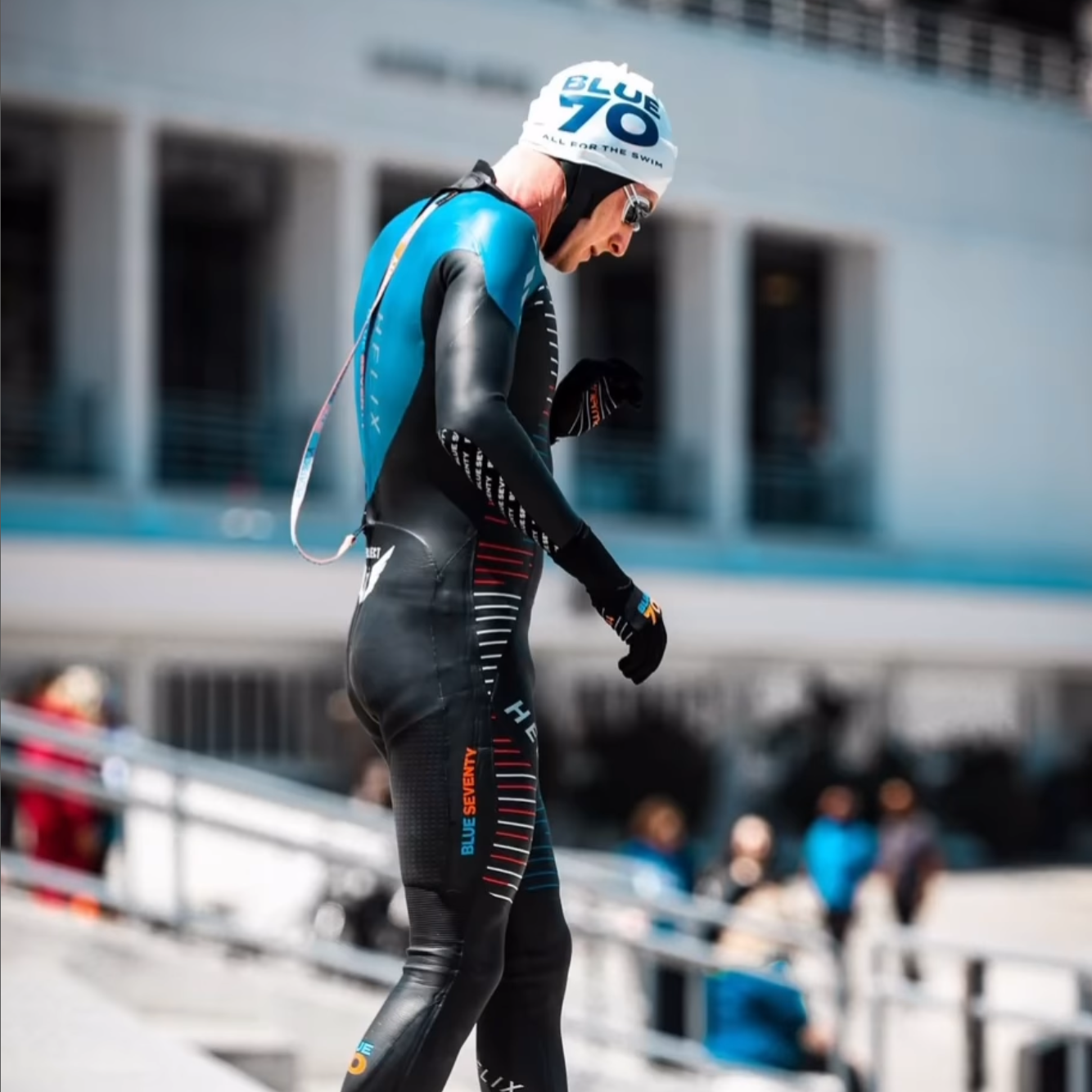
Swim-specific wetsuits use closed-cell Yamamoto neoprene. This material is flexible, buoyant, and thin: for reference, the Helix uses down to 1.5mm neoprene in the arms and shoulders to preserve your stroke. The coating and seam tape that seal the suit are engineered to flex repeatedly without breaking down.
Petroleum jelly, mineral oil, and similar greases break down that seal. They keep working after the suit is on, leaching into the neoprene, weakening the adhesive that holds the seams together, and swelling the material. Once the seam tape lifts or the neoprene loses its ability to repel water, the suit can't perform as intended. A suit worn with petroleum jelly may start leaking at the seams sooner, or the thin shoulder panels may tear during entry. This damage is not covered under warranty.
If you have used petroleum jelly on your suit once or twice, rinse the suit thoroughly in fresh water, inside and out, with a mild wetsuit shampoo. Lay it flat to dry inside-out first, then right-side out, out of direct sunlight. Monitor the seams. It may be fine. But make it the last time.
The real fix is technique, not a slipperier leg
The most common frustration that leads people to Vaseline is the feeling that the suit won't slide over the calves and forearms. This is almost always a donning issue, not a lubricant problem. A properly sized swimming wetsuit is snug on land and gets more comfortable in the water. If you fight the suit by pulling it on like a pair of jeans, you will feel stuck.
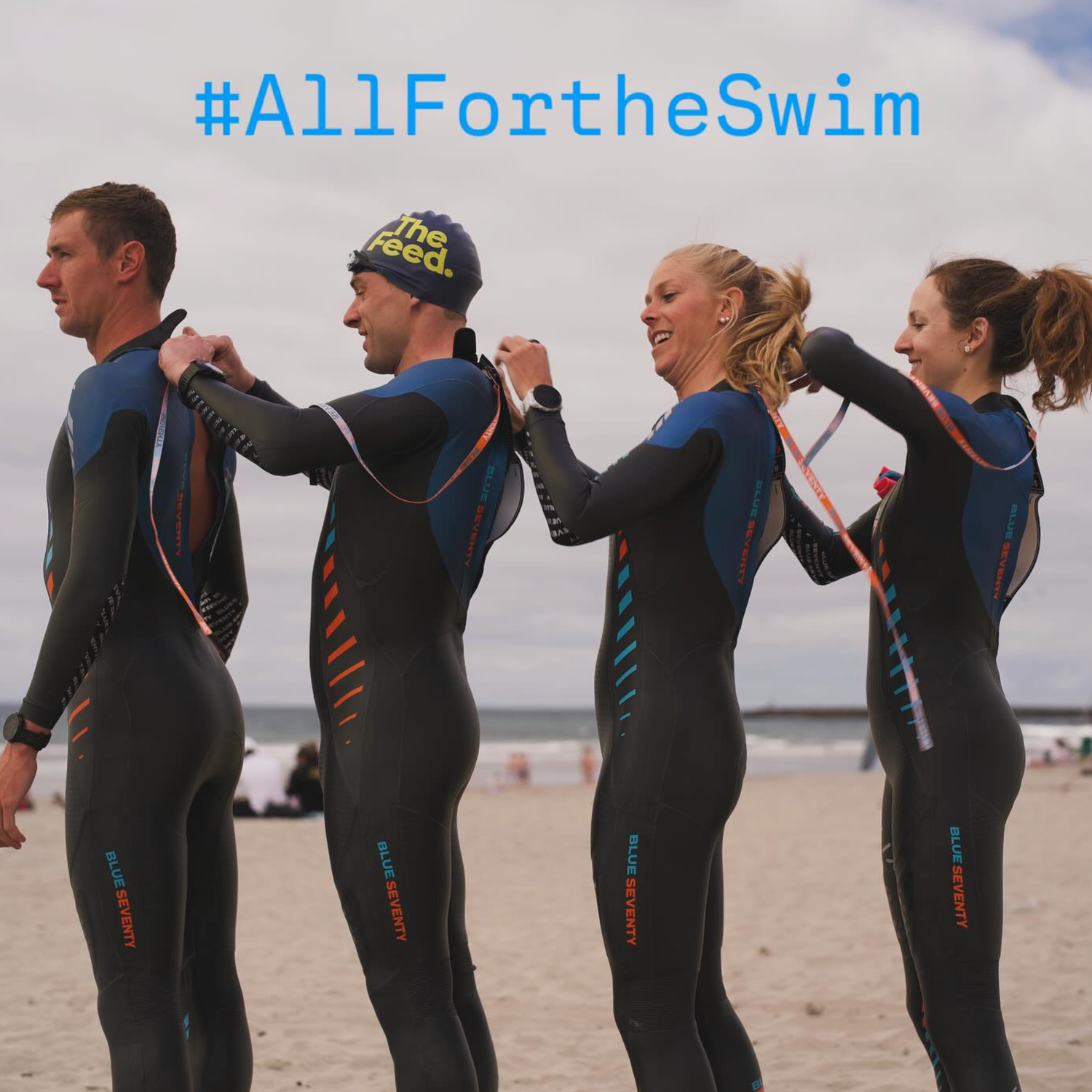
Blue70 suits are designed for a tight, second-skin fit that traps a thin layer of water your body warms for insulation. Getting it on fast without damaging the suit takes a specific method.
How to don a swimming wetsuit without lubricant
- Start with dry skin and a dry suit interior. Moisture makes the suit cling worse.
- Use plastic bags over your feet and hands, or wear thin liner socks and disposable gloves. These create a slick surface that slides through the leg and arm openings without pulling on the neoprene.
- Put the bag-covered foot into the leg opening, then slide the ankle cuff up gently. Work the neoprene up in small increments, gripping the suit with your fingertips only. Never dig in with your nails. Pinch and pull, don't grab and yank.
- Repeat on the other leg, then the arms, using the bags or gloves each time.
- Once the suit is on, pull the bag off through the sleeve or leg opening. The plastic comes out cleanly.
- Zip up and adjust. The suit will feel restrictive until you get in the water and the neoprene warms and conforms.
The same technique works for taking the suit off quickly in transition: re-apply the plastic bag over your foot before pulling the lower leg free, and the suit will peel away faster.
When a lubricant makes sense and what to use
Plastic bags solve the entry problem for most people. If you still want extra glide on your neck, wrists, or ankles to prevent chafing during a long swim, choose a product made for the job. Water-based wetsuit lubricants exist specifically to be safe on neoprene, seams, and adhesives. Look for a dedicated wetsuit or triathlon lubricant with no petroleum, no mineral oil, and no lanolin. Apply a thin layer to the skin before putting the suit on. That is all you need.
Never use:
- Petroleum jelly (Vaseline)
- Baby oil, mineral oil, or cooking oil
- Any lotion or sunscreen with oil or petrolatum
These degrade neoprene over time and void the warranty.
If chafing persists even with proper donning and a wetsuit-safe lubricant, the fit may be the issue. A suit that rubs at the neck or underarms consistently may be the wrong size or model for your body. In that case, the Blue70 size chart and fit guide will get you a better match. And you can always take a test swim: Blue70's policy allows you to swim in the suit and still return or exchange it within 30 days, as long as it comes back clean, dry, and undamaged.
Care steps that keep your suit fast and in one piece
The same petroleum-based products that harm the suit during donning can wreck it after your swim. Follow these three steps to extend the life of a swimming wetsuit.
- Rinse thoroughly in cool fresh water after every use, inside and out. Salt, chlorine, and lake sediment accelerate material breakdown.
- Dry flat, out of direct sunlight, inside-out first then right-side out. Heat, UV, and hanging from the shoulders will distort the suit.
- Store folded or laid flat in a cool, dry place, not on a wire hanger and never in a damp bag.
Small tears or fingernail punctures can be repaired with a neoprene cement like Aquaseal, applied to clean, dry neoprene. Catch the tear early before it spreads. If a seam fails or the suit develops a large tear, contact Blue70 support.
Your wetsuit is a piece of precision swim equipment. Treat it that way and it will hold up across seasons of training and racing. Skip the petroleum jelly. Grab a plastic bag and pull with your fingertips. You will get the suit on in under two minutes and never look back.