


You can use baby powder, but it is not the first tool I would reach for. Baby powder reduces friction between skin and neoprene, which can make calves and forearms slide through more easily. Most wetsuit wrestling matches come from how you put the suit on or how it fits.
What baby powder does
Baby powder coats the skin with a dry layer. That dry layer lets neoprene slide instead of gripping. It helps most on damp skin, which can otherwise stick to the liner. For an early morning race or a chilly parking lot, a light dusting on ankles, calves, and wrists can speed things up.
The downsides of powder
Powder does not disappear. It can collect inside the suit, especially in the seams and the jersey liner. Over time, that buildup can make the inside feel slippery and grimy, and it means you should rinse the suit more thoroughly after every swim. Scented powders can leave fragrance behind. Some swimmers also find that a slick interior hurts their sense of connection to the water.
- Powder can build up in seams and liners.
- It does not fix a suit that is too small or too short in the torso.
- It does not correct poor donning technique.
If you use powder, dust it on your skin, not inside the suit. A little goes a long way.
Better donning technique
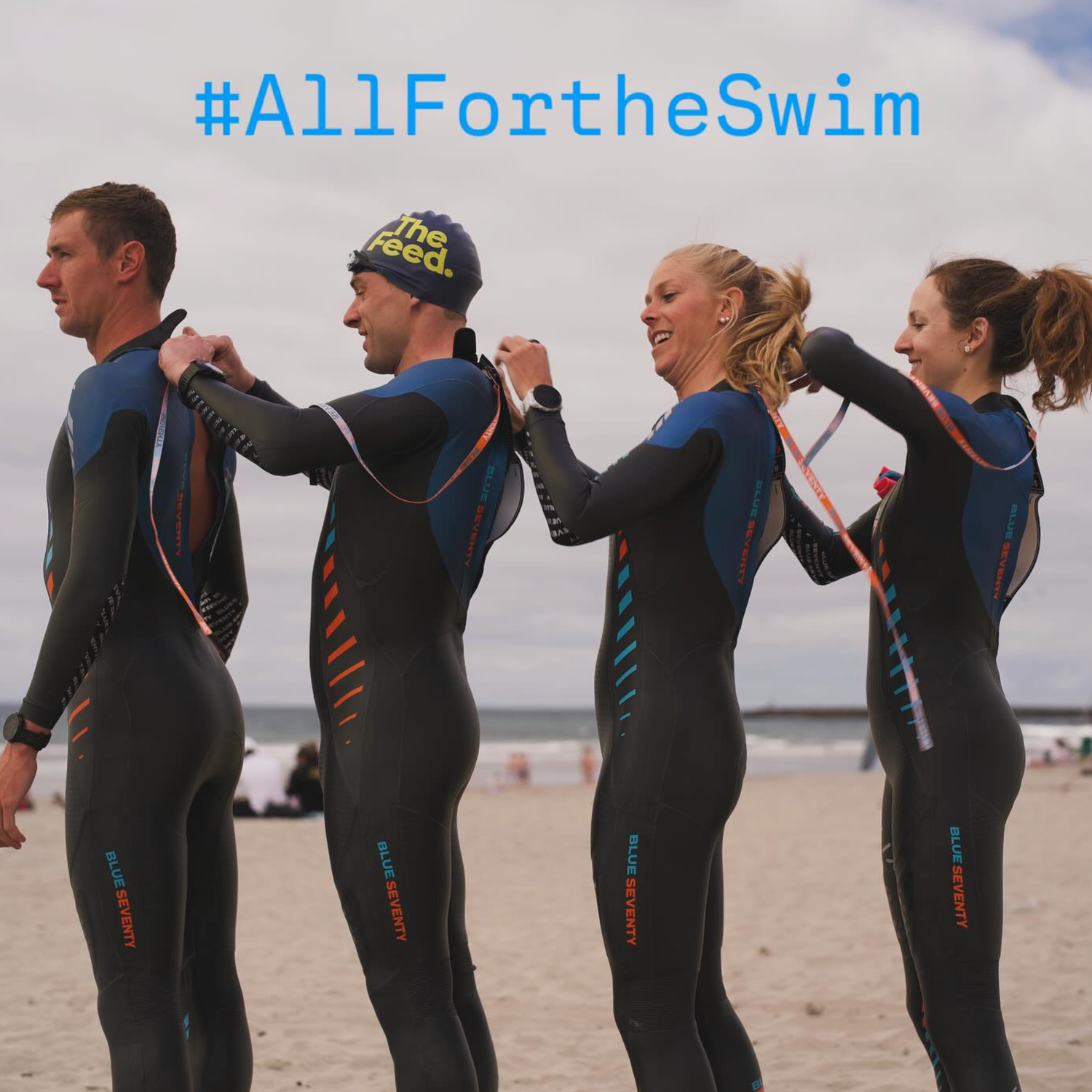
Work the suit up in small folds. Start at the ankle, not the waist. Pull the neoprene over the heel, then shin, then knee, then thigh. If you grab the waistband and yank, you stress the seams and catch the liner with your fingers, which is exactly how small tears start during the rush of race morning.
- Start at the ankle and pull the neoprene over the heel.
- Work upward in small folds through the shin, knee, and thigh.
- Use the pads of your fingers, not your nails.
- Set the shoulders last and ease the arms in stages.
Fingernail punctures are not covered under warranty and are one of the most common ways to damage a new suit. A suit that is too tight in the shoulders will cause fatigue in the water, so pull the suit up step by step.
If you want a friction aid, use a plastic bag over your foot or hand. Slide the suit over the bag, then pull the bag out. It leaves no residue. A thin layer of unscented skin lubricant on ankles and wrists can help in transition without coating the inside of the suit.
What fit has to do with it
If you need powder every time, check the fit. A blueseventy wetsuit should feel snug on dry land and more comfortable once you get in the water and a thin layer of water warms between your skin and the neoprene. A suit that slides on with no resistance usually is too large. A suit that needs a full-body powder coat to get past your calves may be too small.
Women's suits use Femme Fit patterns with an extended zipper length designed to ease entry and accommodate wider hips. That design often removes the need for powder.
Care note
After any swim with powder, rinse the suit inside and out with fresh water. Let it dry away from direct sun and store it flat or folded in a cool, dry spot. If powder has built up, rinse more than once.
Before you reach for powder, check the size chart and fit guide. If you are still unsure, the Take a Test Swim policy lets you swim in a suit and return or exchange it within 30 days as long as it is clean and dry. Good donning technique and the right size do more than powder. Happy swimming.