


Yes, you can, but I would not make it your default. Baby powder reduces friction on dry skin, and that can help feet and hands slide through a snug Blue70 wetsuit. It is not a wetsuit lubricant. The powder can transfer to the inside of the suit, build up in the lining, and leave a film at the neck and wrist seals after repeat use.
Why powder can build up in the lining
Baby powder is cheap, dry, and easy to find in a race bag. The appeal is obvious when you are standing in a transition area, already warm, trying not to tear a sleeve with a fingernail. Powder gives a short burst of slip on the skin.
That slip does not stay on your skin. It moves onto the neoprene as you pull the suit up. A light dusting once in a while is unlikely to cause damage, but repeated use leaves a film that can trap salt, chlorine, or lake water against the lining. For a Blue70 suit that you plan to train in weekly, that film is a reason to rinse carefully after every powder-assisted swim.
Start with the donning technique
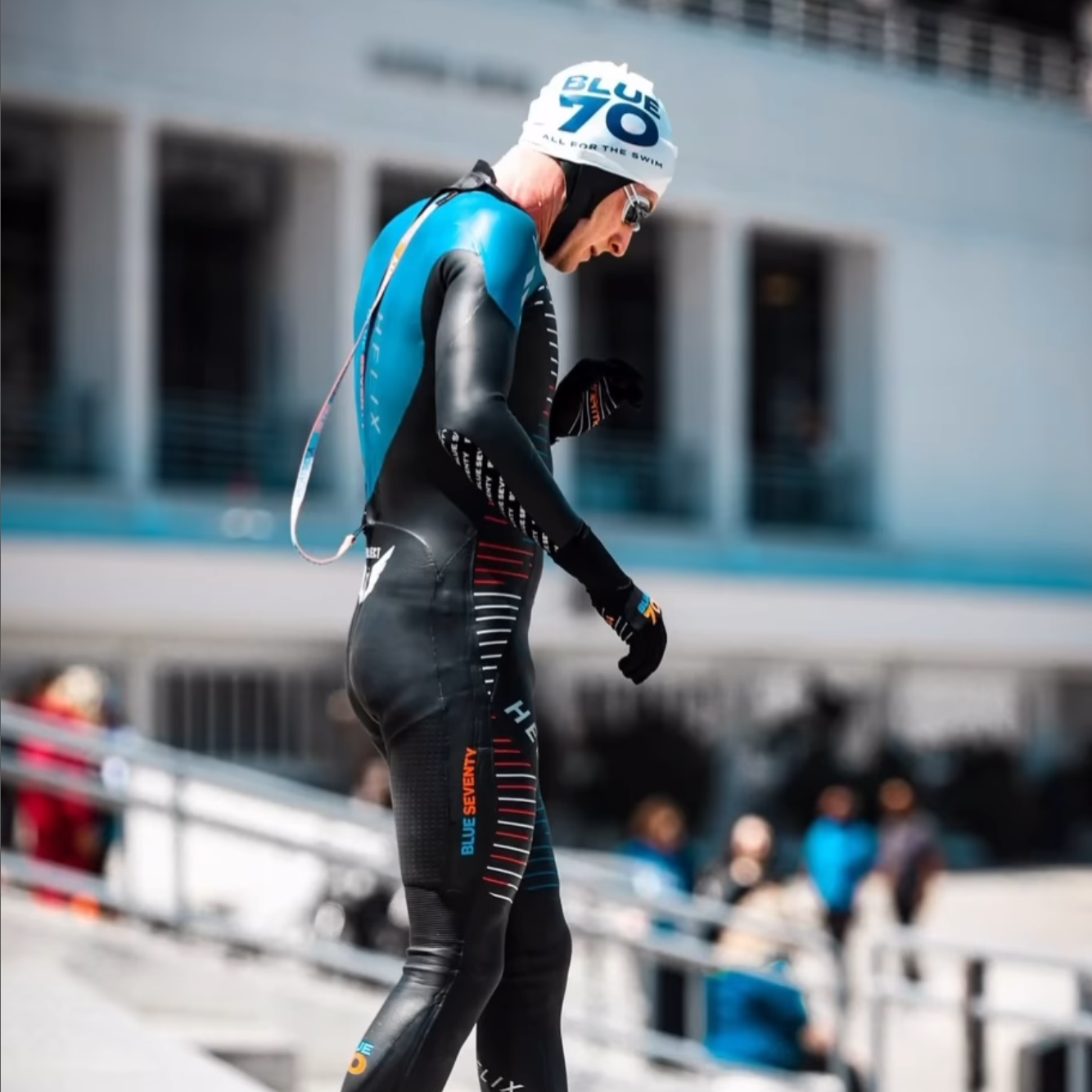
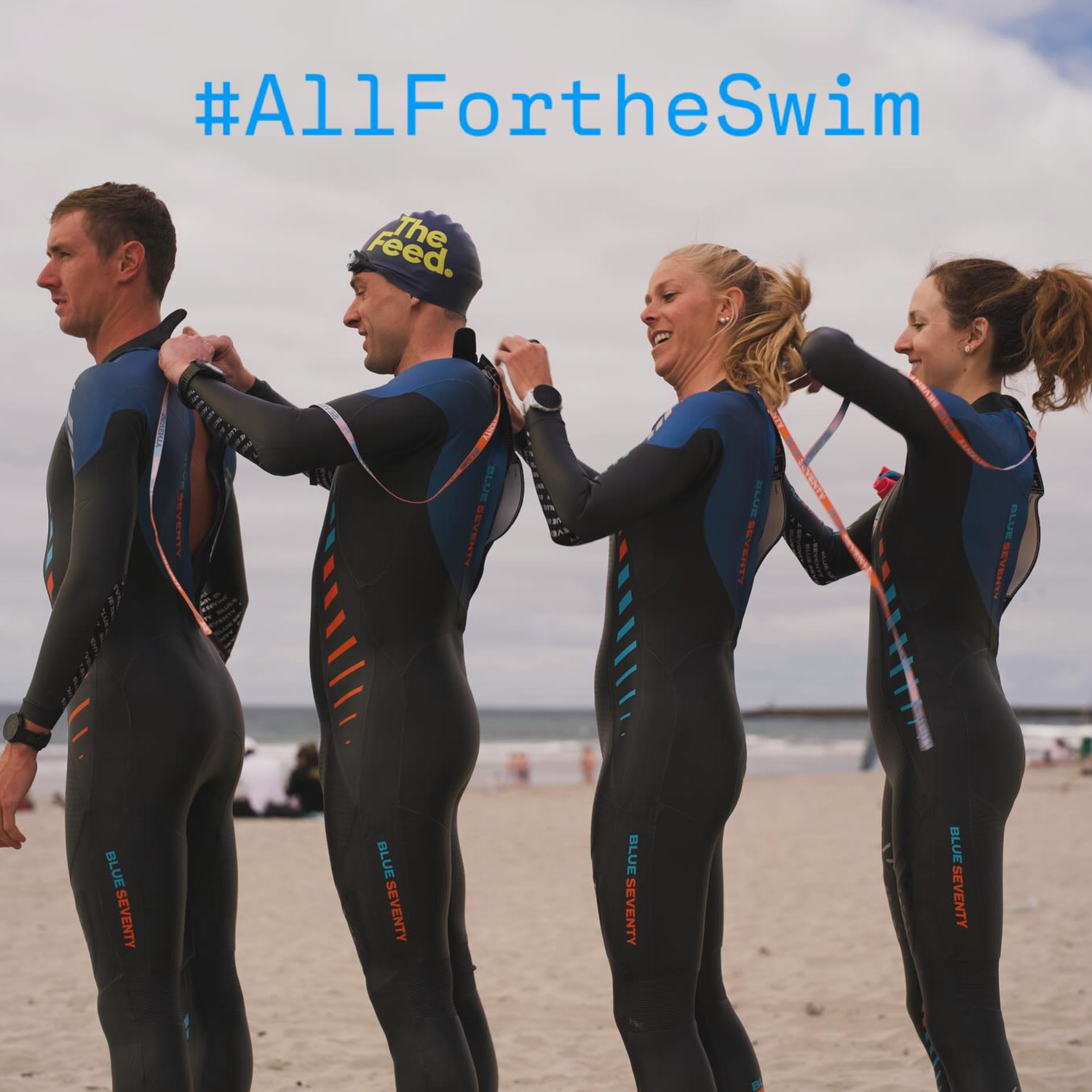
Before you try any powder or lubricant, spend time on the technique. A Blue70 wetsuit should feel snug on dry land and ease up once you are in the water. Fight the temptation to yank from the top of the suit. Pull from the outside with your palms and fingers, never with your nails, and work small folds up your legs and arms.
Use a plastic bag for tight spots
A plastic produce bag is one of the cleanest friction aids. Put the bag over your foot or hand, slide the limb through the leg or arm opening, and then pull the bag out. It gives a slick surface without leaving residue inside the suit. This trick handles the two places most swimmers struggle: tight ankles and tight wrists.
Step-by-step: putting on a Blue70 wetsuit
- Start with cool, dry skin. If you are sweaty from a warm-up, dry your arms and legs first.
- Unzip the suit fully and fold the top down to the waist.
- Put one leg in at a time. Roll the neoprene up in small gathers instead of tugging from the hem.
- Move up the calf, then the thigh, using the flat of your hand.
- For sleeves, insert your hand and wrist first, then work the forearm through before the elbow and shoulder.
- Center the neckline with flat hands. Do not pull it from one side.
If you want a lubricant
Use a small amount of water-based, wetsuit-safe anti-chafe balm on your ankles, the backs of your hands, and the back of your neck, and apply it to your skin rather than the inside of the suit. A thin film is enough. Skip oil-based products; they are harder to rinse out of neoprene and can leave the suit feeling slick at the seals.
Rinse after every powder-assisted swim
Rinse the suit in cool fresh water inside and out. If you did use baby powder, flush the lining until the water runs clear. Hang the suit to dry away from direct sun and direct heat. This matters more for powder users because dried powder can hold whatever you swam through against the neoprene.
Save baby powder for a pinch
Baby powder can work in a pinch, but a plastic bag or a small amount of wetsuit-safe balm is the better everyday answer for a Blue70 wetsuit. Use the plastic bag on tight spots, put the suit on slowly with flat hands, and rinse it well afterward. That routine protects the neoprene and keeps the neck and wrist seals working swim after swim.
If you are still unsure about fit, start with the Blue70 sizing tool or take a test swim. Blue70 allows a test swim and still lets you return or exchange the suit within 30 days when it comes back clean, dry, unmodified, and with tags attached.