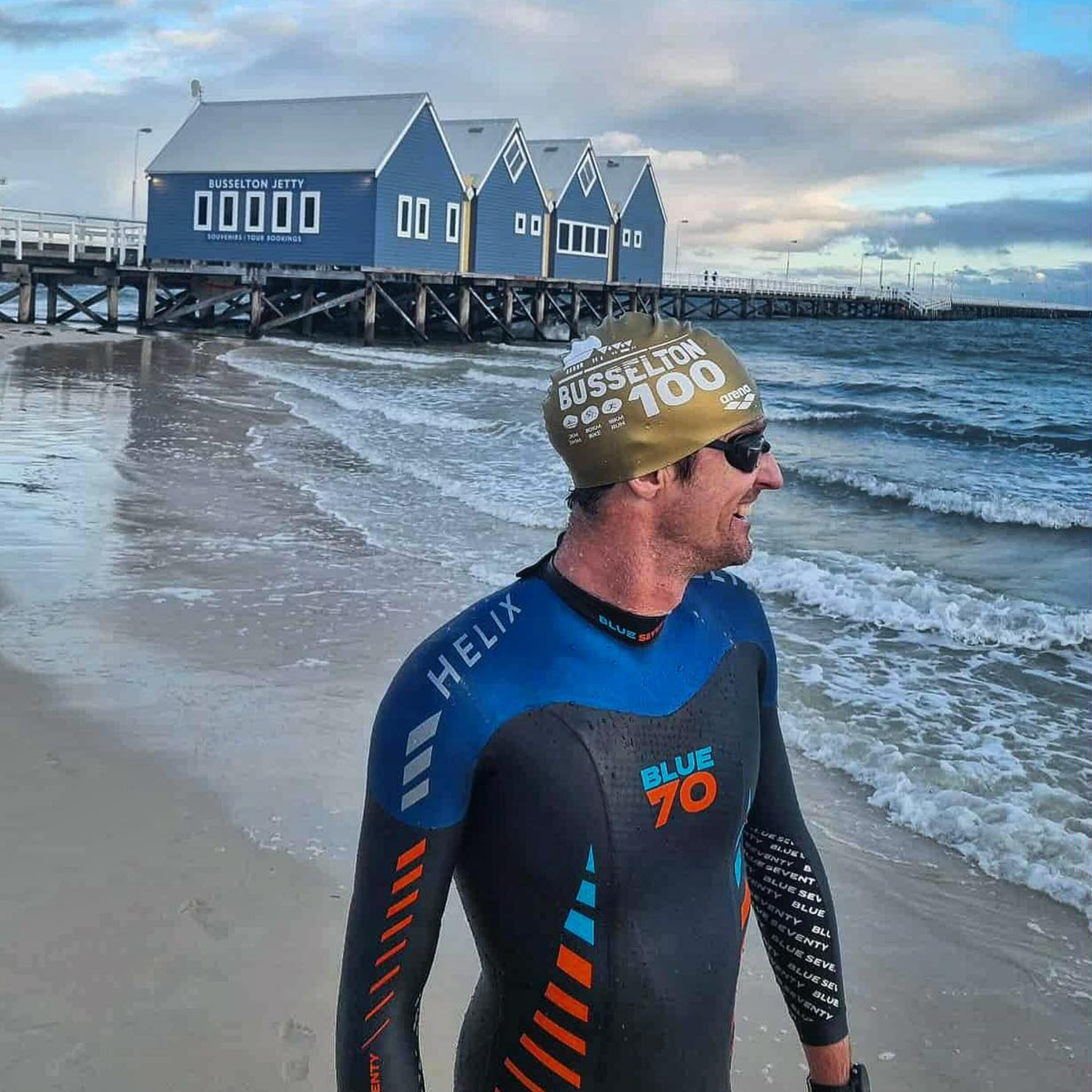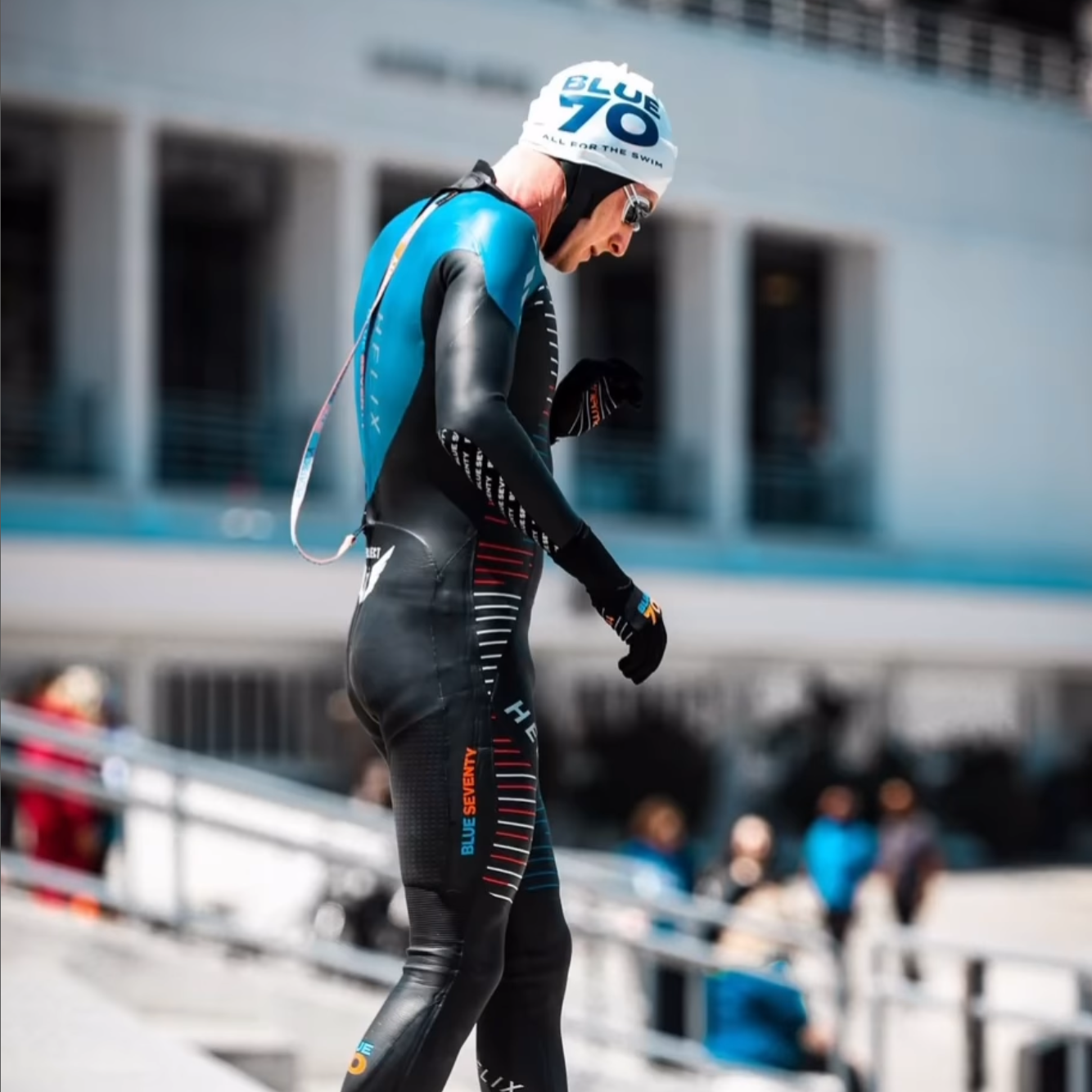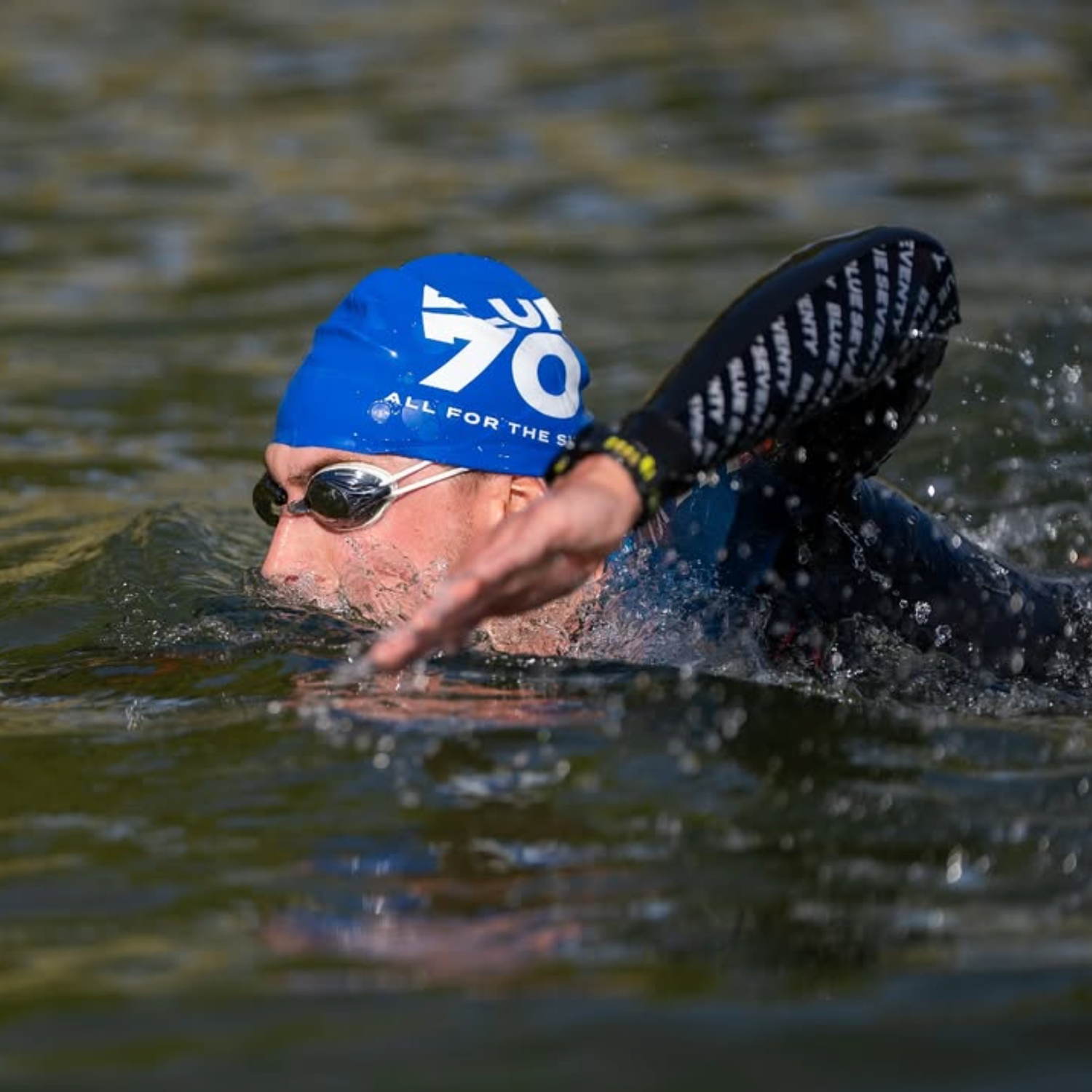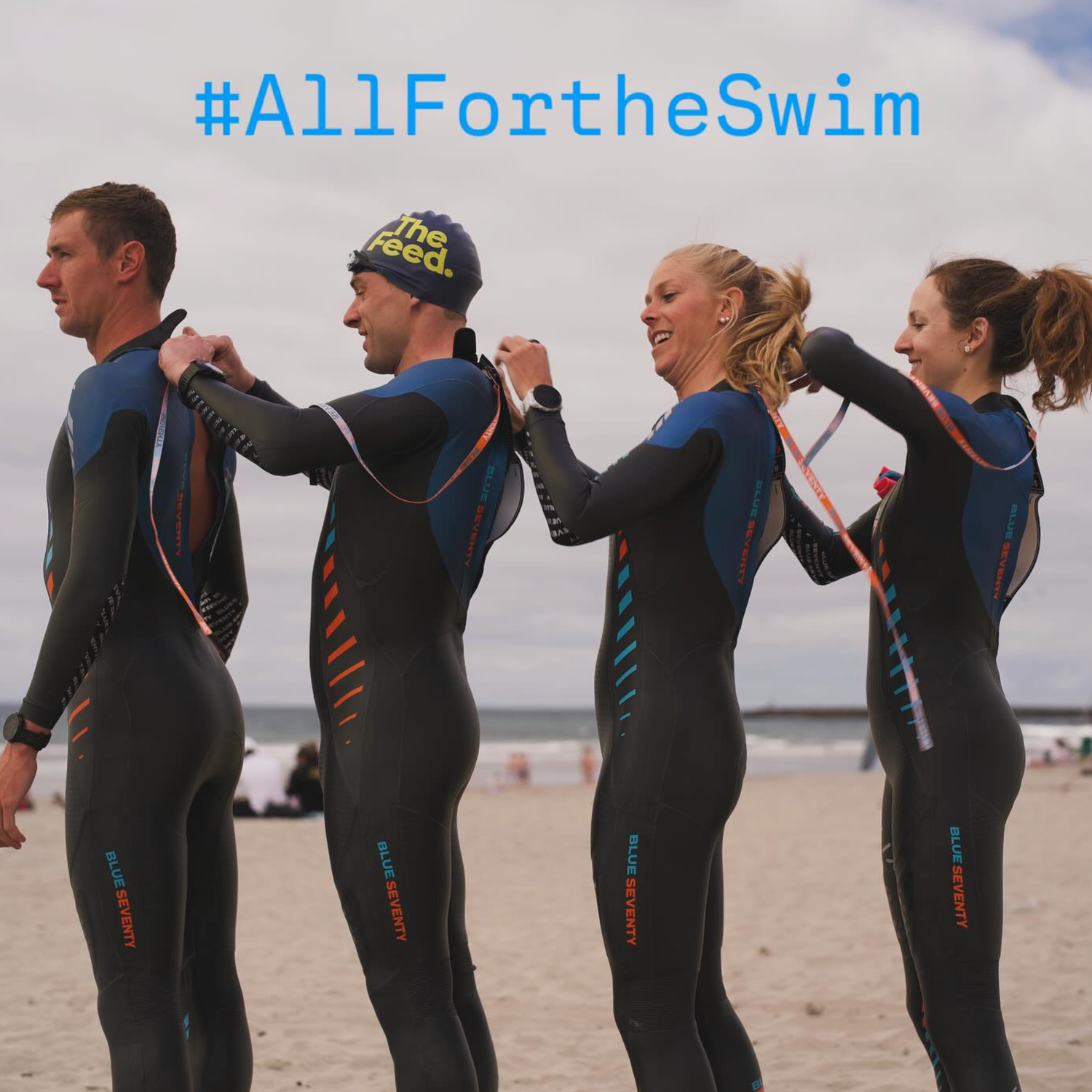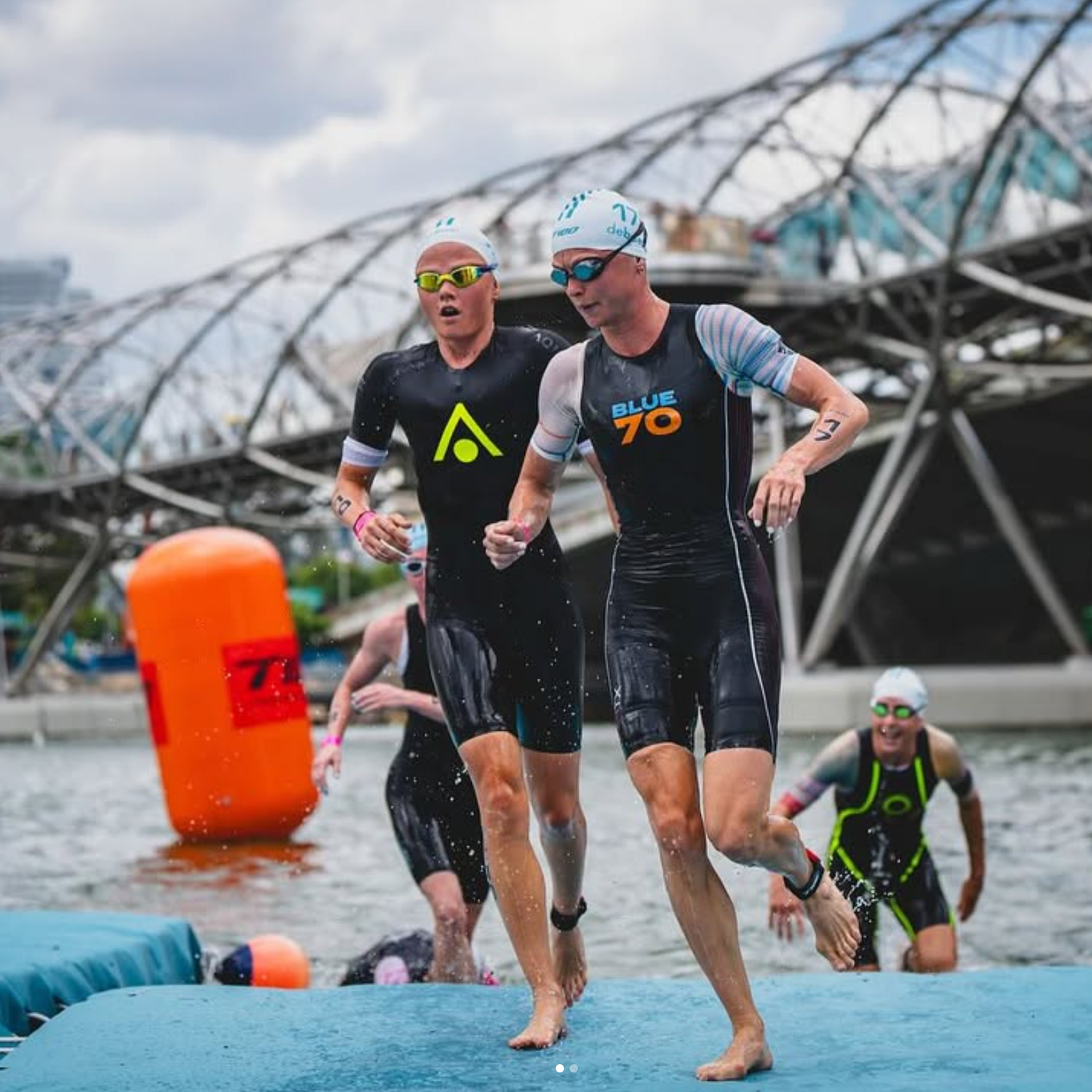



Yes, but the suit matters. Swimrun is not a triathlon. You swim and run repeatedly in the same kit, often over trails, rocks, sand, and roots. A wetsuit built for triathlon or open water swimming can work for a one-off, but blueseventy covers swimrun use on only one suit: the Alliance SwimRun ($275).
Why swimrun is different
In a triathlon, you swim once, take the wetsuit off in transition, and never run in it. In swimrun, you keep the suit on for runs between swim legs. You need a wetsuit that allows a full running stride, drains water instead of holding it, and resists damage from contact with rough ground and vegetation. A suit that fits well for swimming can bind at the hips or shoulders when you run.
What to look for in a swimrun wetsuit
When you choose a suit for swimrun, look for:
- Freedom in the shoulders, hips, and legs for running
- Quick drainage so you don't carry water on the run
- Durable neoprene that can handle trail contact
- A fit that stays snug in the water and comfortable on land
The Alliance SwimRun is the purpose-built option in the blueseventy line. It is the only blueseventy wetsuit warrantied for swimrun use, and it is designed around the run-swim-run format rather than a single swim followed by a bike.
Can you use your existing triathlon wetsuit?
You can, but think hard before you do. The Helix uses thin, flexible neoprene in the arms and shoulders. Blueseventy notes that it is not ideal for heavy training use because that delicate material breaks down more quickly. Running over rocks, roots, and brush in a Helix risks the kind of tears the warranty will not cover.
The Reaction is recommended for frequent, longer swims. That does not change the warranty position. If you use a Fusion, Sprint, or Reaction in a swimrun, you accept that any swimrun-related damage is on you.
That doesn't mean you can't race a single swimrun in a triathlon suit. It means you should weigh the cost of replacing or repairing it against the $275 price of the Alliance. If swimrun is a one-off and you won't be near rough trails, you may be fine. If you plan to do more than one, the Alliance is the sensible choice.
Fit and testing
Swimrun suits should feel snug on dry land and more comfortable in the water. You also need to test the suit while running, because that is where fit problems show up. Take a few strides, lift your knees, and swing your arms. If the suit pulls at the neck, hips, or underarms, it will chafe after the second run segment.
Blueseventy lets you swim in a wetsuit and still return or exchange it within 30 days if it is clean, dry, unmodified, and has tags attached. That policy applies to the Alliance SwimRun, so you can test it in the water before race day.
Cold water and temperature
Swimrun races vary widely in water temperature. Below about 56 to 58°F, a purpose-built thermal suit adds meaningful warmth. The Alliance SwimRun is a swimrun suit, not a thermal cold-water suit, so think about your total time in the water and your own cold tolerance. If the course has long swim legs in cold water, train in similar conditions, practice with others, and know your exit plan. Cold water demands respect. A wetsuit adds buoyancy and thermal protection, but it is not a personal flotation device and does not replace good judgment.
Above about 70 to 72°F, a full suit can feel hot on the runs. Check your race organizer's rules on wetsuit thickness and water temperature. Cutoffs vary, and they change over time. The race briefing is the best source for what is allowed.
Care and repair
Swimrun is hard on equipment. Rinse your suit in fresh water after every race or training session, especially if you ran through sand, mud, or salt water. Dry it inside and out, away from direct sun. Store it flat or on a wide hanger, not folded. Small nicks and punctures can be repaired with Aquaseal neoprene cement, which blueseventy carries. Fingernail punctures, heel tears, and zipper damage from force are not covered by the warranty, so handle the suit carefully, especially when wet and tired after a run.
First swimrun tips
- Do at least one run in your suit before race day
- Find hot spots and use anti-chafe on the neck, underarms, and anywhere the suit rubs
- Practice unzipping and rezipping while moving
- Practice running into the water and starting to swim with your heart rate up
- Keep transitions simple, since swimrun doesn't give you a full T1
Find the Alliance SwimRun in the blueseventy collection and take it for a test swim. It is the only suit in the line warrantied for the sport.