


The short answer: Yes, you can wear a wetsuit in near-freezing water. A purpose-built cold-water suit such as the blueseventy Thermal Reaction adds thermal protection. That protection has limits. It will not make the water warm, and it will not act as a personal flotation device.
What a wetsuit does in near-freezing water
A wetsuit works by letting a thin layer of water inside the suit. Your body warms that layer, and the neoprene slows how quickly the warmed water moves away from your skin. This is why a wetsuit is not waterproof and is not designed to keep you dry. In ice swimming conditions, water often sits near 32°F (0°C). Without insulation, heat leaves the body fast. A well-fitted wetsuit slows that loss.
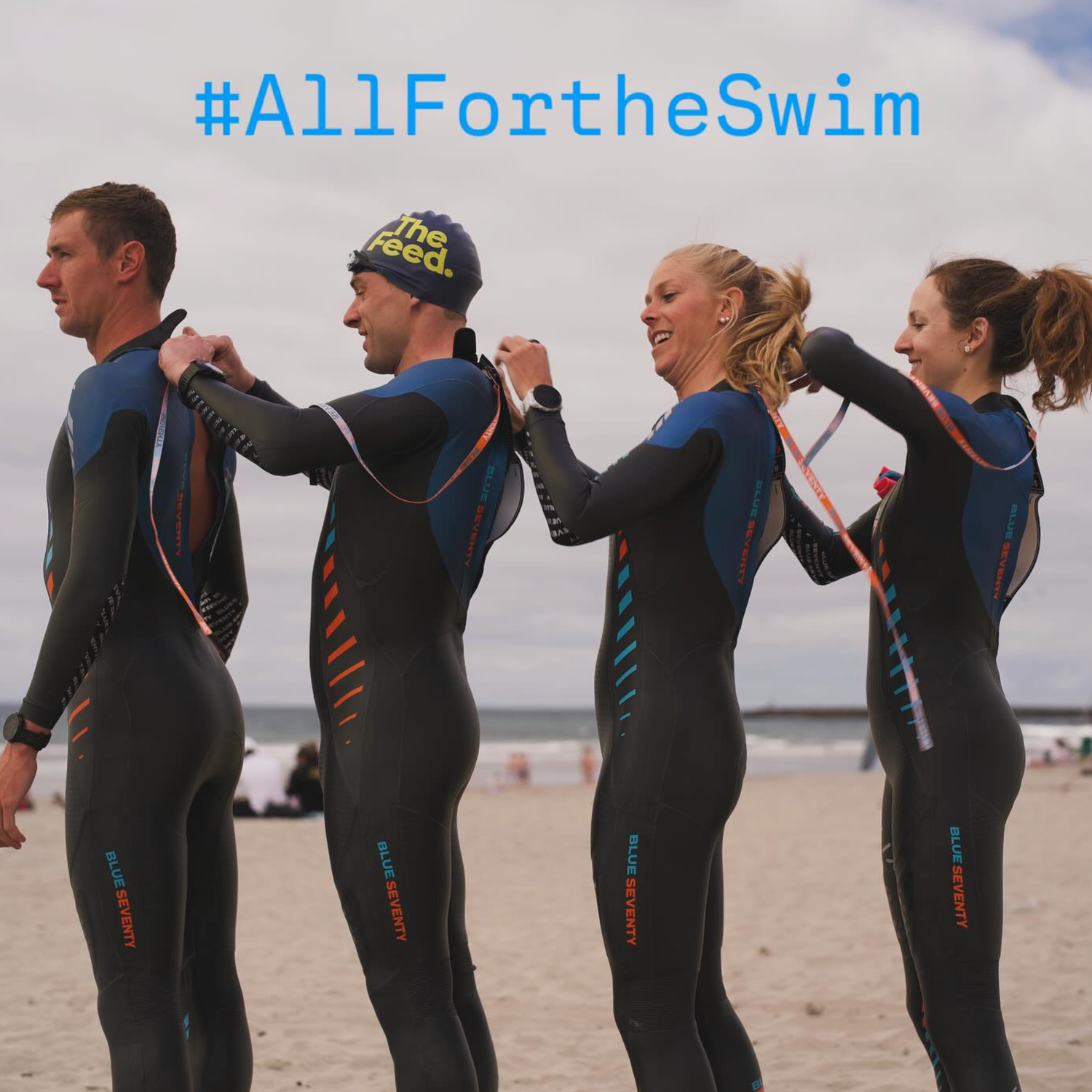
The fit controls how well the warm layer stays put. A loose neck, wrist, or ankle lets cold water flush through the suit each time you move. In near-freezing water, that flushing erases the thermal benefit quickly. Before any cold swim, take time to pull the suit up fully at the legs and torso, then settle the shoulders. A suit should feel snug on dry land and more comfortable once you are in the water.
What ice swimming asks of your suit
Ice swimming is not ordinary cold-water swimming. The water is colder, the exposure is often shorter, and the consequences of a bad fit arrive faster. blueseventy builds its wetsuits with Yamamoto 38, 39, and 40-cell neoprene. Higher cell counts flex more easily, which matters through the shoulders when you are trying to keep a clean stroke in cold water. The suit's buoyancy also helps hold a more horizontal body position.
Where Thermal Reaction fits
For water below about 56 to 58°F, a purpose-built thermal suit adds warmth. The blueseventy Thermal Reaction is that suit in our range. It is priced at $785 and is fully lined with a Zirconium jersey, a synthetic wool material that provides added thermal protection against cold water. Ice swimming sits far below that 56 to 58°F range, so the Thermal Reaction is the model to choose if you plan to spend real time in near-freezing water.
For frequent cold-water training, the usual durability logic still applies. Reaction suits you for longer, repeated sessions. Fusion suits you for shorter, more frequent swims. When water drops below the mid-50s, Thermal Reaction adds the most warmth of the three.
What no wetsuit can do
A wetsuit slows heat loss. It does not stop it. Cold shock, afterdrop, and hypothermia remain real risks in near-freezing water, even with a thermal suit. Cold water can trigger an involuntary gasp and rapid breathing. Enter cold water gradually, keep your head above water, and stay near an exit.
Thermal performance depends on water temperature, exposure time, and the individual. Some swimmers lose heat faster than others at the same water temperature. A suit that feels warm for one person on a short dip may not feel warm for another person on a longer swim. A tight fit that works for one body type can leave gaps on another, so the only reliable test is a supervised cold-water session in your own suit.
blueseventy wetsuits are not Coast Guard-certified personal flotation devices. Neoprene adds buoyancy, but you still need supervision, a visible exit, and warm clothing immediately after the swim. Do not use a wetsuit as a substitute for those basics. If you or someone you are swimming with shows signs of hypothermia, get out, get warm, and seek medical help.
Wetsuit categories and event rules
Some cold-water and ice swimming groups run separate categories for wetsuit and non-wetsuit swims. If your goal is an organized ice swimming event, confirm whether wetsuits are permitted in your category. Rules differ by event, and some categories are for swimmers without wetsuits. Check the event's published rules before you build your kit.
For self-directed cold-water swimming, a wetsuit can help you spend more time in the water with less heat loss. Start with short exposures, swim with people who know the water, and build tolerance gradually. A thermal suit is one part of that system, not the whole plan.
Donning and care in the cold
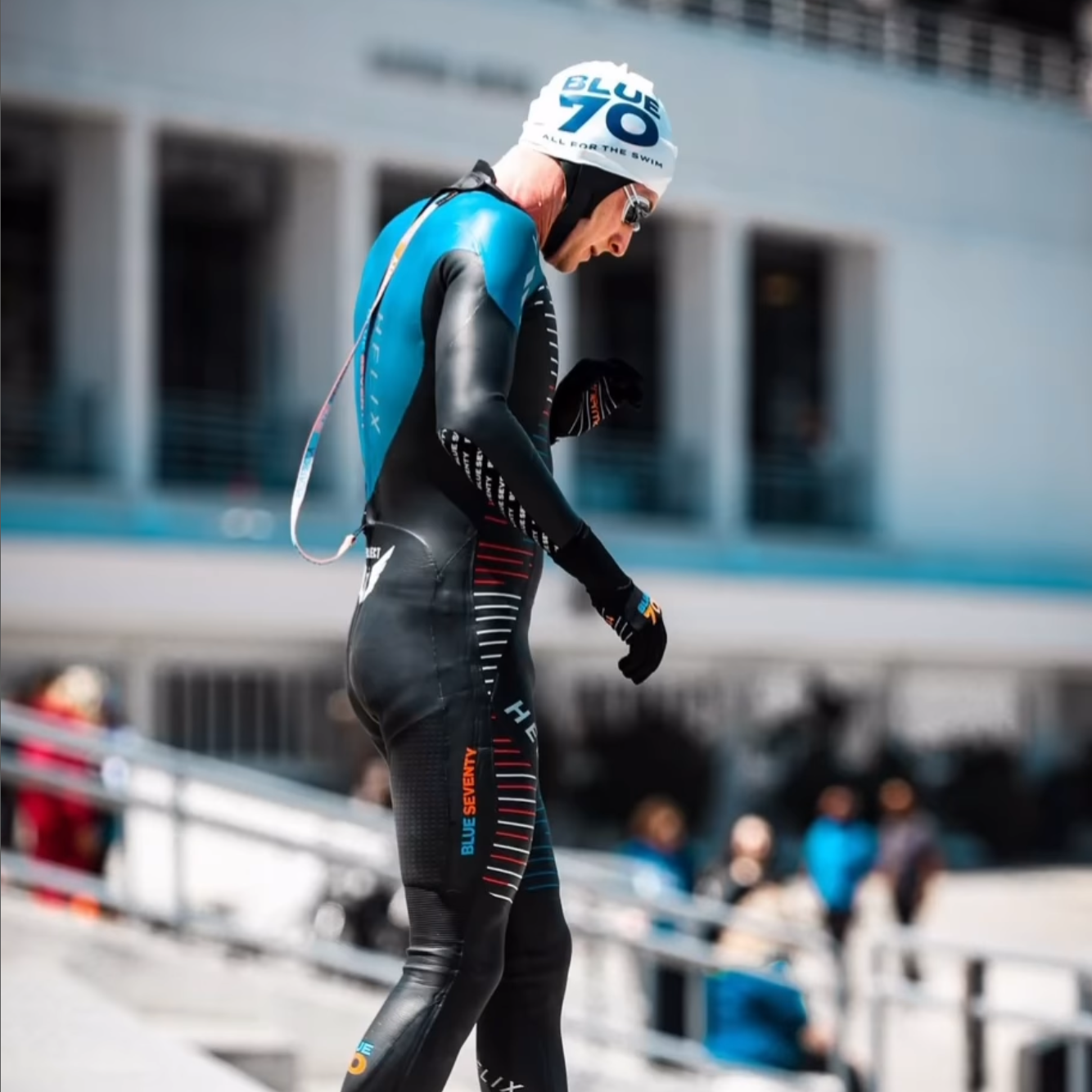
Put the suit on before you get cold. On shore, pull the legs all the way up, work the torso fabric over your hips, and ease the shoulders into place. A rushed donning leaves folds and gaps that let cold water in. After the swim, rinse the suit in cool fresh water. Dry it inside and out. Keep it out of direct sun, hot cars, and any heat source, because neoprene breaks down with heat and chlorine exposure.
Fingernail punctures and heel tears are the easiest ways to damage a new suit. Pinch the neoprene when you pull it up instead of digging with your fingertips. Sit down to remove the lower legs rather than standing on the suit.
The practical answer
Can you use a wetsuit for ice swimming? Yes, you can wear one in near-freezing water. A blueseventy Thermal Reaction adds thermal protection and is designed for cold-water swimming. It will not make an ice swim safe on its own. Pair it with gradual acclimatization, a trained group, a clear exit, and warm recovery clothing. If you are entering a formal event, check the event's rules on wetsuit categories first.
Find your size in 30 seconds on our sizing tool, then take the suit for a test swim. Returns stay possible within 30 days from the ship date as long as the suit is clean, dry, unmodified, and has its tags and accessories. All for the swim.