


Yes, with the right preparation and a well-fitted blueseventy suit. A swim-specific wetsuit works in a river, but current changes how you plan your entry, exit, sighting, and stroke. The suit adds buoyancy and thermal protection. It does not make you stronger than the river, and it is not a Coast Guard-certified personal flotation device.
How a swim-specific wetsuit behaves in moving water
blueseventy wetsuits are cut for swimming, not surfing or scuba. They use Yamamoto neoprene in 38, 39, and 40 cell grades. A higher cell number means more flexibility, and that matters in current. A stiff suit fights you when you need to adjust your line or accelerate across a seam of fast water.
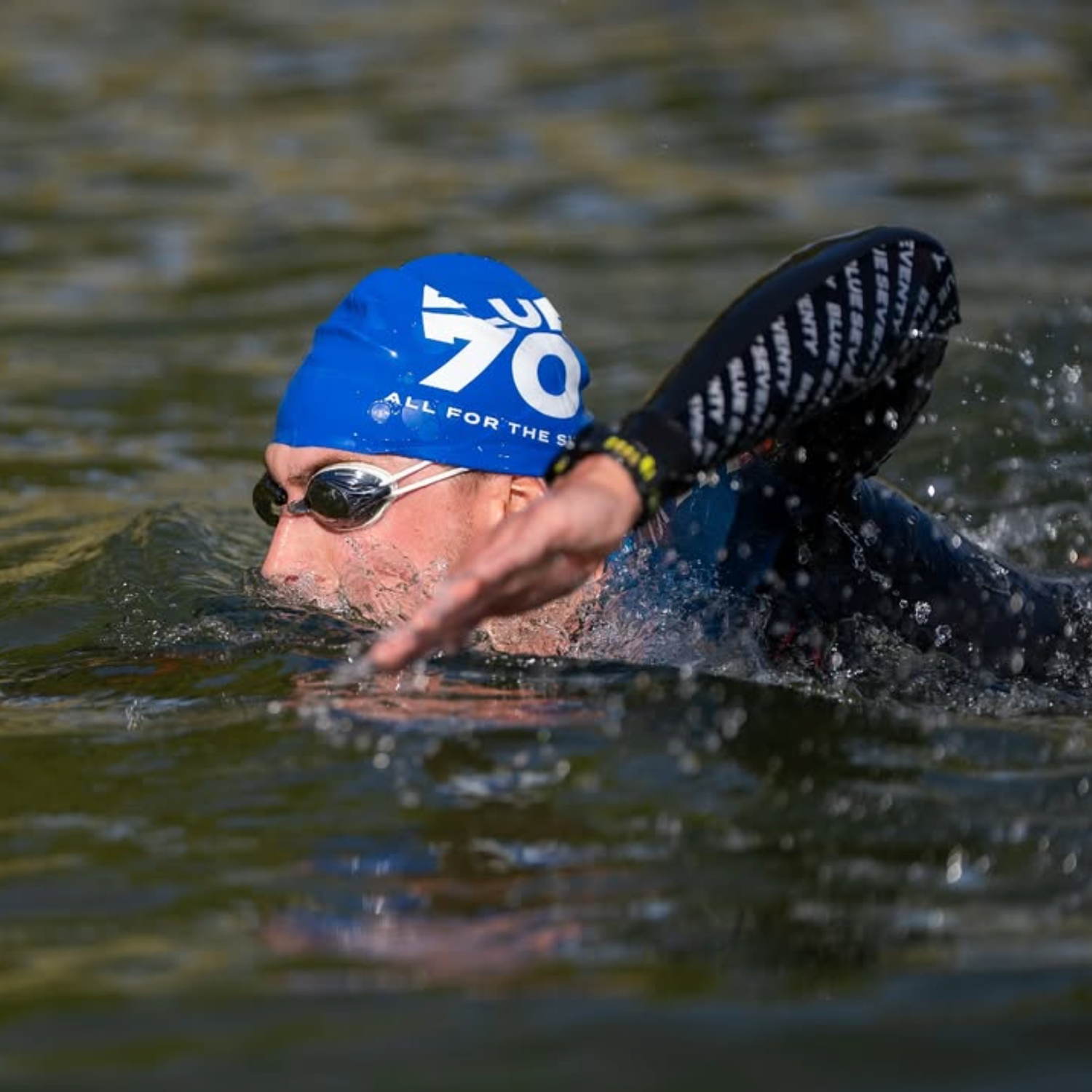
The main benefit is buoyancy. A wetsuit lifts your hips and legs, which improves body position and reduces drag. In a river, that helps you hold a more efficient line when you angle downstream across the current. What it will not do is keep you stationary. Fast water still moves you. If the current pushes you toward a downed tree, bridge abutment, or low-head dam, the suit does not change that outcome.
For river swimming, think of the suit as a tool for warmth and body position. Think of the current as the thing you must read, respect, and plan around.
Choosing a blueseventy suit for river swimming
The right suit depends on how often you swim and how cold the water is.
- Reaction: For frequent river training. It uses higher-grade neoprene than the Fusion and is recommended for frequent, longer swims.
- Fusion: For shorter, more regular swims. The 2021 redesign added a lower-sitting neckline for comfort without losing the watertight seal.
- Thermal Reaction: For cold river water. It is fully lined with a Zirconium jersey, a synthetic wool liner, and designed for cold-water swimming. Below roughly 56 to 58°F water, that added warmth matters more.
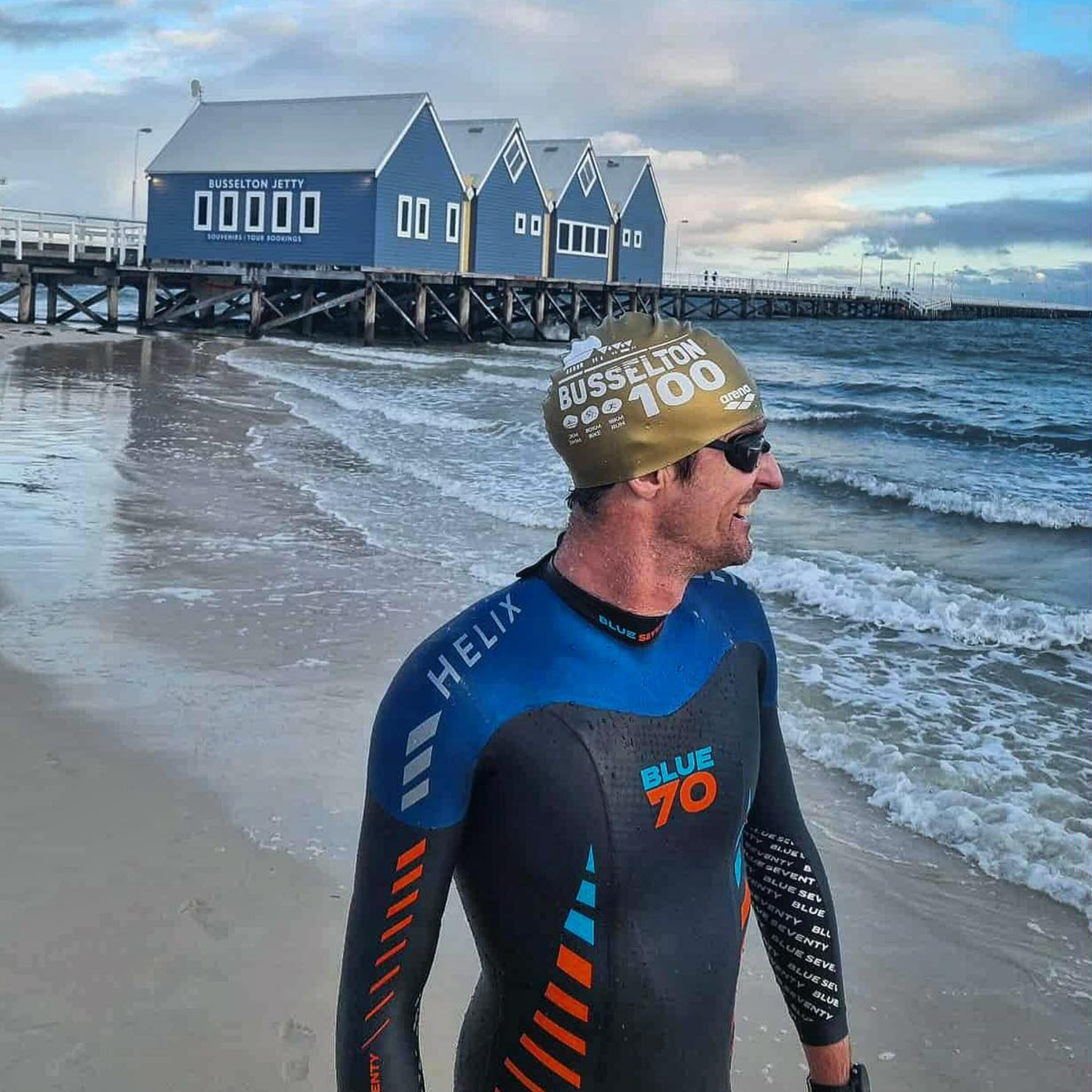
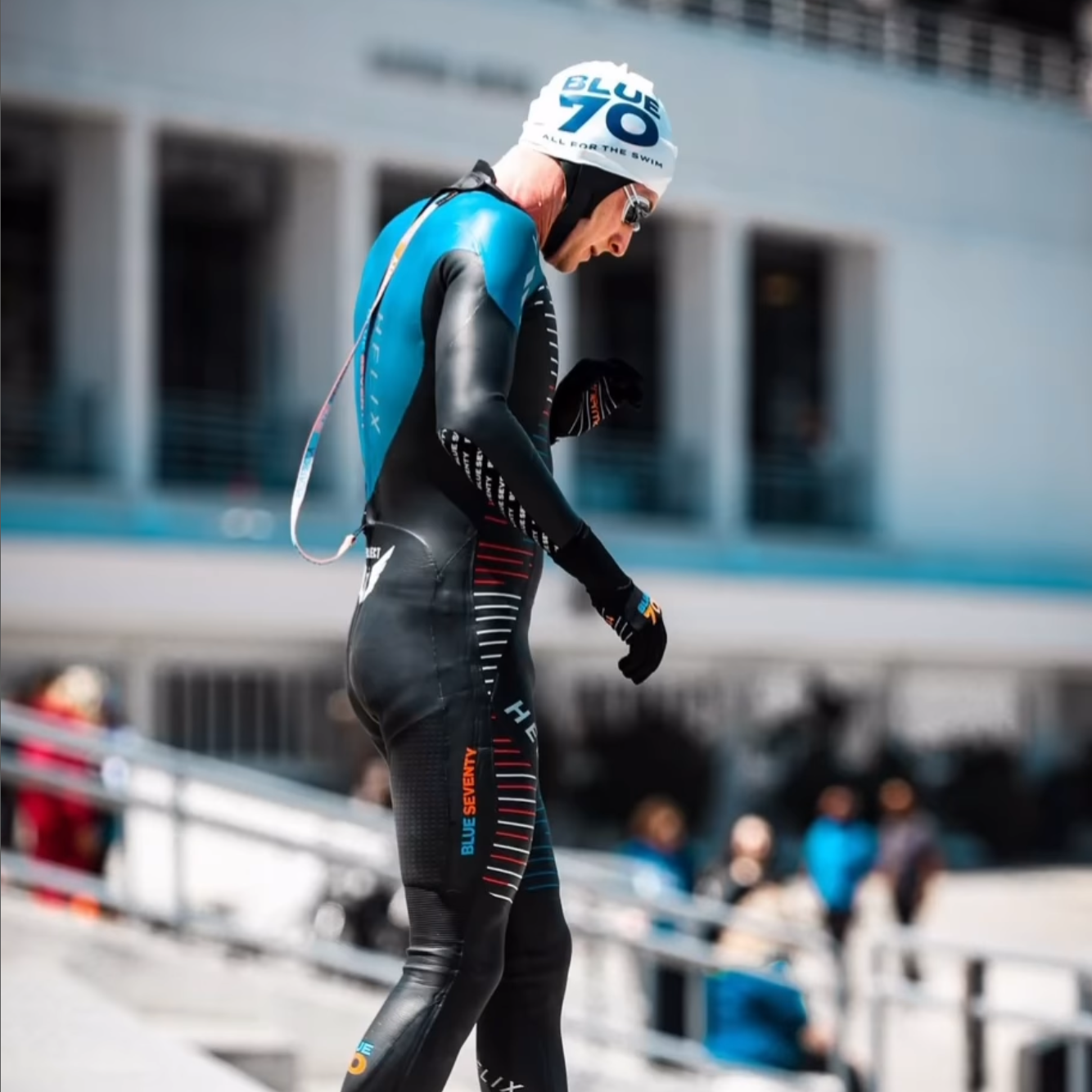
- Helix: For race-day speed or shorter, high-intensity efforts. Thin, flexible neoprene in the arms and shoulders plus a permeable catch panel. Not ideal as a daily training workhorse.
When the water is above about 70 to 72°F, a full suit can feel too warm on longer river swims. A sleeveless suit or swimskin becomes more comfortable.
Whatever model you choose, pick the suit that fits snugly and stays comfortable for the time you will actually be in the water.
Fit and stroke mechanics when the current pushes back
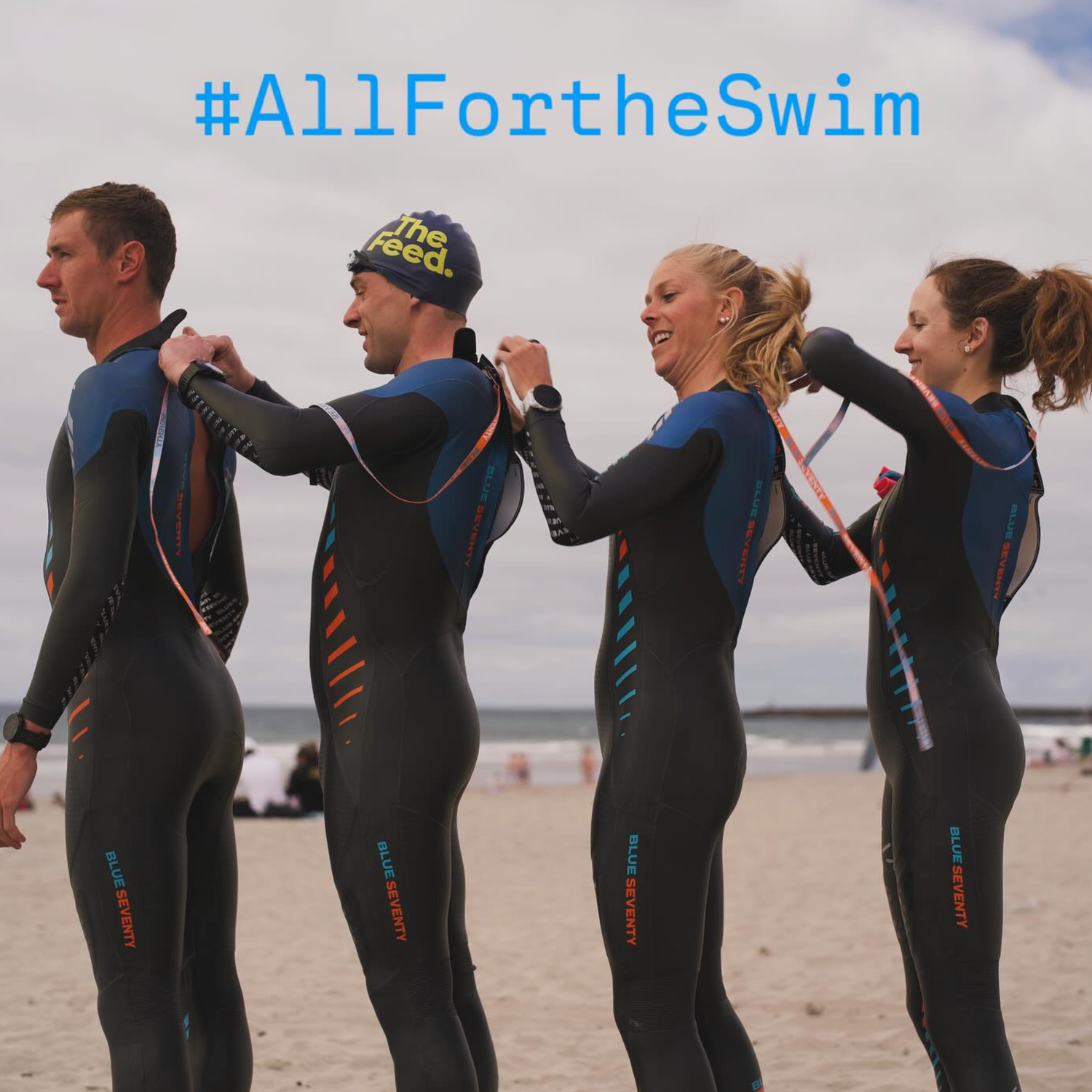
A river suit needs to fit correctly. On land, a blueseventy wetsuit should feel snug. In the water, it should feel more comfortable as the neoprene softens. A suit that is too loose around the torso can trap water and create drag, which is the last thing you want when current is already pulling on you. A suit that is too tight across the shoulders restricts stroke length and fatigues you early, which also becomes more dangerous in moving water.
blueseventy builds flexibility into the shoulder and arm panels for this reason. Femme Fit addresses fit in the areas where a unisex cut often fails for women. The pattern is refined through the bust, torso, wrists, and ankles. The neckline sits lower to reduce chafing, and the zipper is extended for easier entry and faster changes.
In a river, test your shoulder mobility before you enter. Reach overhead, across your body, and into a catch position. If the suit pulls against those movements on land, it will fight you in the current.
Cold water, debris, and river-specific care
Rivers often run colder than lakes, especially in spring or below dam releases. The air may feel warm while the water stays cold. If you are new to a stretch, treat the water temperature as your first consideration, not the air temperature.
After a river swim, rinse the suit with fresh water. River water carries silt, algae, and fine grit that can break down neoprene if left to dry. Dry the suit away from direct sun and heat. If you get a small fingernail puncture or heel tear, Aquaseal neoprene cement can repair it before the tear grows.
Current also wears on a suit differently than flat water. Debris, submerged branches, and rocky entry points can abrade the neoprene. Check the seams and chest panel after a river session, especially if you scraped against anything.
Before you enter a strong current
- Recon the stretch from shore first. Identify where you will enter, where you will exit, and what the current does between those two points.
- Watch for current strength mid-channel and on outside bends. Eddies behind large rocks can give you a brief rest, but they also create seams where water changes speed quickly.
- Have a shore spotter or support kayaker. Swim with people who know the river.
- Start in moderate current before attempting anything fast.
- If the water is high, brown, or carrying debris after rain, skip the river that day and choose a controlled open water venue.
A wetsuit will not improve your judgment. It will keep you warmer and help your body position while you use the skills you already have.
Find your size in 30 seconds and take a test swim. blueseventy allows you to swim in a wetsuit and still return or exchange it within 30 days as long as it comes back clean, dry, unmodified, and with tags attached. That policy applies whether you test it in a pool, a lake, or a calm stretch of river.