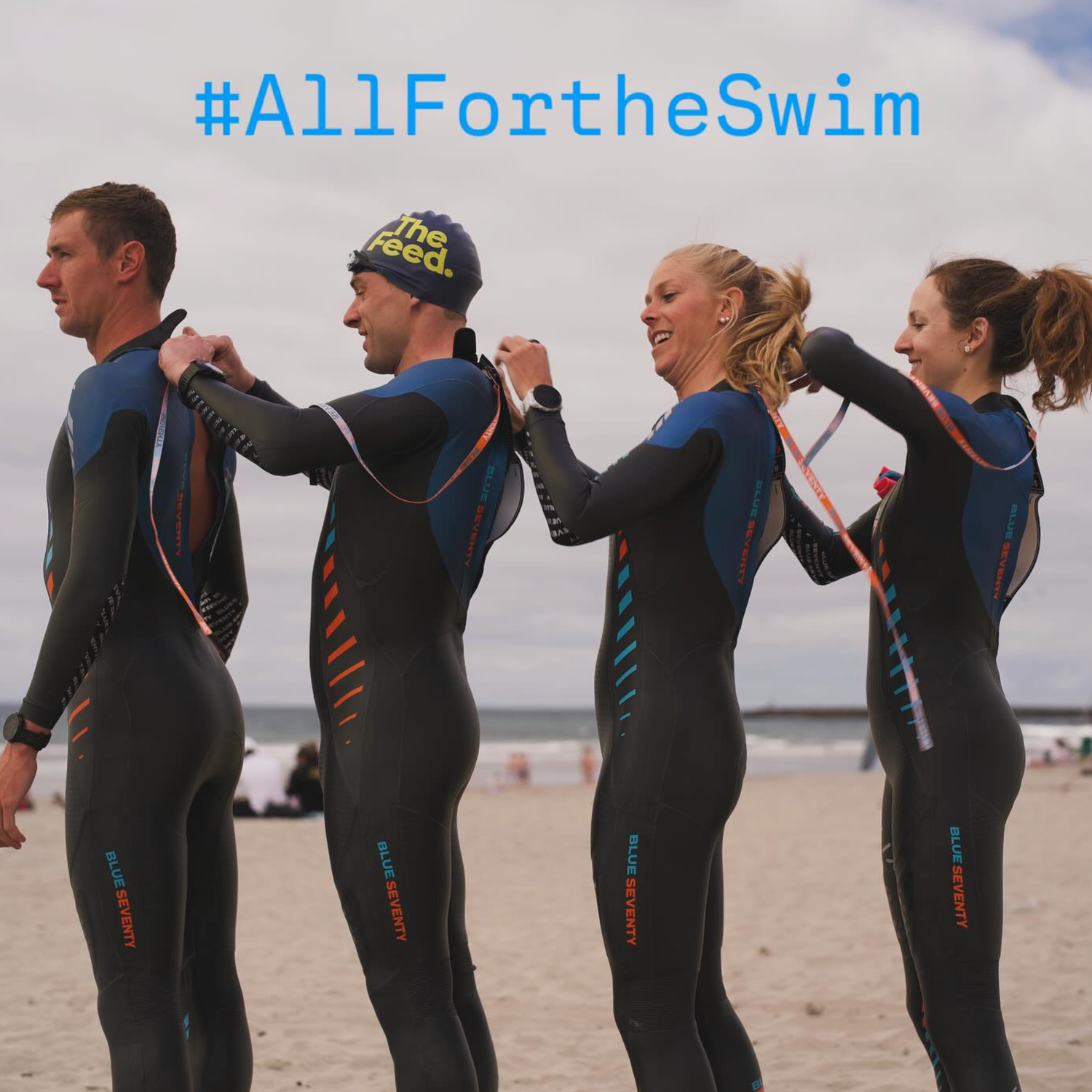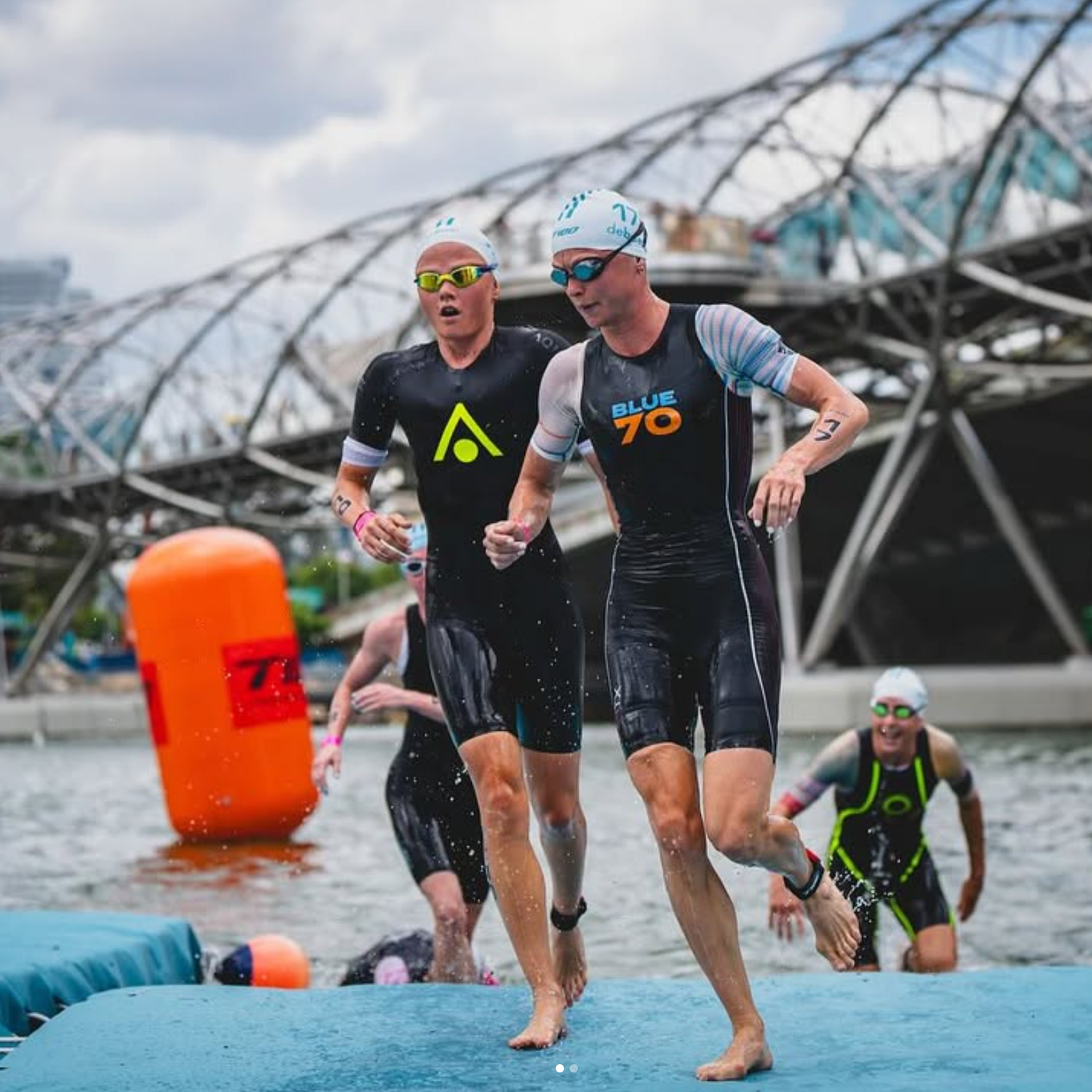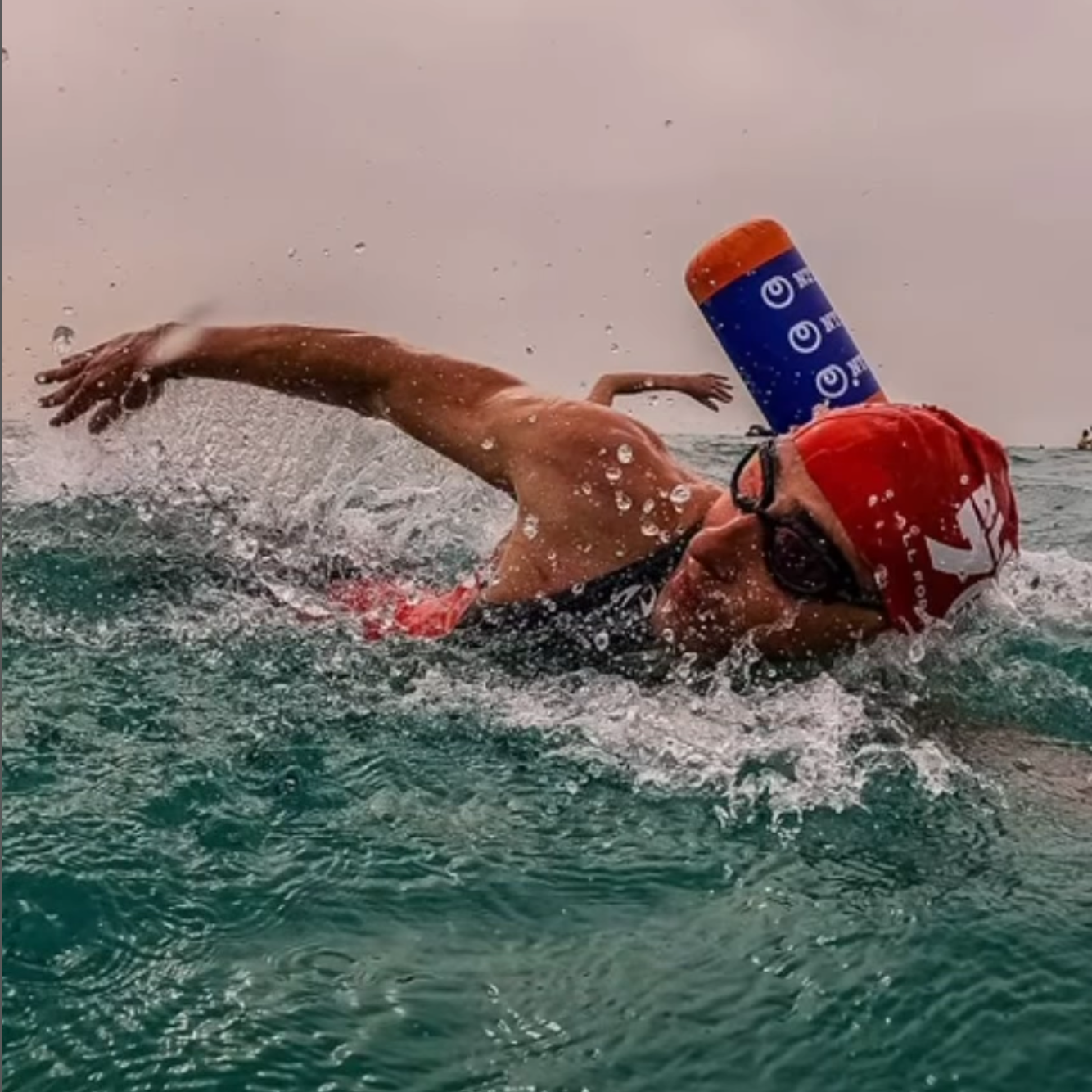



You can put a Blue70 swimming wetsuit on and paddle out, but you should not. Blue70 builds swim-specific wetsuits for open water swimming and triathlon. Surfing subjects a suit to board wax, deck pads, leashes, fins, sand, and wipeout forces that a swimming suit was never designed to handle. One session can tear the thin shoulder neoprene, stress the zipper, and void the warranty.
Why swim-specific neoprene is the wrong tool for surf
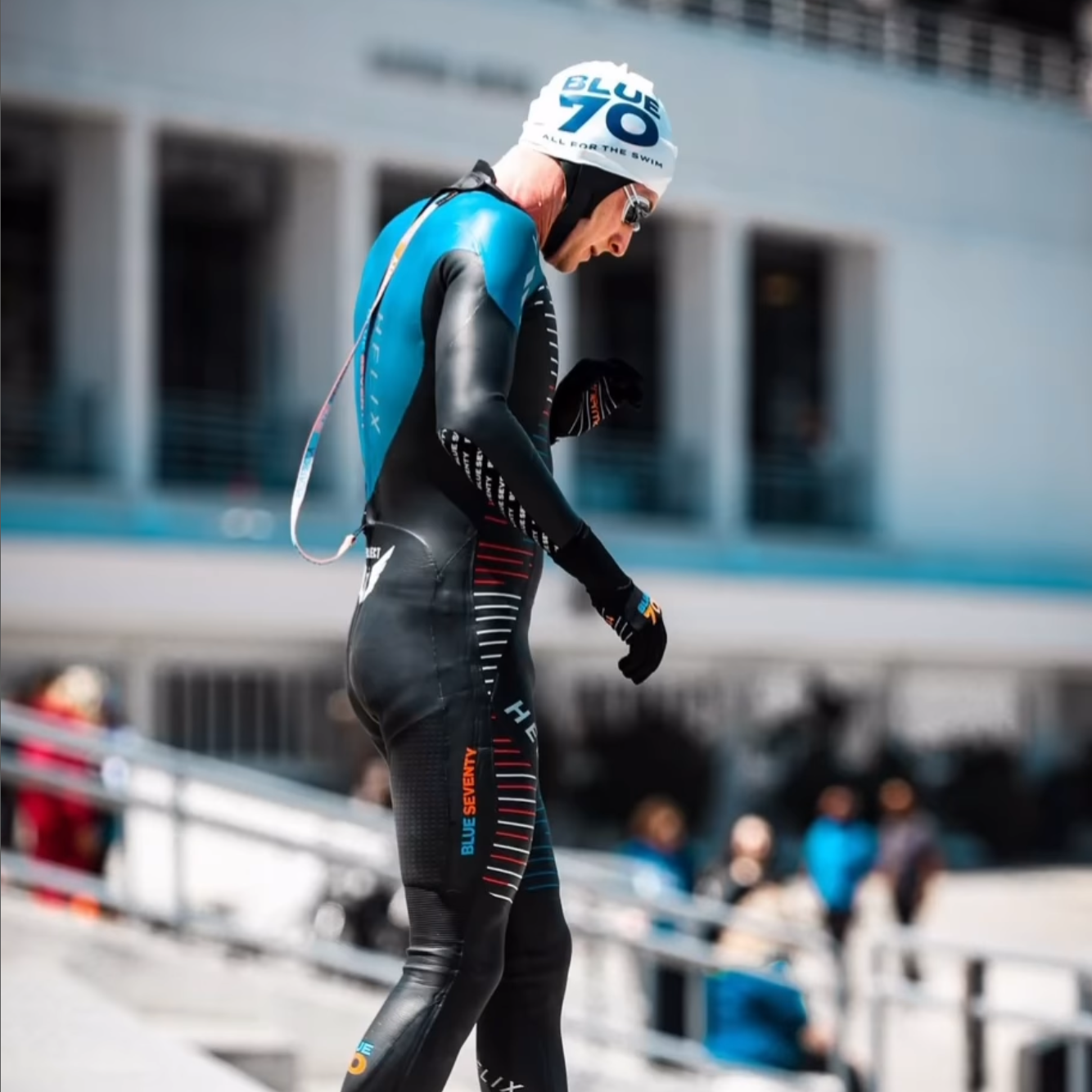
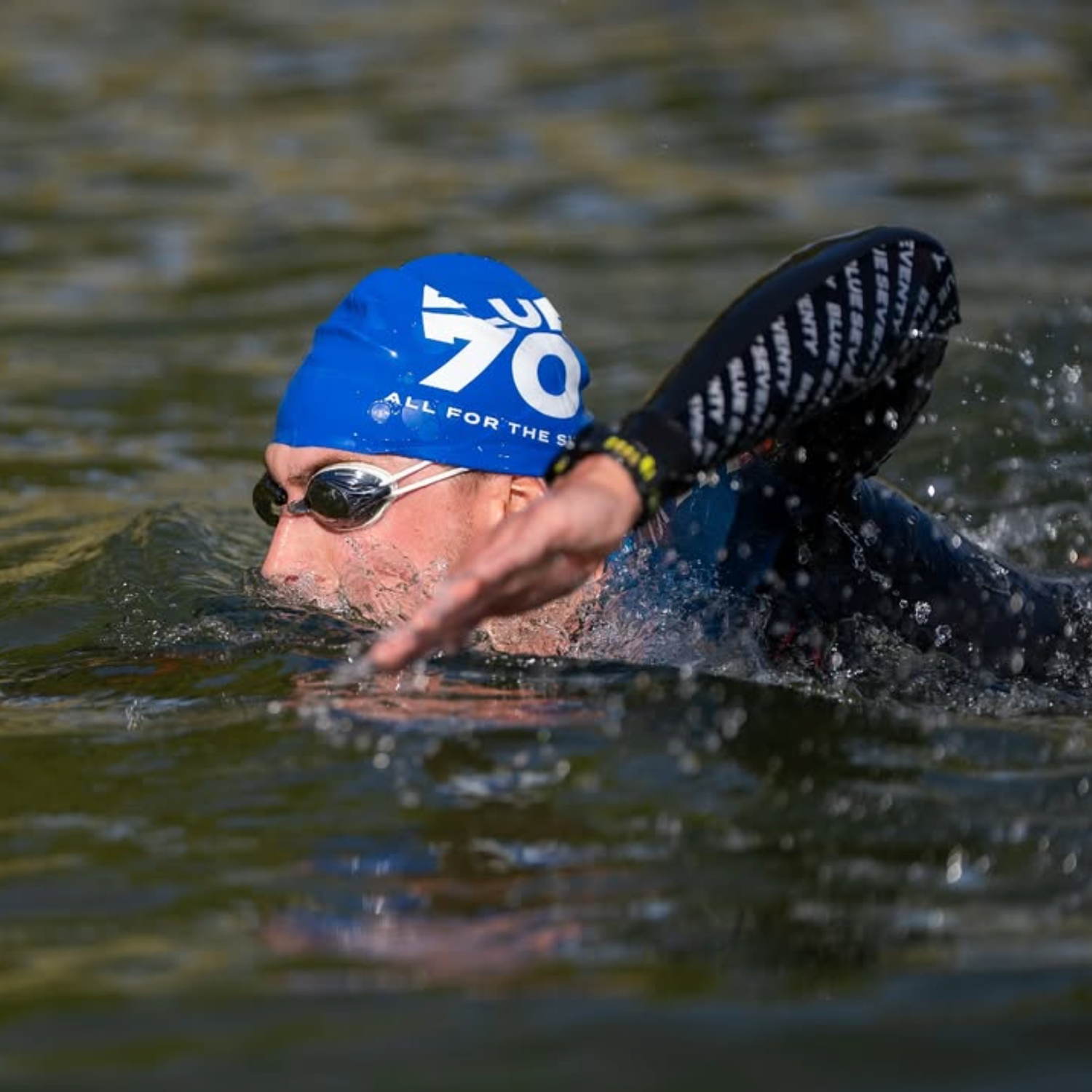
Every Blue70 wetsuit uses Yamamoto neoprene in 38, 39, and 40 cell grades. Higher cell numbers mean more flexibility. That flexibility matters most in the shoulders and arms, because a free catch and recovery reduces fatigue over long swims. The Helix uses thin, flexible neoprene in the arms and shoulders plus a permeable catch panel on the forearms. Those features help you hold water and keep a high elbow. They do not help when a surfboard deck pad or leash rubs the same material. Blue70 also notes that the Helix's thin neoprene will break down more quickly with frequent training use. Surfing is harder on a suit than training laps.
LIFT buoyancy panels sit in the hips and legs to improve body position for swimming. A surf wetsuit is cut and lined for contact with a board, rocks, and fins. Those different jobs mean different seam placement, zipper placement, and neoprene thickness.
What tends to fail first
Fingernail punctures are the most common damage. Grabbing a rail during a pop-up or duck dive pinches the neoprene between fingertip and board. The warranty specifically excludes fingernail punctures. Other damage points follow.
- Fingernail punctures. Pinched neoprene from grabbing the board or adjusting fins.
- Heel tears. Caused by pulling on fins or walking over shells and rocks before a session.
- Leash rub. A leash can wear a raw spot into the calf during a session.
- Zipper stress. A twisting wipeout or a board striking the zipper can force it past its normal range.
Blue70 also excludes heel tears and zipper damage from force from warranty coverage. Surfing invites all of these.
Warranty: non-swimming use voids it
Blue70 warranties wetsuits for one year against manufacturing and material defects for the original owner, and the remedy is repair only. The warranty does not cover fingernail punctures, heel tears, zipper damage from force, heat or chlorine damage, normal wear and tear, or any non-swimming use. Surfing, scuba, kayaking, and other non-swimming activities sit outside coverage. A surf session that tears a shoulder seam leaves you with a suit Blue70 cannot repair under warranty, even if the suit is only a week old and has never been in the ocean before.
What if the waves are tiny and you only go once?
Small waves do not change the failure points. You still wax or grip the board, paddle through broken water, pop up, and stretch the neck and shoulders in ways that differ from a forward swim stroke. Duck dives twist the torso and pull on the zipper. If you already own a Blue70 for training or racing, protect it. If you decide to paddle out anyway, choose a flat, sandy beach, skip board wax, keep the session short, and inspect every seam and the zipper afterward before you rinse and dry the suit. That reduces salt and abrasion risk. It does not restore warranty coverage or undo the stress on the neoprene. If you want to surf, use a surf-specific wetsuit or rent one. A swim-specific wetsuit is not a do-everything suit.
What to use for open water swimming instead
Choose a Blue70 by water temperature and training frequency. In water below about 56 to 58°F, the Thermal Reaction adds meaningful thermal protection with its Zirconium jersey lining. For frequent cool-water swimming, the Reaction holds up to longer sessions and repeated use. The Fusion suits shorter, more frequent sessions and has the lower-sitting neckline from the 2021 redesign. Above about 70 to 72°F, a full suit can become warm, so the Reaction Sleeveless or a swimskin is the better call. New swimmers and budget-focused athletes should look at the Sprint or Glide Short John.
If you are still deciding, use the sizing tool on blueseventy.com or take a Test Swim. Blue70 lets you swim in a wetsuit and still return or exchange it within 30 days as long as it is clean, dry, and unmodified. Keep the suit for swimming. Save the surf session for a surf-specific suit.