


Short answer: skip the rash guard if extra warmth is what you want. A swimming wetsuit relies on a thin layer of water next to your skin. Adding a shirt between your skin and the suit tends to break the suit's seals and create paths for cold water to flush through. You usually end up colder than you would without the rash guard.
How a swim wetsuit traps warmth
A Blue70 wetsuit does not keep you dry. It is designed to let a small amount of water in. Your body warms that thin layer, and the neoprene plus the suit's lining slow the exchange between that warm water and the colder water outside. The neck, wrist, and ankle seals control how much fresh cold water can enter with each movement, so a break at any one of those points lets cold water replace the warm layer your body has already heated.
Blue70 suits use Yamamoto neoprene in 38, 39, and 40-cell grades. A higher cell number means more flexibility. Blue70 builds cold-water models with additional materials for thermal protection. The Thermal Reaction, for example, is fully lined with Zirconium jersey, a synthetic wool material that adds thermal protection in cold water.
Why a rash guard usually makes you colder
A rash guard is a thin synthetic shirt. Under a well-fitting swim wetsuit it does three things that work against warmth.
- It breaks the seals. Extra fabric at the neck, wrists, and ankles prevents those openings from sitting flush against your skin. Cold water flushes in with each stroke.
- It adds bulk through the shoulders and armpits. A swim wetsuit is cut for full stroke motion. A shirt underneath can restrict that motion and make you work harder.
- It creates folds and channels. Loose spots in the rash guard allow water to move around rather than warm up and stay in place.
Your body also has to warm the rash guard's thin layer of water before it can warm the suit layer. The shirt itself adds almost no insulating material, and it can break the seal that keeps warm water close to your body.
A thin base layer can work for chafe or sun, not warmth
Some swimmers use a thin top as a chafe barrier or for sun protection before they get in. If you do this, keep the top tight and seam-free, and make sure the suit still seals at the neck, wrists, and ankles. Remove it before swimming if sun protection is the only reason. For thermal protection, change the suit or the accessories instead of adding clothing underneath.
Better ways to add warmth
Start with the suit. For regular swimming below about 56 to 58°F, the Thermal Reaction is the cold-water model in the Blue70 line. Its Zirconium jersey lining adds thermal protection throughout the torso and legs.
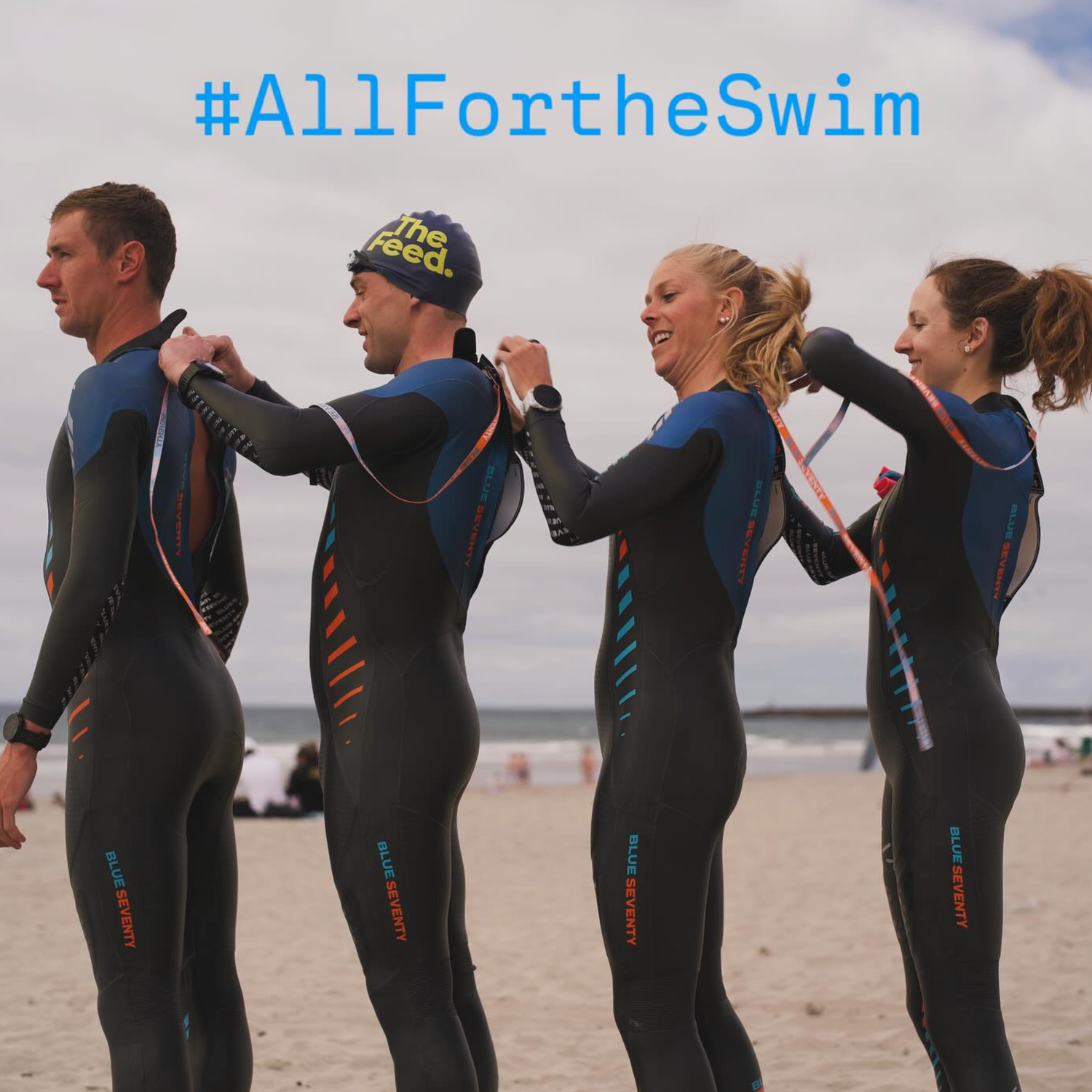
Then fix the fit. A suit that is too large flushes more water and feels cold faster. The suit should be snug on dry land and settle once you are in the water. Pull the legs up high, work the material up through the torso, and check the shoulder panels before you zip.
Cover the heat-loss zones. Neoprene caps, gloves, and booties add thermal protection for your head, hands, and feet without interfering with the fit of the suit. Blue70 carries thermal accessories for these areas.
Fit check before you add anything
If your current wetsuit feels cold, check the seals before reaching for a layer. The neck seal should lie flat with no obvious gaps. The wrists and ankles should stay put when you rotate your arms and kick. If you can grab large folds of neoprene at the hips or lower back, the size may be too big. If the suit binds across the chest or shoulders after proper donning, it may be too small or not pulled up enough.
For cold-water swimming, a properly fitted thermal suit will serve you better than a rash guard under a standard suit. If you regularly swim below 56 to 58°F, the Thermal Reaction collection is the place to start. Happy swimming.