


You can add knee pads, but I would not recommend it. Adding aftermarket knee pads to a blueseventy swimming wetsuit changes how the suit flexes, how it seals, and how it moves through the water. If you are trying to prevent knee damage or abrasion, the better fix is a different entry routine, a proper fit, and the right repair product when you do get a nick.
Why knee pads fight a swimming wetsuit
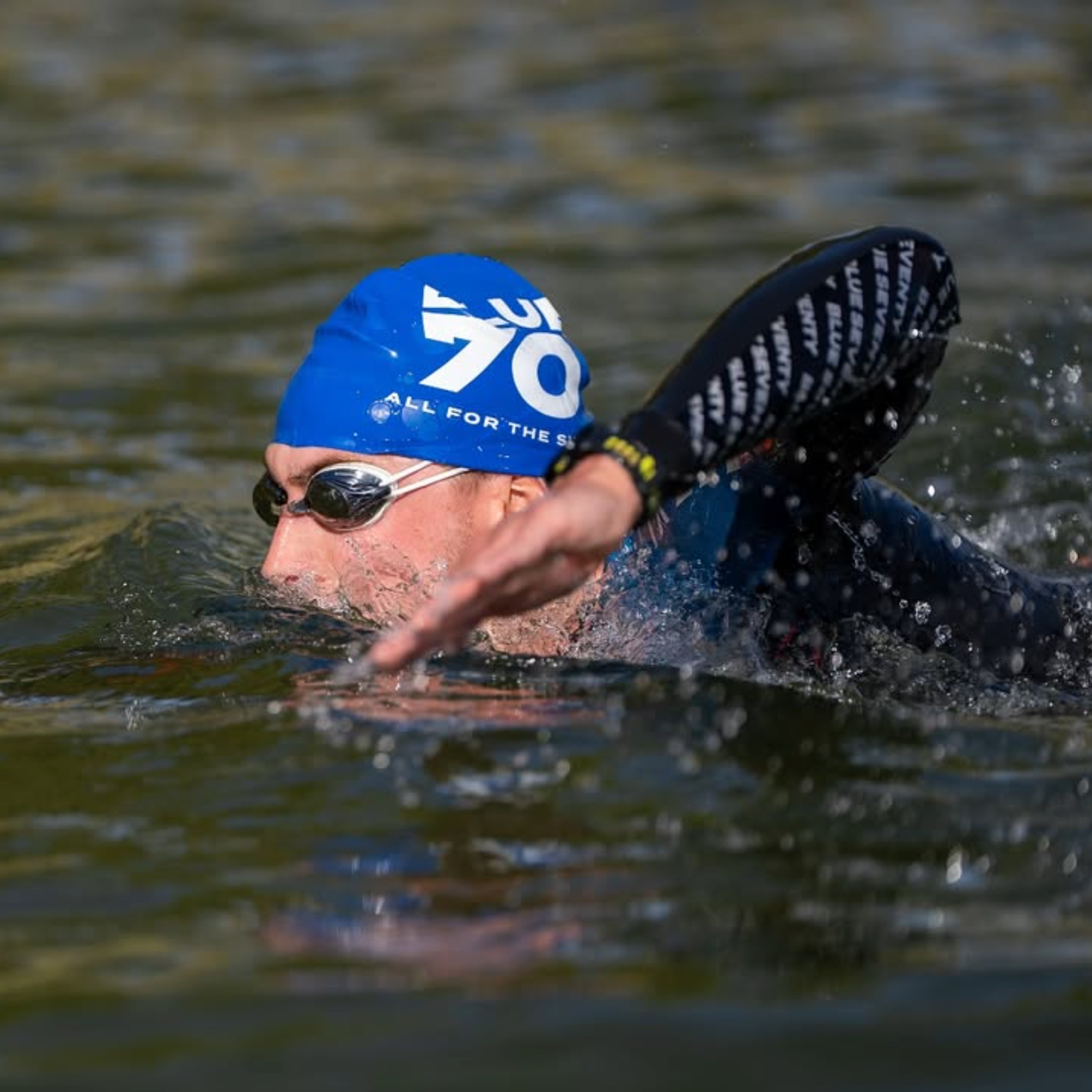
A freestyle kick bends the knee on every stroke. Thick padding at that joint resists the bend and forces your quadriceps and hamstrings to work harder for the same kick. That added effort can shorten your stroke and cost you energy over a long open water swim. Blueseventy designs around freedom from restriction, especially through the shoulders and legs. A stiff knee pad works against that.
Adding a pad also creates a step in the material. Neoprene already resists stretch, and a glued or stitched pad increases that resistance right where the leg needs to fold. When the knee bends, the pad can bunch or leave a hard edge. Water catches edges like that and adds drag. If the adhesive is not compatible with Yamamoto neoprene, it can stiffen the surrounding panel or break down the material.
In a triathlon, thick knee pads can catch on the suit as you pull it off in transition. A clean exit depends on the lower leg sliding through quickly. A stiff patch at the knee creates an extra ridge to fight while you are tired and racing the clock.
A blueseventy wetsuit is not a dry suit. A thin layer of water moves inside the suit, your body warms it, and the neoprene flexes as you swim. Repeated wetting, body heat, chlorine, and salt can weaken most fabric adhesives over time. A pad that looks fine on land can peel after a few sessions. That failure can tear the outer jersey layer and leave a bigger problem than the one you were trying to solve.
What blueseventy builds instead
Blueseventy uses Yamamoto neoprene in 38, 39, and 40 cell grades. Higher cell count means more flexibility. Swim-specific suits use thin, flexible panels through the legs because swimming does not require kneeling or impact protection at the knee. The design goal is body position and reduced drag. Buoyancy in the hips and legs helps lift you into a better line. A thick patch at the knee does not add flotation where you need it and can make the leg stiffer.
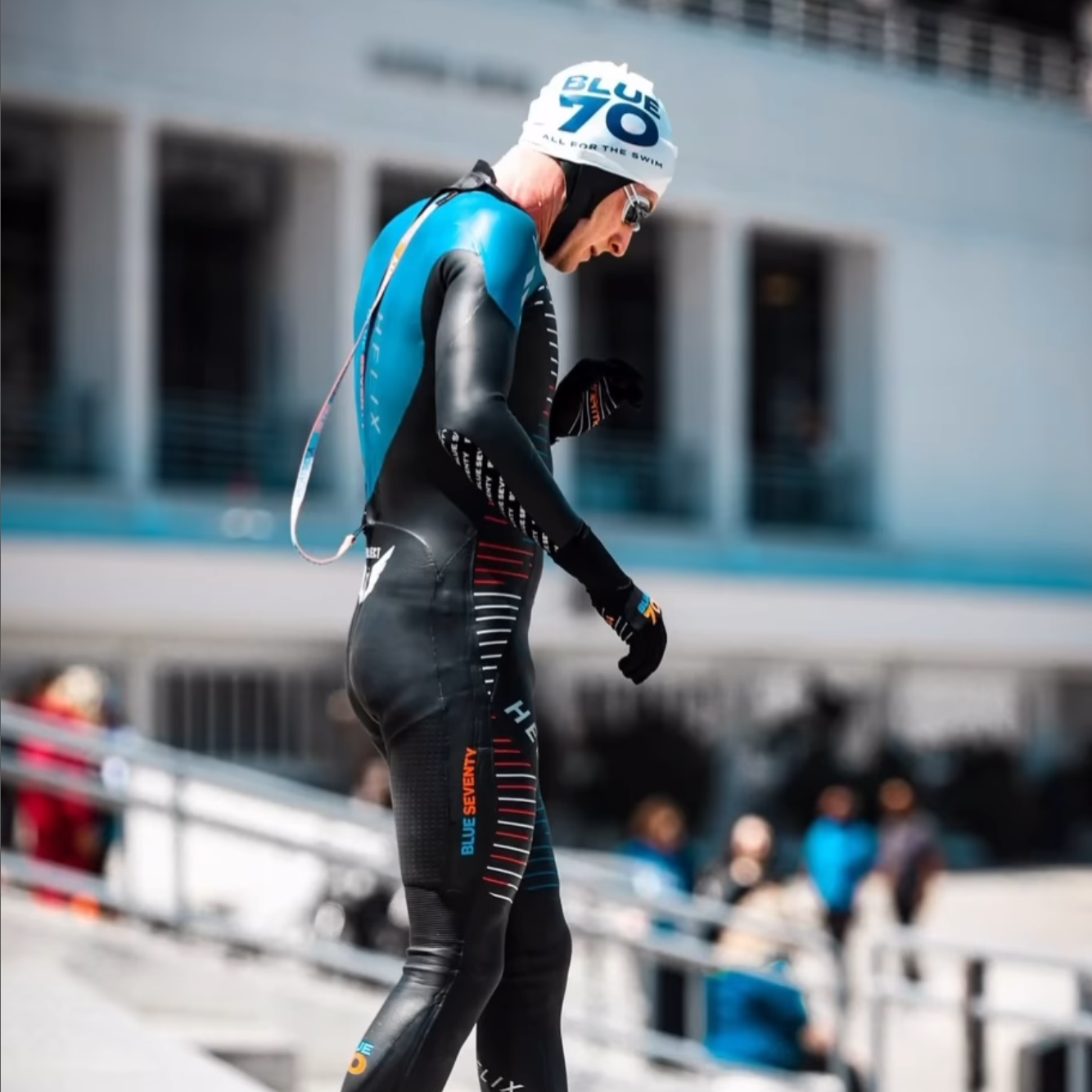
The same logic applies across the range. The Helix, Reaction, Fusion, and Sprint are built for stroke mechanics and comfort in a horizontal swimming position. That design does not include stiff knee pads. If knee abrasion is a recurring problem, the source is how you enter the water or how you handle the suit on land, not the suit itself.
Safer ways to protect your knees
Protecting the knee panel starts before you get wet and continues after you climb out.
Before you swim
- Sit down to put the suit on. Kneeling on concrete, gravel, or pool decking stresses the knee panel and can grind sand into the neoprene.
- Put a towel or changing mat under you at the water's edge. It gives you a clean, soft surface while you get your feet and ankles through the suit.
- Walk into the water to waist depth before you start swimming. Avoid crawling across barnacles, rocks, or boat ramps on your knees.
After the swim
- Rinse the suit in fresh water after every swim. Rinse the outside and the inside. Dry it inside out, then reverse it. Do not fold it sharply at the knees.
- Repair a nick early. A small tear at the knee can grow. Use a small amount of blueseventy Aquaseal neoprene cement to close it. Clean the spot, dry it, apply a thin layer, and press the edges together until it cures. Do not use household glues or iron-on patches. Heat and solvents can damage neoprene. A clean cement repair keeps the panel far more flexible than an external pad.
Before you modify the suit
If you are thinking about knee pads because the suit feels tight, baggy, or restrictive through the legs, do not glue anything on. Check the fit first. A blueseventy wetsuit should feel snug on dry land and more comfortable once you are in the water. If you are inside 30 days from the ship date and the suit is clean, dry, unmodified, and still has its tags and accessories, you can swim in it and still return or exchange it. That test swim path no longer applies once you add pads or apply aftermarket adhesive.
Baggy fabric at the knee can fold and rub. A better size often fixes that. Use the blueseventy size charts and fitting guide if you are between sizes or if your height and weight put you in different size columns. Aftermarket pads are not a manufacturing defect, so damage caused by them sits outside the one-year manufacturing and materials warranty.
If you want to protect a suit that already fits well, the routine matters more than padding. Sit down to dress, avoid kneeling on rough surfaces, rinse and dry it properly, and repair small nicks early. That approach keeps the knees flexible, keeps the suit out of the repair pile, and keeps your kick as free as it was designed to be.