


Search for a triathlon wetsuit comparison chart and you will find grids that sort brand names. A swim coach looks at the same search and asks five questions: How many open water sessions will you actually do each week? What water temperatures will you train and race in? Where do your shoulders bind? What fit problems have you had before? How long do you expect the suit to last?
Those questions come first because the chart has one job. It should match a suit to your calendar, your water, and your body. Sorting logos skips all of that. This article builds the useful chart around the questions instead.
Start With Sessions Per Week, Not the Suit's Marketing
Neoprene cell structure is the first trade-off. Blueseventy uses Yamamoto neoprene in 38, 39, and 40 cell grades. A higher cell number means more flexibility and a lighter feel. That flexibility has a cost. Thin, high-cell neoprene in the arms and shoulders tears more easily and breaks down faster under repeated use.
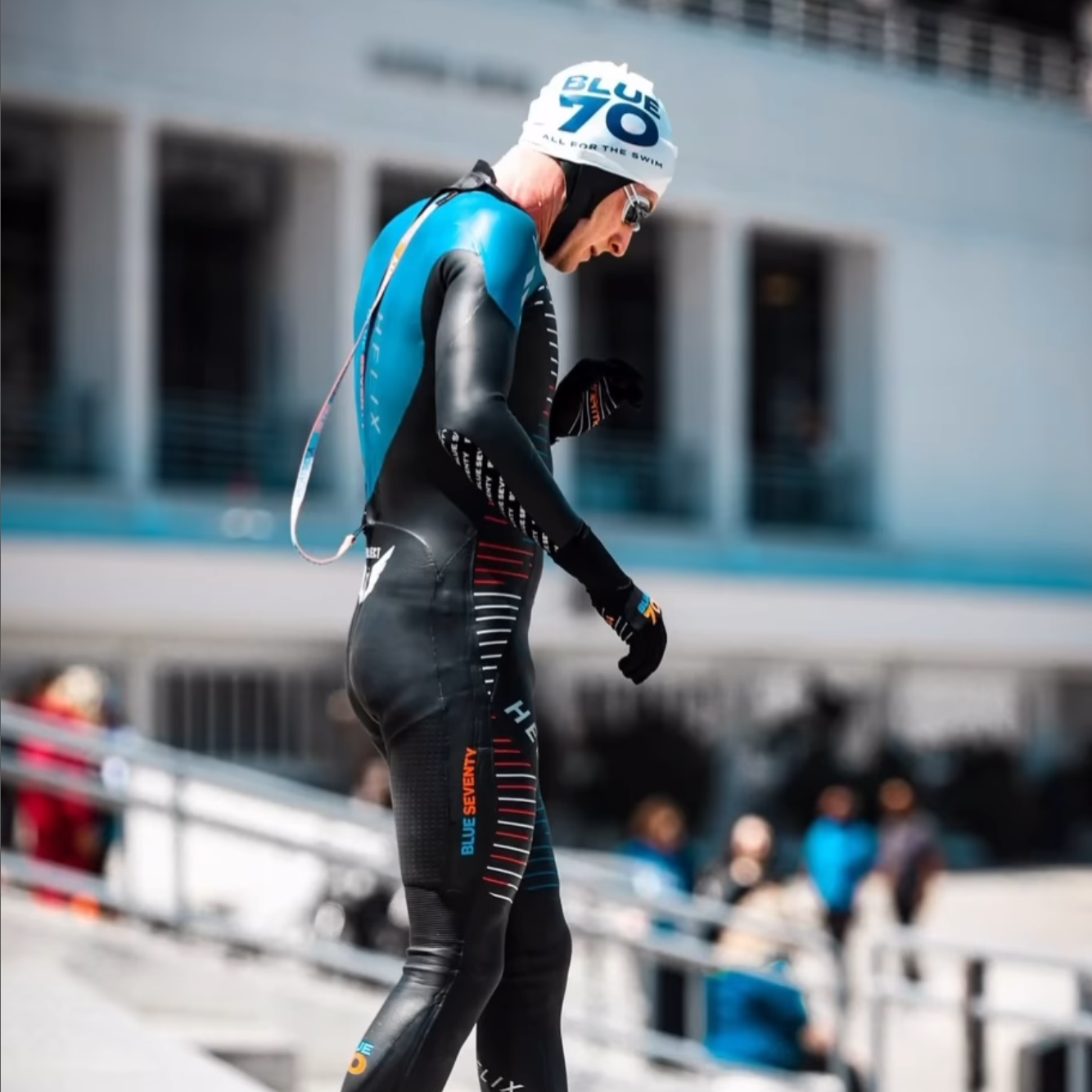
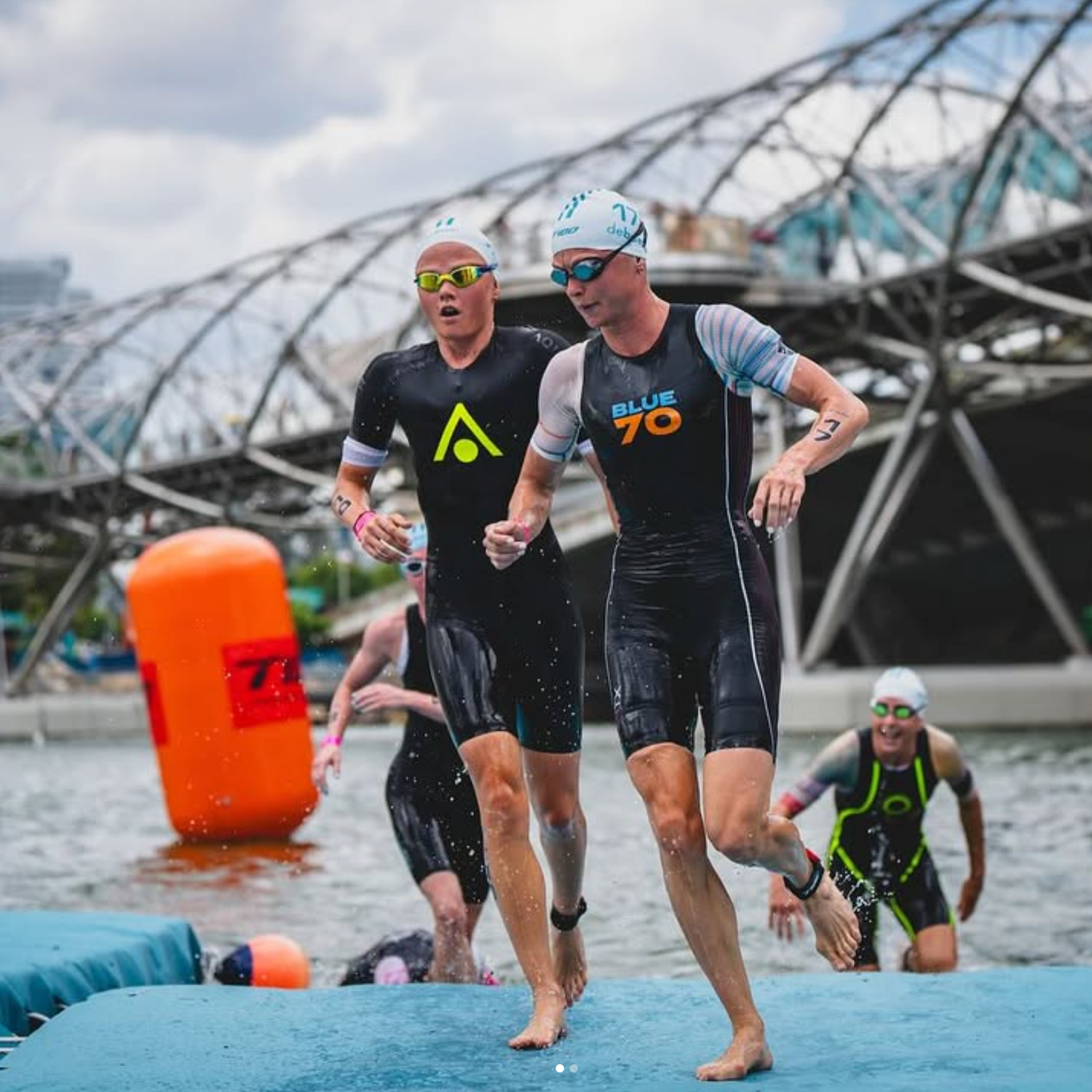
The race-day Helix lives at the flexible end of that spectrum. It uses thin, flexible neoprene in the arms and shoulders, and it includes a permeable catch panel that helps you keep feel for the water through the stroke. At $995, it is built for race day. It is not the suit to live in for twice-a-week open water sessions.
If your open water plan looks closer to one or two sessions a week from spring through fall, the Reaction at $680 holds up better for longer, more frequent swims. The Fusion at $420 works for shorter repeat sessions and has a lower-sitting neckline from its 2021 redesign. In your first season? The Sprint at $325 handles a few open water swims before race day.
Be honest about the calendar you actually keep, not the one you meant to keep.
Let Water Temperature Choose the Sleeves and Lining
Water temperature changes which suit makes sense faster than any other variable. Below about 56 to 58°F, a thermal suit adds meaningful thermal protection. The Thermal Reaction at $785 is fully lined with Zirconium, a synthetic wool jersey. That lining is designed for cold-water swimming. Above about 70 to 72°F, a full suit feels too warm for many swimmers over longer sessions. The Reaction Sleeveless at $395 removes shoulder restriction and sheds heat. Between those ranges, a standard full suit works for most swimmers.
A wetsuit is not waterproof. A thin layer of water enters the suit and your body warms it. That is how the suit insulates. A wetsuit is also not a personal flotation device. Neoprene adds buoyancy, but it is not Coast Guard-certified as a PFD. Cold water swimming below 60°F requires acclimatization, a swim buddy, and a clear exit plan. If you feel dizzy, weak, or confused, get out and seek warmth and medical help.
Race legality is a separate question from comfort. Wetsuit-legal temperature cutoffs vary by sanctioning body and season. Check the current rulebook for your race before you plan around a specific suit.
Buoyancy Changes Your Body Line Before It Changes Your Speed
Neoprene changes your position in the water before it changes anything else. It increases your volume without adding much weight. The upward force equals the weight of the water you displace. Concentrating that buoyancy lower on the body raises your hips and legs, flattens your body line, and reduces frontal drag. Because drag increases with the square of your speed, that body position matters more as your effort rises.
Beginners gain proportionally more from a wetsuit than advanced swimmers. A strong swimmer already holds a flatter body line. A newer swimmer fights sinking legs, so added hip buoyancy removes a large share of the drag penalty. Blueseventy added LIFT buoyancy panels to the Helix in 2018. The LIFT Buoyancy Short at $150, launched in 2020, uses NBR foam for maximum buoyancy. It can serve as a training aid for swimmers who want the body position benefit without full-sleeve coverage or added warmth. It is not a personal flotation device.
Fit Is the Column Most Charts Skip
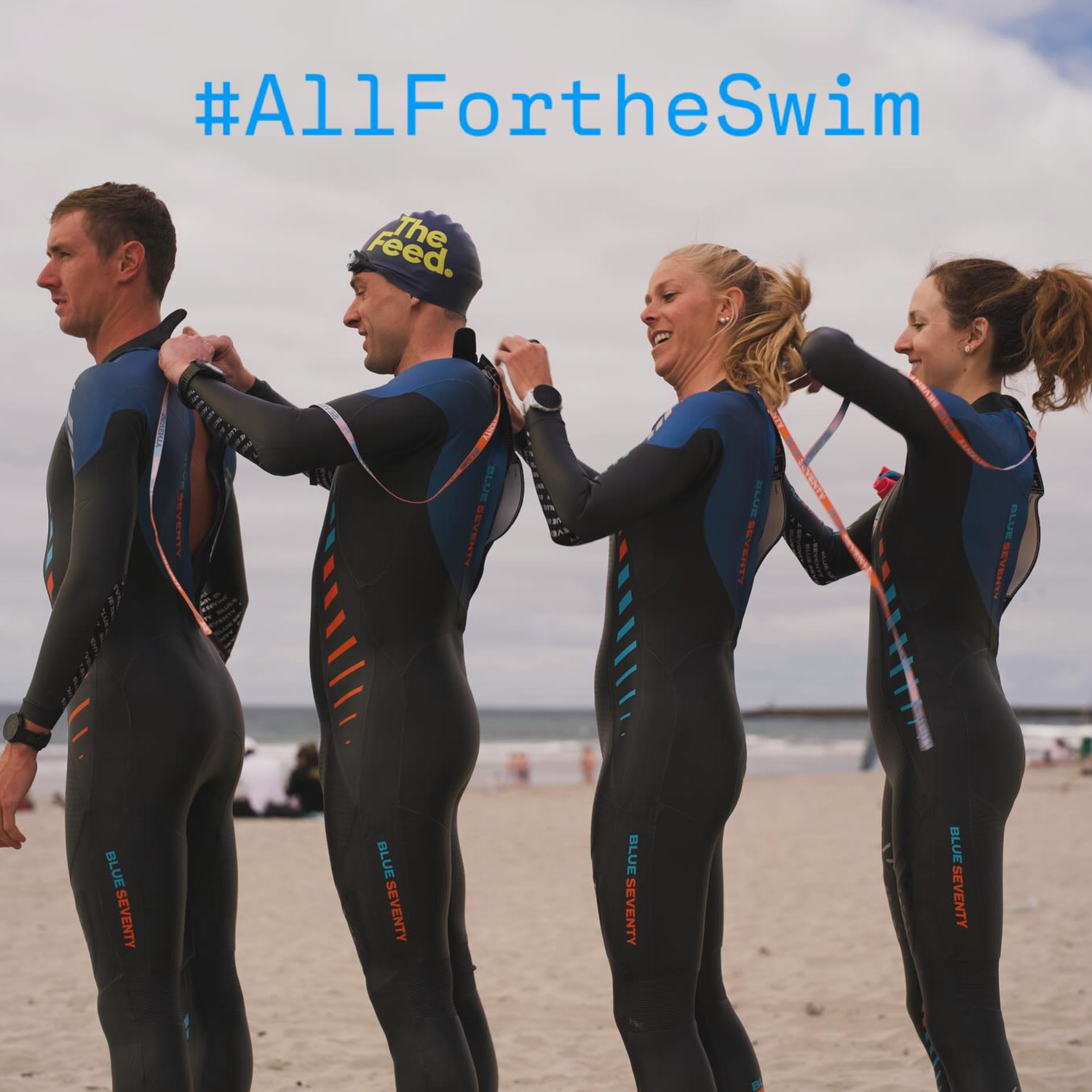
Fit determines whether any of these materials work for you. A wetsuit should feel snug on dry land and more comfortable in the water. An improperly donned suit, especially one pulled too low on the shoulders, causes arm fatigue within a few hundred meters. The suit should sit high into the armpit. The shoulder material should lie flat without folds. If you feel pressure across the collarbones or a tug at the deltoid when you rotate, the suit is not seated correctly.
Follow this donning sequence every time:
- Start dry. Wet suits grab and bind.
- Roll each leg up gradually from the ankle, using the pads of your fingers rather than your nails.
- Pull the torso up once the legs are high, then reach back and lift the suit into the armpits.
- Pull the zipper only after the suit is seated. A zipper cannot fix a suit that is too low on the shoulders.
Women's fit has its own set of variables. Blueseventy Femme Fit sizing refines the pattern in the bust, torso, wrists, and ankles. It lowers the neckline to reduce chafing and extends the zipper length for easier entry and faster transitions. That added zipper length also accommodates wider hips. Femme Fit is available across the women's wetsuit range.
Test the fit before you commit to a size. Blueseventy's Test Swim policy lets you swim in a wetsuit and still return or exchange it, as long as it comes back clean, dry, unmodified, and with tags and accessories attached. That removes much of the anxiety around ordering a size that feels tight on land.
Care and Ownership Horizon
Most wetsuit damage happens before the first race. Fingernail punctures, heel tears, and zipper damage from force are the common ones. The warranty covers manufacturing and material defects for one year for the original owner. Technical race swimwear carries a six-week warranty. It does not cover fingernail punctures, heel tears, zipper damage from force, heat or chlorine damage, or normal wear and tear. Using a wetsuit for surfing, scuba, kayaking, or other non-swimming activities voids the warranty. SwimRun use is covered only on the Alliance SwimRun suit.
Rinse the suit in fresh water after every swim. Dry it inside out, then turn it right side out to finish. Keep it away from direct sun and heat. Hang it over a wide hanger or lay it flat. Heat and chlorine both break down neoprene over time. A suit that gets rinsed and dried properly lasts longer than one that lives in a wet transition bag.
Build the Chart Before You Compare Anything
Put these columns on a piece of paper or in a note on your phone. Sessions per week. Typical water temperature. Fit history. Budget. Ownership horizon. Then use the answers to narrow your choices from the blueseventy range.
- Helix ($995): Race-day flexibility, not for heavy training use.
- Thermal Reaction ($785): Cold-water swimming below about 58°F.
- Reaction ($680): Frequent open water training and longer swims.
- Fusion ($420): Shorter, regular swims and a lower-sitting neckline.
- Reaction Sleeveless ($395): Warm water above about 72°F or easier shoulder fit.
- Sprint ($325): First season and entry-level open water swims.
The wider line also includes the Glide Short John at $210 for warm-water entry-level swims and the Alliance SwimRun at $275, the only suit warrantied for swimrun use.
Your chart should serve one purpose. It should match a suit to your actual swim week, your actual water, and your actual body. That beats any pre-made chart built around someone else's training log. If you are between sizes, use the size chart on any product page and remember the Test Swim policy. Dive in. All for the swim.