


Broad shoulders can make wetsuit shopping frustrating fast. You check the size chart, find a range that matches your height and weight, pull the suit on, and still feel that familiar tug across the upper back and chest. The zipper closes, but the suit does not feel right. For swimmers and triathletes, that difference matters, because a wetsuit that fits on paper can still interfere with the way you actually swim.
The usual conversation about broad shoulders focuses on comfort. That misses the real issue. Shoulder fit changes stroke mechanics. If a suit places too much tension across the deltoids, lats, and upper back, you do not just feel restricted. You start altering recovery, shortening extension, and carrying extra fatigue into the second half of the swim. In open water, where sighting, chop, and race pace already ask more from your upper body, those small changes get expensive.
A better way to think about wetsuit fit is to treat the shoulders as a performance zone. The question is not simply whether the suit fits. The question is whether the suit lets you hold your natural stroke under load, in cold water, and under race pressure.
Why broad shoulders change the fit equation
Most sizing systems start with height and weight. That is useful, but it is only the first pass. Broad-shouldered swimmers often carry extra width through the upper back, more depth through the chest, or more size through the lats and upper arms than a standard size chart can fully account for. Two athletes can share the same height and weight and have very different experiences in the same suit once they begin moving.
That is why broad shoulders create problems that are easy to miss in a fitting room. Standing still does not tell you much. Freestyle asks the shoulders to rotate, recover, extend, and stabilize over and over again. If the neoprene is already stretched hard across the upper body before you start swimming, each stroke amplifies that tension.
The result is usually predictable. Arm recovery loses some of its ease. Front-end reach gets shorter. Rotation feels less natural. After several minutes, the swimmer starts working around the suit instead of swimming through the water.
What shoulder restriction looks like in the water
Restriction rarely announces itself in dramatic fashion. Most of the time, it shows up as drift. Your stroke rate rises a little because the long reach in front is harder to hold. You feel your shoulders working earlier than usual. You start lifting the shoulder during recovery instead of letting the torso rotation do more of the job. If you sight often, the upper body gets even tighter.
These are not minor details. A wetsuit should support body position and reduce drag, but it should not force you to change the best parts of your stroke to make the suit tolerable. If your shoulders and upper traps are burning during a moderate swim that would normally feel controlled in the pool, the fit deserves another look.
Why swim-specific design matters for broad shoulders
Wetsuit design has come a long way from the old idea that more buoyancy solved everything. For swimmers, shoulder freedom matters just as much as body position. A suit has to let the arms move cleanly through recovery and extension while still supporting the hips and legs in the water.
That is where swim-specific construction becomes important. blueseventy builds wetsuits for swimming, and that shows up in the way the suits are patterned and in the materials used through the upper body. All blueseventy wetsuits use Yamamoto neoprene in 38, 39, and 40 cell, and the higher cell numbers bring more flexibility. That is not a throwaway material detail. For broad-shouldered swimmers, upper-body flexibility can decide whether the suit feels natural after ten strokes or starts fighting you from the first minute.
The overlooked point: broad shoulders affect durability too
Fit gets most of the attention, but broad shoulders also change how much work the suit has to do over time. Every arm recovery and forward reach stretches the shoulder and arm panels. A swimmer with a bigger upper-body build places more repeated load through those areas, especially during long training blocks.
That is one reason suit selection should include an honest look at how often you plan to swim in it. The most flexible upper-body construction can feel excellent on race day, but the right choice for a dedicated weekly training schedule may be different from the right choice for a race-focused athlete who wants the least possible restriction for key events.
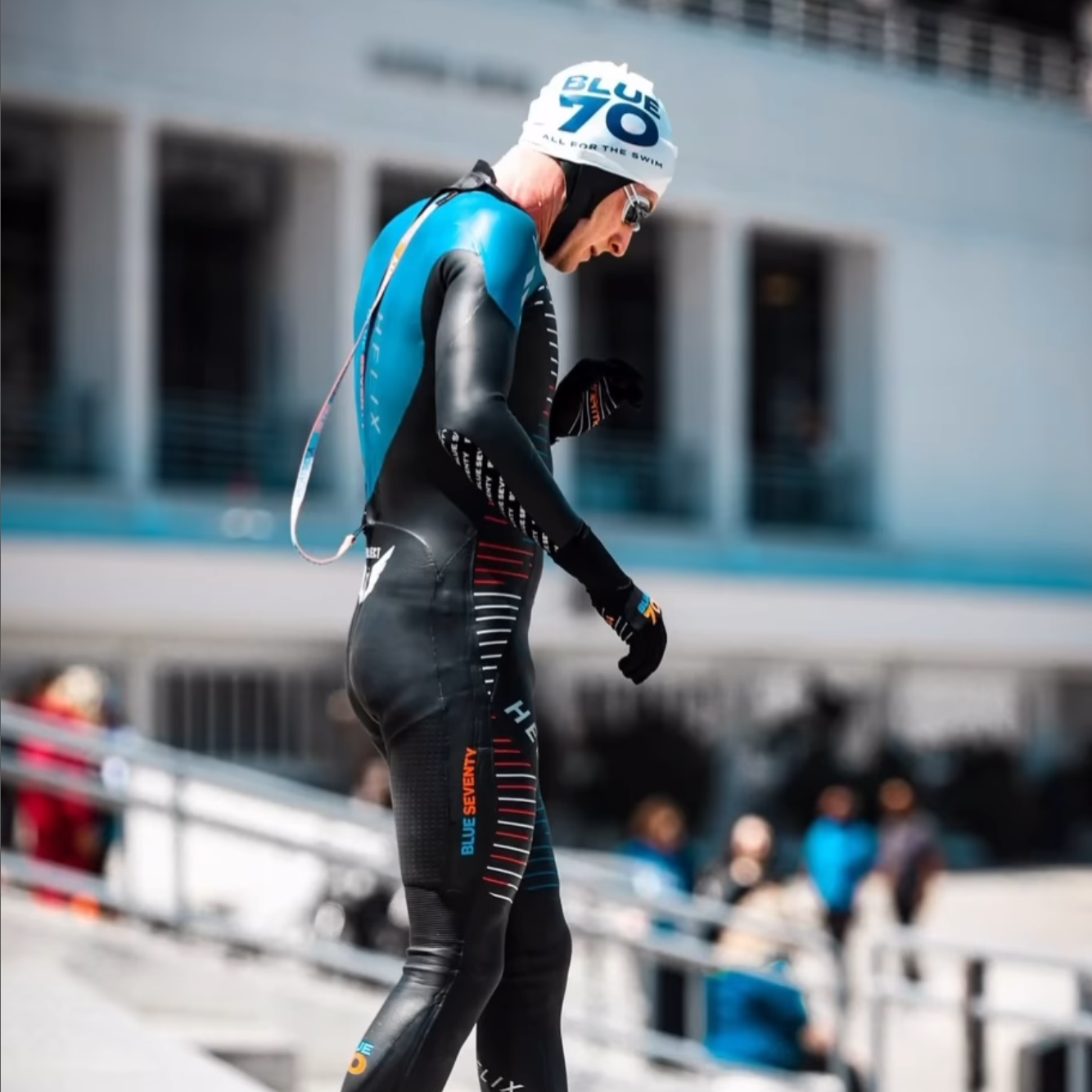
blueseventy is refreshingly direct about that trade-off. The Helix is built for race-day performance, with very thin, highly flexible neoprene through the arms and shoulders, a permeable catch panel to preserve feel for the water, and LIFT buoyancy panels added in 2018. It delivers exceptional freedom through the stroke. blueseventy also notes that the delicate upper-body neoprene is not the best match for heavy training use.
That kind of honesty helps. If you train in your suit once a week or more, especially with a strong upper-body build, it makes sense to think beyond the first fitting and toward the full season.
Why many broad-shouldered swimmers size up too quickly
When swimmers feel tension in the shoulders, the first instinct is often to go up a size. Sometimes that is the right answer. Often it is not. The more common issue is that the suit has not been pulled fully into place.
A wetsuit that sits low through the legs and hips steals length from the torso and shoulders. The swimmer feels that shortage across the upper back and assumes the chest or shoulders are too big for the suit. In reality, the problem started much lower.
This is one of the most useful fitting lessons for broad shoulders: better donning often solves what looks like a sizing problem.
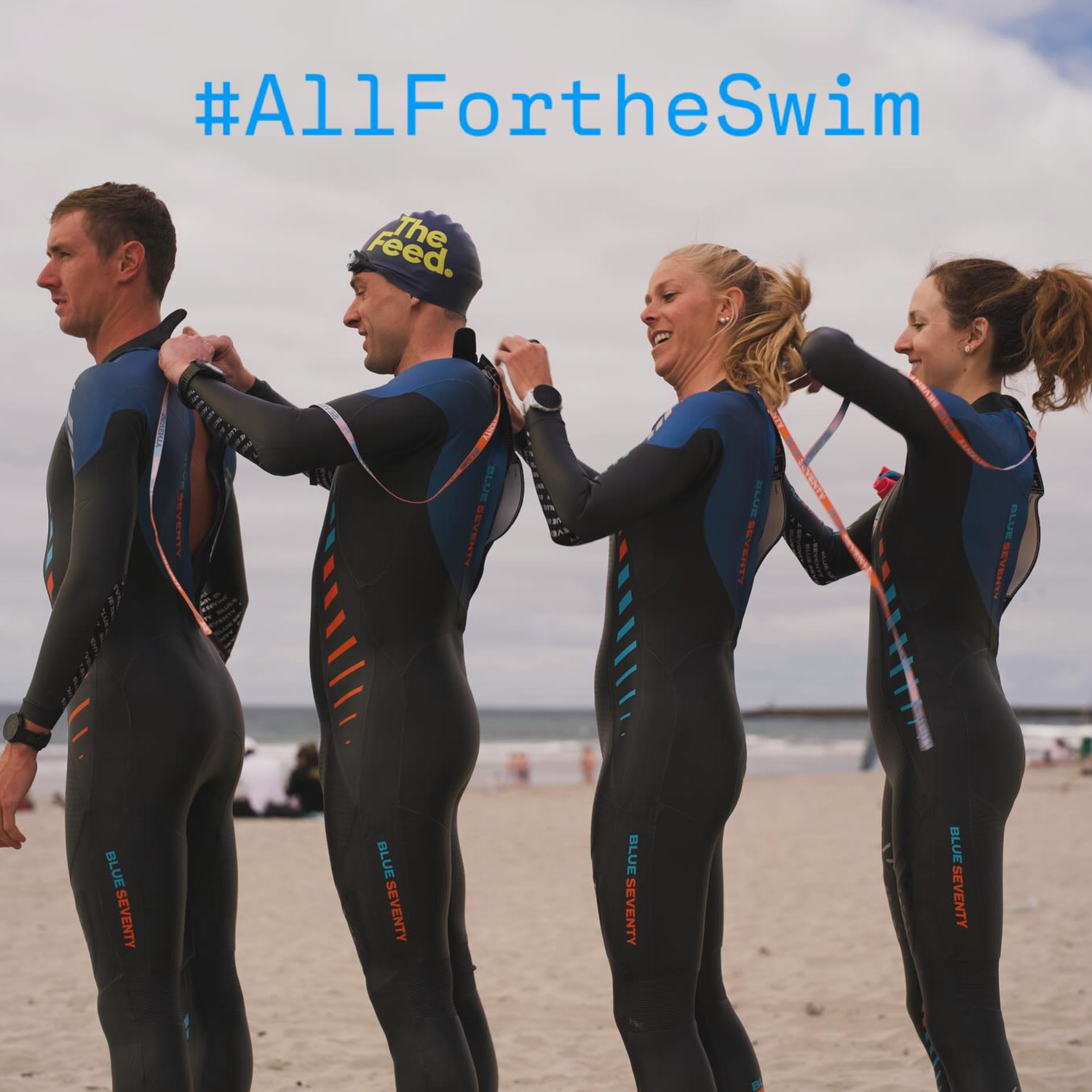
Before judging the fit, work through the suit carefully
- Pull the suit high from the ankles to the knees.
- Keep working material upward from the knees to the hips.
- Make sure the crotch is fully seated before you assess the torso.
- Distribute the neoprene evenly through the midsection.
- Set the shoulders and upper back before closing the zipper.
- Check the neckline again after the suit is fully zipped.
blueseventy’s fit guidance is clear on one point that surprises new swimmers: the suit should feel snug on land. In the water, it should settle and feel more natural. That is why a dry-land first impression only tells part of the story.
How to test shoulder fit on land
Do not stand there with your arms at your sides and call it good. Move the way you move in the water. Raise one arm into a freestyle recovery path. Switch sides. Reach both arms forward into extension. Rotate your torso gently right and left. Mimic a few slow strokes.
You are looking for specific signs of trouble, not vague discomfort.
- A sharp pull across the top of the shoulders when you reach forward
- Tension between the shoulder blades when both arms extend
- The neckline dragging upward when the arms move
- A need to shrug the shoulder to clear recovery
- One side feeling much tighter than the other
Snug is fine. Abrupt resistance is not. If the suit feels blocked at the front of the reach, that usually shows up even more once you add pace and open-water movement.
Open water makes small fit errors feel larger
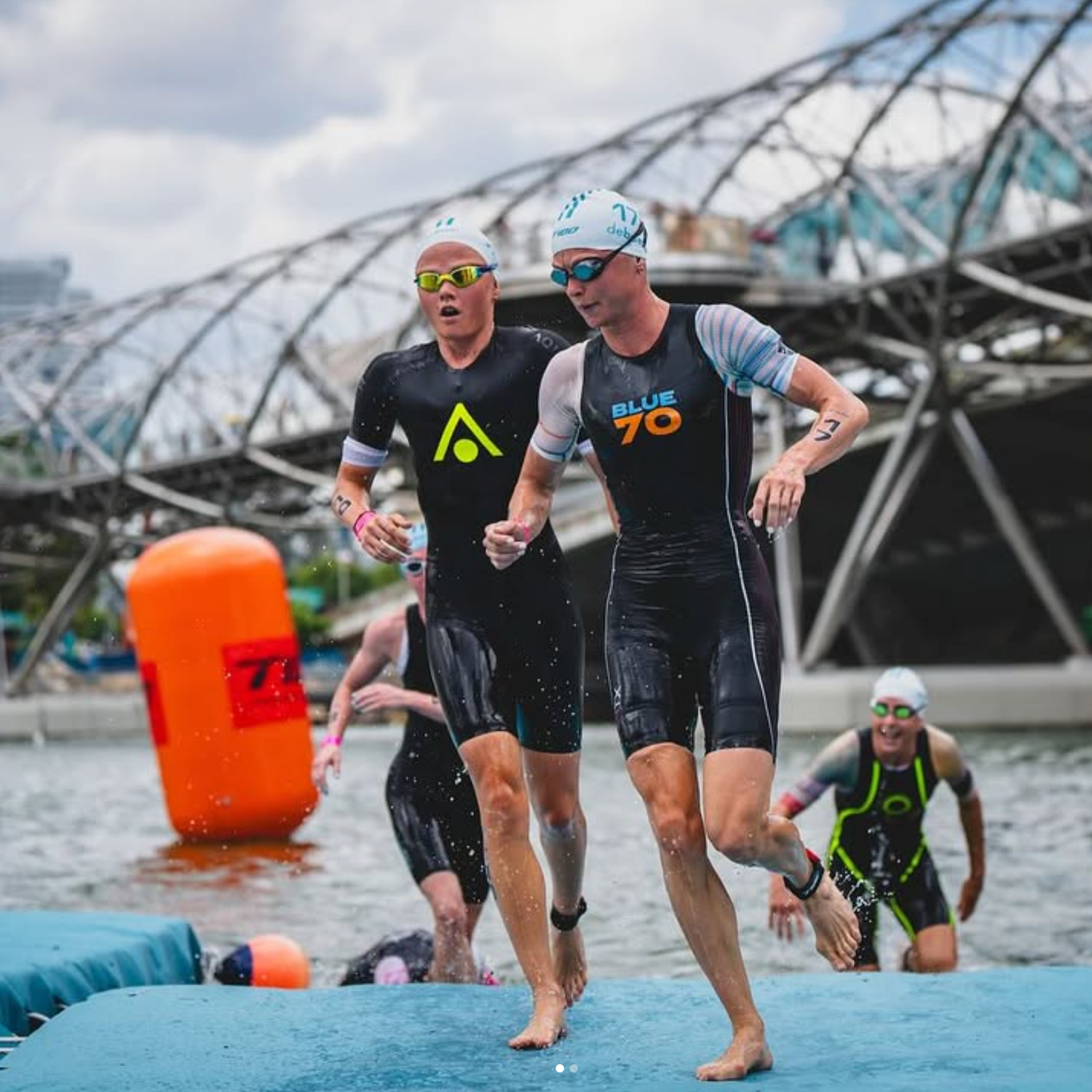
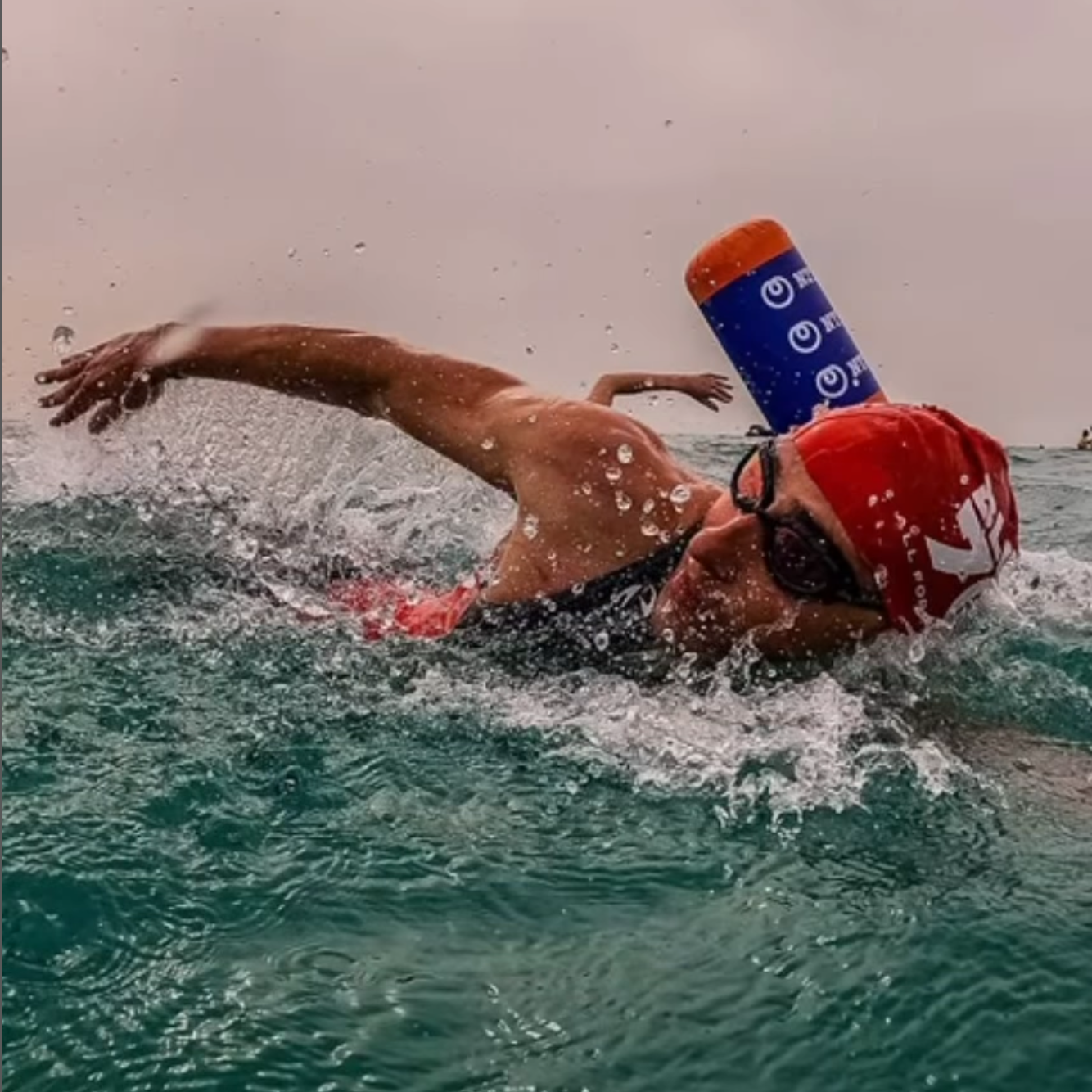
The pool can hide a shoulder issue for a short session. Open water usually does not. The demands change too often. You sight. You raise the stroke rate in chop. You breathe away from glare or waves. You surge around turns. Every one of those adjustments asks the shoulders and upper back to move freely under tension.
If the suit already feels loaded across the upper body, those race-day demands stack up quickly. A swimmer may still finish the swim well, but the cost is higher. The shoulders come out tighter. The upper traps are more involved than they should be. The transition to the bike starts with tension rather than rhythm.
That makes broad-shoulder fit more than a comfort issue. It is a race management issue.
Which blueseventy wetsuits deserve a close look?
The best option depends on how often you swim, how long your sessions tend to be, and how much upper-body freedom you want on race day.
Helix
The Helix is blueseventy’s flagship race suit, priced at $995 on the US site as verified in the brand materials provided. It is built for total race-day performance, with very thin, highly flexible neoprene in the arms and shoulders, a permeable catch panel, and LIFT buoyancy panels. For broad-shouldered swimmers who want the most natural upper-body feel on race day, Helix is the clear starting point.
Reaction
The Reaction, priced at $680, is a strong choice for swimmers who train regularly in open water and want a high-performance suit with more practicality for frequent use. If your shoulders need freedom but your wetsuit also has to handle regular mileage, Reaction belongs on the shortlist.
Fusion
The Fusion, priced at $420, works well for shorter frequent swims and for athletes who want strong comfort and value. The 2021 redesign added a lower-sitting neckline for comfort without losing the watertight seal. That detail matters for swimmers who feel shoulder restriction spill upward into the neck.
Sprint
The Sprint, priced at $325, is the entry point in the line. It makes sense for newer triathletes, occasional racers, and swimmers who want a more accessible starting point without losing the benefits of a swim-specific suit.
Cold water changes the equation too. For water below about 56 to 58°F, blueseventy’s own guidance points toward a purpose-built thermal suit such as the Thermal Reaction, which uses a full Zirconium jersey lining for added thermal protection. Water temperature, exposure time, and the individual still shape how warm a swimmer feels.
Women with broad shoulders need better patterning, not just extra volume
Women with broad shoulders often get pushed toward the same flawed solution: size up until the shoulders calm down. That can create a suit that is loose in the wrong places and still not quite right where it matters.
blueseventy’s Femme Fit design takes a better route by refining fit in the bust, torso, wrists, and ankles, along with a lowered neckline to reduce chafing and an extended zipper length that makes entry easier and accommodates wider hips. Those changes matter because shoulder restriction is rarely isolated. It often interacts with chest fit, torso length, and neckline position.
A whole-pattern solution makes more sense than just adding room and hoping the rest works itself out.
A practical checklist before you decide
Before you commit to a wetsuit for broad shoulders, run through a few simple questions.
- Does the suit feel evenly snug, or sharply tight across the shoulders?
- Can you reach forward without hitting a hard stop?
- Can you mimic recovery without shrugging?
- Does the neckline stay settled when your arms move?
- Have you fully seated the suit from the legs upward?
- Are you buying for race day, regular training, or both?
Those answers will tell you more than the size label alone.
Final thoughts
Broad shoulders do not mean you are hard to fit. They mean the fitting process has to be more precise. A good wetsuit should support your body position without taking away the stroke you already trust. That calls for careful donning, honest movement testing, and a realistic match between the suit and the way you train.
If you want the best chance of getting it right, start with the size charts and then take the next step that matters most: a real swim. blueseventy’s Test Swim policy lets you swim in the wetsuit and still return or exchange it, provided it comes back clean, dry, and unmodified. You can also explore fit support and sizing help at the size charts page or learn more about fit at the fitting guide.
For broad-shouldered swimmers, that trial in the water often gives the clearest answer. If the shoulders stay free, the stroke stays yours.