


Most beginner wetsuit articles start in the wrong place. They sort suits by price, or by whatever sounds most race-focused, and assume every new swimmer needs the same thing. In practice, the better question is simpler: how often will you actually swim in the suit?
A first-timer doing one or two open-water sessions before race day needs something different from a beginner who plans to swim outside every week. One athlete needs comfort, confidence, and a clean fit. The other needs those things too, but also enough durability for repeated use and enough freedom through the shoulders to keep the stroke together when the swim gets longer.
That is why the best beginner wetsuit is not one universal model. It is the suit that matches your training habits, your water temperature, and the way you swim right now.
Why training frequency is the best place to start
Beginners usually do not need a wetsuit for the same reasons experienced racers do. They are not chasing tiny gains in an already polished stroke. Most are trying to solve more basic problems in open water: body position, early fatigue, and comfort.
A swim-specific wetsuit helps by adding buoyancy, which lifts the hips and legs and improves position in the water. That matters because drag drops when the body rides higher. Newer swimmers often feel that difference right away. The swim becomes less of a fight.
But buoyancy is only part of the picture. A beginner also needs a suit that does not turn every practice swim into a shoulder workout. If the fit is off, or if the suit is not pulled fully into place, the swimmer ends up blaming the wetsuit for a problem that started with sizing or donning.
That is one reason a first wetsuit should be chosen with regular use in mind. A race-day suit and a training suit are not always the same thing. Some designs put a premium on maximum flexibility and race feel. Others make more sense for repeated use over the course of a season.
The best beginner wetsuit depends on how you plan to use it
If you answer one question honestly, the shortlist gets much easier to build: How many times will you swim in this suit over the next three months?
For occasional use: start with the Sprint
If you signed up for your first triathlon, expect a handful of open-water sessions, and want a swim-specific suit without overspending, the Sprint is a sensible place to begin.
At $325 on the blueseventy US site, it is the entry point in the wetsuit line. That makes it a strong option for athletes who want the benefits of buoyancy and open-water support without committing to a higher-cost suit before they know how much they will use it.
This matters because a lot of beginners do not need more features. They need more practice. A first wetsuit should get you into the water, help your body position, and give you enough comfort to focus on sighting, pacing, and staying relaxed through the first minutes of a swim.
For weekly training: the Fusion often makes the most sense
If you plan to swim outside regularly, the Fusion is one of the strongest beginner choices in the line. It sits at $420 and covers the space many first-season athletes actually live in: frequent shorter swims, race preparation, and repeated use.
blueseventy redesigned the Fusion in 2021 with a lower-sitting neckline for comfort without losing the watertight seal. That may sound like a small detail, but beginners notice neck comfort fast. If the collar feels wrong, the swimmer starts lifting the chin, shortening the stroke, and thinking about the suit instead of the water.
A good beginner wetsuit should stop drawing attention to itself once the swim settles down. The Fusion often lands there. It gives new athletes a suit they can train in, learn in, and race in without moving straight into a top-end race build.
For frequent, longer swims: look at the Reaction
Some beginners come into triathlon or open-water swimming with a serious training mindset. They may be new to wetsuits, but they already know they will swim outside often and that their sessions will not stay short for long.
That athlete should look closely at the Reaction. At $680, it sits above the Fusion and uses a higher grade of neoprene. blueseventy recommends it for frequent, longer swims, which tells you exactly where it fits.
The key mistake here is buying for current confidence instead of planned workload. If you know the suit will become part of your weekly routine, it makes sense to choose a model built for that kind of use.
Warm water and cold water change the answer
Water temperature matters more than many beginners expect. It can change the right choice faster than race distance does.
Warm water: sleeveless can be the smarter first option
Once water temperatures rise above about 70 to 72°F, a full suit can feel too warm for longer swims. This is where sleeveless options become attractive, especially for athletes who want a more natural shoulder feel.
The Reaction Sleeveless at $395 and the Glide Short John at $210 both simplify the upper-body feel of the suit. That can help beginners who dislike any pressure across the shoulders or who want easier entry and exit.
The trade-off is clear. You get less warmth and less buoyancy than with a full suit. In warm water, that can be the right trade to make.
Cold water: use a thermal suit
Below about 56 to 58°F, blueseventy’s guidance shifts toward a purpose-built thermal suit. That is where the Thermal Reaction fits.
The Thermal Reaction is fully lined with Zirconium jersey, a synthetic wool lining designed to provide added thermal protection in cold water. For beginners, cold water deserves extra respect. It changes breathing, timing, and comfort in a hurry.
A thermal suit can help with warmth, but it does not remove risk and it is not a flotation device. Cold-water swimmers still need to acclimate gradually, choose suitable conditions, swim with others, and exit the water before form and judgment start to fall apart.
The most overlooked beginner issue is often fit at the neck
Shoulder flexibility gets most of the attention in wetsuit discussions, but neckline comfort can shape the whole swim.
If the suit sits low through the torso, the collar often feels wrong. The swimmer notices pressure at the throat, rubbing at the sides of the neck, or a general sense that the suit never settled into place. Once that starts, head position changes and the stroke gets messier.
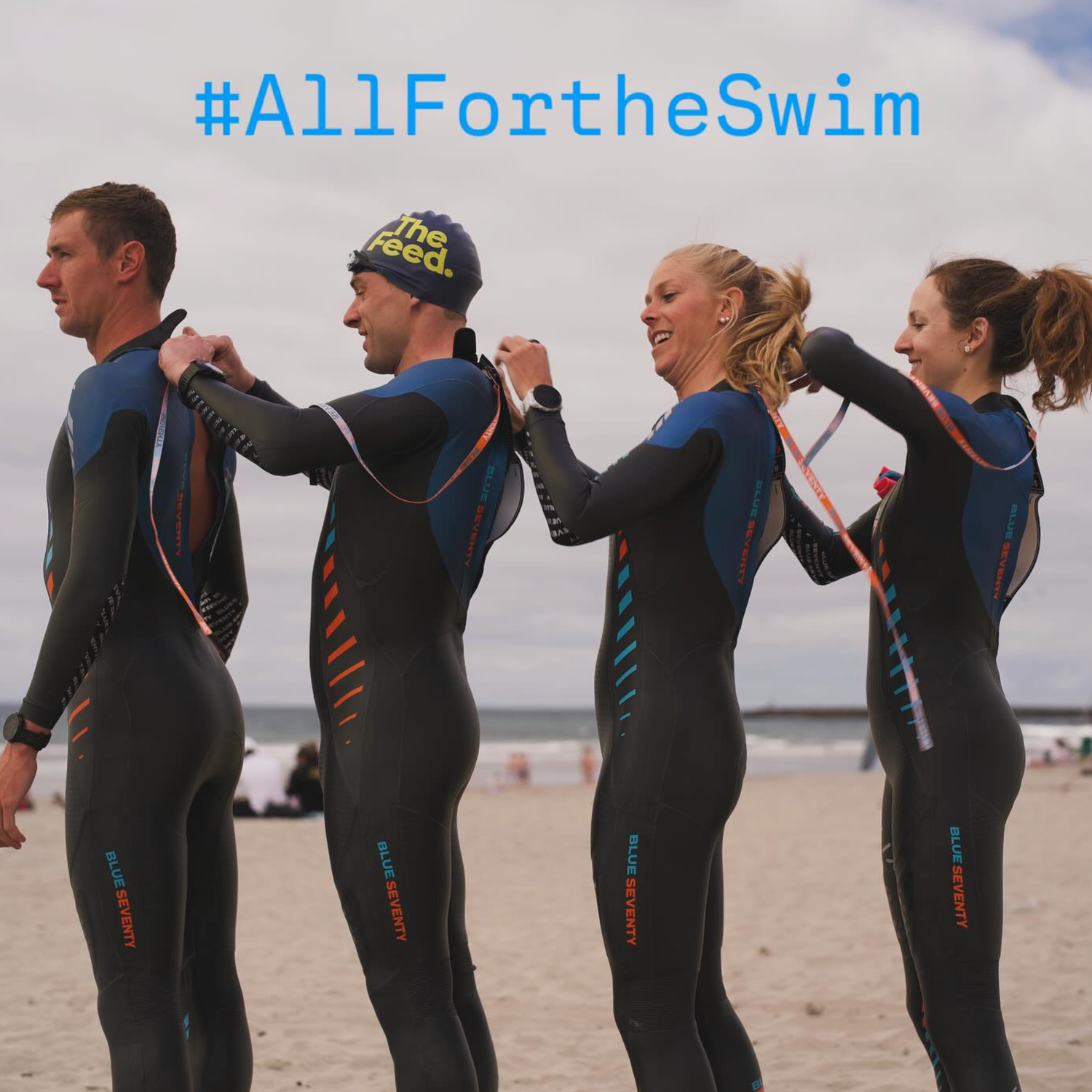
This is why proper donning matters so much. A wetsuit should feel snug on land and more comfortable in the water. Before judging the fit, pull the suit all the way up from the calves to the quads, then into the hips, torso, and shoulders. A lot of beginner shoulder and neck complaints start lower in the suit.
Women-specific fit can make a major difference
For many women, the right beginner wetsuit is the first one that feels like it was shaped for how they are built in the first place. blueseventy’s Femme Fit patterning focuses on critical areas including the bust, torso, wrists, and ankles. It also includes a lowered neckline for comfort and reduced chafing, plus an extended zipper length for easier entry and accommodation through the hips.
Those changes are not cosmetic. They affect how the suit goes on, how it sits in the water, and how easy it is to remove in transition. For a beginner, that can change the experience from tolerable to comfortable.
What wetsuit materials actually mean for a beginner
blueseventy uses Yamamoto 38, 39, and 40 cell neoprene across its wetsuit range. The practical takeaway is straightforward: higher cell numbers bring more flexibility.
That matters, but only when matched to the job. A race-focused suit uses flexibility differently from a suit intended for regular training. A thermal lining solves a different problem from a sleeveless cut. A beginner does not need the most technical feature set available. A beginner needs the feature set that matches the swimming they will actually do.
How to choose the right beginner wetsuit
If you want the shortest path to the right decision, use this framework:
- Choose the Sprint if you want the most accessible swim-specific starting point and expect occasional use.
- Choose the Fusion if you plan to train regularly and want one suit for frequent shorter swims and race day.
- Choose the Reaction if you know your open-water training volume will be high and your swims will be longer.
- Choose a sleeveless option if you swim in warm water, want easier shoulder movement, or prefer simpler entry and exit.
- Choose the Thermal Reaction if you will swim in cold water below about 56 to 58°F and need added thermal protection.
Fit checks to make before you decide
A beginner wetsuit should feel supportive, not distracting. Before you commit, run through a few simple checks.
- Expect a snug fit on land. That is normal for a swim-specific wetsuit.
- Pull the suit higher than you think you need to. Extra material left low in the legs and hips steals freedom from the shoulders.
- Settle the torso before judging the neckline. A low torso position often causes neck discomfort.
- Practice removing the suit. Transition speed improves when the motion feels familiar.
- Test the suit in the water. A wetsuit is hard to judge accurately in a bedroom.
blueseventy’s Take a Test Swim policy makes that last step easier. You can swim in a wetsuit and still return or exchange it, provided it comes back clean, dry, unmodified, and includes tags and accessories. For a first-time buyer, that removes a lot of uncertainty.
The bottom line for beginners
The best beginner wetsuit is the one that supports the season you are about to have, not the version of yourself you imagine on race morning. If you buy for your actual training week, your water temperature, and the way you swim now, you are much more likely to end up in the right suit.
That usually means keeping the decision practical. Get the fit right. Match the suit to your frequency of use. Respect the conditions. Then swim in it enough that race day feels familiar.
If you are narrowing down your first suit, start with the training you will really do, then use a real swim to confirm the choice.