


Search "wetsuit hire near me" the week before your first triathlon and you'll find a list of dive shops, race-morning rental booths, and clubs with a bin of loaner suits in the back room. It looks like the answer. You need a wetsuit for one swim leg, you don't want to spend hundreds of dollars on something you might wear twice, so you rent.
That solves one problem. It creates three others, and all three show up in the water, right when you can't do anything about them: fit, neoprene condition, and hygiene. This is a case for finding the right suit for your body before race morning, not for skipping the swim leg's most controllable variable.
Fit Is the Variable a Rental Rack Can't Solve
A wetsuit should feel snug on dry land and settle into something more comfortable once you're actually swimming. Neoprene behaves differently under water pressure than it does against dry skin. If a suit doesn't loosen up once you're moving, if the shoulders bind through every stroke, you're not fighting the water anymore. You're fighting the suit. And you're tiring out faster than you would with bare arms.
Buoyancy equals speed. That's the whole physics case for wearing a wetsuit at all: it lifts your hips and legs into a flatter position, cutting drag before your first stroke. Beginners tend to feel this more than experienced swimmers, since they haven't yet built the core strength to hold a horizontal line on their own. If your first taste of that lift happens in a suit that fits wrong, you're not testing what a wetsuit does. You're testing a compromise, and you'll draw the wrong conclusions from it on race day.
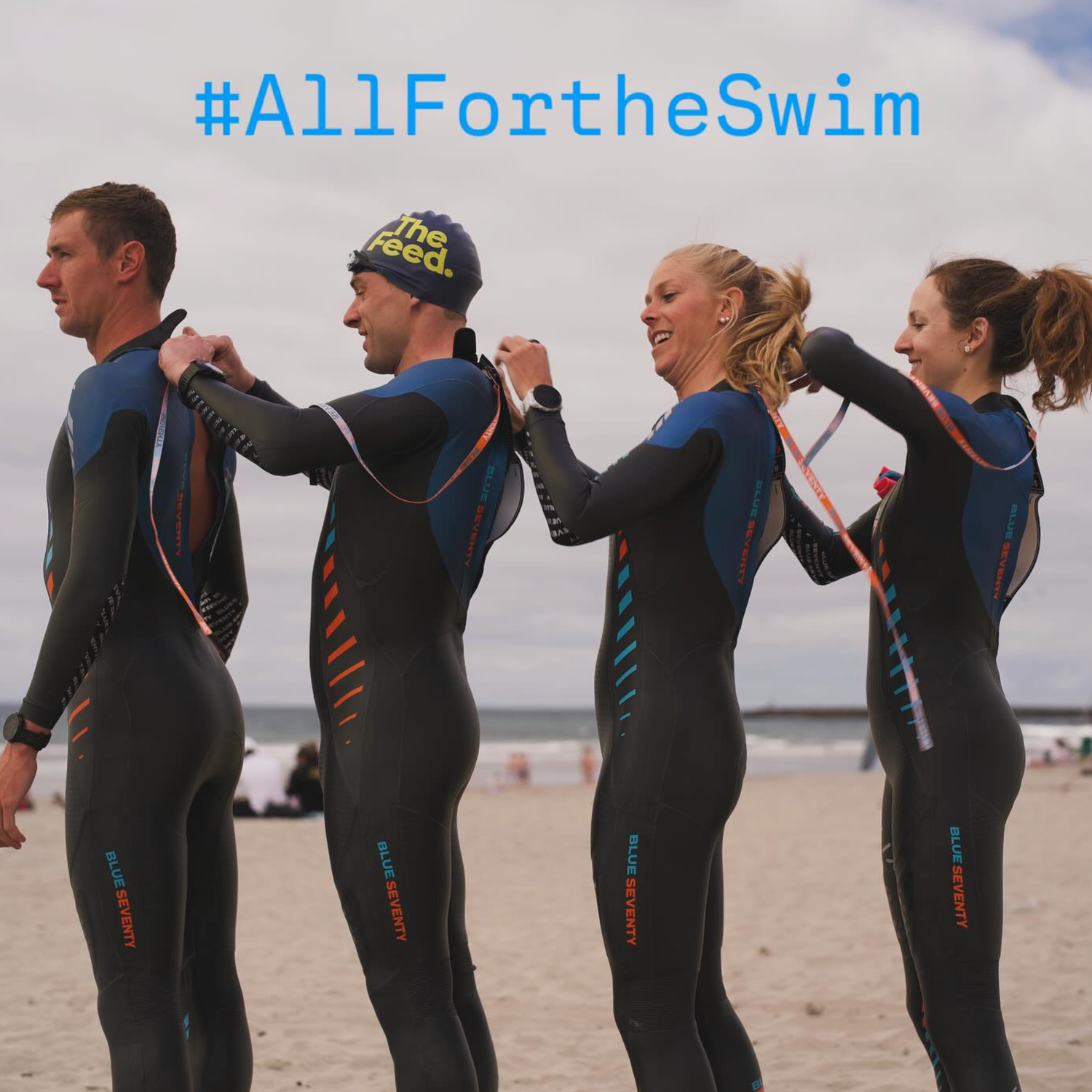
Rental fleets are built around broad size bands, and there's no way around that. A shop stocking twenty or thirty suits for one race weekend can't cover every combination of height, weight, torso length, and limb proportion walking through registration. Women feel this gap hardest. A suit patterned for a male torso doesn't account for bust, waist-to-hip ratio, or a shorter torso. That's why fit-specific women's patterning exists in the first place: adjustments through the bust, torso, wrists, and ankles, a lowered neckline to cut chafing, a longer zipper for faster entry and exit. None of that shows up on a rack sorted by S, M, L, XL.
Neoprene Wears Out Faster Than It Looks
Wetsuit neoprene is graded by cell count, usually 38 to 40 cell across a given suit. Higher cell counts mean thinner, more flexible material, especially through the shoulders, where flexibility protects your catch and your stroke rate. That flexibility has a cost. Thinner neoprene breaks down faster under repeated stress than a heavier panel does.
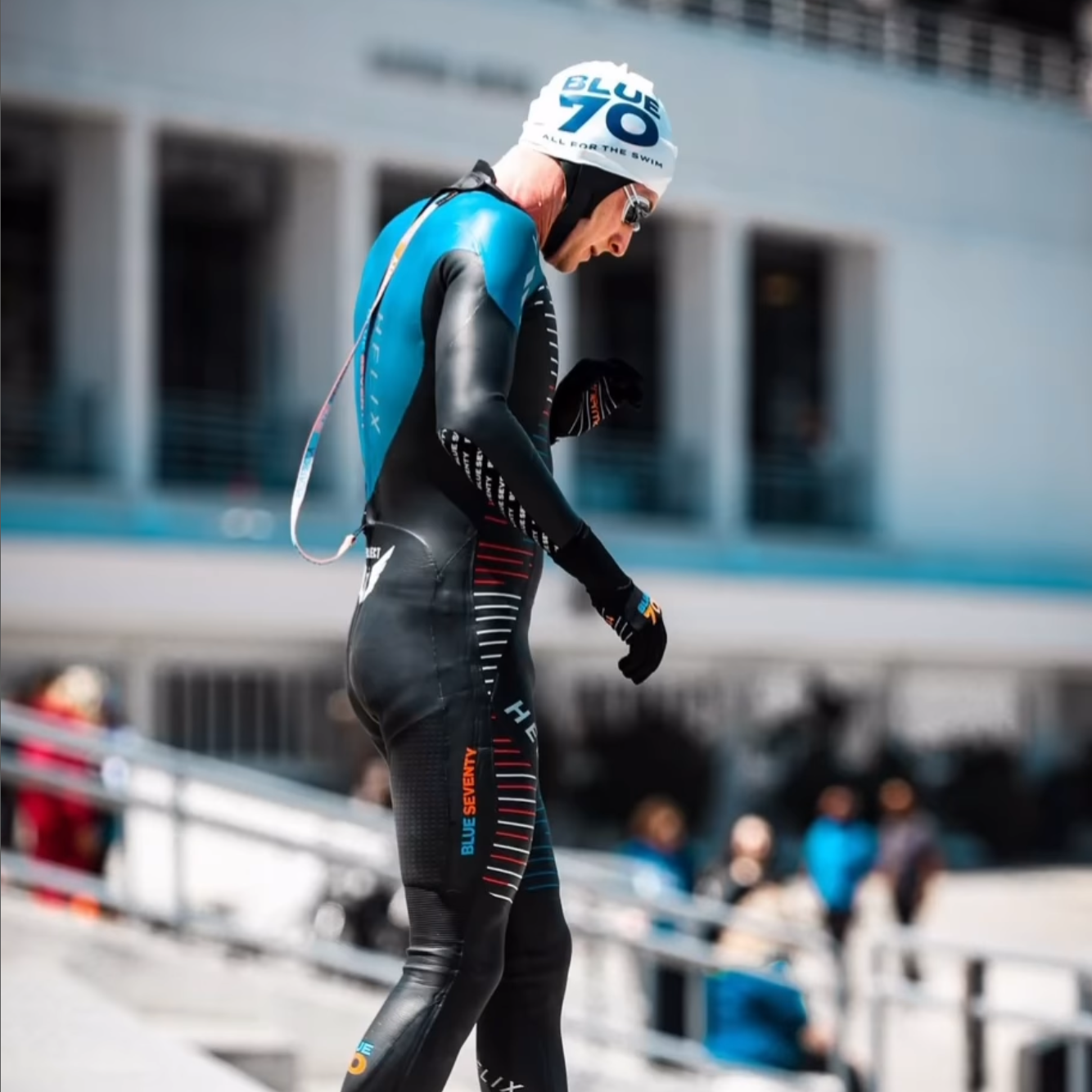
We're direct about this trade-off in our own lineup. Our flagship Helix uses very thin, highly flexible neoprene built for race-day performance, and we tell swimmers plainly that it isn't the right call for frequent training because that delicate neoprene wears faster with repeated donning and doffing. Swimmers training in open water once a week or more get pointed toward the Reaction instead, built with higher-grade, more durable neoprene for longer, more frequent swims.
Now think about what a rental suit goes through. Dozens of swimmers, many pulling on a wetsuit for the first time, put it on and take it off across a single season. Seams stretch. The shoulders and underarms, already the highest-stress zones on any suit, lose their recovery faster with each new wearer who doesn't know to bunch the material and roll it on instead of yanking it into place. A suit that started as a sizing compromise arrives to you further compromised on condition. You won't find out how much give is left in that neoprene until you're already mid-swim.
Care Between Renters Is Harder Than It Looks
Any wetsuit worn in open water, salt water, or a chlorinated pool needs a full rinse and complete drying, inside and out, before it goes back into use. Salt and chlorine both break down neoprene and glued seams over time if left to sit. A suit worn by several renters across one weekend, then turned around days later for the next race, may not get the drying time it actually needs.
Ask a rental shop how they clean suits between customers. If the answer is vague, that tells you something too.
The Cost Math Only Works Once
A single-event rental fee looks cheap next to the price of owning a wetsuit outright. That math holds up exactly once. Sign up for a second race and you're paying to rent again, in a suit that still isn't yours and still isn't properly fitted. An entry-level full suit built specifically for swimming, not surfing or diving, closes that gap after two or three races.
Our Sprint, priced at $325 and built as a top-rated entry-level suit, is a straightforward example. After a couple of race weekends, it's paid for itself against repeated rental fees. Every swim after that, you're wearing a suit you already know, in a fit you don't have to relearn each time.
Test the Suit Without the Rental Trade-Offs
The instinct behind "wetsuit hire near me" is a good one. You want to feel a wetsuit in the water before you commit to it. You don't need a shared rental fleet to get that.
Our Test Swim policy is built around that exact instinct. Order your correctly sized suit using our size chart or sizing tool, swim in it in open water or in the pool, and if it isn't right, return or exchange it within 30 days of your ship date, as long as it comes back clean, dry, with tags and accessories attached. You get the real trial you were looking for, in a suit sized to your body from the start, without the fit and condition trade-offs of a shared rental.
Match the Suit to How and Where You Swim
Once fit is settled, the next question is frequency and water temperature. Training in open water more than once a week and racing competitively points toward a durability-focused suit like the Reaction ($680) or Fusion ($420), simply because more cycles of wear go through the neoprene. Shorter, less frequent sessions hold up fine in a lighter build.
Water temperature changes the calculation too:
- Below roughly 56 to 58°F, a standard race-cut suit won't offer enough thermal protection, and a fully lined thermal suit built for cold water, like our Thermal Reaction, becomes the better call. Swimmers stretching their season into colder water should pair that suit choice with real acclimatization, not rely on the neoprene alone.
- Above roughly 70 to 72°F, a full suit can run too warm over a longer swim, and a sleeveless cut becomes more comfortable without giving up the buoyancy through your hips and legs.
None of this requires guesswork. Check your measurements against our size chart, run them through the sizing tool, and reach out to us directly if you're still unsure before you buy.
Convenience matters race week. But fit, neoprene condition, and how a suit was cared for between wearers matter more to how you actually feel during your swim leg, and no rental fleet can guarantee any of it. Find the right suit for your body, test it in real water, and walk to the start line already knowing exactly how it feels, because you're the only one who's worn it.