


The triathlon wetsuit question is not a yes or no. It has not been that simple since 1993, when blueseventy's predecessor built one of the first purpose-made triathlon wetsuits. Back then you asked two things. Is the water cold enough for neoprene? And can I find a suit that will not fight my stroke? Today the answer depends on race rules, water temperature, fit, and how your body sits in open water.
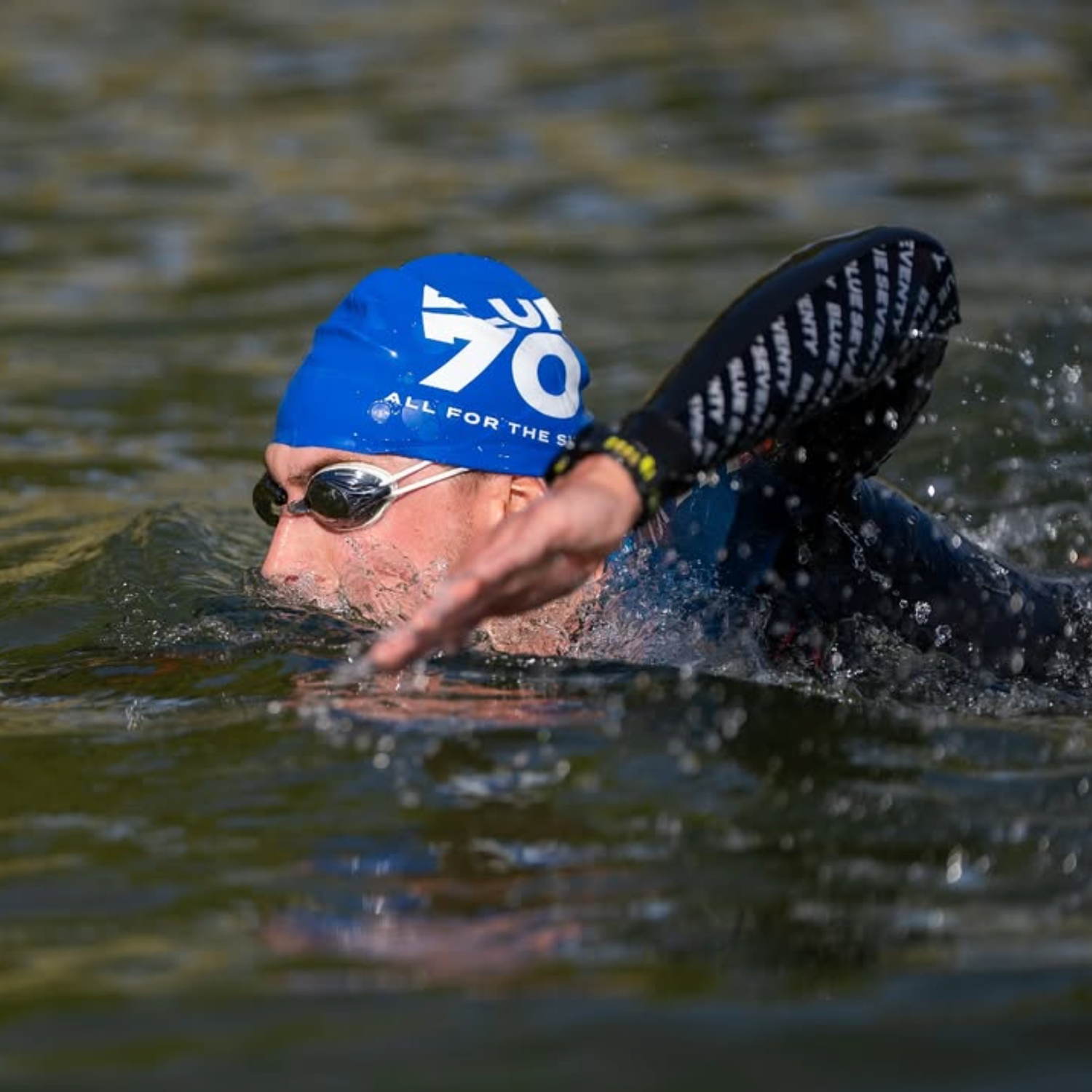
That last part matters more than most new triathletes expect. A wetsuit does two jobs. It adds buoyancy and it reduces surface drag. Neoprene lifts your hips and legs toward the surface. When your legs ride higher, your body flattens out, your kick works less to keep you level, and you slip through the water with less energy spent. That saved energy follows you onto the bike and the run.
What a Swim-Specific Suit Does Differently
Blueseventy shorthand for the physics is blunt: buoyancy equals speed. A lifted hip line reduces drag. It also cuts the energy you waste kicking just to keep your legs from sinking. That is the real performance gain for most age groupers.
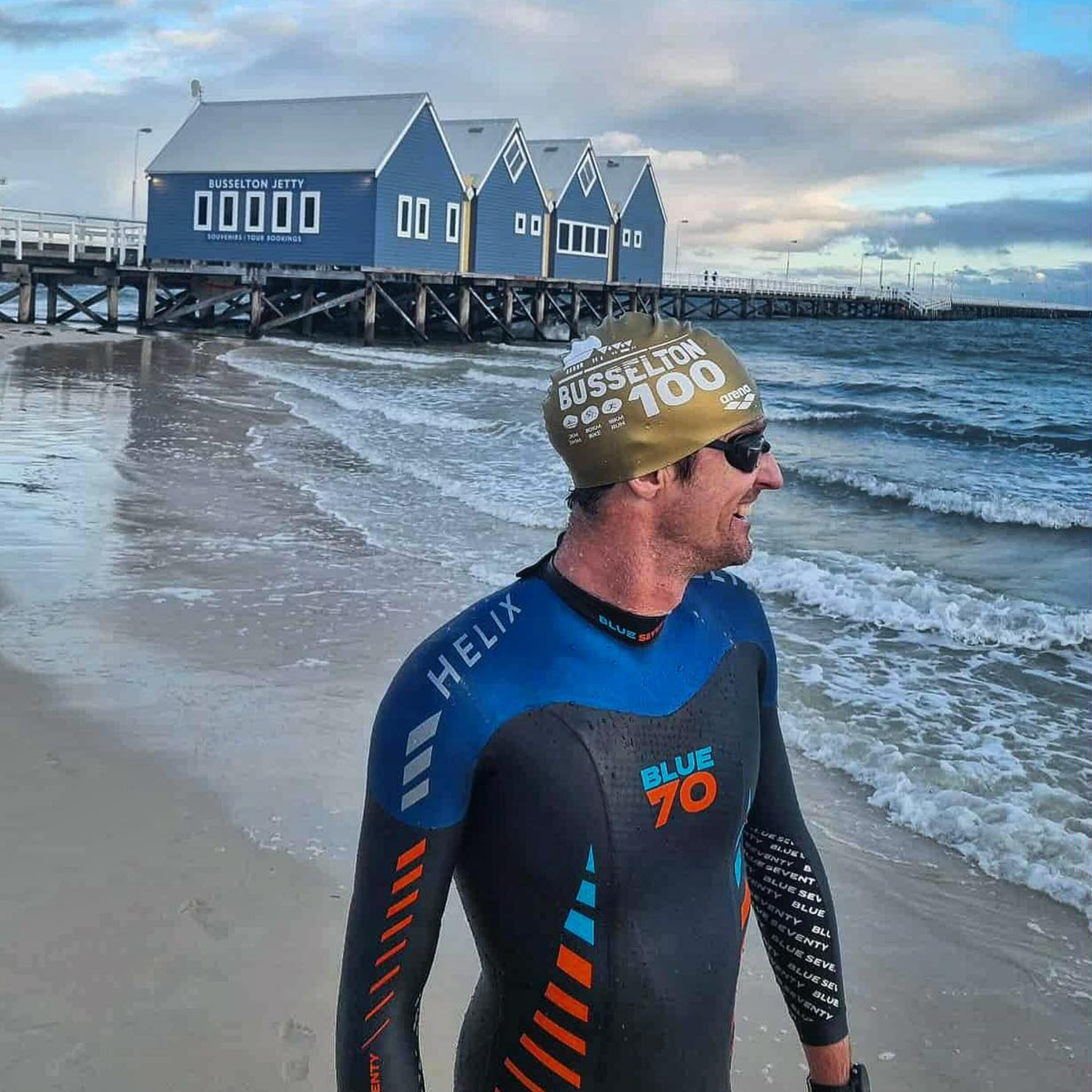
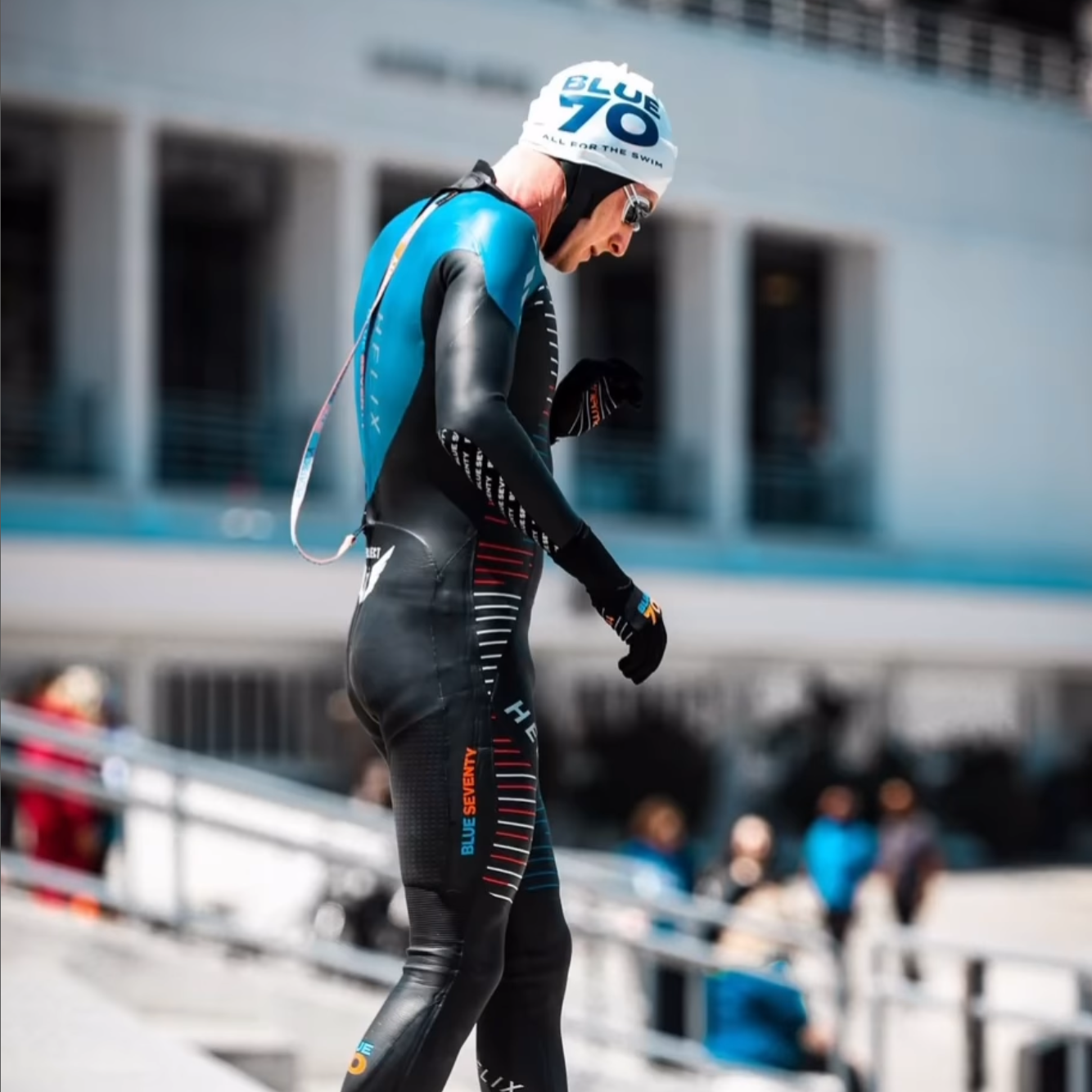
Wetsuits are not waterproof. They let a thin layer of water in, and your body warms that layer. Graded neoprene does the rest of the work. Higher cell counts like 40-cell Yamamoto neoprene flex more, so those panels go in the arms and shoulders where overhead reach matters. Lower cell counts add structure through the torso. A race suit may also include a catch panel that keeps your feel for the water during the pull. These details are why a swim-specific wetsuit fits and moves differently from a surf or dive suit.
Check Race Rules Before You Shop
The first question is not whether a suit makes you faster. It is whether the suit is legal and whether it will overheat you. Wetsuit legality changes by race organizer and by year. USAT, Ironman, and World Aquatics each publish current water temperature cutoffs. The athlete guide for your race is the only source worth trusting. Not forum posts. Not last season.
Water temperature then narrows the gear choice.
- Below roughly 56 to 58 degrees Fahrenheit, a purpose-built thermal suit adds meaningful warmth. The Thermal Reaction uses a Zirconium jersey lining that holds a thin layer of water against the skin and warms it.
- Above roughly 70 to 72 degrees, a full suit can feel too warm on longer swims. A sleeveless suit or swimskin often becomes the smarter call.
Fit Is the Decision Most People Skip
An ill-fitting $995 suit is worse than a well-fitting $325 suit. A suit that pulls on your shoulders will fatigue your arms within a few hundred meters. A neck that gaps lets water flush through and breaks your rhythm.
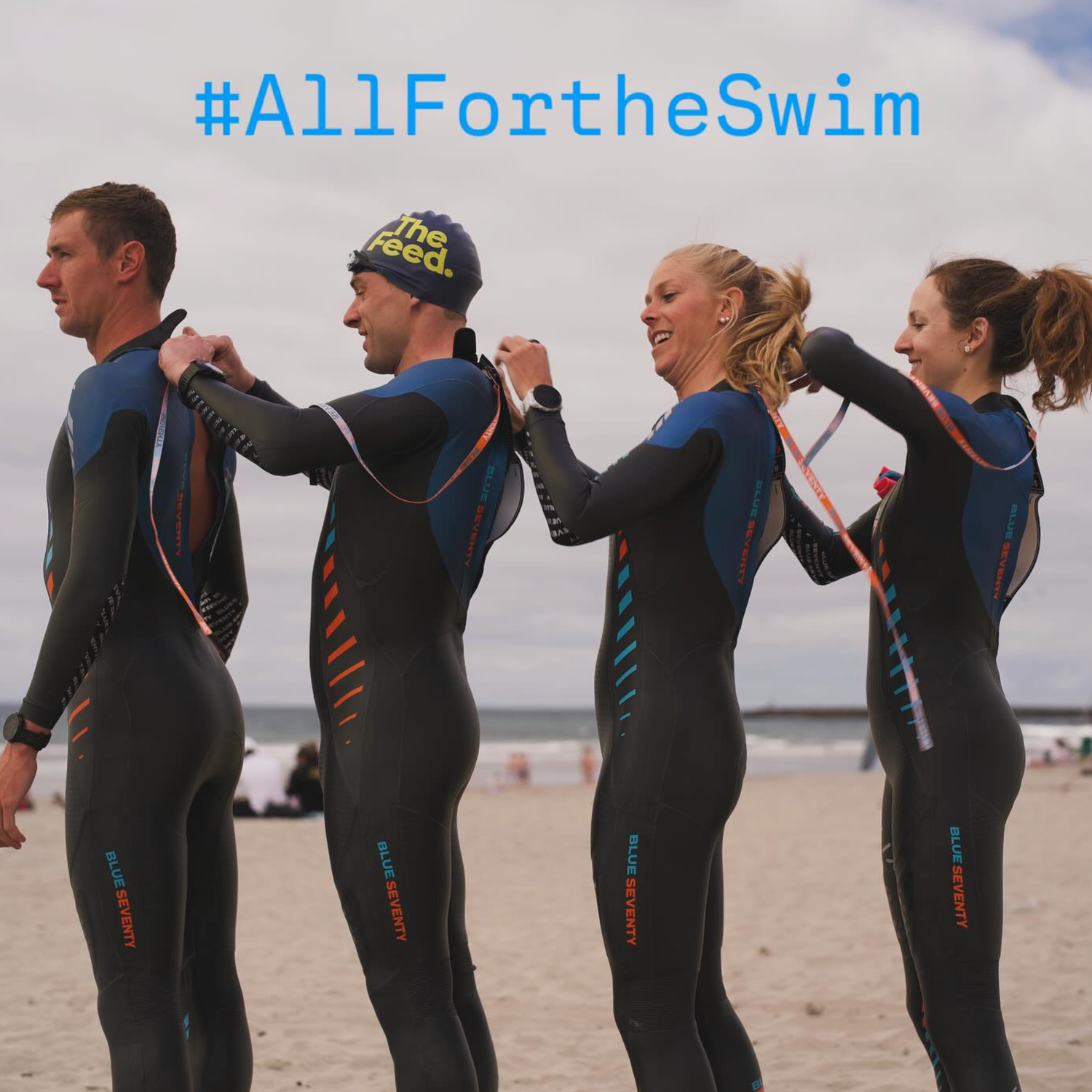
The fit test is easy. Put the suit on. Raise your arms overhead. If the shoulders fight that movement, the suit is too small or it is not pulled up enough at the hips. Most shoulder pain comes from poor donning, not the suit itself. Take the extra minutes to work the legs up and pull the torso high before you zip.
Blueseventy's women's suits use Femme Fit, which adjusts the pattern in the bust, torso, wrists, and ankles. The neckline sits lower to reduce chafing, and the zipper extends longer for easier entry and faster transitions. A suit cut for your body is not a luxury. It is the difference between a steady swim and a fight with your gear.
When a Full Suit Is Not the Answer
A short race in warm water changes the math. If your event swim is brief and the water is warm, a full wetsuit may cost more in shoulder restriction and heat than it gives back in buoyancy. Summer sprint races often land here. Check the athlete guide.
If wetsuits are optional or not permitted, a swimskin is the low-drag alternative. A swimskin is not a wetsuit. It offers little buoyancy and no meaningful warmth, but it reduces surface drag and fits the warm-water category.
Strong open-water swimmers with a naturally high body position still benefit from a wetsuit. The margin is just smaller. Beginners and swimmers who fight sinking legs gain proportionally more. If you can hold a horizontal line without a suit for 800 meters, your decision shifts to temperature and comfort rather than body position correction.
Budget belongs in the conversation too. The Sprint starts at $325. The Helix is the $995 race-day tool. The Fusion and Reaction sit between them and are built for frequent training. If this is your first season or a single race, buy a suit that fits, then spend the rest on coaching and open-water practice.
Cold Water Needs a Different Mindset
A thermal wetsuit provides added thermal protection. It is not a personal flotation device, and it does not turn cold water into warm water. Cold-water swimming demands acclimatization, a plan, and a buddy. If you are new to water below 60 degrees, get in gradually. Swim with a group or a shore observer. Tell someone your route and your expected return.
Learn the signs of trouble before you get cold. Confusion, slurred speech, and loss of coordination mean it is time to get out and seek warmth and medical help. The Thermal Reaction is designed for cold-water swimming. Its full Zirconium jersey lining provides added thermal protection, but the suit supports your decision to swim cold. It does not make that decision for you.
Your Decision Checklist
You do not need to solve every variable at once. Work through this order.
- Confirm wetsuit legality and water temperature from your race's athlete guide.
- Try on two sizes if you can. Snug, not painful.
- Swim in the suit before race day. Blueseventy's test swim policy lets you swim in the suit and still return or exchange it within 30 days if it is clean, dry, unmodified, and has the tags.
- If the water is below about 58 degrees and you train in open water, look at a thermal suit or a full suit with generous shoulder flex.
- If the water is above about 72 degrees or the swim is short, consider a sleeveless suit or swimskin.
- Fit first. A $325 wetsuit that fits beats an ill-fitting $995 suit.
The wetsuit question has moved beyond a simple yes or no. It now asks you to know your race, your water, and your own body position. Answer those first and the gear decision shrinks.
Check the size charts or read the fit guide on the blueseventy site. The question gets easier once the suit is on your body. Happy swimming.